A Trip to the Moon
"A cannon-blast of pure imagination."
I was sitting on my couch last Tuesday, struggling to get my overpriced espresso machine to stop leaking, when I realized that Georges Méliès probably built an entire moon out of cardboard and glue with less frustration than I feel toward modern kitchen appliances. I’d decided to rewatch A Trip to the Moon (1902) for the hundredth time, mostly because I needed a reminder that "spectacle" doesn't require a billion-dollar server farm in Burbank. Even with my cat intermittently trying to bat at the flickering grain on the screen, the magic held.
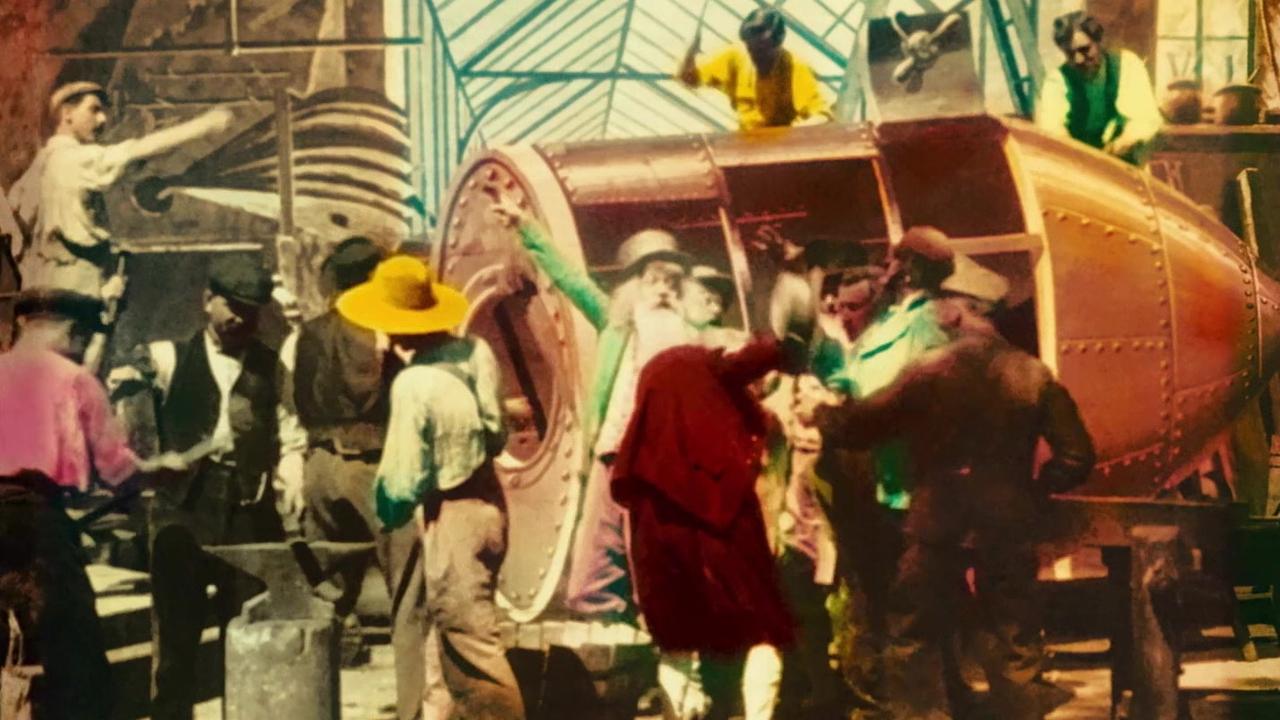
It is easy to look at a 122-year-old film and see it as a "museum piece"—something to be respected but not necessarily enjoyed. But Méliès, a professional magician before he was a filmmaker, didn't make museum pieces. He made dreams. When you watch Professor Barbenfouillis and his troupe of eccentric astronomers climb into a giant bullet to be shot into space, you aren't just watching the birth of science fiction; you’re watching a man invent the visual vocabulary of the 20th century in real-time.
The Magician in the Machine
Méliès wasn't interested in the "actualities" of his contemporaries, the Lumière brothers, who were busy filming trains pulling into stations or workers leaving factories. He wanted to see things that couldn't happen. As a seasoned stage performer, he understood that the camera was the ultimate trapdoor. In A Trip to the Moon, he uses the "substitution splice"—literally stopping the camera, changing something on set, and starting it again—to make things vanish or explode.
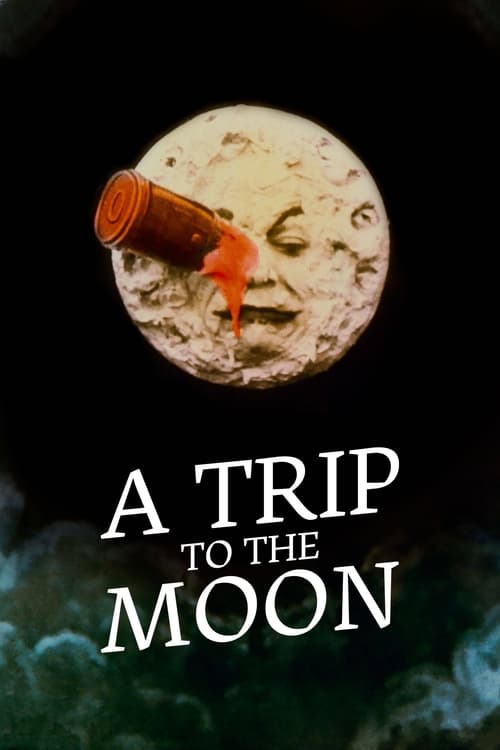
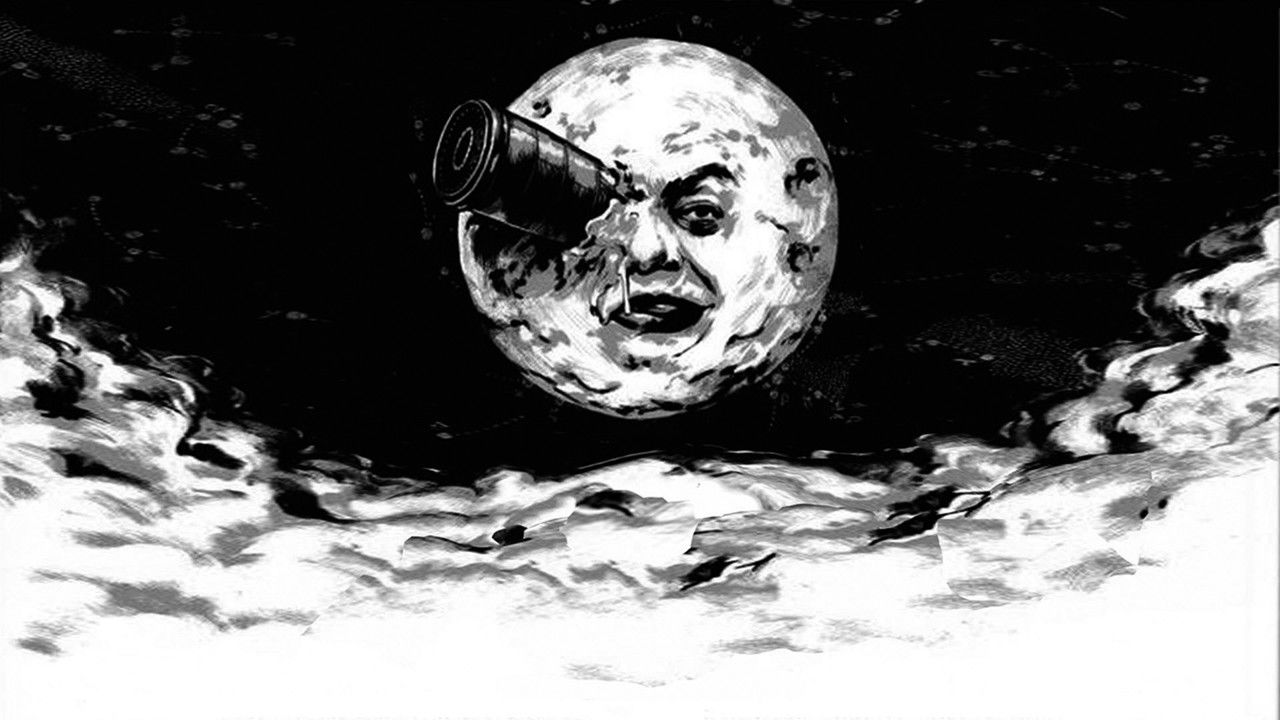
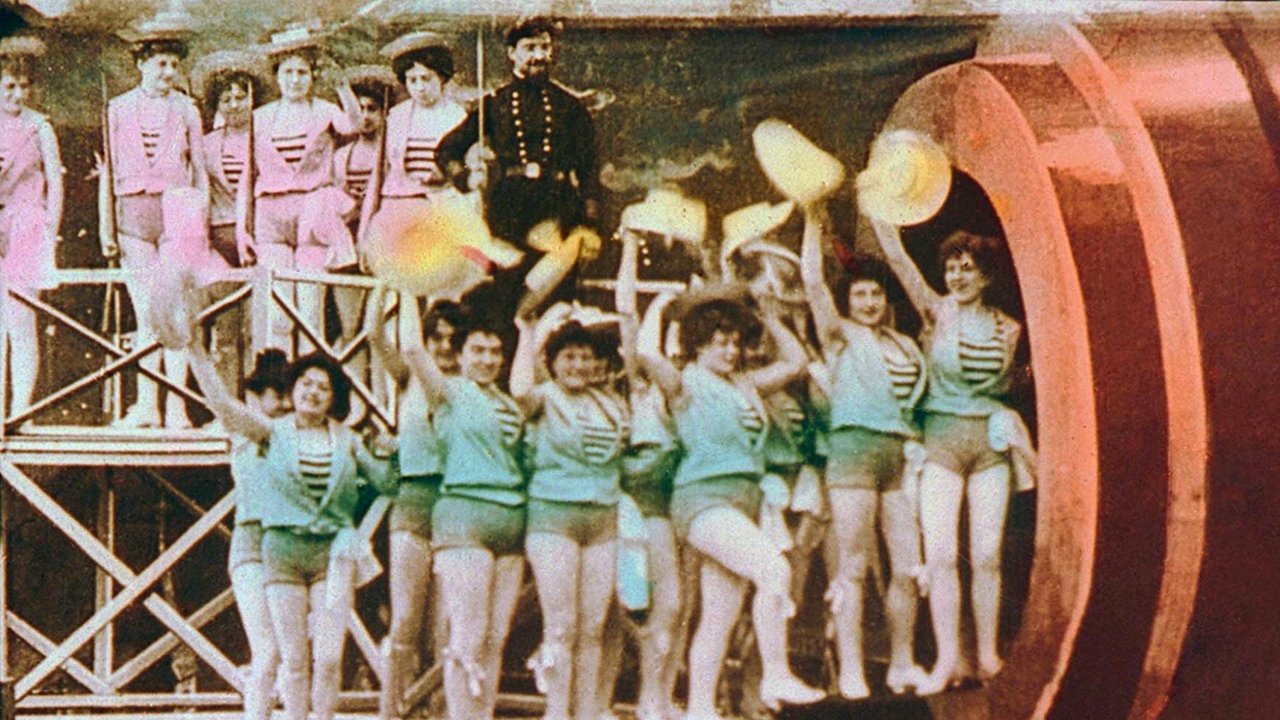
The plot is delightfully absurd, based loosely on Jules Verne and H.G. Wells. A group of bearded academics in wizard-like robes decide to visit the moon. They build a rocket, get shoved into a massive cannon by a line of "marines" (played by women in very short shorts, because even in 1902, sex sold), and blast off. The iconic shot of the rocket landing in the eye of the Man in the Moon—played by Georges Méliès himself under layers of heavy makeup—remains one of the most enduring images in human history. It’s a literalization of a "shot" that changed the world.
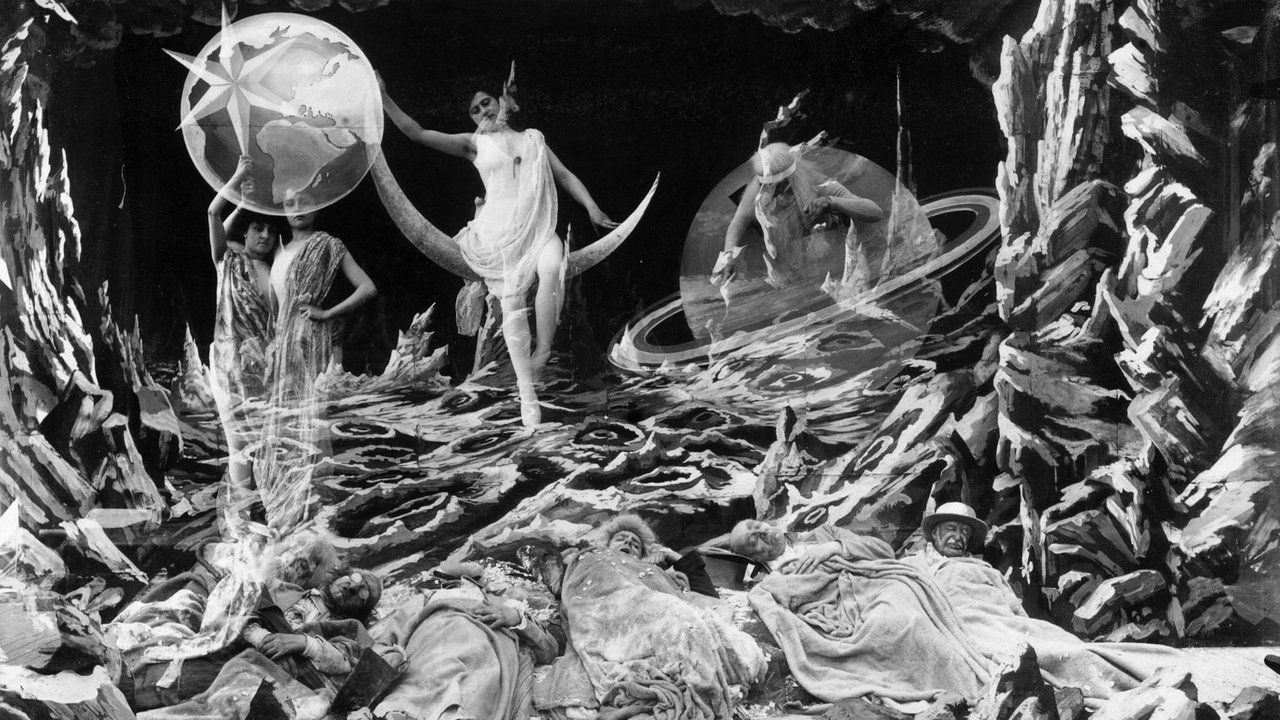
What strikes me most is the handcrafted texture of the world. Every backdrop is a hand-painted flat, every costume a tactile labor of love. There is a specific, whimsical charm to the lunar surface, where stars have faces and giant mushrooms sprout from the ground. When the explorers encounter the Selenites—the insect-like moon dwellers—and find that they disappear in a puff of smoke when hit with an umbrella, it’s pure, joyous Vaudeville. Méliès was basically the James Cameron of the Edwardian era, just with more glue and cardboard.
An Indie Spirit on a Shoestring
While we think of this as a "classic," it was actually the ultimate indie project. Produced through his own company, Star Film, Méliès spent about $5,985 on the production—a staggering sum at the time, but peanuts compared to the industry that followed. He was the director, the writer, the star, the set designer, and the producer. He even oversaw the hand-coloring of individual frames in some versions, a process so painstaking it makes modern color grading look like child’s play.
The tragedy of the film’s "business" side is a cautionary tale for any independent creator. Thomas Edison’s film technicians essentially pirated the movie, making secret negatives and distributing it across the United States without paying Méliès a dime. It’s the original "you wouldn't steal a car" piracy moment. While the world fell in love with his lunar voyage, Méliès himself struggled to see the profits he deserved, eventually ending his life as a toy salesman in a train station before being "rediscovered" by film historians.
Watching it now, I’m struck by the sheer audacity of the pacing. There are no close-ups. No complex tracking shots. The camera sits like a spectator in the front row of a theater. Yet, through the performances of Bleuette Bernon as Phoebe and Jehanne d'Alcy, there is a kinetic energy that defies the static frame. They aren't just "acting"; they are pantomiming the very thrill of discovery.
The Philosophy of the Possible
If we look past the whimsical umbrellas and the exploding moon-men, there’s a deeper question here: why did we want to go? A Trip to the Moon captures that pre-Cold War, pre-NASA era of exploration where the "how" was less important than the "wow." It’s a philosophical meditation on the human urge to plant a flag in the unknown, even if we look ridiculous doing it.
The film represents a transition from the 19th-century fascination with mechanical wonders to the 20th-century obsession with space. It treats the moon not as a cold rock, but as a place of infinite, weird possibility. I think that’s why it still resonates. In a world where we can see high-definition photos of Martian dust, there’s something deeply soul-nourishing about seeing a moon that looks back at you with a grumpy, cream-covered eye.
I once tried to explain this movie to my nephew while he was playing Starfield, and he looked at me like I was describing how to use a butter churn. But once the rocket hit the moon’s eye, he actually stopped playing. That’s the power of Méliès. He didn't have CGI, but he had a vision that could pierce through a century of technological noise.
This isn't just a movie; it's the DNA of everything we love about the cinema of the fantastic. Whether you watch the black-and-white original or the gorgeously restored hand-colored version with the Air soundtrack, give yourself those 15 minutes. It’s a short trip that reminds us that before we had the technology to reach the stars, we had the imagination to build a ladder out of light and shadows. If you can’t find the joy in a group of astronomers beating up moon-men with umbrellas, you might need to check your pulse.

Keep Exploring...
-

The Wizard of Oz
1939
-
King Kong
1933
-
Justice League: The Flashpoint Paradox
2013
-
Stagecoach
1939
-
The Time Machine
1960
-
Treasure Planet
2002
-
Nausicaä of the Valley of the Wind
1984
-

Castle in the Sky
1986
-

Flow
2024
-
The City of Lost Children
1995
-

The Gold Rush
1925
-
The General
1926
-

Delicatessen
1991
-
Metropolis
1927
-

The Little Prince
2015
-

The Kid
1921
-

City Lights
1931
-
It Happened One Night
1934
-

Bringing Up Baby
1938
-
Mr. Smith Goes to Washington
1939