Sherlock Jr.
"Step inside the screen and lose your mind."
Breaking Physics for a Gag
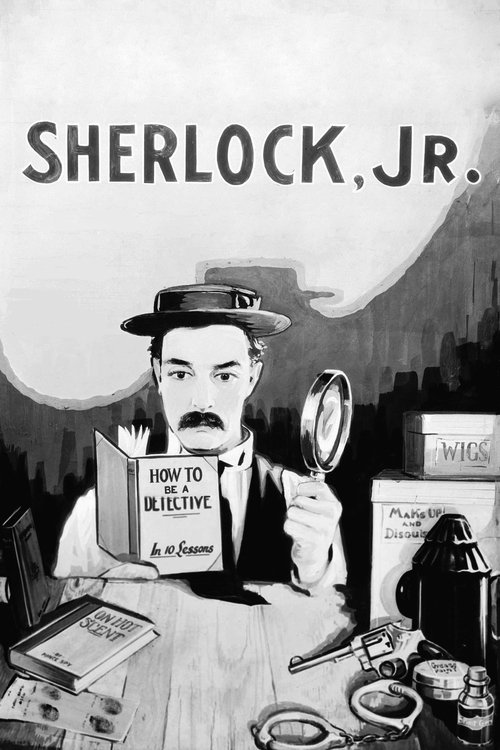
Most people know Buster Keaton as the guy who didn't smile, but I prefer to think of him as the guy who treated his own skeleton like a suggestion rather than a biological requirement. I recently revisited Sherlock Jr. on a rainy Tuesday afternoon while eating a bag of slightly stale pretzels I found in the back of my pantry, and I was struck by how much more "modern" it feels than almost anything hitting theaters today. At a lean 45 minutes, it’s a masterclass in economy, yet it contains more imagination than a three-hour superhero epic.
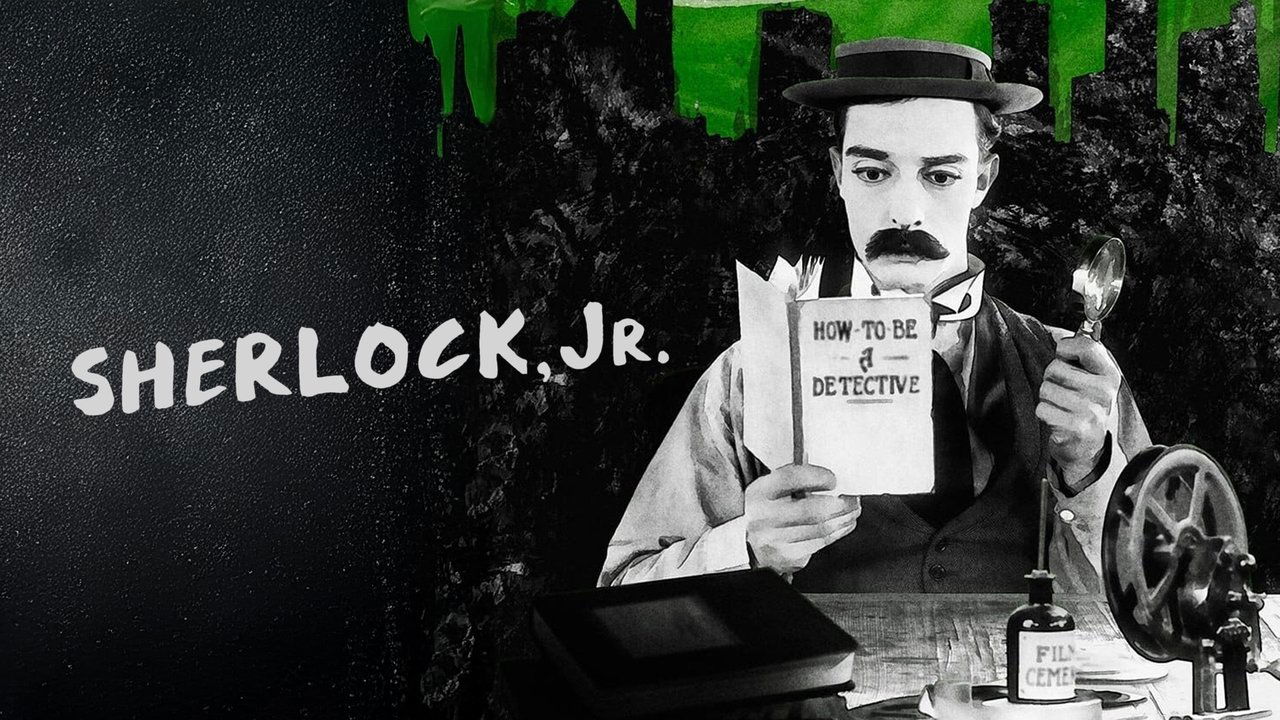
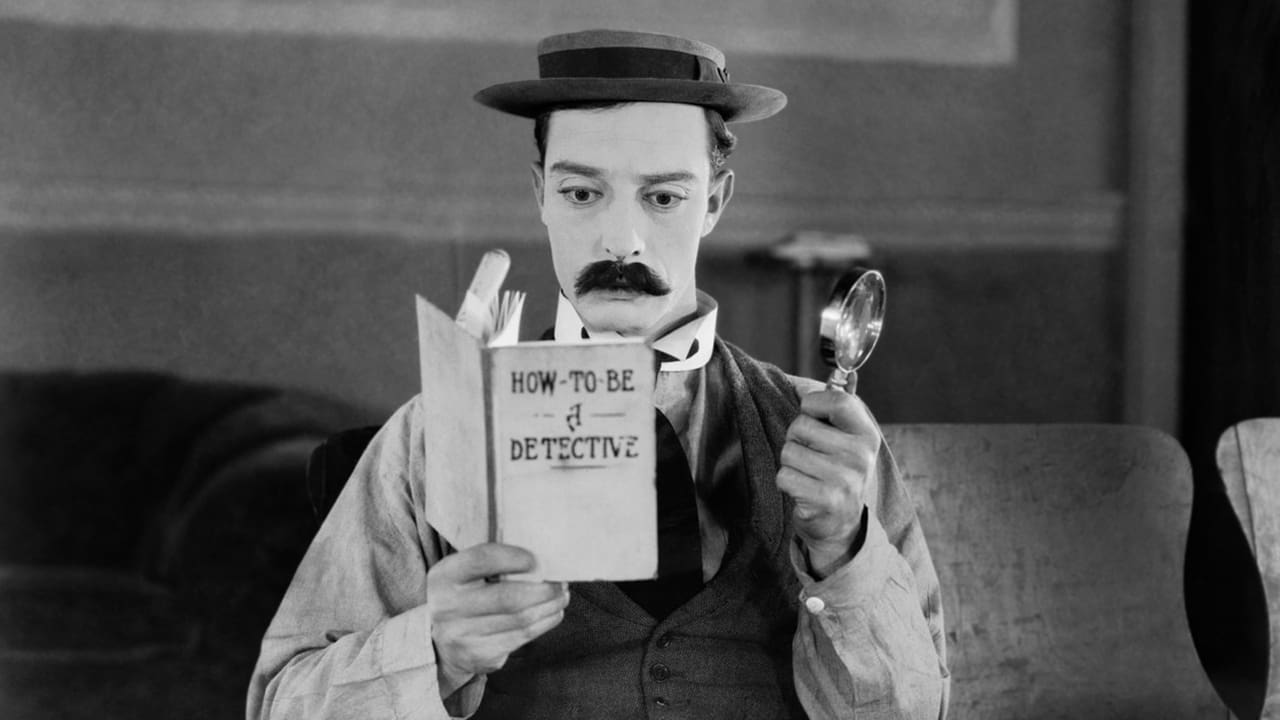
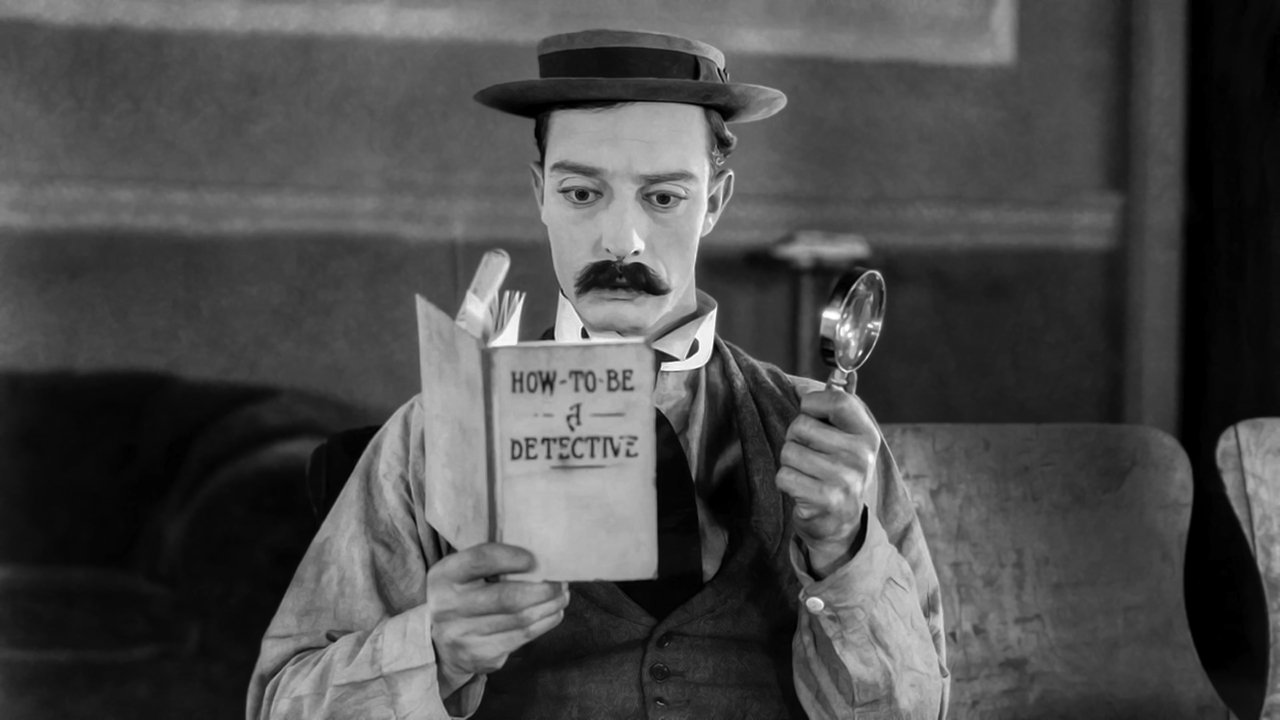
The setup is deceptively simple: Buster Keaton plays a lowly film projectionist and janitor who is studying to be a detective. He’s in love with "The Girl" (Kathryn McGuire), but he’s framed for stealing her father’s pocketwatch by a local cad (Ward Crane). Rejected and dejected, our hero returns to the projection booth, falls asleep, and his dream self literally walks off the job, down the aisle, and into the movie screen. What follows is quite possibly the most famous sequence in silent cinema—a sequence that essentially makes Christopher Nolan look like he’s playing with Duplo blocks.
The First Meta-Masterpiece
When Keaton’s character steps into the film-within-the-film, the "movie" starts changing its setting every few seconds. He tries to sit on a bench, but the scene cuts and suddenly he’s in the middle of a busy street. He tries to dive into the ocean, and he lands head-first in a snowdrift. This isn't just a funny bit; it was a technical nightmare to film in 1924. Keaton and his cinematographer, Elgin Lessley, had to use surveying instruments to ensure Buster was positioned in the exact same spot relative to the camera for every cut so the transition would be seamless.
Watching it now, the precision is staggering. There’s no CGI to smooth over the edges. It’s pure, obsessive craftsmanship. I’ve always felt that silent film stars were the original high-wire acts, but Keaton was the one who decided to do it while balancing a piano on his head. He understood that the camera wasn’t just a tool to record a play; it was a magic box that could subvert reality. In an era where "meta" humor is everywhere, Sherlock Jr. stands as the undisputed ancestor of everything from The Purple Rose of Cairo to Last Action Hero.
Stunts That Should Have Been Fatal
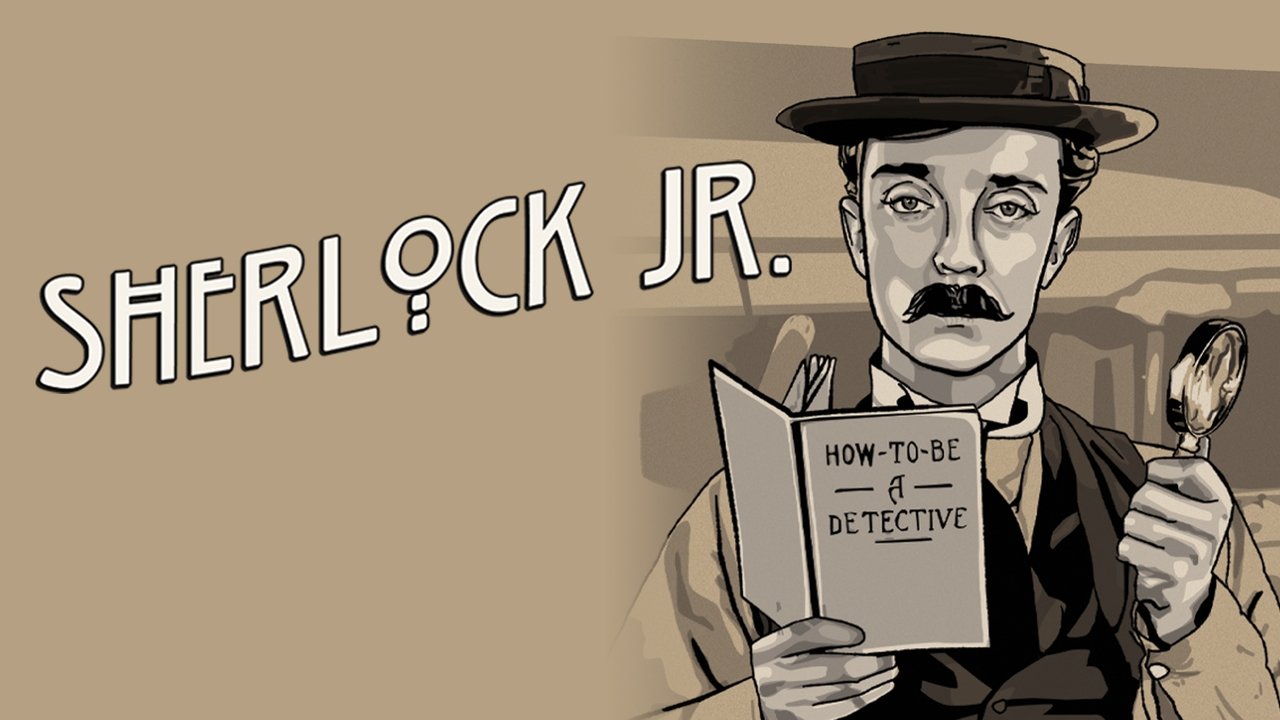
If the technical wizardry doesn't grab you, the action choreography will. The second half of the film is a relentless chase sequence that features some of the most dangerous practical stunts ever committed to celluloid. There is a moment where Keaton is riding on the handlebars of a motorcycle, unaware that the driver has fallen off. He zips through traffic, over broken bridges, and through a moving train—all performed at actual speed without a stunt double.
The most legendary bit involves a water tower. Keaton hangs from a spout, and a deluge of water slams him onto the tracks below. It looks painful because it was; Buster Keaton literally broke his neck during this shot and didn’t realize it for years. He just complained of a headache and kept filming the next day. That level of commitment to a gag is borderline psychotic, but it’s why the film has such incredible weight. When you see him nearly get decapitated by a train, you aren't looking at pixels—you’re looking at a man gambling with his life for a chuckle.
A Dream That Never Ages
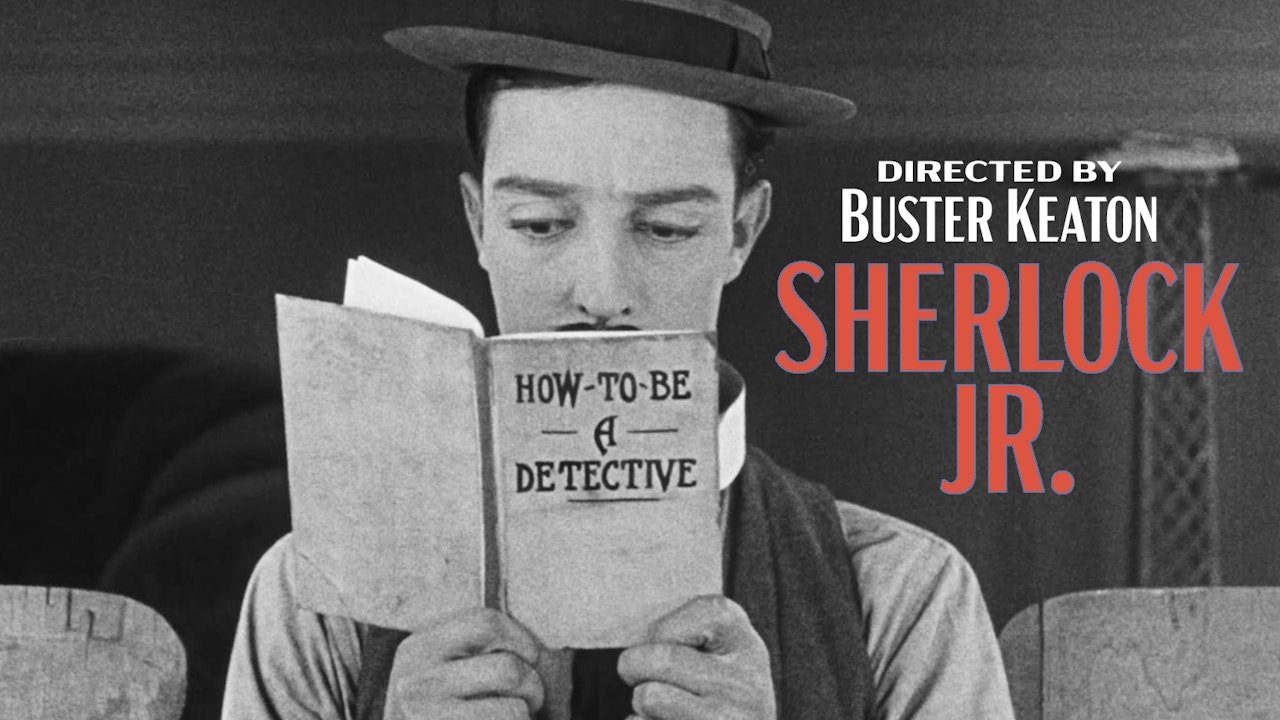
For a film that’s a century old, Sherlock Jr. doesn't feel like a museum piece. The comedy isn't "quaint"; it’s sharp, rhythmic, and incredibly visual. Even the supporting cast, like Joe Keaton (Buster’s real-life father) as the Girl’s Father and Erwin Connelly as the shifty hired man, play their roles with a physical commitment that transcends the lack of dialogue. The villain, played by Ward Crane, is a perfect foil—an oily, mustache-twirling personification of incompetence that makes Buster’s eventual (dream) victory all the sweeter.
The film serves as a beautiful tribute to the escapism of the cinema. We all go to the movies to be the "detective," the hero, or the lover we can't quite manage to be in our mundane lives. Keaton just took that feeling and turned it into a literal journey through the lens. It’s a film about the power of the image, the thrill of the chase, and the sheer audacity of a man willing to jump through a window to escape a villain.
If you have 45 minutes to spare, you owe it to yourself to see what a genius can do with a camera and a total lack of self-preservation. Sherlock Jr. isn't just a landmark of the silent era; it’s a reminder that movies used to be a daring, physical adventure. It’s the ultimate proof that you don't need a massive budget or synchronized sound to create something that feels truly alive. Go find a restored version—the clarity of the 1920s film stock is breathtaking—and witness the Great Stone Face at the height of his powers.
Keep Exploring...
-
The General
1926
-

The Circus
1928
-
The Gold Rush
1925
-

Midnight Run
1988
-
The Player
1992
-

Tangled Ever After
2012
-
Teen Titans Go! To the Movies
2018
-
Nimona
2023
-
Teenage Mutant Ninja Turtles: Mutant Mayhem
2023
-
Wake Up Dead Man: A Knives Out Mystery
2025
-
They Call Me Trinity
1970
-
Drunken Master
1978
-
The Legend of Drunken Master
1994
-
Who Am I?
1998
-
OSS 117: Cairo, Nest of Spies
2006
-
OSS 117: Lost in Rio
2009
-
Boruto: Naruto the Movie
2015
-
I Can Quit Whenever I Want 2: Masterclass
2017
-
I Can Quit Whenever I Want 3: Ad Honorem
2017
-
Riders of Justice
2020