The General
"One man. One locomotive. Zero safety nets."
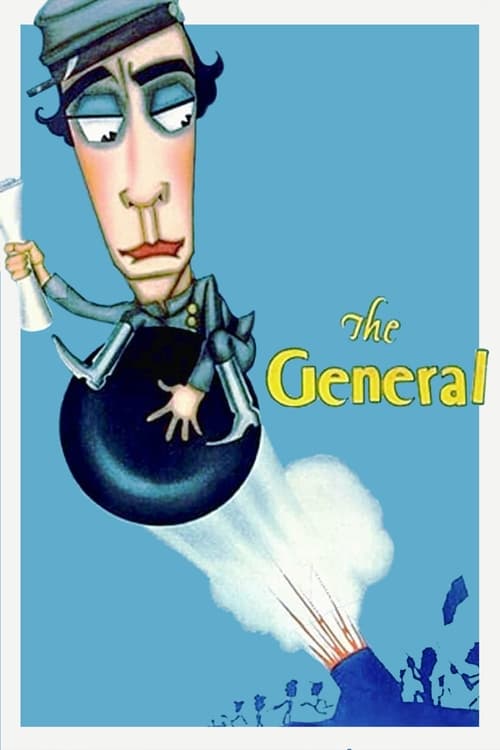
Imagine, for a second, that you are a film producer in 1926. A deadpan comedian with a penchant for porkpie hats walks into your office and says he wants to reenact a Civil War heist using actual 19th-century locomotives, hundreds of Oregon National Guardsmen as extras, and—for the grand finale—he wants to drop a real, massive steam engine off a burning bridge into a river. There are no computers. There is no "fixing it in post." There is only the terrifying reality of heavy metal meeting gravity. This isn't just a movie; it's an act of beautiful, high-speed insanity.
I watched this recently while sitting on a slightly damp porch swing, swatting away a persistent horsefly, and it struck me how Buster Keaton makes our modern CGI-heavy blockbusters look like they were filmed in a padded nursery. The General is often filed under "Comedy," but let’s be honest: it’s the blueprint for every high-octane chase movie from Mad Max: Fury Road to Mission: Impossible. It’s a relentless, rhythmic, and incredibly dangerous piece of clockwork filmmaking that happens to feature the funniest man to ever stare down a cannon.
Physics as Fine Art
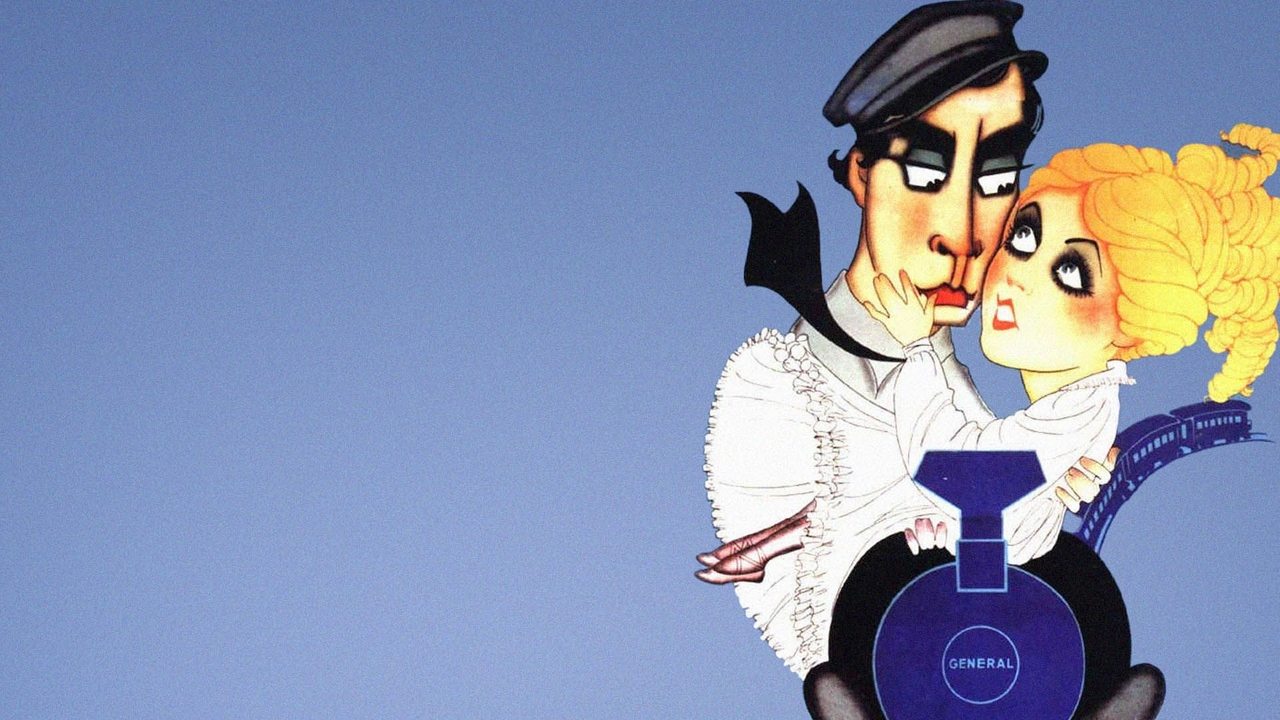
The plot is deceptively simple. Buster Keaton plays Johnnie Gray, a man with two loves: his locomotive (The General) and Annabelle Lee (Marion Mack). When Union spies steal the train with Annabelle aboard, Johnnie doesn't wait for orders. He gives chase. What follows is essentially one long, spectacular pursuit that moves north, then turns around and screams back south.
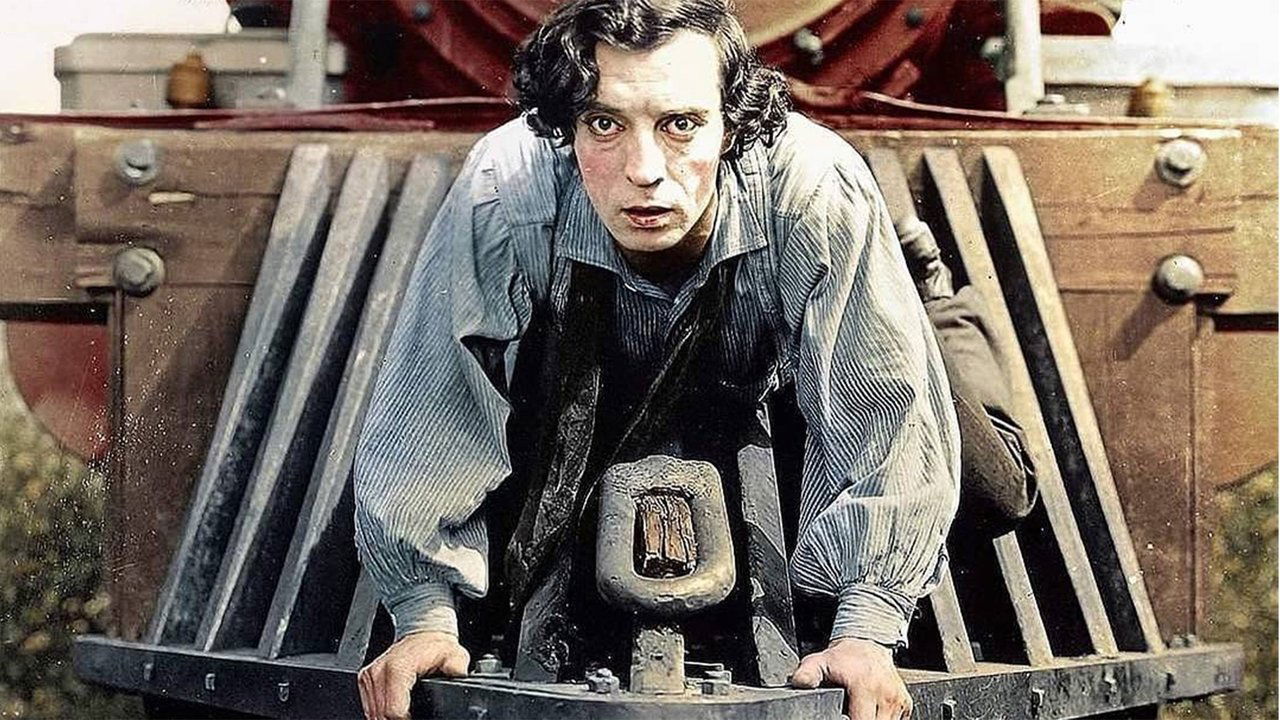
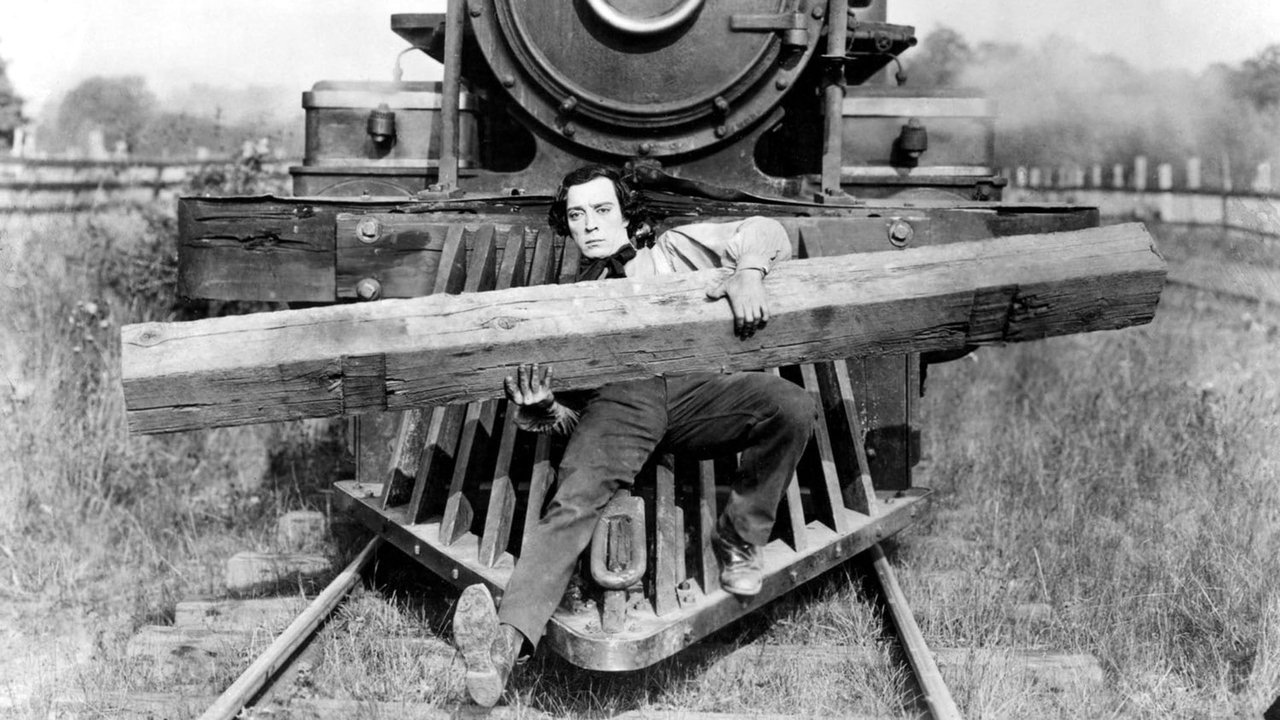
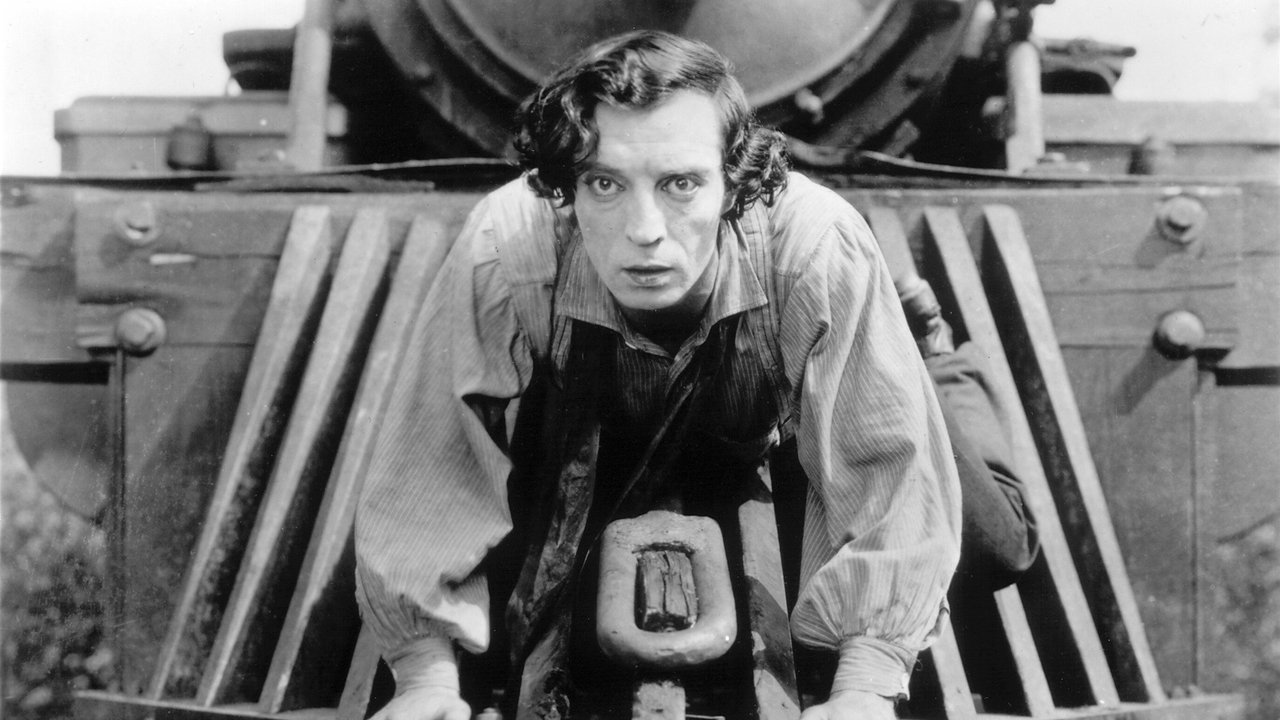
What makes the action work—and I mean really work even a century later—is the physical weight of everything. When Johnnie is sitting on the cowcatcher of the moving train, trying to dislodge a tie from the tracks by throwing another tie at it, you aren't watching a stuntman or a digital double. You are watching Keaton risk a very literal decapitation for the sake of a gag. The geometry of the stunts is breathtaking. There’s a sequence involving a massive cannon attached to a railcar that is so perfectly timed it feels like a mathematical proof. It’s not just "slapstick"; it’s a high-wire act where the wire is made of iron and moving at thirty miles per hour.
The Great Stone Face in a World of Iron
Buster Keaton was known as "The Great Stone Face" because he never cracked a smile. In the context of The General, this is his superpower. While the world around him is collapsing into the chaos of the Civil War, Johnnie remains singularly focused on his mechanical bride and his human one. His stoicism in the face of a literal retreating army—he’s so busy cleaning his engine he doesn't notice the entire war moving past him in the background—is one of the most clever ways to blend character with world-building I’ve ever seen.
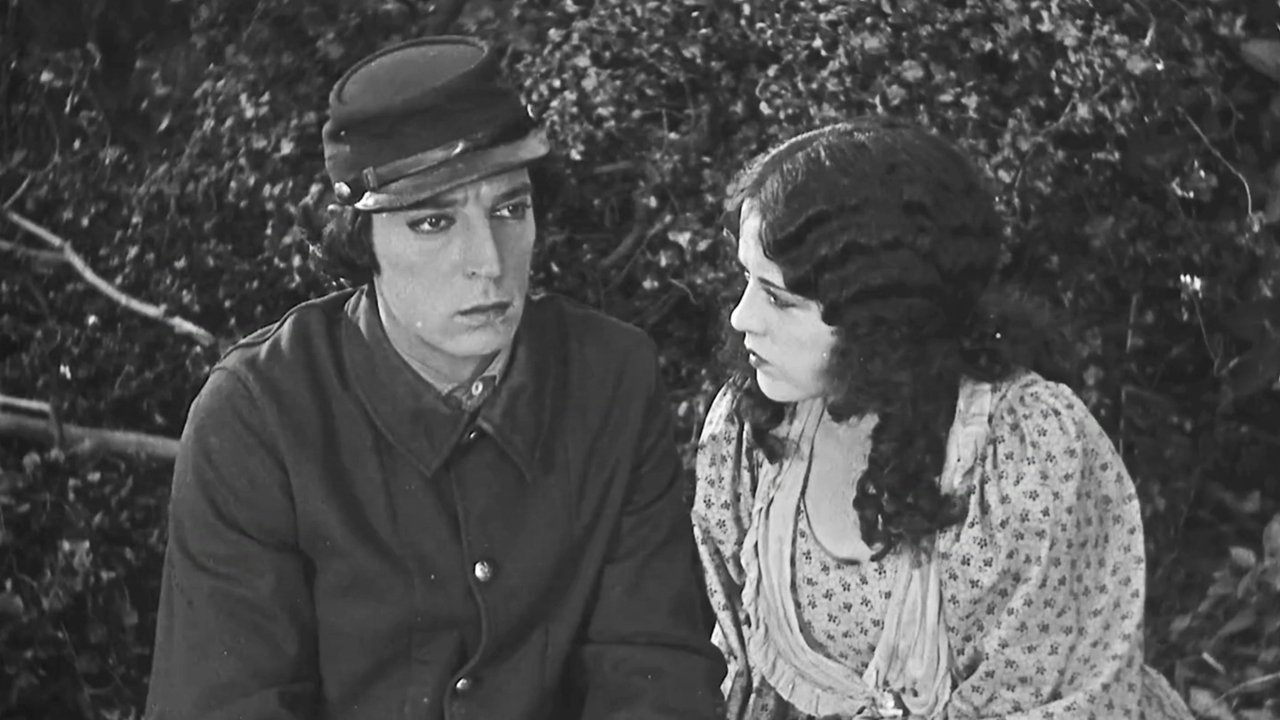
Marion Mack deserves a shout-out here, too. She isn't just a damsel in distress; she becomes an accidental accomplice to the chaos. There’s a moment where she tries to "help" by sweeping the floor of the locomotive or putting a tiny piece of wood in the massive furnace, and Johnnie’s brief, silent moment of "are you kidding me?" frustration is the closest he ever gets to losing his cool. It’s a grounded, relatable human beat in the middle of a film that is otherwise about massive machinery.
The Most Expensive "Oops" in Cinema
Keaton was a perfectionist who operated with the kind of creative freedom that would make a modern studio executive faint. For the climactic bridge collapse, he didn't use a miniature. He built a real bridge over the Culpich River in Oregon and ran a real locomotive over it as it burned. It cost $42,000 in 1926 money—the most expensive single shot in silent film history. The town nearby even declared a holiday so everyone could go watch the crash.
The production was a series of "how did they do that?" moments. Keaton and his co-director Clyde Bruckman basically lived on the tracks for months. They didn't have safety unions; they had grit. When you see the smoke, the fire, and the authentic period costumes, you’re seeing a level of independent ambition that rarely exists today. It actually lost money upon its initial release because audiences at the time weren't sure what to make of a "comedy" that looked this realistic and took the war this seriously. Today, it feels like a gift from a more daring era of storytelling.
Turns out, the engine they crashed stayed in that river for nearly twenty years, becoming a local tourist attraction until it was finally scrapped for metal during World War II. It’s a fittingly grand end for a piece of a movie that refused to do anything halfway.
The General is a miracle of celluloid. It’s a film that demands your attention not because it’s a "historical classic" you're supposed to respect, but because it is genuinely, thrillingly alive. If you think silent movies are just grainy footage of people running around in fast-forward, this will change your mind in the first ten minutes. It’s a masterclass in pacing, a triumph of practical effects, and a reminder that sometimes, all you need for a great story is a man, a mission, and several tons of runaway steel.
Stuff You Didn't Notice
- The "Union" and "Confederate" soldiers were often the same group of Oregon National Guardsmen; they just kept swapping uniforms depending on which way the train was heading. - Buster Keaton actually knocked himself unconscious during the scene where the water tank douses him. - The film was shot on "orthochromatic" film stock, which gives it that distinct, high-contrast, almost newsreel-like look that makes the historical setting feel remarkably authentic.
Keep Exploring...
-
Sherlock Jr.
1924
-
The Gold Rush
1925
-

City Lights
1931
-
It Happened One Night
1934
-
Bringing Up Baby
1938
-

Lady and the Tramp
1955
-
Romancing the Stone
1984
-
Swiss Army Man
2016
-
Big Trouble in Little China
1986
-
The Princess Bride
1987
-
Lethal Weapon 2
1989
-
A Goofy Movie
1995
-
Grosse Pointe Blank
1997
-
Hercules
1997
-
Men in Black
1997
-
Shrek 2
2004
-
Kung Fu Panda
2008
-
Scott Pilgrim vs. the World
2010
-
Big Hero 6
2014
-
How to Train Your Dragon 2
2014