Sunrise: A Song of Two Humans
"A symphony of shadows and a redemption of souls."
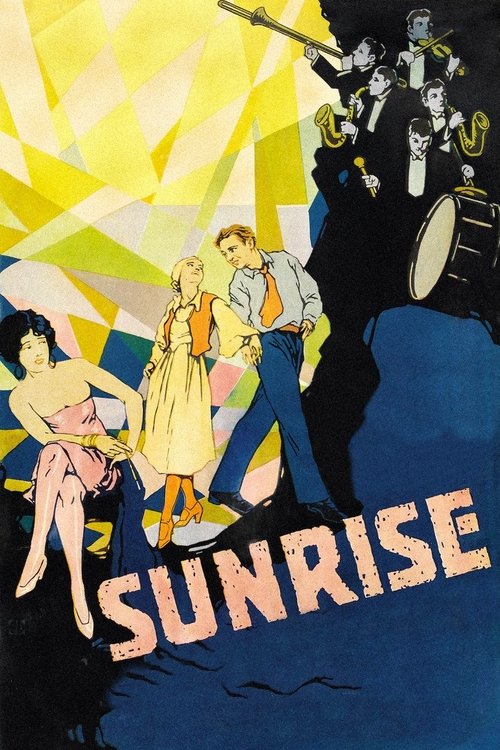
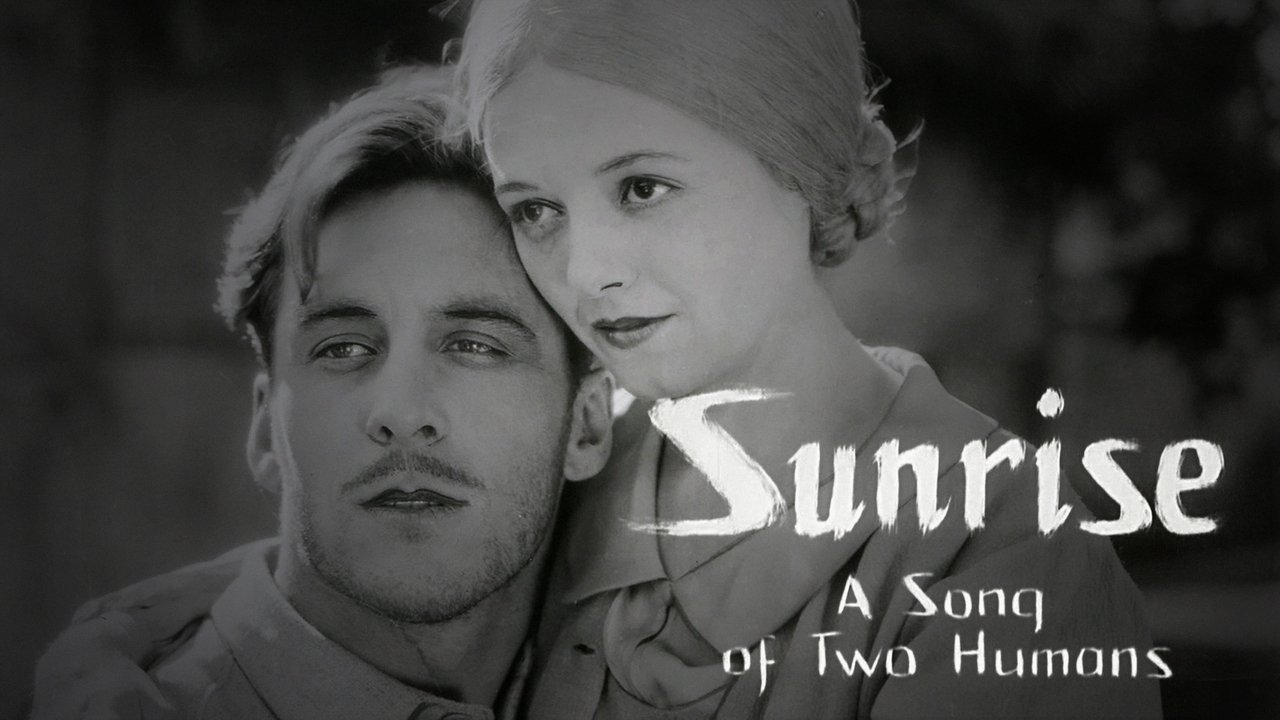
The very first title card of Sunrise: A Song of Two Humans tells us that this story is of "no place and every place." It’s a bold, slightly pretentious claim for a movie made in 1927, but within ten minutes, you realize F.W. Murnau wasn't kidding. He wasn't just making a movie; he was trying to build a universal visual language. I watched this on a Tuesday afternoon while my neighbor was aggressively leaf-blowing outside, and yet, the moment the screen flickered to life, the roar of the modern world just... evaporated. There is a gravity to this film that pulls you in and refuses to let go.
The Unchained Camera
Before Sunrise, cameras were largely static beasts, bolted to the floor like heavy furniture. But Murnau, fresh from the German Expressionist movement, brought a different philosophy to the Fox Film Corporation. He wanted the camera to breathe. In the famous marsh sequence, where The Man (George O'Brien) sneaks out to meet the Woman from the City (Margaret Livingston), the camera follows him through the reeds with a predatory, gliding grace.
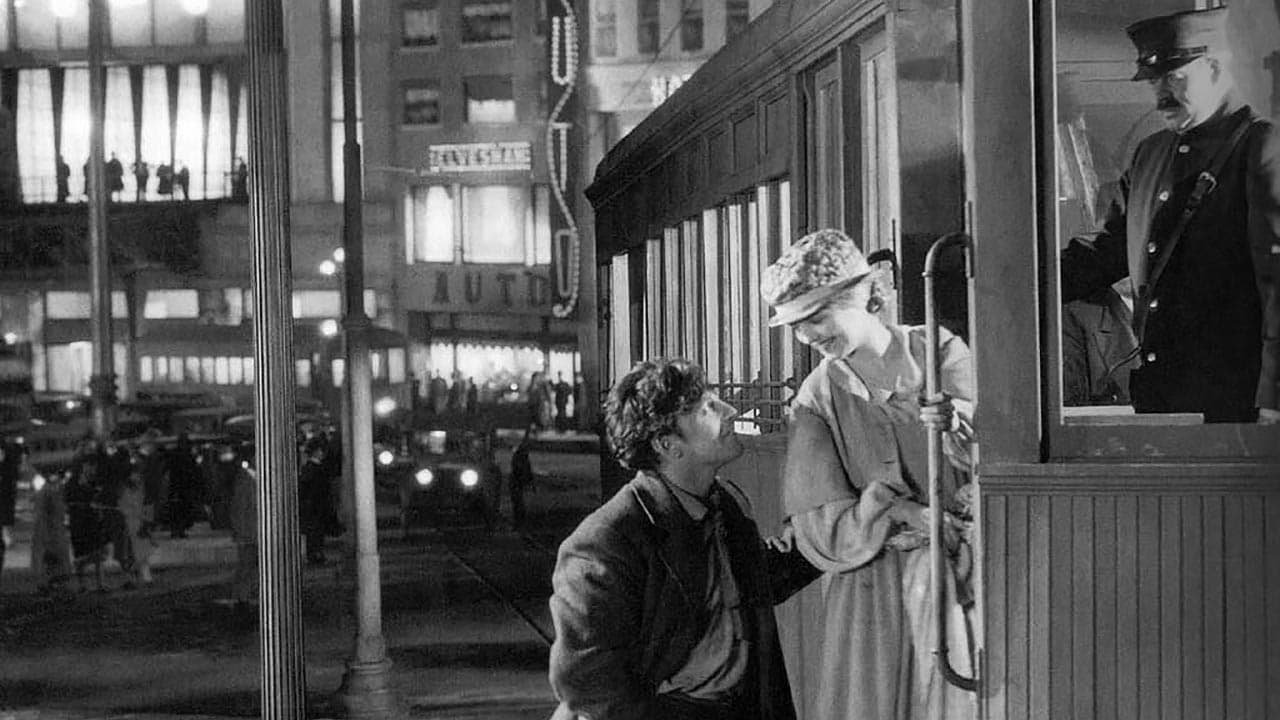
It’s hard to overstate how revolutionary this was. There were no drones, no Steadicams, just massive wooden boxes on makeshift tracks, yet the movement feels more fluid than half of what we see in modern CGI-heavy blockbusters. Murnau literally built a city on the Fox backlot—a sprawling, distorted metropolis with forced perspective to make it look miles deep—just so his camera could roam through it. It’s a technical flex that still feels modern because it serves the emotion. When the camera moves, it’s because the characters' hearts are racing.
A Masterclass in Physicality
Because there’s no spoken dialogue, the performances rely entirely on the body. George O'Brien starts the film looking like a different species. He’s slumped, his shoulders are heavy with the weight of a murderous secret, and the Man moves like a Frankenstein monster who just discovered guilt. He is terrifying and pathetic all at once. Contrast that with Janet Gaynor as The Wife, whose face is a roadmap of quiet heartbreak. It’s no wonder she took home the first-ever Academy Award for Best Actress for this role; she manages to be the film’s moral center without ever feeling like a boring "damsel."
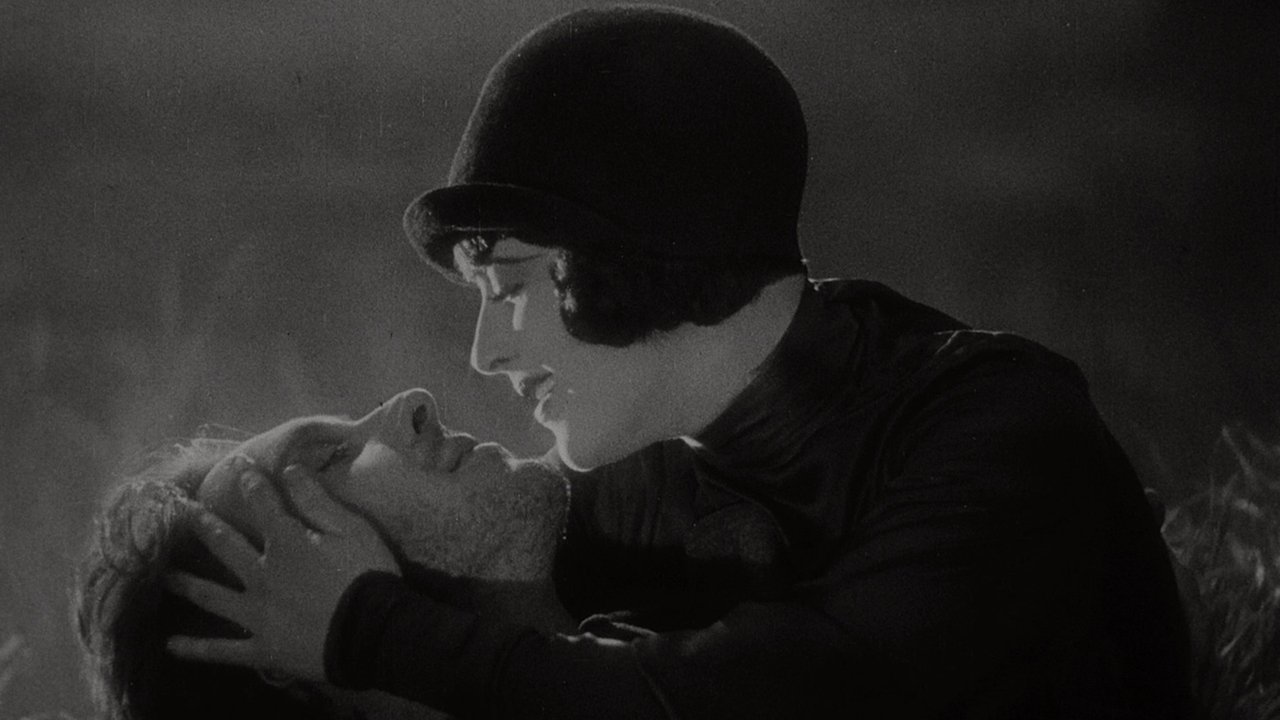
Then there’s Margaret Livingston, the catalyst for all the chaos. She represents the "temptation" of the city, and she plays it with a slinky, jazz-age venom. To be honest, the City Woman’s dress looks like it was woven out of pure, unadulterated bad decisions, and her seductive dance in the marsh is one of the most effective "femme fatale" moments in cinema history. She isn't just a person; she’s the personification of the glittering, hollow lure of the modern world.
The Philosophy of the Ordinary
At its core, Sunrise is a psychological thriller that transforms into a romantic poem. The first half is suffocatingly dark—a story about a man contemplating the unthinkable. But once the setting shifts to the city, the film undergoes a radical tonal shift. It becomes a celebration of life’s small, redundant joys: a haircut, a melting ice cream cone, a photo booth session.
Murnau is exploring the idea of grace—the notion that even someone who has fallen to the absolute bottom of their own soul can find a way back through simple, human connection. The "cerebral" part of the film isn't tucked away in a complex script; it’s right there in the lighting. The way the shadows of the swamp give way to the blinding, neon light of the city, and eventually the soft, natural dawn of the finale, tells the entire philosophical arc. It’s a movie that trusts you to feel the themes rather than read them.
Why This "Old Movie" Matters
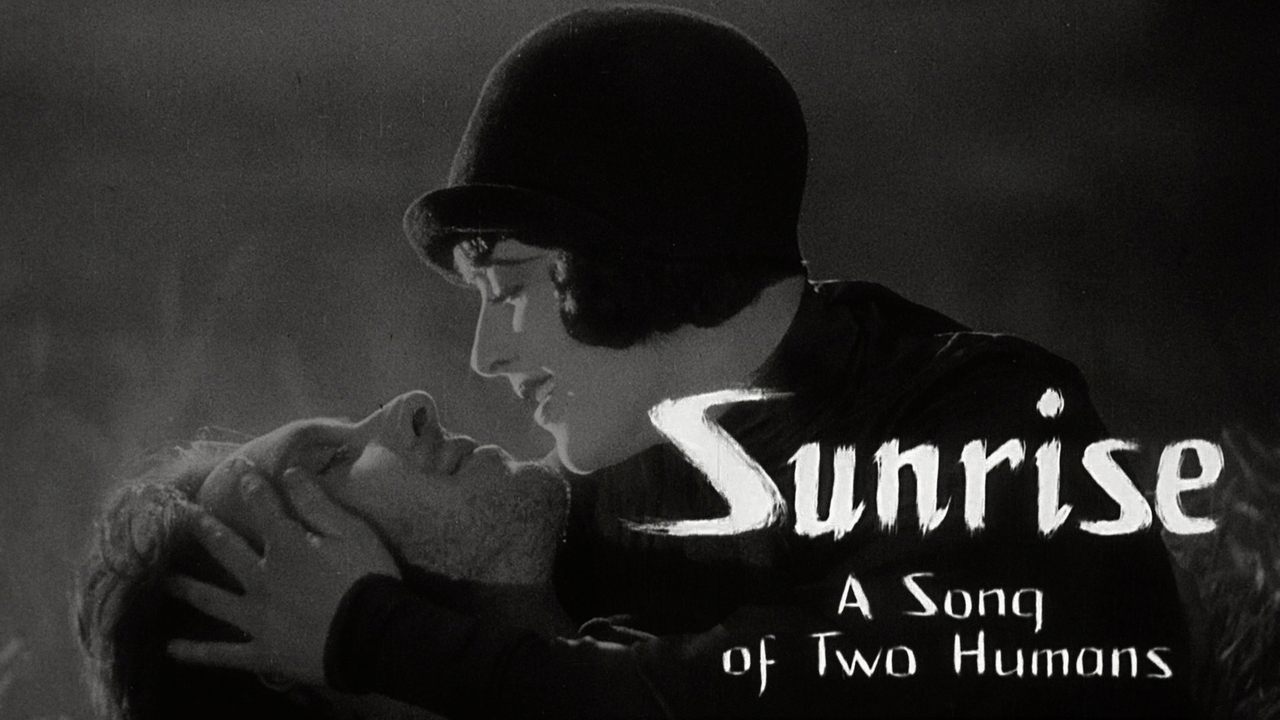
For years, Sunrise lived in the shadow of the transition to sound. It was released just as The Jazz Singer was blowing the doors off the silent era, making Murnau’s masterpiece feel like an "antique" almost immediately. We are incredibly lucky it survives at all; a fire at the Fox vault in 1937 destroyed the original negative, and for a long time, we only had lower-quality prints. The restored versions we have today are a miracle of preservation, allowing us to see the grain of the film and the shimmer of the water as it was intended.
It’s easy to dismiss silent films as quaint or "slow," but Sunrise moves with a relentless pace. It understands that human emotion is loud, even when the screen is quiet. Whether it’s the terrifying tension of a boat ride or the slapstick comedy of a runaway pig in a fancy restaurant, Murnau hits every note on the emotional keyboard. It’s a reminder that at the dawn of the medium, filmmakers were already doing things we’re still trying to perfect a century later.
If you think you don't like silent movies, this is the one that will prove you wrong. It is a hauntingly beautiful, deeply strange, and ultimately hopeful piece of art that bridges the gap between the 1920s and today. It doesn't just hold up; it stands over most modern dramas like a giant. Put your phone in the other room, turn off the lights, and let the shadows tell you a story. You won't regret the 94 minutes.

Keep Exploring...
-

The Circus
1928
-

City Lights
1931
-
Modern Times
1936
-

The Passion of Joan of Arc
1928
-
Sabrina
1954
-

The Hustler
1961
-
Harold and Maude
1971
-

All Quiet on the Western Front
1930
-
Dracula
1931
-
Frankenstein
1931
-
Metropolis
1927
-
Gone with the Wind
1939
-
Hiroshima Mon Amour
1959
-
Jules and Jim
1962
-
La Jetée
1962
-

Three Colors: Red
1994
-
A Dog's Will
2000
-

Millennium Actress
2002
-
Talk to Her
2002
-

My Name Is Khan
2010