The Invisible Man
"Evil is closer than it appears."
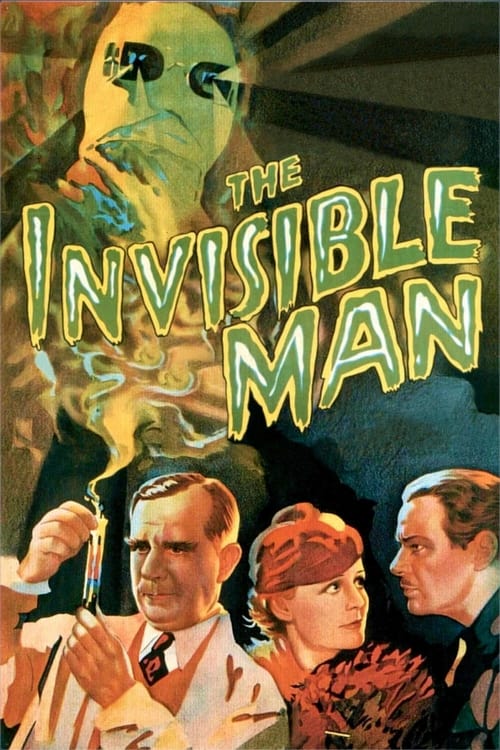
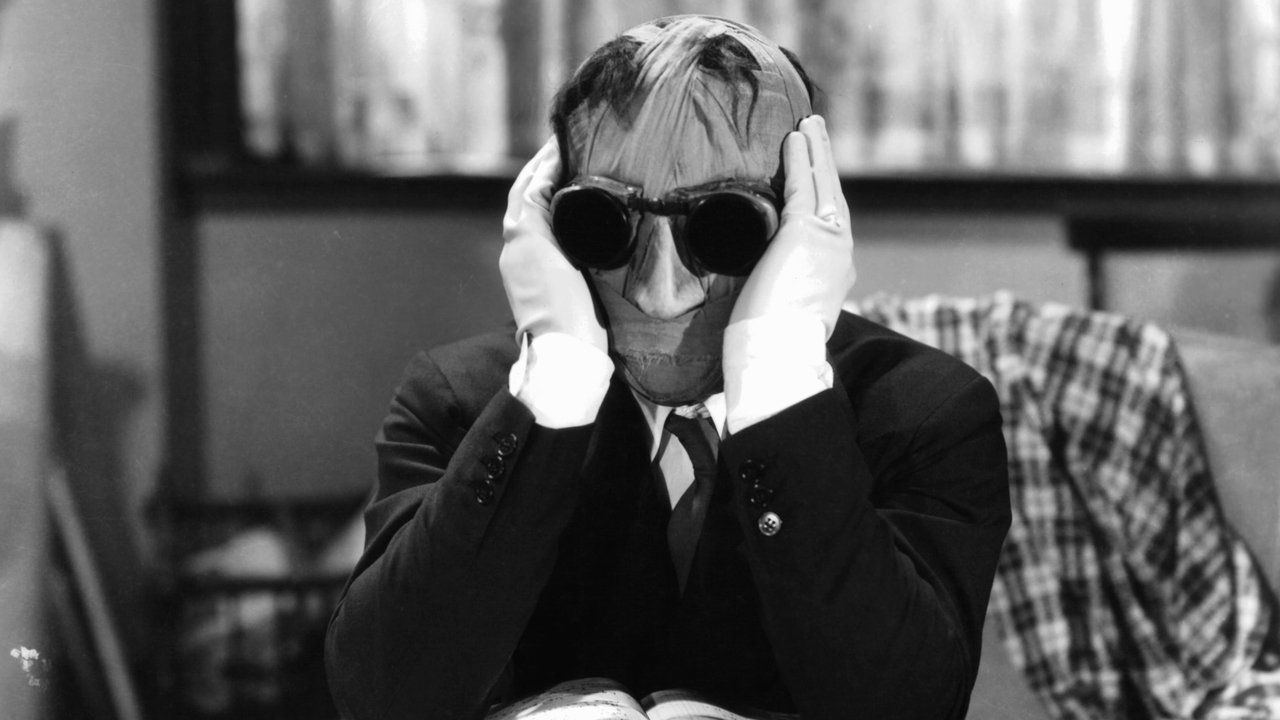
Imagine being a studio executive in 1933 and hearing a pitch for a big-budget horror film where the leading man’s face is hidden behind bandages for 70 minutes and only appears on screen for a few seconds before the credits roll. It sounds like a career-ending gamble, but for Universal Pictures and director James Whale, it became a masterclass in how to build a movie around a void. I watched this last Tuesday while trying to peel a particularly stubborn orange, eventually giving up and just biting into the rind because the sight of a pair of empty trousers skip-roping down a country lane was so strangely hypnotic I lost all my fine motor skills.
The Voice in the Void
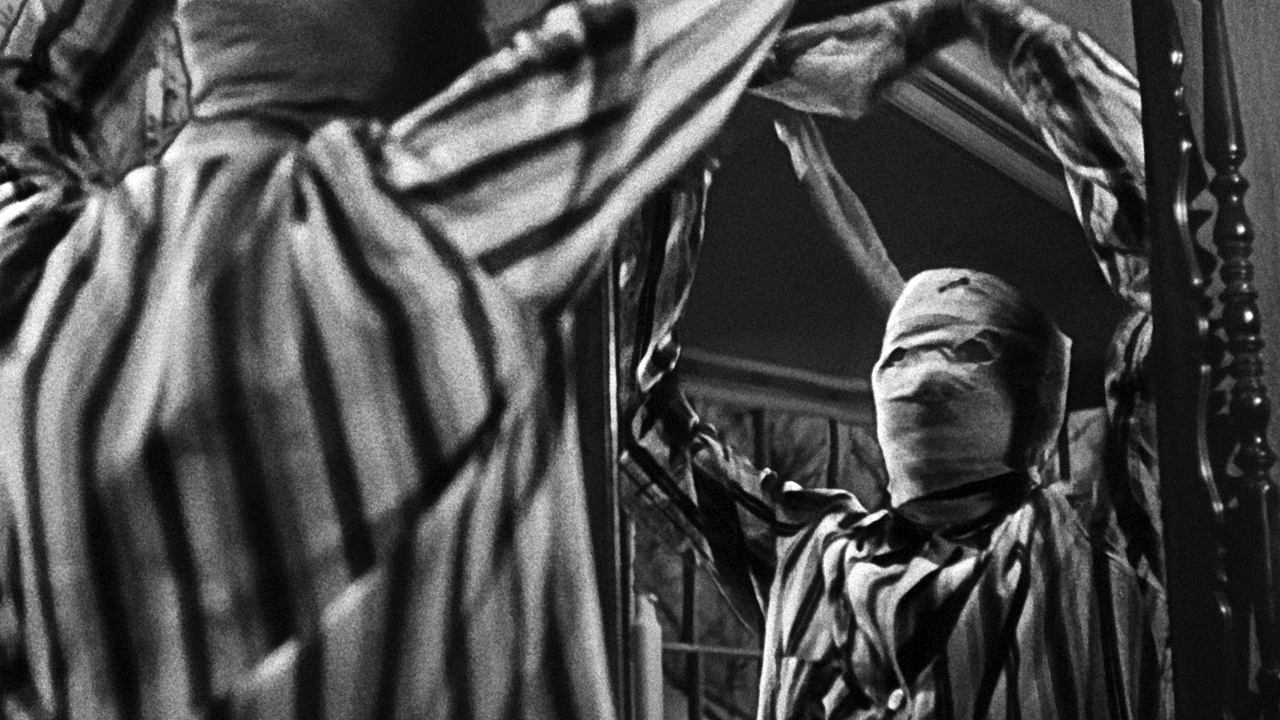
When we talk about the legendary Universal Monsters, Claude Rains’ Dr. Jack Griffin often gets overshadowed by the heavy hitters like Dracula or the Frankenstein Monster. That’s a mistake. While the others rely on heavy prosthetics and physical presence, Rains has to conquer the screen using nothing but a velvet-drenched baritone and some very expressive gesturing. It was his film debut, and the fact that he commands the frame while being literally invisible is a feat of pure theatricality.
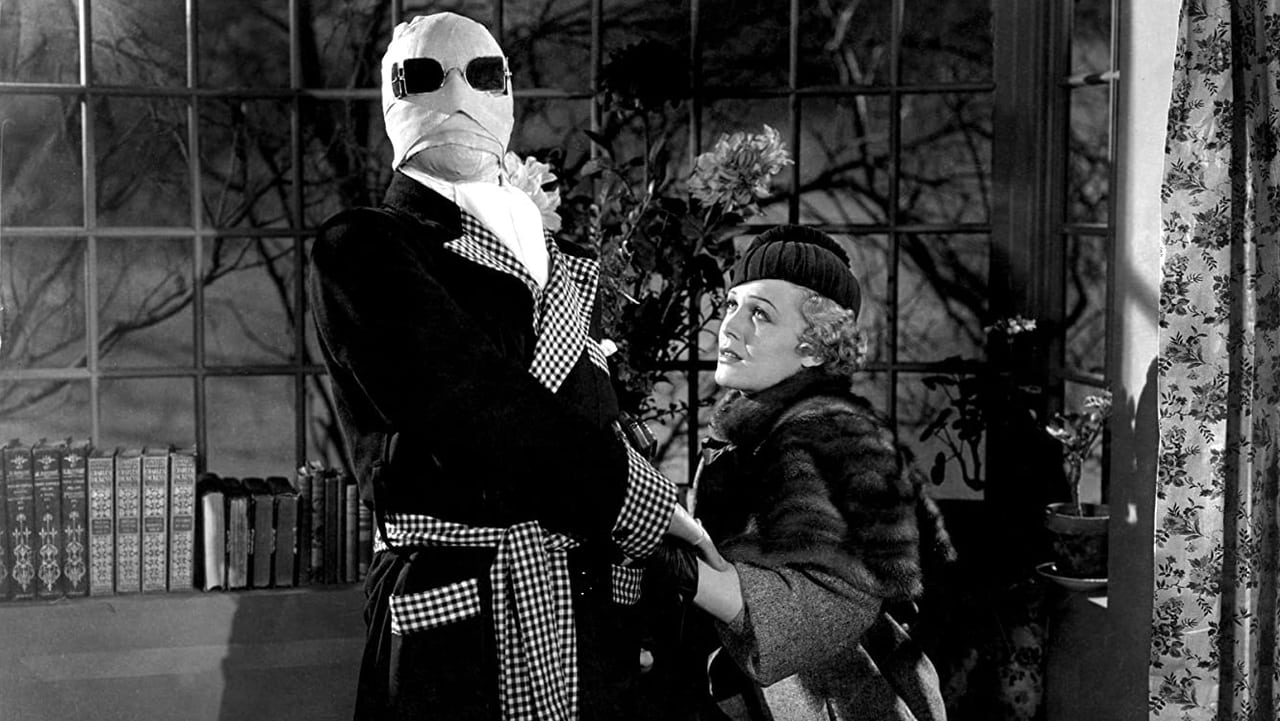
Griffin isn’t a misunderstood tragic figure in the vein of Boris Karloff’s creature. From the moment he arrives at the Lion and Lamb Inn during a snowstorm, swathed in bandages and goggles, he’s a powder keg of arrogance and irritability. Once the drug "monocaine" takes hold of his sanity, he transitions from a frustrated scientist into a full-blown homicidal megalomaniac. Claude Rains plays the descent into madness with a gleeful, terrifying energy. His laugh—a high-pitched, mocking cackle—is the sound of a man who has realized that if nobody can see him, no moral law can touch him. It’s a dark, nihilistic take on power that feels uncomfortably modern.
Technical Sorcery of the 1930s
Even ninety years later, the special effects in The Invisible Man are nothing short of miraculous. There’s a specific kind of "how did they do that?" wonder that modern CGI simply can’t replicate. Effects pioneer John P. Fulton achieved the invisibility sequences by filming Rains in a suit of black velvet against a black velvet background, then meticulously compositing that footage over the background plates.
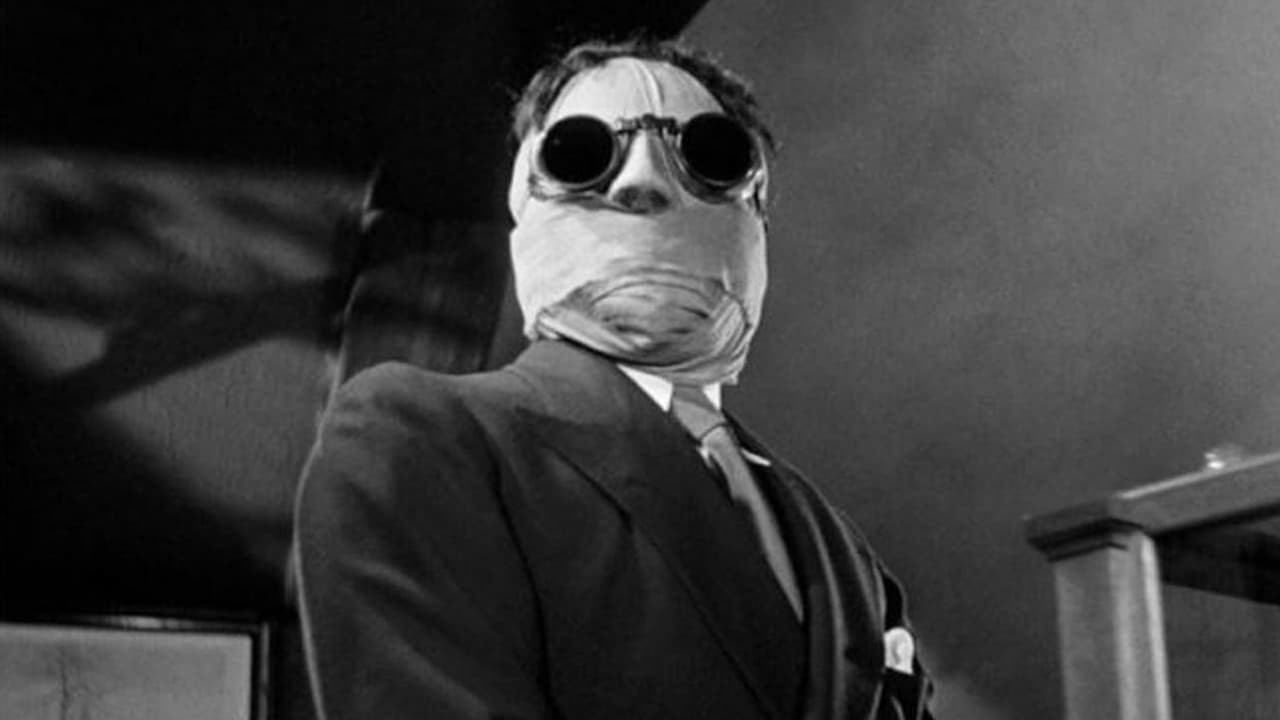
The scene where Griffin unrolls the bandages to reveal… absolutely nothing… is still a showstopper. There’s no digital blurring or jittery pixels here; it’s a crisp, physical impossibility. When he starts throwing furniture or dodging the bumbling village police, the wires are nearly impossible to spot. James Whale treats the camera like a participant in the chaos, allowing the "unseen" protagonist to manipulate the environment in ways that must have felt like genuine sorcery to audiences in 1933. The special effects budget was clearly spent on making a man disappear, leaving the local constabulary to look like they’ve been outsmarted by a very angry coat rack.
The Whale Touch: Horror with a Wink
James Whale, who had already redefined the genre with Frankenstein (1931), brings a very specific, dark British wit to the proceedings. He understands that horror is often most effective when it’s punctuated by absurdity. The film is populated by a gallery of eccentric village archetypes, most notably the screeching, incomparable Una O'Connor as the innkeeper’s wife. Her high-decibel hysterics provide a chaotic counterpoint to Griffin’s cold, calculating violence.
But don’t let the eccentric villagers fool you; the film is surprisingly brutal. Griffin isn't just playing pranks; he's derailing trains and pushing people off cliffs. There is a weight to the violence that many early talkies shied away from. Whale balances this intensity with a visual flair that borrows heavily from German Expressionism—lots of sharp angles, deep shadows, and a sense of impending doom that hangs over the snowy English countryside. The pacing is so relentless that the 71-minute runtime feels like a panicked sprint through a nightmare.
A Legacy in the Shadows
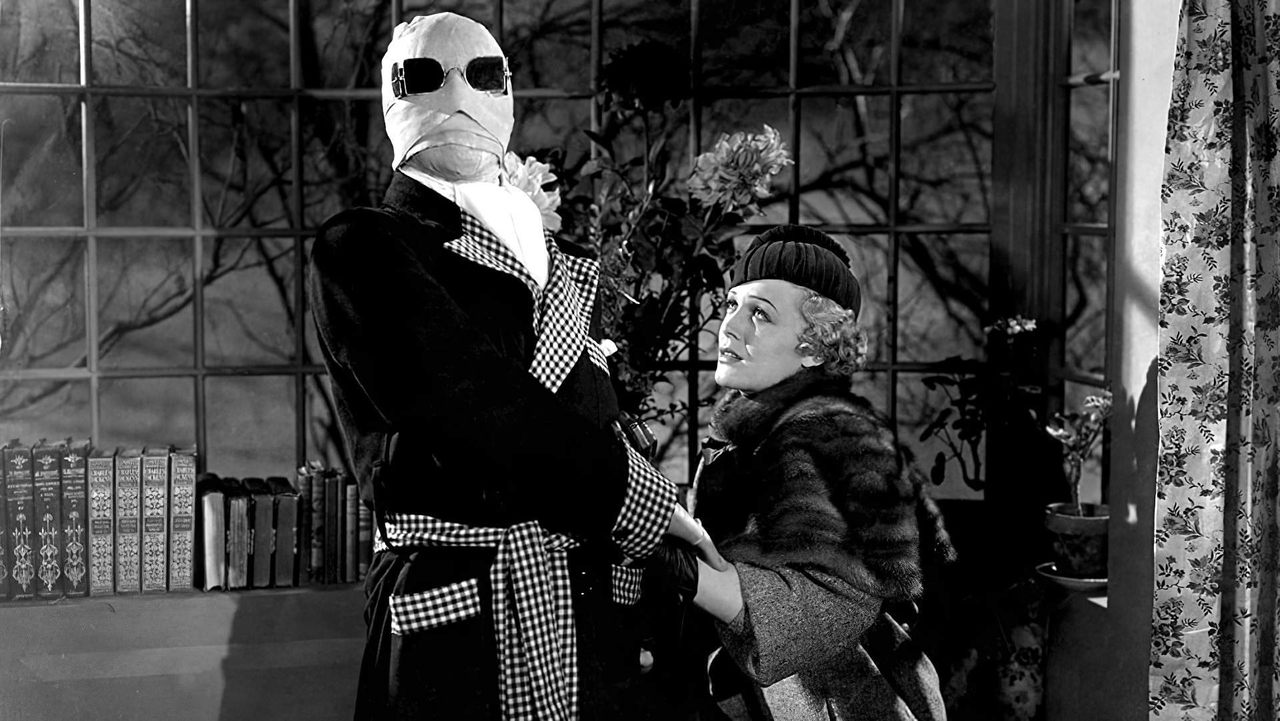
While Gloria Stuart (who many will recognize as the elderly Rose from Titanic) does her best as the concerned love interest, Flora, the heart of the film is the toxic relationship between Griffin and his former colleague, William Harrigan as Dr. Kemp. The scene where an invisible Griffin corners Kemp in his own home is a masterclass in tension. It turns the domestic space into a trap, proving that the most frightening monster isn't the one under the bed, but the one sitting right next to you that you can’t even see.
The Invisible Man remains a cornerstone of science fiction and horror because it refuses to offer easy comfort. It’s a story about the total erosion of the human soul under the influence of absolute anonymity. In an era where we often hide behind digital masks, Griffin’s tirades about "ruling the world" from behind a curtain of invisibility feel more like a prophecy than a period piece. It’s a lean, mean, and technically dazzling achievement that proves you don't need to see the monster's face to feel its teeth.
The film concludes with one of the most poignant shots in horror history, as the snow begins to fall and the consequences of Griffin's ambition finally catch up to him. It’s a reminder that even the most brilliant mind can’t outrun its own shadow, especially when that shadow is all that's left of you. If you haven't revisited this corner of the Universal vault lately, do yourself a favor and seek it out—just keep an eye on your furniture.
Keep Exploring...
-
Bride of Frankenstein
1935
-
Frankenstein
1931
-
Dracula
1931
-
Freaks
1932
-
King Kong
1933
-

Un Chien Andalou
1929
-
The Dead Zone
1983
-
All Quiet on the Western Front
1930
-
Shin Godzilla
2016
-

#Alive
2020
-
The Cabinet of Dr. Caligari
1920
-

Invasion of the Body Snatchers
1956
-
The Rocky Horror Picture Show
1975
-

Invasion of the Body Snatchers
1978
-
The 39 Steps
1935
-
The Lady Vanishes
1938
-
Nosferatu
1922
-
Godzilla
1954
-
Dawn of the Dead
1978
-
Alien
1979