Bambi
"Nature's beauty hides a heart of steel."
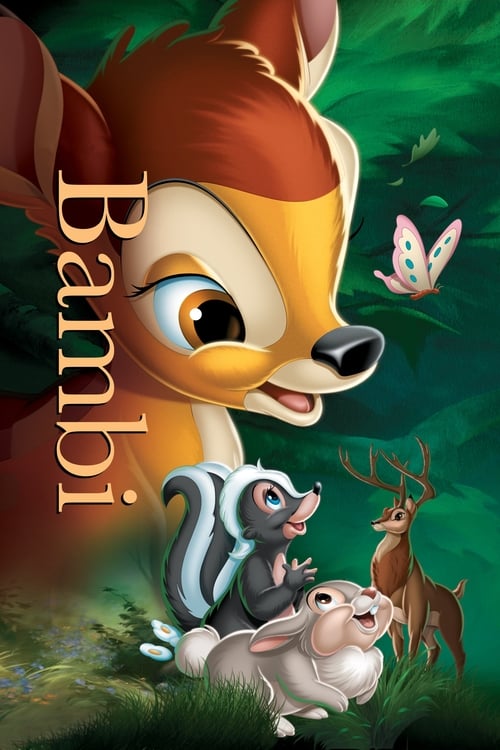
The first time I really saw the forest in Walt Disney’s Bambi, I wasn’t looking at the deer. I was looking at the way the light filtered through the trees—not as a crisp drawing, but as a hazy, atmospheric wash of color that felt like a half-remembered dream. Most people remember this movie for the trauma (we’ll get to that), but for me, it’s always been about the silence. It’s a film that trusts the rustle of leaves and the rhythm of a raindrop more than it trusts a script. I watched this again yesterday while sitting on a slightly damp sofa because I’d spilled a glass of water ten minutes earlier, and that cold patch on my leg felt strangely appropriate for a movie that doesn't shy away from the harsh chill of survival.

The Impressionist Wilderness
By 1942, Walt Disney was already a titan, but his studio was bleeding money. Pinocchio and Fantasia hadn’t performed the way he’d hoped, and the world was currently on fire with World War II. Bambi was a gamble on realism. To get the movement right, Disney brought live fawns into the studio, essentially turning the animation floor into a petting zoo so the artists could study the twitch of a nose or the spindly uncertainty of a leg.
But the real secret weapon was Tyrus Wong, a Chinese-American lead artist who threw out the hyper-detailed, busy backgrounds of Snow White in favor of something more poetic. Wong’s style was impressionistic; he focused on the feeling of a forest rather than every individual blade of grass. It’s why the movie feels so expansive despite its 69-minute runtime. When the Great Prince of the Forest—Bambi’s distant, stoic father—appears on a rocky crag, the background fades into a misty blue. It’s pure drama, stripping away the clutter to focus on the weight of a legacy. Honestly, Bambi’s dad is the ultimate deadbeat forest god, showing up once a season just to look majestic and offer a cryptic warning before disappearing back into the fog.
The Anatomy of a Heartbreak
We have to talk about "The Meadow." It’s the sequence that defined childhood for generations of kids and probably single-handedly funded the therapy industry for decades. But as a seasoned viewer, I’m struck by the directorial restraint shown by David Hand. We don't see the hunter. We don't see the impact. We only see the frantic scramble of a mother trying to save her child, and then, the silence of the falling snow.
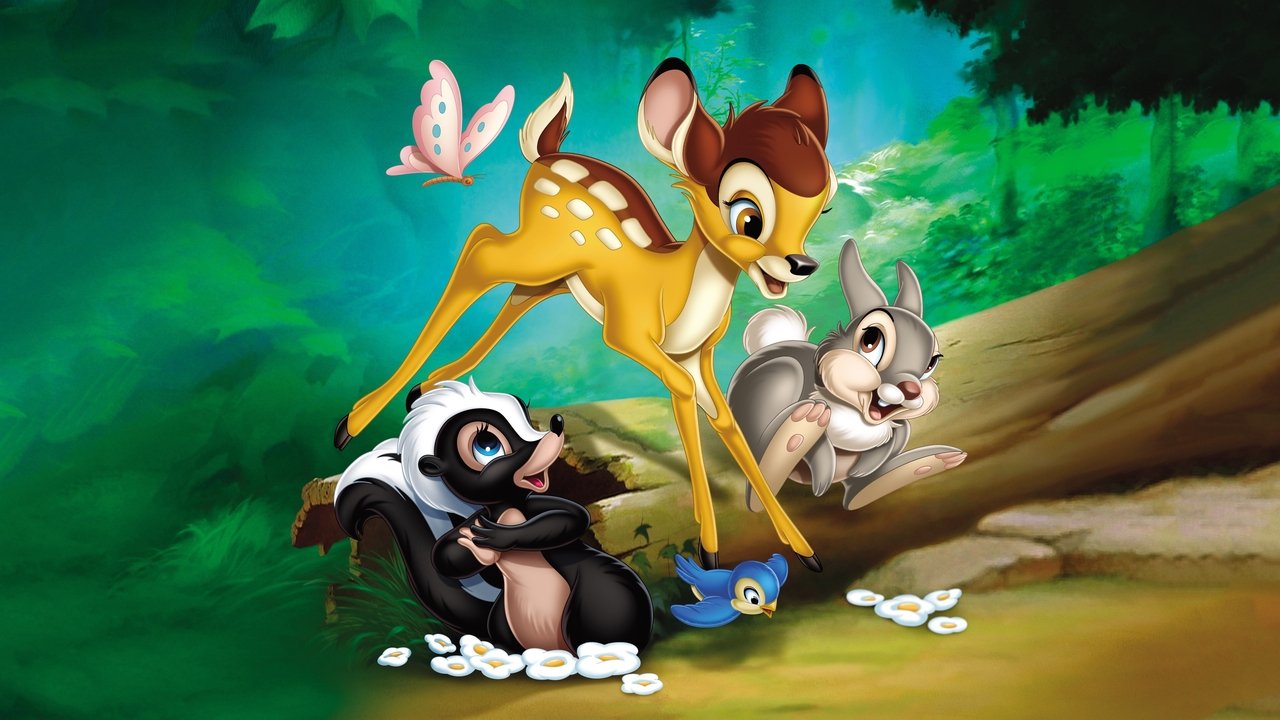
This is where Bambi separates itself from the "Family" genre and plants its feet firmly in "Drama." It’s a film about the transition from the protected circle of a mother’s warmth to the cold reality of independence. The voice of young Bambi, provided by Donnie Dunagan, carries a genuine, fragile innocence. Fun fact: Dunagan eventually grew up to be a highly decorated Major in the Marine Corps and kept his past as the voice of the world’s most famous deer a total secret from his men for years. He didn't want to be "Major Bambi," which is a movie I would also pay to see.
The drama here isn't just in the death; it's in the recovery. The way the film moves from the grey stillness of winter into the frantic, almost psychedelic colors of spring is a masterstroke of emotional pacing. Thumper is the only thing keeping this movie from being a total nihilistic nightmare, providing the necessary levity that keeps the audience from sinking into a permanent funk. Peter Behn, who voiced the young rabbit, gives a performance that feels unforced and messy in a way modern voice acting rarely achieves.
A Masterpiece Under Pressure
Behind the scenes, the production was a mess of industrial strife. The 1941 Disney animators' strike happened right in the middle of it, and the studio’s finances were so precarious that Disney had to cut the film’s length significantly. You can feel that lean, mean energy. There isn't a single wasted frame. Every beat of Frank Churchill’s score is doing heavy lifting, standing in for dialogue in a way that feels closer to a silent film or a ballet than a traditional "cartoon."

Despite the box office being initially lukewarm—largely because the European market was cut off by the war—Bambi has become a cultural monolith. It’s the film that made "Man" the ultimate off-screen villain, a shadow in the woods that changes the world without ever showing his face. It’s a bold choice for a studio that was simultaneously producing wartime propaganda. They were showing the cycle of life as something beautiful, terrifying, and ultimately unstoppable.
I’m giving this a 9 because even 80 years later, it still feels radical. Most modern animated dramas feel the need to fill every second with quippy sidekicks or world-ending stakes. Bambi is content to watch the seasons change. It understands that a young buck discovering his own antlers in a stream is just as dramatic as a forest fire. It’s a technical marvel of the Golden Age that prioritizes atmosphere over plot, and while it might leave you reaching for the tissues, it also leaves you with a profound respect for the sheer craftsmanship of a studio at its peak. Don't just watch it for the nostalgia; watch it for the way those painted shadows move across the screen. It’s art that happens to have a heartbeat.
Keep Exploring...
-
Bambi II
2006
-
Fantasia
1940
-

Snow White and the Seven Dwarfs
1938
-
Pinocchio
1940
-
Cinderella
1950
-
Dumbo
1941
-
Alice in Wonderland
1951
-
The Hunchback of Notre Dame
1996
-

The Prince of Egypt
1998
-
Tarzan
1999
-

Arthur Christmas
2011
-
Peter Pan
1953
-

Lady and the Tramp
1955
-
The Boy and the Heron
2023
-
Sleeping Beauty
1959
-
The Jungle Book
1967
-
The Aristocats
1970
-
It's a Wonderful Life
1946
-
The Fox and the Hound
1981
-

An American Tail
1986