It's a Wonderful Life
"The darkest holiday movie ever to warm your heart."
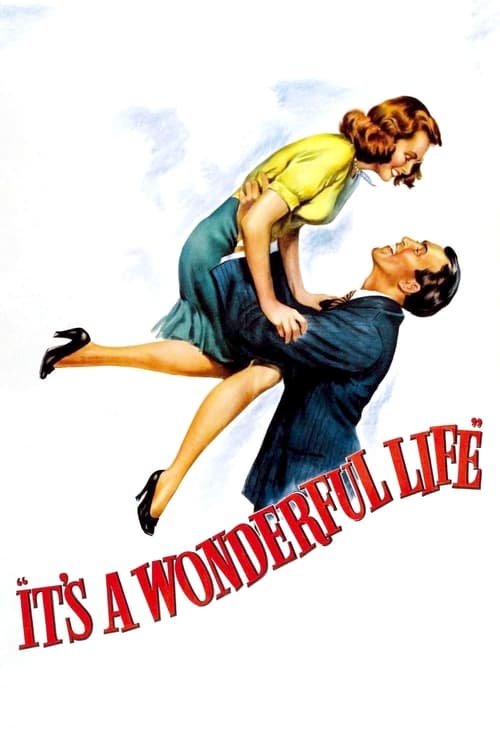
In 1947, the FBI issued a memo claiming this movie was a clever piece of communist propaganda. Their reasoning? It portrayed the wealthy Mr. Potter as a "scrounge" and suggested that "common people" were inherently better than bankers. I find that hilarious, mostly because if you watch it today, the film feels less like a manifesto and more like a high-stakes psychological thriller where the protagonist’s soul is the prize. I actually re-watched this last Tuesday while eating a slightly burnt grilled cheese sandwich, and honestly, the crunch of the bread matched the grit of the movie better than any Christmas cookie ever could.

We’ve been conditioned to think of It’s a Wonderful Life as the ultimate "feel-good" classic, the cinematic equivalent of a warm blanket. But if you strip away the bells and the tinsel, you’re left with a startlingly bleak portrait of a man whose dreams are systematically dismantled by the universe. It’s the quintessential Golden Age drama, but it possesses a philosophical depth that refuses to let you off the hook.
The Man Who Never Left
The brilliance of the film lies entirely in the weary shoulders of James Stewart. Returning from World War II after flying twenty combat missions, Stewart brought a raw, jagged edge to George Bailey that wasn't there in his pre-war "aw-shucks" roles. George isn’t a saint; he’s a frustrated, ambitious man who wants to build skyscrapers and see the world, but he’s trapped in Bedford Falls by his own pesky conscience.
Every time George gets close to the door, a tragedy or a duty pulls him back. James Stewart plays these moments not with noble resignation, but with a simmering resentment that eventually boils over into a terrifying domestic meltdown. When he’s screaming at his kids and kicking over his model bridge, he’s effectively a hostage to his own goodness, and that’s a far more interesting character than the "nice guy" the posters suggest.
Opposite him, Donna Reed provides more than just the "supportive wife" archetype. As Mary, she’s the one who sees George’s worth even when he’s blinded by his own failures. And then there’s Lionel Barrymore as Mr. Potter. In the height of the studio system, villains were often caricatures, but Barrymore plays Potter with a cold, immobile spite that feels uncomfortably real. He’s the only major character in the film who never gets a redemption arc, and the movie is braver for it.
Noir in the Snow
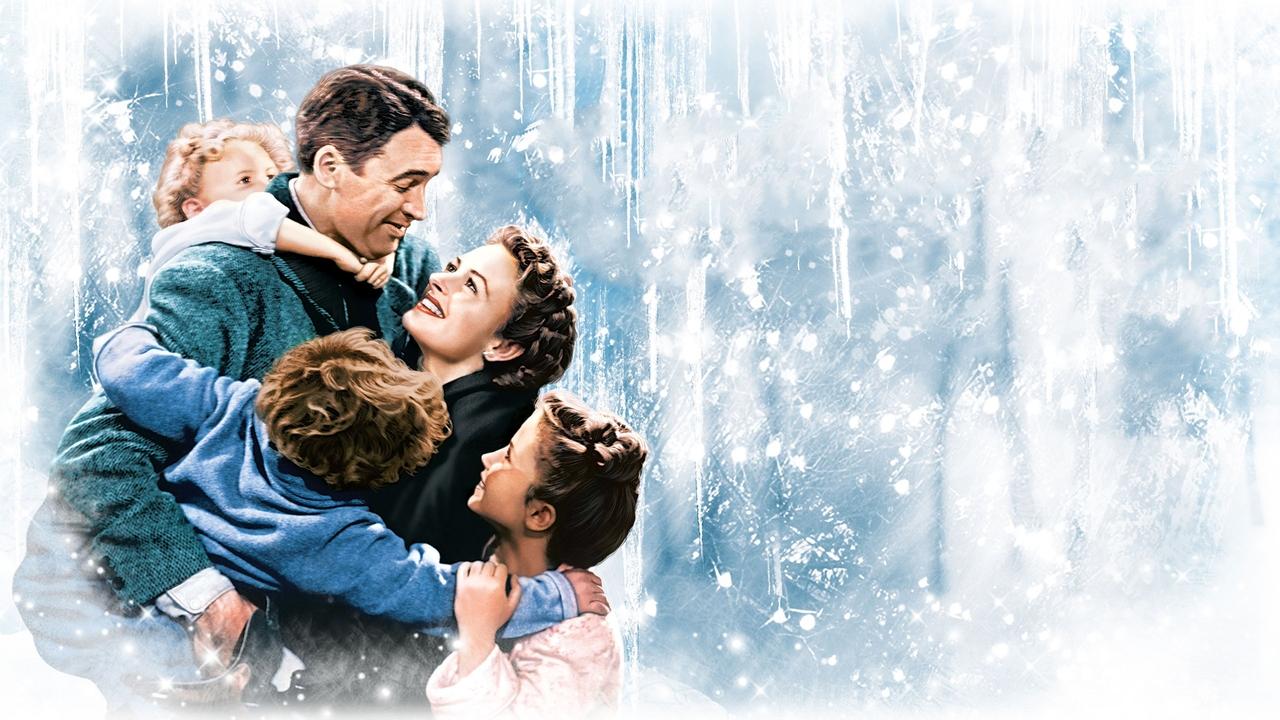
Director Frank Capra is often accused of "Capra-corn"—overly sentimental storytelling—but the middle hour of this film is practically a film noir. Once the $8,000 goes missing (thanks to a characteristically bumbling turn by Thomas Mitchell as Uncle Billy), the movie descends into a nightmare.
The cinematography by Joseph F. Biroc shifts from the soft, nostalgic glow of George’s youth to a harsh, shadowy world of desperation. The "Pottersville" sequence is a masterstroke of visual storytelling. It’s a glimpse into an alternate reality that feels like a fever dream, where the town has been stripped of its soul and replaced with neon signs and cynicism. It’s here that the film’s philosophical weight hits hardest: the idea that our lives are not our own, but are woven into a fabric of connections we can't see until they're gone.
Interestingly, the "snow" you see on screen was a technical breakthrough. Back then, movies used untoasted cornflakes painted white, which were so loud that actors had to re-record their dialogue later. Frank Capra wanted to capture the sound of the performances live, so the crew engineered a new type of "silent" foam. It earned the RKO effects department a technical Oscar and gave the film its crisp, tactile atmosphere.
The Prestige of the Flop
It’s hard to believe now, but It’s a Wonderful Life was a box office disappointment. It was a prestige production from Liberty Films—an independent studio founded by Capra and George Stevens to escape the iron grip of the big majors—and it was gunning for the Oscars. It landed five nominations, including Best Picture and Best Actor, but it got absolutely steamrolled by The Best Years of Our Lives, another post-war drama that felt more "current" at the time.
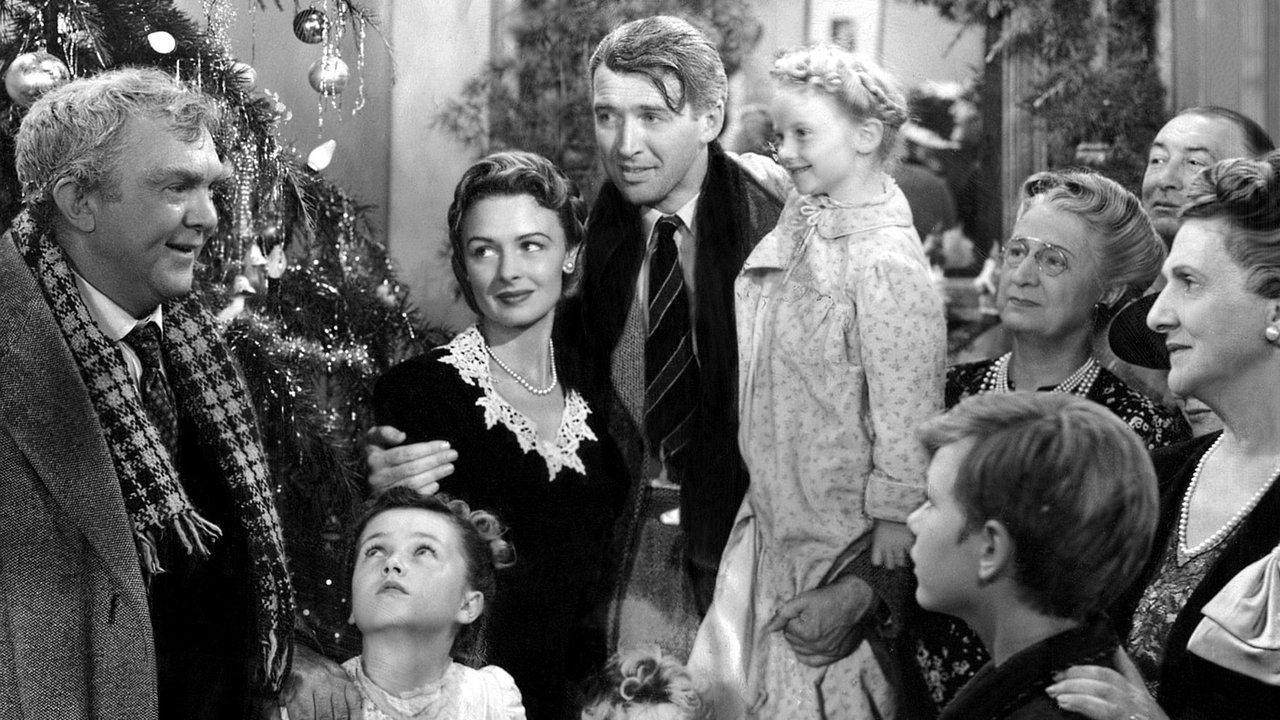
The film only became a "classic" because of a clerical error. In the 1970s, the copyright expired, and the movie fell into the public domain. TV stations, looking for free content to fill holiday slots, played it on a loop for decades. We didn't choose this movie; it wore us down until we realized it was a masterpiece.
Beyond the trivia, the film asks a question that still feels urgent: Does a "small" life matter? In a world that prizes "making it big" above all else, George Bailey’s realization that his ordinary, frustrating, stuck-in-one-place life is actually a triumph is the most radical thing about it. It’s a film that demands you look at your own mistakes and missed opportunities and see the grace in them.
This isn't just a holiday movie; it's a reckoning. It survives because it doesn't cheat. It takes George Bailey to the very edge of a bridge in a freezing snowstorm before it offers him a way back. It earns every single tear it wrings from you by acknowledging that life is often unfair, cruel, and exhausting—and that, despite all of that, it’s still a miracle. If you haven't seen it in a few years, watch it again. You’ll be surprised by how much of yourself you find in the shadows of Bedford Falls.

Keep Exploring...
-
Mr. Smith Goes to Washington
1939
-

The Seventh Seal
1957
-

Citizen Kane
1941
-
Casablanca
1943
-
Kiki's Delivery Service
1989
-
12 Angry Men
1957
-
A Little Princess
1995
-

Laura
1944
-
Rope
1948
-
The Treasure of the Sierra Madre
1948
-

All About Eve
1950
-
Sunset Boulevard
1950
-
Seven Samurai
1954
-

Ben-Hur
1959
-
High Noon
1952
-
Soul
2020
-
Arsenic and Old Lace
1944
-

Wolf Children
2012
-

The Boy and the Beast
2015
-
Fantasia
1940