The Day the Earth Stood Still
"A silver-suited warning from the stars."
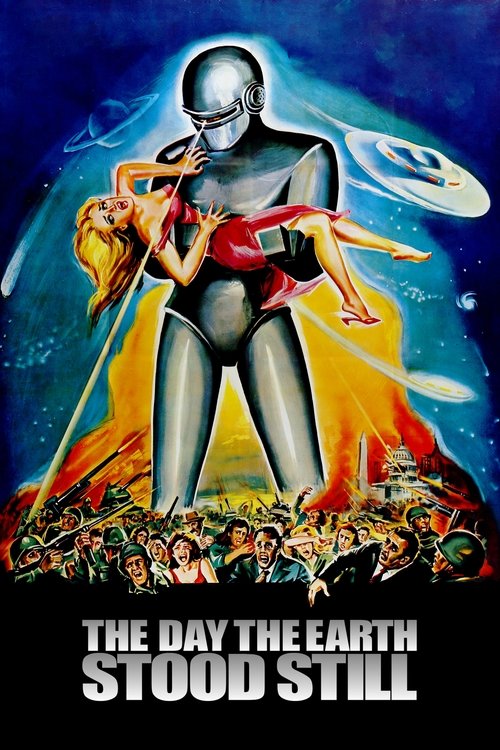
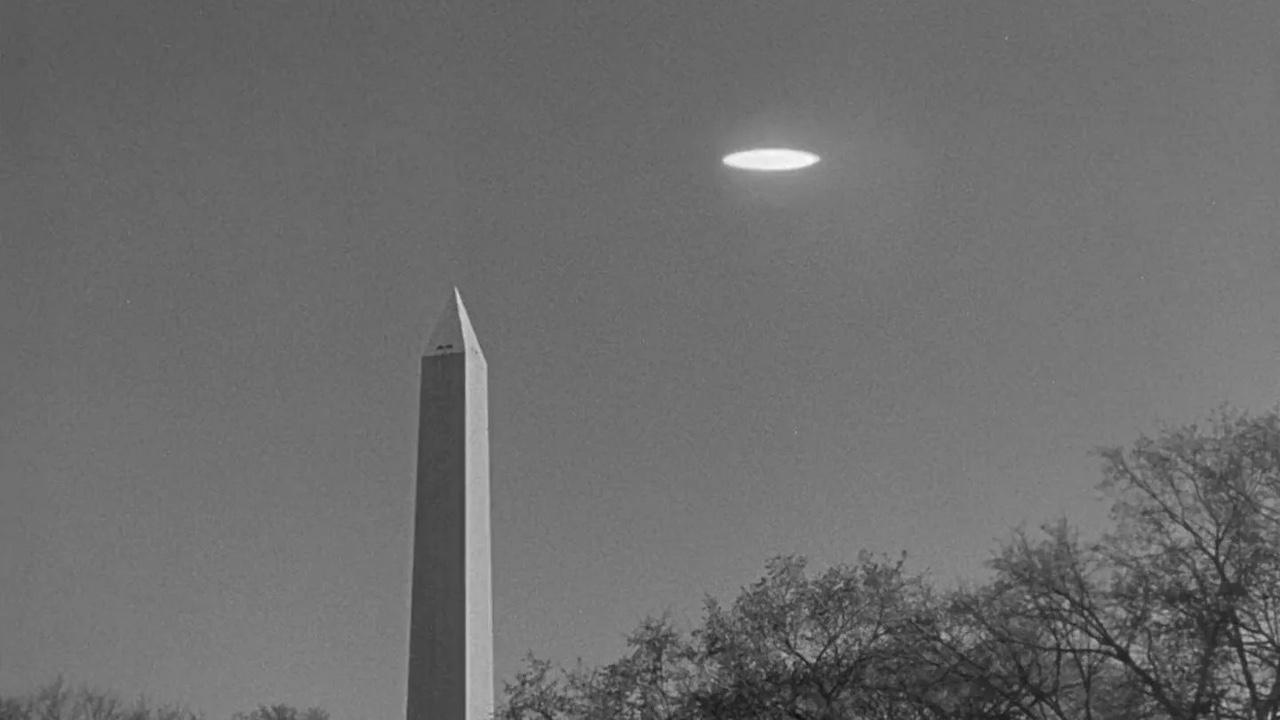
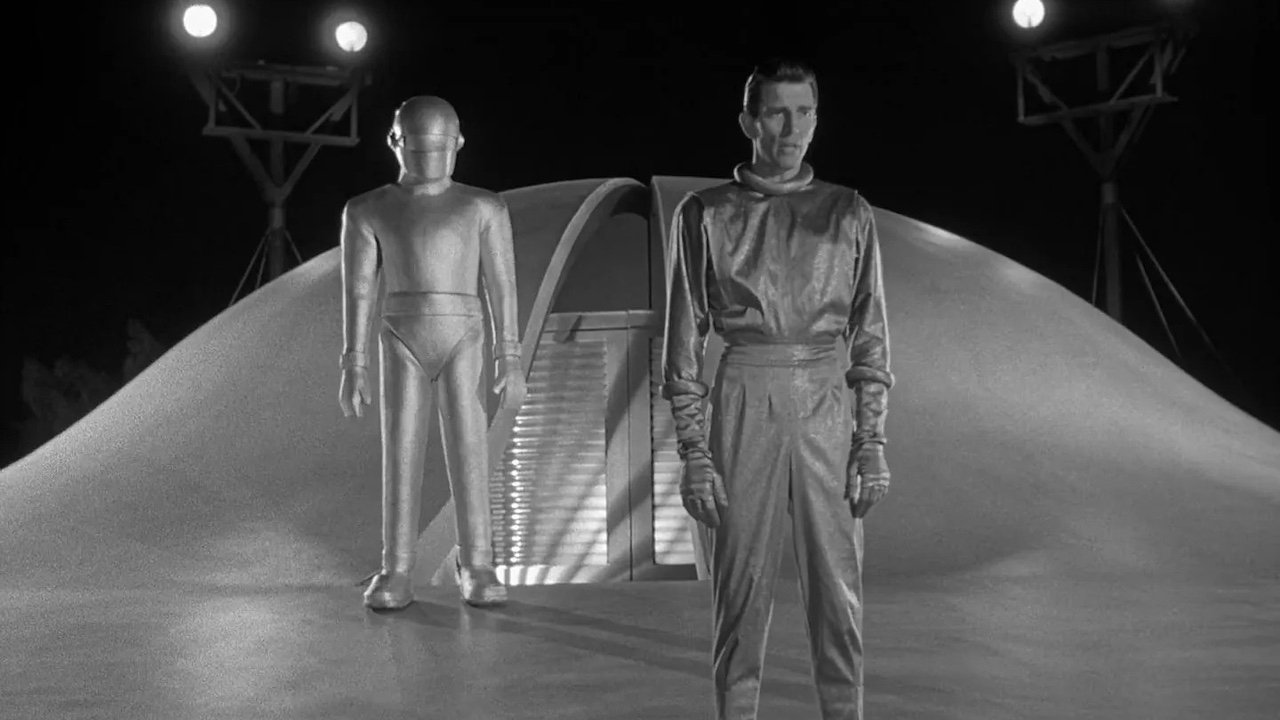
The silence is what gets you first. In an era of cinema where science fiction usually meant rubber-suited monsters roaring at the moon, the arrival of the saucer in Robert Wise’s 1951 landmark doesn't announce itself with an explosion. It descends into the heart of Washington D.C. with a sleek, terrifying grace, humming like a disturbed beehive. When the door slides open, we don’t get a tentacled beast. We get a man in a shimmering jumpsuit who looks like he’s about to offer us a very polite, very firm mortgage foreclosure on the entire planet.
I watched this most recent viewing on a Tuesday morning while my neighbor was outside relentlessly operating a leaf blower. There was something unintentionally hilarious about the contrast: on my screen, a superior civilization was threatening to turn off our electricity to save us from ourselves, while outside, a man was waging a losing battle against a pile of dead oak leaves. It reminded me that for all our nuclear ambitions, we’re mostly just noisy toddlers playing in the dirt.
The Messianic Stranger in a Grey Suit
What makes The Day the Earth Stood Still feel so much heavier than its 50s contemporaries is the performance of Michael Rennie. As Klaatu, Rennie carries an ethereal, detached stillness that feels genuinely "other." He isn't hostile; he’s disappointed. Taking the alias "Mr. Carpenter"—a nudge toward his messianic subtext that surely gave the Production Code censors a nervous tic—he walks among us to see if we’re worth the effort of saving.
Rennie is perfectly balanced by Patricia Neal as Helen Benson. In an age where female leads in sci-fi were often relegated to "The Screamer," Neal provides a grounded, weary intelligence. She isn't just a witness to the spectacle; she’s the emotional anchor that convinces the alien that humanity might have a soul buried under all that military brass. Her chemistry with Michael Rennie is built on mutual respect rather than a shoehorned romance, which gives the film a maturity that most modern blockbusters still struggle to replicate.
Shadows, Steel, and the Sound of Dread
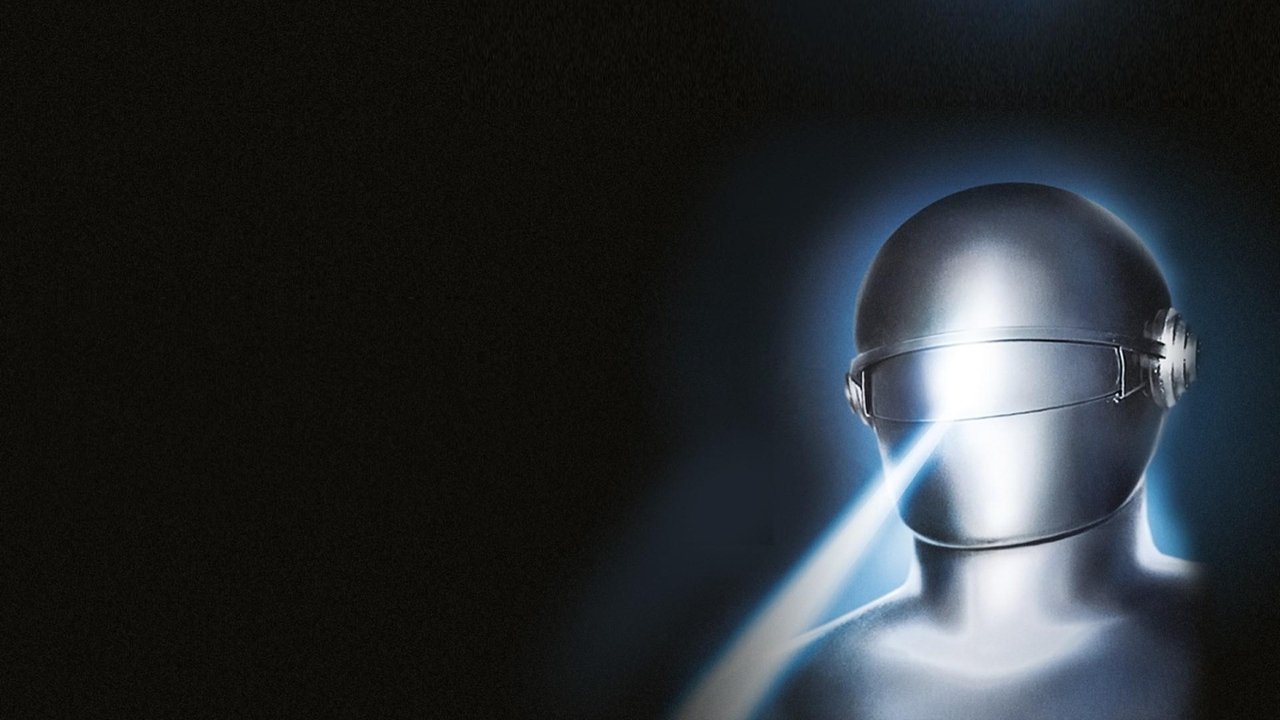
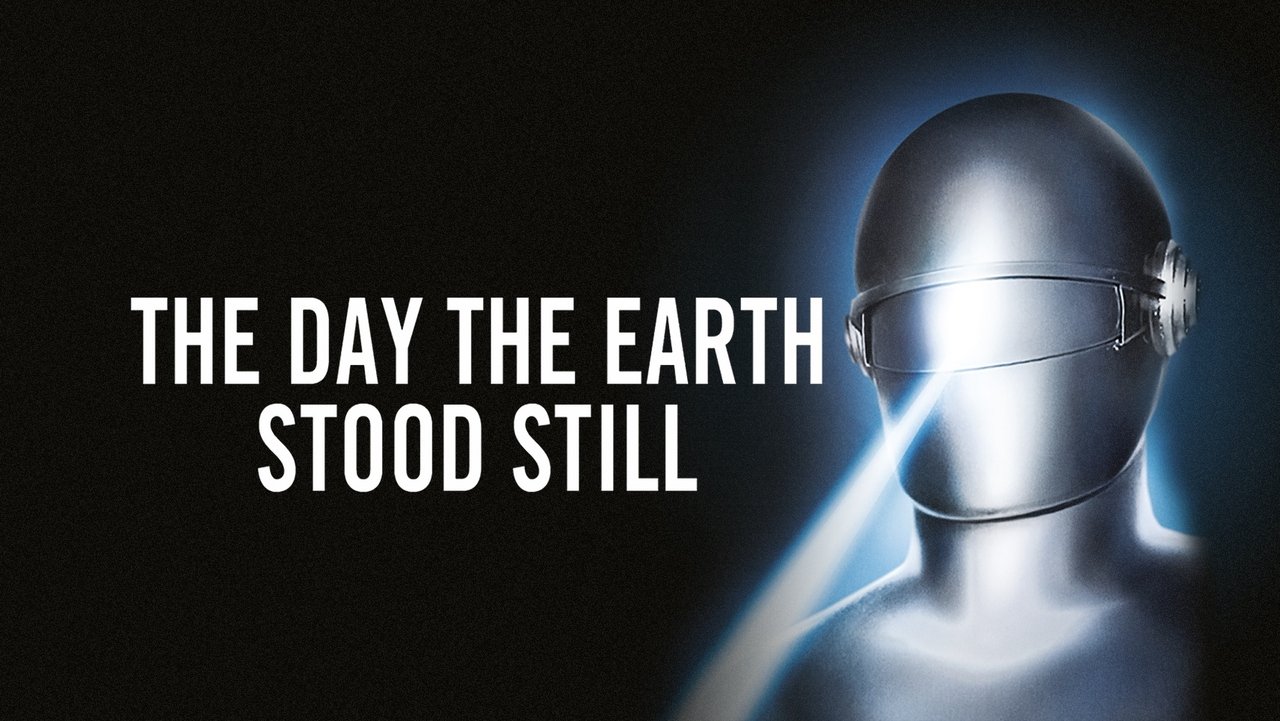
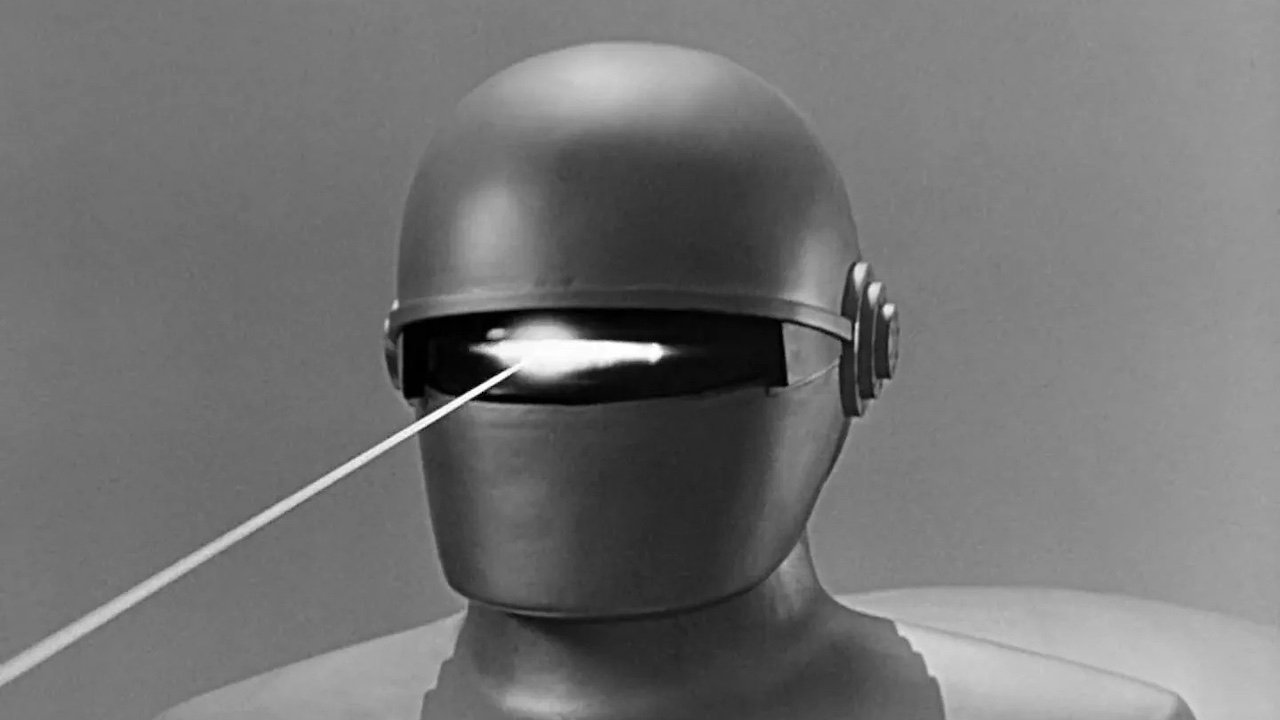
While Robert Wise would later become a household name for The Sound of Music, his roots were in the dark corridors of RKO horror and editing Citizen Kane. You can feel that noir DNA in every frame of this film. Leo Tover’s cinematography treats the alien robot Gort—played by the seven-foot-seven Lock Martin—not as a toy, but as an indestructible monolith of pure shadow. Gort doesn't have a face, just a visor that slides open to reveal a disintegrating beam, and honestly, the big lug is more intimidating than a thousand CGI Marvel villains combined.
Then there is the music. Bernard Herrmann, the man who would later give us the shrieking violins of Psycho, utilizes the theremin here to create a sonic landscape of pure anxiety. It’s a wavering, ghostly sound that feels like the atmosphere itself is being stretched thin. It’s the sound of the Cold War—the high-pitched hum of a world holding its breath, waiting for the first bird to fall from the sky.
A Peace Treaty Written in Lead
The film is a sociopolitical autopsy performed by an alien with better manners than any of us. Produced at the height of the Red Scare, it took a massive amount of creative "subversion" to get this script past the gatekeepers. The U.S. Army actually refused to cooperate with the production because they didn't like how the military was depicted as trigger-happy and paranoid. Consequently, the tanks and soldiers you see were actually sourced from the National Guard, who were apparently less concerned about their cinematic PR.
The tragedy of the film is that it’s become something of a "forgotten" classic to the casual viewer, overshadowed by the loud, dumb, and ultimately pointless 2008 remake. The original doesn't care about your spectacle; it cares about your survival. It’s a drama first, a thriller second, and a cautionary tale always. It doesn't offer a "happily ever after." It offers an ultimatum: join the galactic community and stop acting like violent children, or be reduced to a "burned-out cinder."
The film concludes with a speech that still feels like a slap in the face to modern global politics. There are no handshakes, no medals, and no celebratory parades. There is only a warning and a departure. As Klaatu’s ship rises back into the heavens, you’re left with a profound sense of loneliness. It’s one of the few films from Hollywood's Golden Age that feels more relevant with every passing decade—a somber reminder that the stars aren't watching us with wonder, but with a finger hovering over the "delete" key.
Keep Exploring...
-
A Streetcar Named Desire
1951
-
Rope
1948
-
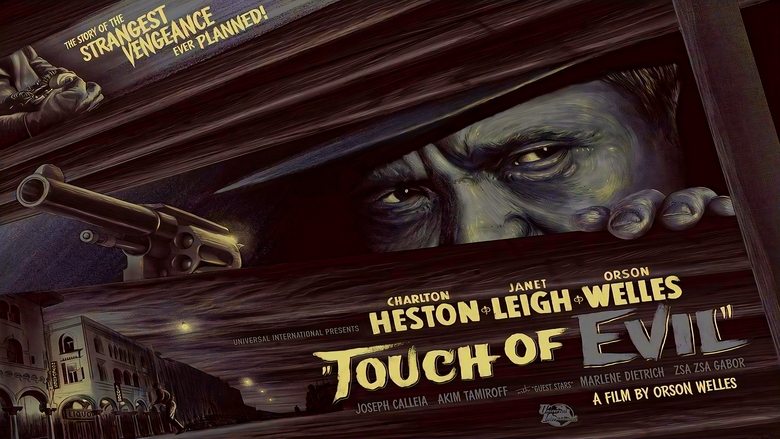
Touch of Evil
1958
-
The Wages of Fear
1953
-
The Night of the Hunter
1955
-

Invasion of the Body Snatchers
1956
-
Godzilla
1954
-
Strange Days
1995
-
Batman vs. Robin
2015
-
The Big Sleep
1946
-
Strangers on a Train
1951
-
To Catch a Thief
1955
-
The Man Who Knew Too Much
1956
-
West Side Story
1961
-
The Maltese Falcon
1941
-
Double Indemnity
1944
-

All About Eve
1950
-
Diabolique
1955
-
Blade Runner
1982
-
WarGames
1983