High Noon
"The clock is ticking and nobody is coming."
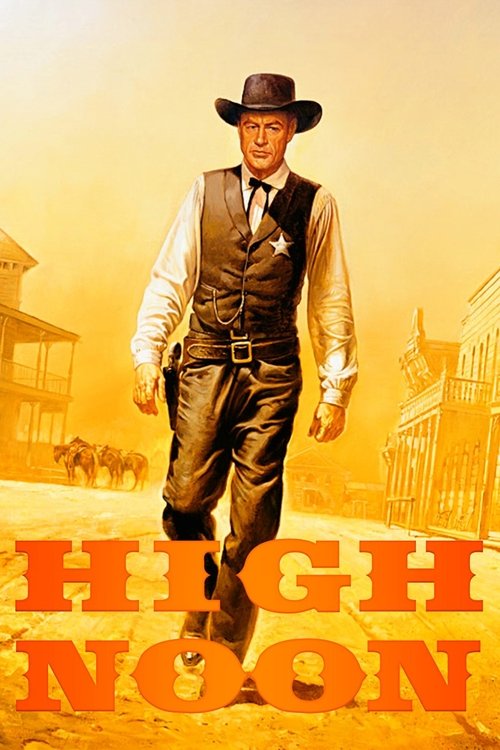
The most striking thing about High Noon isn't the gunplay or the dusty streets; it’s the silence. In an era where Westerns were usually loud, Technicolor parades of manifest destiny, Director Fred Zinnemann handed us a monochrome panic attack that feels more like a ticking bomb than a cowboy flick. I watched this again on a Tuesday morning while my neighbor was obsessively leaf-blowing his driveway, and even that rhythmic suburban drone couldn't break the suffocating tension of the film’s real-time structure.
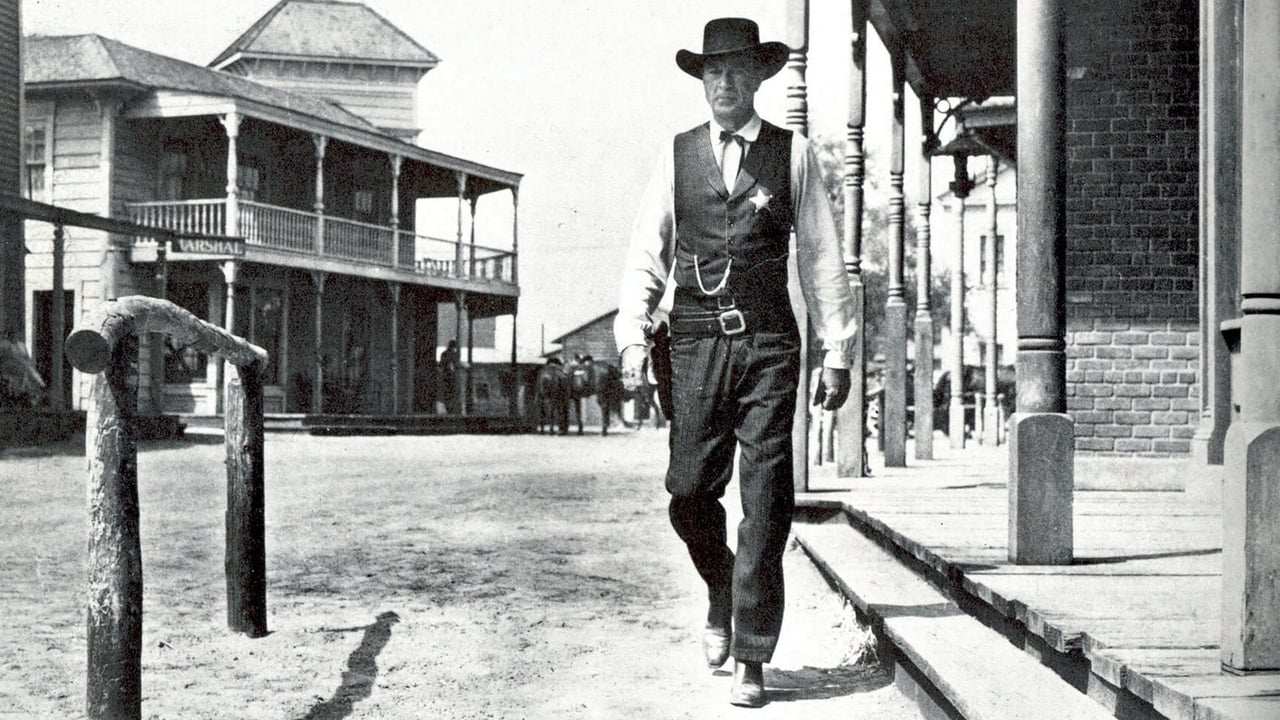
While the 1950s Hollywood machine was busy churning out spectacles to fight off the rising threat of television, producer Stanley Kramer went the other way. He made something lean, mean, and deeply uncomfortable. This wasn't a "shining city on a hill" story. It was a movie about a man standing in a vacuum, watching his friends find very polite ways to let him die.
The Face of a Fragile Hero
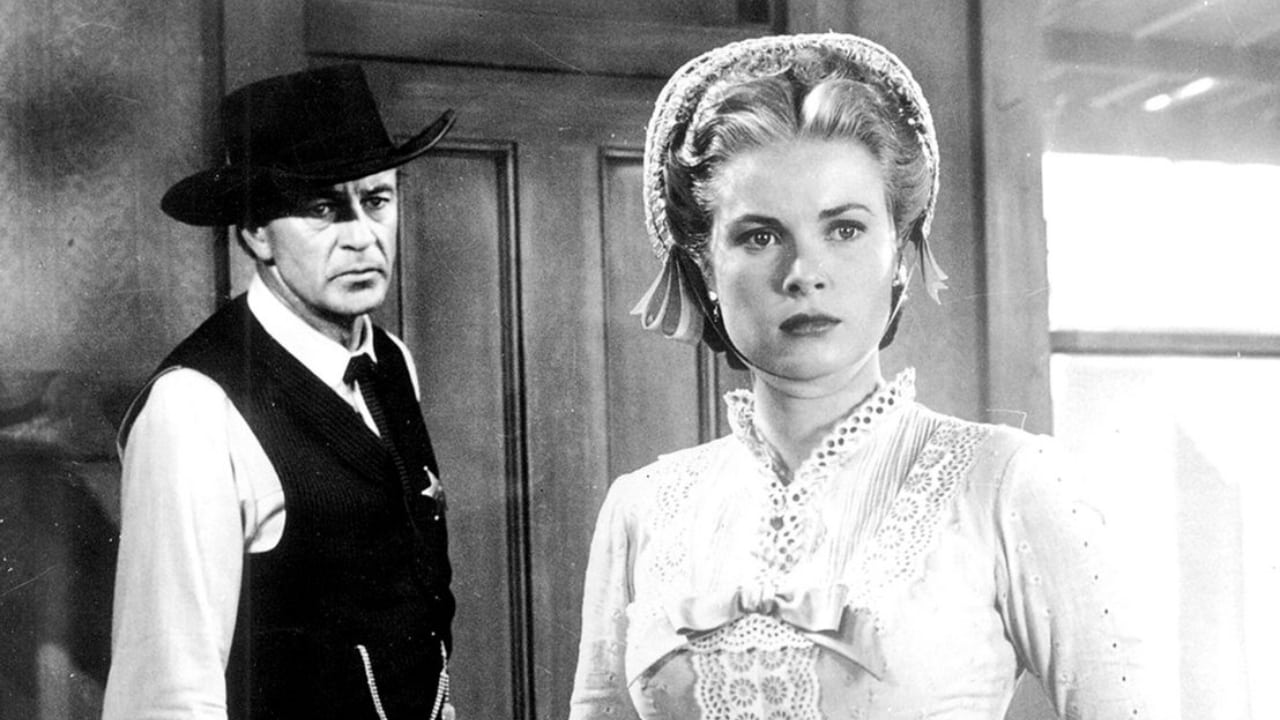
Gary Cooper was 50 years old when he played Will Kane, and he looked every bit of it. He was actually dealing with a bleeding stomach ulcer during the shoot, and you can see that genuine, physical agony in his eyes. It’s a performance that strips away the invincibility of the Western archetype. Usually, the hero is a force of nature, but Cooper’s Kane is just a man who is profoundly tired and reasonably terrified. He spends half the movie looking like he needs a nap and a hug more than a gunfight.
His marriage to Amy, played by a young Grace Kelly, happens in the first few minutes, and it’s the last bit of happiness he gets. Grace Kelly is often criticized here for being "wooden," but I’ve always felt her stiff, Quaker resolve is the perfect foil for the chaos. She isn't just a "damsel"; she’s a woman with a moral code that explicitly forbids the very thing her husband feels he must do. It’s a marriage born into a philosophical car crash.
Then you have Katy Jurado as Helen Ramírez. In 1952, for a Mexican actress to play a character with this much agency, history, and raw intelligence was revolutionary. She’s the smartest person in the room, the one who truly understands the rot at the heart of the town. When she looks at Lloyd Bridges (playing the hot-headed deputy Harvey Pell) with pure, unadulterated "you’re a boy playing at being a man" energy, you feel the burn through the screen.
The Cowardice of the Crowd
The genius of Carl Foreman’s screenplay lies in how it handles the townspeople. This is where the "Cerebral Western" label really sticks. We watch Kane go from the church to the tavern, pleading for a posse. He doesn’t find villains; he finds excuses. Thomas Mitchell as the Mayor gives a speech that is a masterclass in political gaslighting—effectively saying, "We love you, Will, but your death is bad for the local economy."
There’s a heavy philosophical weight to these scenes. The film asks: what is a community worth if it only exists when things are easy? It’s a stark subversion of the genre. Most Westerns celebrate the "frontier spirit," but High Noon suggests that the frontier is actually full of people who will watch you get murdered if it means they don't have to miss lunch.
This hit home in a very real way behind the scenes. Carl Foreman was called before the House Un-American Activities Committee (HUAC) while writing the script. He refused to name names and was subsequently blacklisted. He essentially wrote his own experience into the movie—the feeling of watching your colleagues and friends cross the street so they don't have to be seen with a "marked" man. The town of Hadleyville isn't just a setting; it’s a graveyard for the American spine.
A Masterclass in Independent Hustle
For a film that feels so monumental, it’s surprisingly "indie" in its DNA. With a budget of only $730,000, Stanley Kramer and Fred Zinnemann couldn't afford the bells and whistles of a John Ford epic. They turned that limitation into a visual language. Cinematographer Floyd Crosby (who won an Oscar for this) used a high-contrast, almost documentary-style grain. It looks "harsh" because the situation is harsh.
They also leaned into the real-time gimmick. The movie is 85 minutes long, and the plot covers about 100 minutes of Will Kane’s life. Every time Fred Zinnemann cuts to a clock—and he does it a lot—it feels like a physical punch. It’s a brilliant way to build suspense without needing a single explosion. Even the music, the famous "Ballad of High Noon" by Dimitri Tiomkin, acts as a haunting, repetitive Greek chorus, reminding us that the train is coming and Frank Miller is on it.
I’ve always found it hilarious that John Wayne called this movie "un-American" and later teamed up with Howard Hawks to make Rio Bravo as a "proper" Western response. To me, that just proves how effective High Noon is. It touched a nerve because it dared to suggest that the "good guys" don't always stand together. Sometimes, the good guy is just the one who’s too stubborn to run when everyone else is hiding under the bed.
High Noon is the rare classic that hasn't lost an ounce of its bite. It’s a lean, philosophical thriller dressed in a duster and spurs, proving that the most terrifying thing in the world isn't an outlaw with a gun—it’s a neighbor with an excuse. If you think old Westerns are just about guys in white hats shooting guys in black hats, this movie is waiting to prove you wrong. It’s a film that demands you ask yourself what you’d do when the clock hits twelve and the street is empty.


Keep Exploring...
-
The Treasure of the Sierra Madre
1948
-

Bicycle Thieves
1948
-
The Bridge on the River Kwai
1957
-

Rio Bravo
1959
-

All About Eve
1950
-
Sunset Boulevard
1950
-
Sabrina
1954
-
Rebel Without a Cause
1955
-

The Searchers
1956
-
12 Angry Men
1957
-
It's a Wonderful Life
1946
-
Rope
1948
-
The African Queen
1952
-

On the Waterfront
1954
-
The Night of the Hunter
1955
-
Witness for the Prosecution
1957
-
Seven Samurai
1954
-

The Ten Commandments
1956
-
The Seventh Seal
1957
-

Singin' in the Rain
1952