The Wages of Fear
"Terror is a cargo of liquid death."
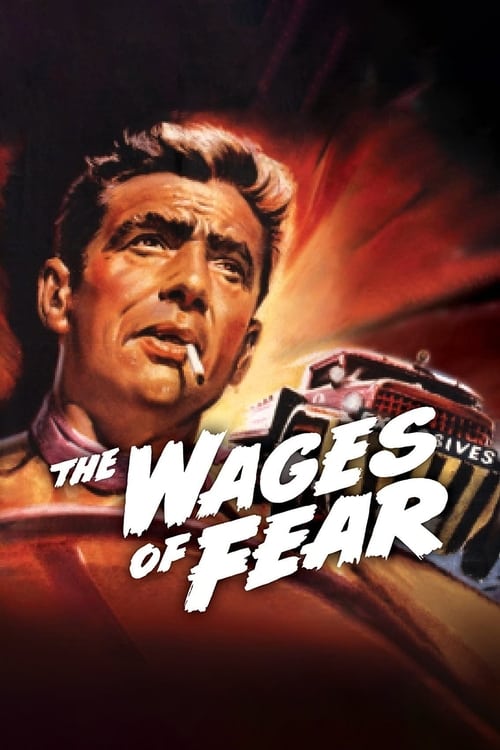
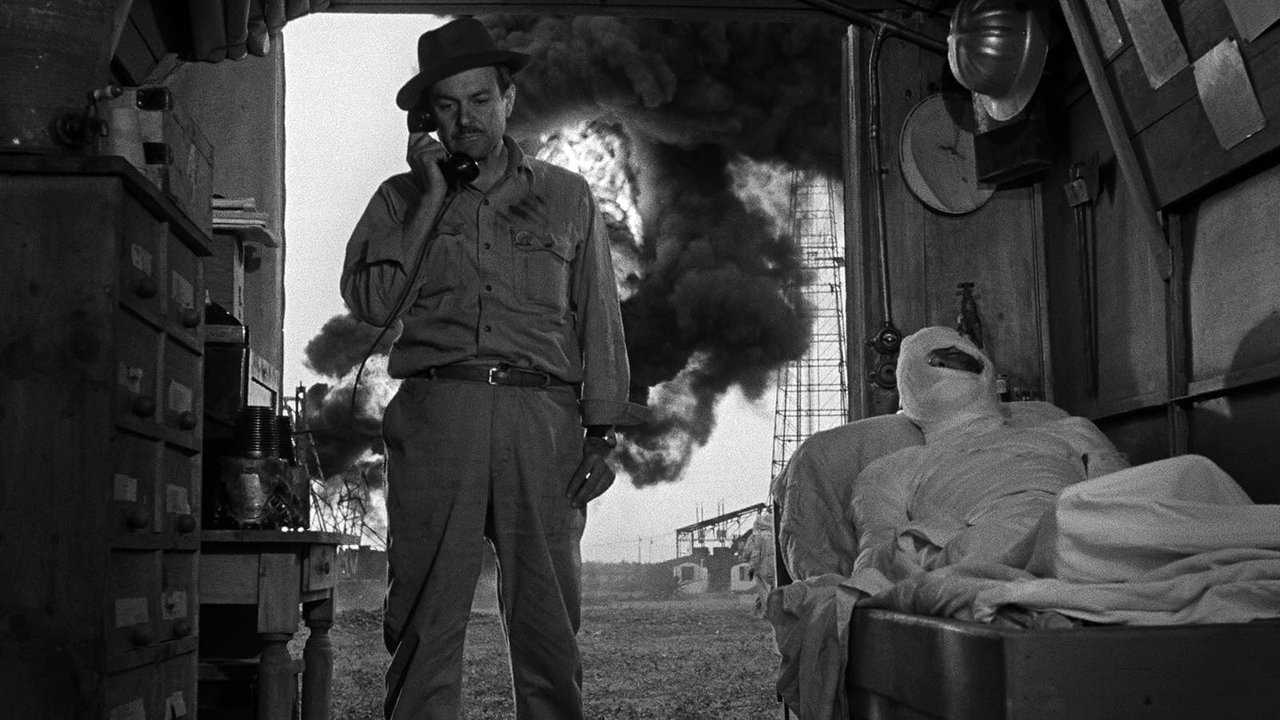
There is a specific kind of humidity that only 1950s black-and-white cinematography seems capable of capturing—a thick, oily grime that makes you want to reach for a towel just looking at the screen. In the opening minutes of The Wages of Fear, we aren't in a Hollywood-sanitized version of South America. We are in Las Piedras, a purgatory of dust, flies, and stagnant heat where the only thing more plentiful than the desperation is the contempt the local expatriates have for one another. I watched this for the third time last Sunday while my neighbor’s air conditioner was rattling like a bag of loose nails, and honestly, the mechanical grinding outside only made the industrial dread on screen feel more inescapable.
The Long, Slow Burn of Despair
Most modern thrillers would give you the "suicide mission" pitch in the first ten minutes. Henri-Georges Clouzot, however, isn't interested in rushing. He spends a full hour letting us marinate in the misery of these men. We meet Yves Montand as Mario, a handsome, cynical Frenchman who treats the local girl, Linda (played by the director’s wife, Véra Clouzot), with a casual cruelty that would never fly in a modern protagonist.
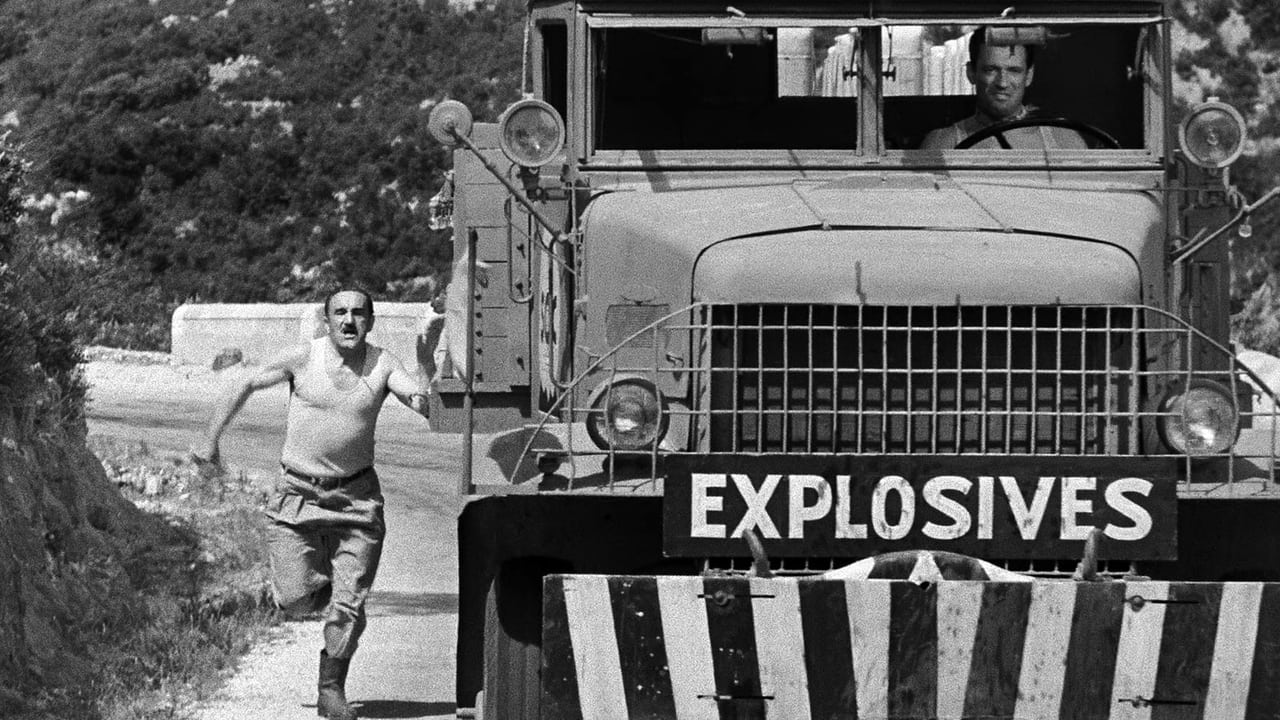
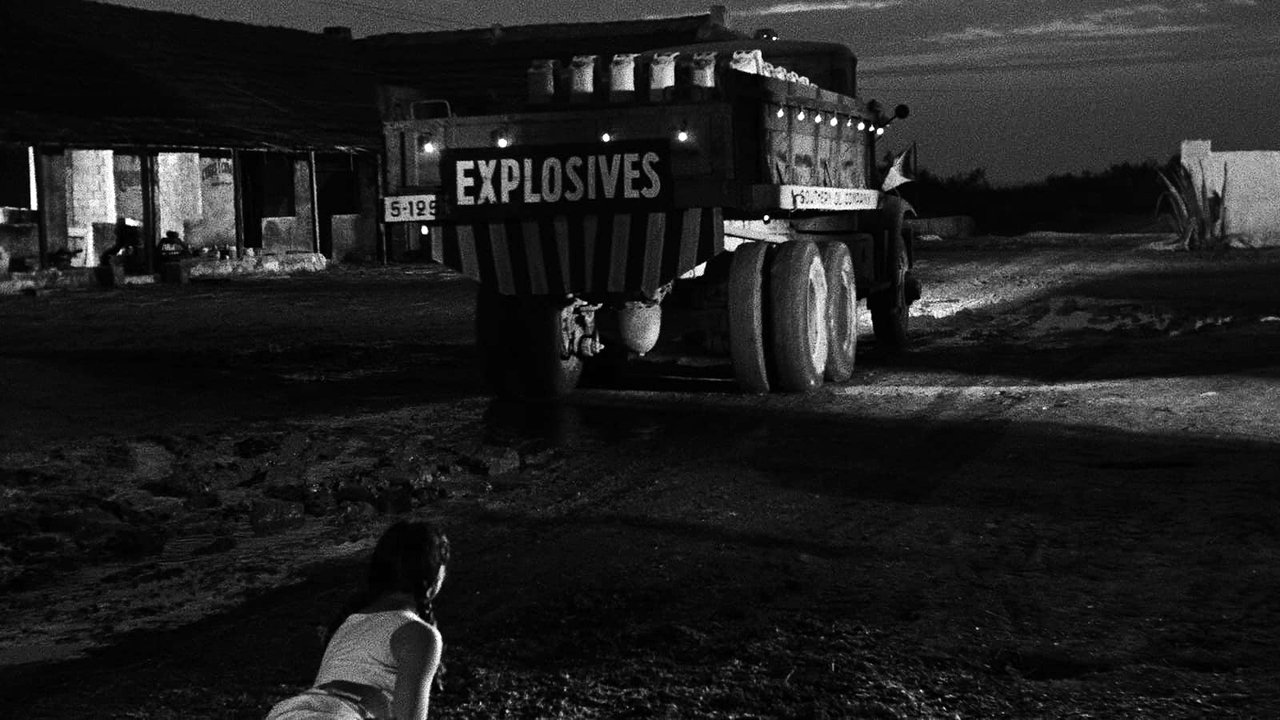
When the "Southern Oil Company" needs four drivers to transport two truckloads of unstable nitroglycerin 300 miles through rugged terrain to snuff out an oil well fire, it isn't presented as a heroic opportunity. It’s a death sentence with a paycheck. The first half of the film is a masterclass in character dynamics, specifically the arrival of Jo (Charles Vanel), an aging "tough guy" whose bravado slowly evaporates once the reality of the cargo sinks in. Clouzot was effectively Hitchcock with a meaner soul and a much bleaker worldview, and he uses this prologue to ensure that when the trucks finally start rolling, we aren't just watching stunts; we’re watching terrified men we’ve come to know far too well.
A Masterclass in High-Stakes Geometry
Once the journey begins, the film transforms into the most grueling experience in cinema history. The tension isn't built on jump scares or rapid editing; it’s built on physics. Every pebble on the road is a potential detonator. There is a sequence involving a "washboard" road—where the trucks must maintain a specific speed to avoid vibrating the nitro into an explosion—that had me gripping my sofa cushions so hard I think I popped a seam.
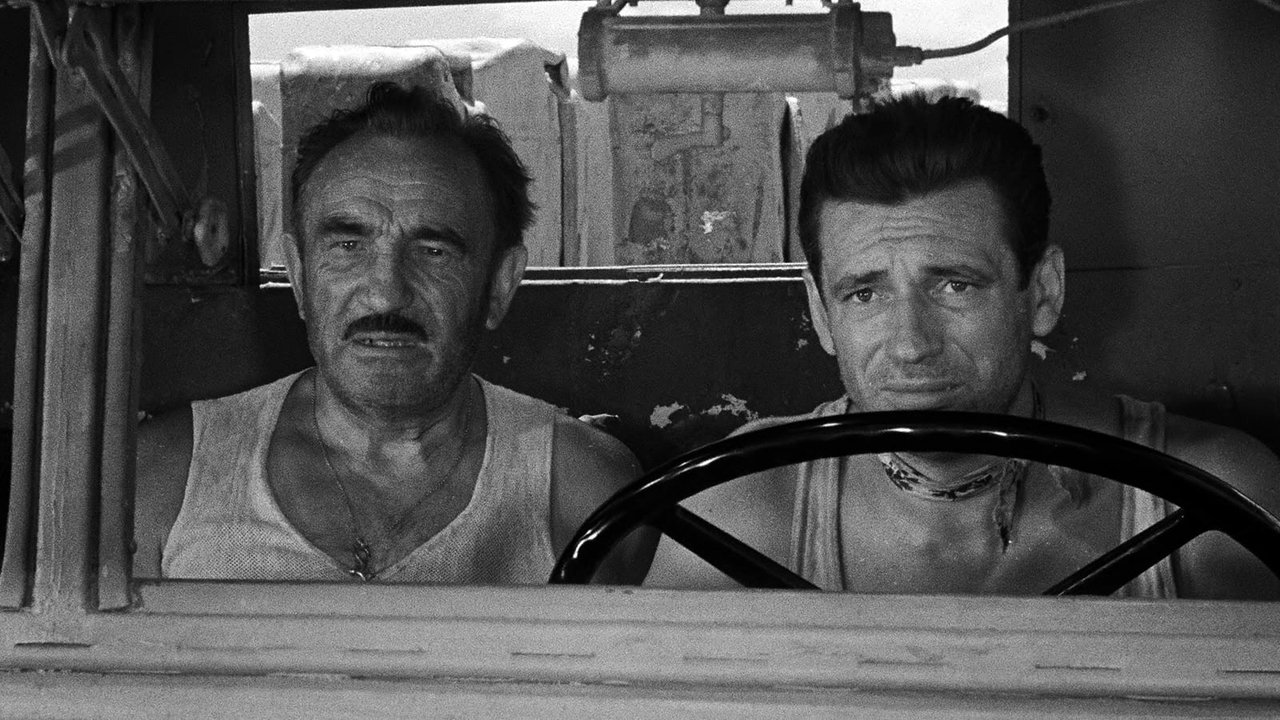
The cinematography by Armand Thirard is unflinching. He treats the trucks like massive, prehistoric beasts and the landscape like a predatory god. There’s a famous scene involving a rotten timber platform over a precipice that requires a multi-point turn. It’s a sequence of pure, agonizing geometry. We watch Peter van Eyck and Folco Lulli (as the second truck team) navigate these obstacles with a stoicism that contrasts beautifully with the mental collapse of Charles Vanel. Vanel’s performance is particularly haunting; seeing a man’s reputation as a "hard man" get stripped away layer by layer until only a whimpering child remains is uncomfortable, raw, and entirely human.
The Sweat, the Oil, and the Irony
Behind the scenes, the production was almost as cursed as the characters' journey. Clouzot was a notorious perfectionist—he reportedly made his actors work in actual filth and stagnant water to get the 'right' look of misery. Production was halted by relentless rain, flooded sets, and Clouzot himself falling ill. This wasn't a studio-backlot job; it was a physical war.
It’s also fascinating to look at this through the lens of the 1950s. While Hollywood was churning out Technicolor musicals and Westerns with clear moral lines, Clouzot was delivering a biting critique of corporate imperialism. The "Southern Oil Company" is a thinly veiled stand-in for American interests, portraying them as a cold, calculating machine that views human lives as cheaper than the oil they’re trying to save. In fact, when the film was first released in the U.S., nearly half an hour was hacked out by censors—partly for length, but mostly because the anti-American sentiment was a bit too "intense" for the Cold War palate.

Why It Still Shakes the Soul
If you’ve only seen the 1977 remake Sorcerer (which is also a gem), you owe it to yourself to see where the DNA started. The 1953 original is leaner and somehow more nihilistic. It captures a post-WWII world where life is cheap and the only thing that matters is the next cigarette and the hope of a ticket out of town. The ending—which I won’t spoil—is one of the most famous "gut punches" in film history. It refuses to offer the comforting embrace of a standard Hollywood resolution, opting instead for a bitter, ironic laugh at the expense of fate.
This isn’t just a "classic" you watch to check a box on a film student’s list. It’s a high-octane, sweat-soaked nightmare that manages to be more thrilling than 90% of the CGI-bloated spectacles we see today. It reminds me that the most effective special effect in cinema isn't a digital explosion; it’s the look of genuine terror on an actor’s face as they realize they’re one pothole away from oblivion.
The Wages of Fear is a towering achievement of the French Golden Age that manages to be both a psychological deep-dive and a white-knuckle thriller. It’s the kind of movie that makes you realize how rarely modern cinema asks us to truly feel the weight of the stakes. Watch it on the biggest screen you can find, turn the lights off, and prepare to hold your breath for two and a half hours. Just maybe don't watch it if you have a long drive the next morning.
Keep Exploring...
-
Diabolique
1955
-
A Streetcar Named Desire
1951
-
The Day the Earth Stood Still
1951
-
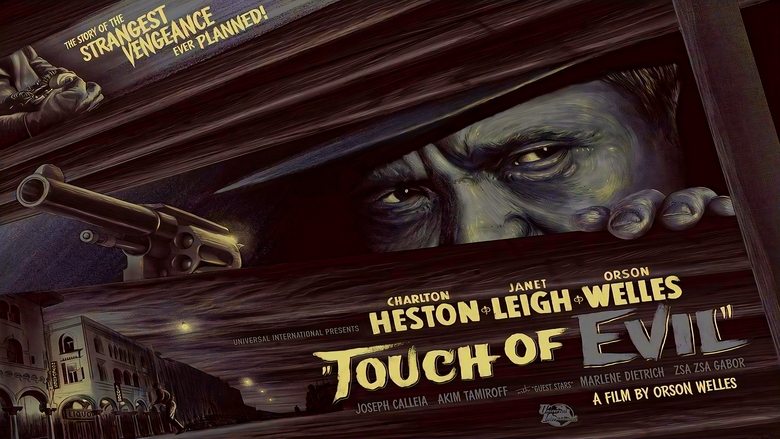
Touch of Evil
1958
-
Rope
1948
-
The Night of the Hunter
1955
-
To Catch a Thief
1955
-
Deliverance
1972
-
The Poseidon Adventure
1972
-
The Count of Monte Cristo
2002
-
Batman vs. Robin
2015
-
The Treasure of the Sierra Madre
1948
-
Strangers on a Train
1951
-
The Man Who Knew Too Much
1956
-
North by Northwest
1959
-
127 Hours
2010
-

Along with the Gods: The Two Worlds
2017
-
The Maltese Falcon
1941
-
Shadow of a Doubt
1943
-
Double Indemnity
1944