20,000 Leagues Under the Sea
"Steel, steam, and a monster from the deep."
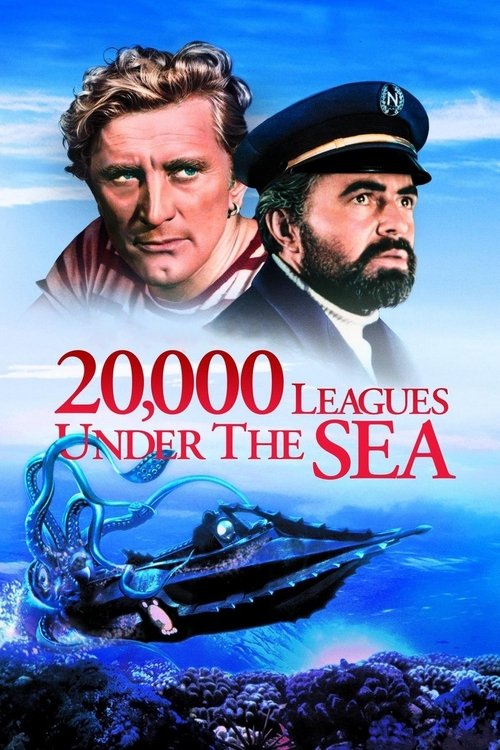
Imagine walking into a cinema in 1954 expecting the usual sugar-spun whimsy of a Walt Disney production and being greeted instead by a Victorian fever dream where a brooding nihilist plays Bach on a pipe organ while a giant squid tries to dismantle his house. 20,000 Leagues Under the Sea wasn't just a movie; it was Walt’s high-stakes gamble to prove that his studio could do more than paint mice and princesses. He dropped $5 million—an astronomical sum at the time—on a live-action spectacle that remains, quite frankly, the high-water mark for mid-century science fiction.
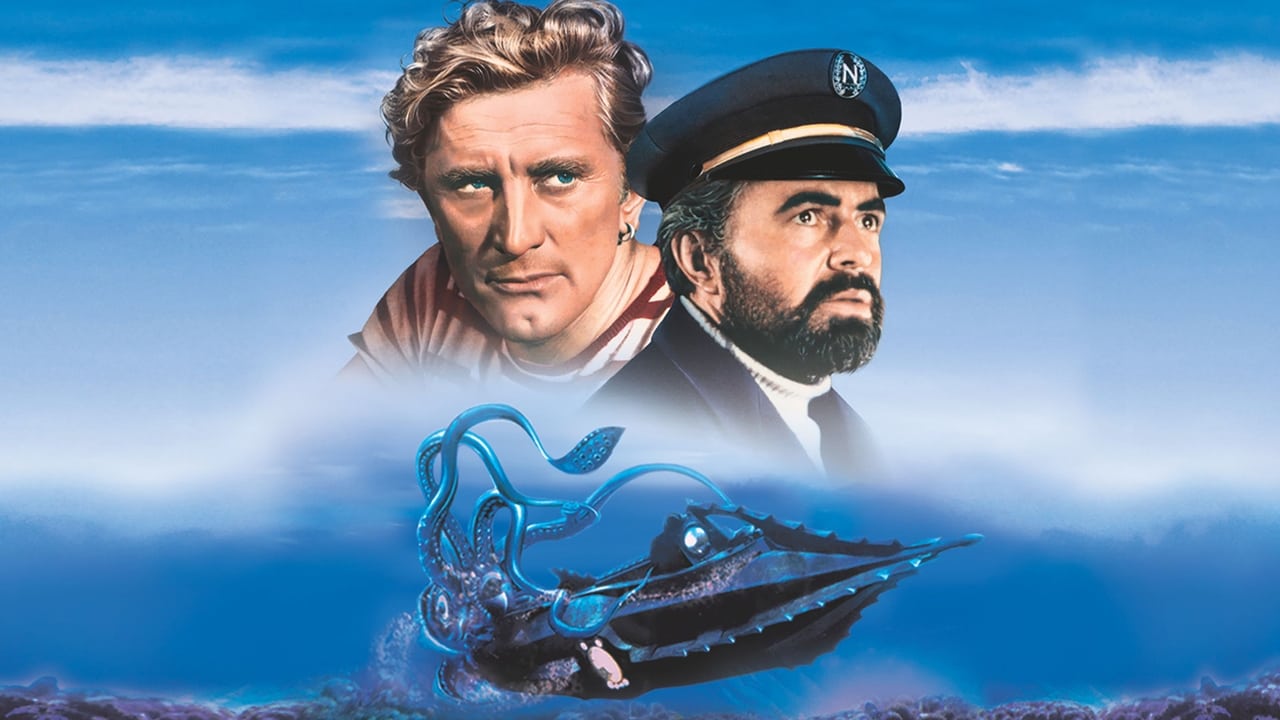
I recently revisited this one on a rainy Tuesday while nursing a lukewarm cup of Earl Grey that had a single, stubborn tea leaf floating on top like a tiny, drowned shipwreck. That little floating leaf felt strangely appropriate as I watched Captain Nemo’s Nautilus slice through the glass-bottomed Technicolor depths of the Caribbean.
A Masterpiece of Rivets and Red Velvet
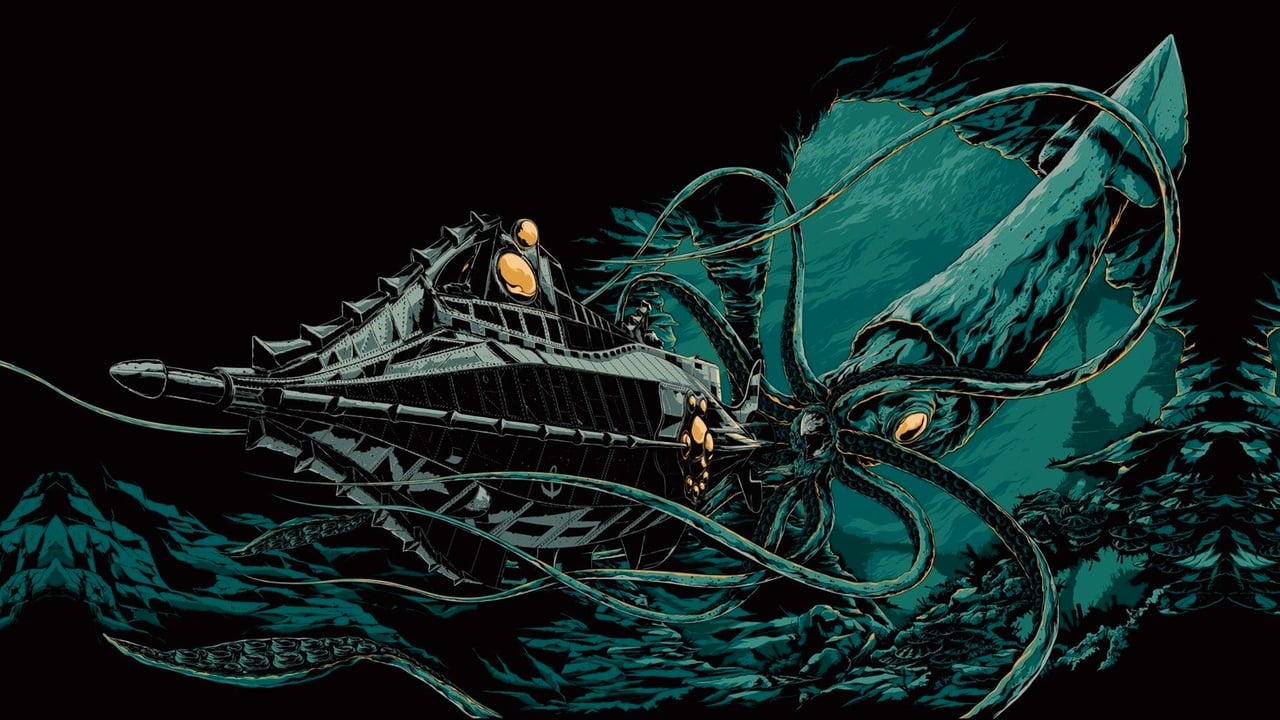
The real star of the film isn't the cast, though they are formidable. It’s the Nautilus itself. Designed by Harper Goff, this vessel is a masterclass in "steampunk" before the term was even coined. It’s a jagged, rivet-covered shark made of iron, yet inside, it’s a gentleman’s club of velvet, mahogany, and fine art. The production design captures that specific 19th-century optimism regarding technology—the idea that a machine could be both a weapon of mass destruction and a sanctuary for a man who has turned his back on the world.
Director Richard Fleischer—interestingly, the son of Walt’s long-time rival Max Fleischer—manages to balance the claustrophobia of the submarine with the breathtaking scale of the underwater sequences. This was the peak of the studio system’s technical glamour. They didn't have CGI to cheat the physics of light through water; they had to drag massive Technicolor cameras into the ocean. The result is a texture that modern digital films simply can’t replicate. You can practically feel the salt on the lens and the weight of those brass diving suits.
The Brooding Captain and the Singing Sailor
Then there is James Mason. If there is a more definitive Captain Nemo, I haven't seen him. Mason (whom you might remember as the velvet-voiced villain in North by Northwest) brings a weary, tragic dignity to the role. He isn't a cartoon villain; he’s a man broken by the cruelty of "civilization," using his scientific genius to wage a private war against the world’s navies. He’s the original anti-hero, and Mason plays him with a simmering intensity that makes you forget you’re watching a "family" movie.
On the other side of the deck, we have Kirk Douglas as the harpooner Ned Land. Douglas, fresh off his rugged turns in films like The Bad and the Beautiful, provides the necessary 1950s machismo to keep the plot moving. His striped shirt deserves its own billing in the credits, serving as a bright, primary-colored anchor for the eyes whenever the film gets too dark. The dynamic between the stoic Prof. Arronax (Paul Lukas) and the nervous Conseil (Peter Lorre, doing a wonderfully restrained version of his usual bug-eyed persona) adds a layer of intellectual debate that you rarely see in modern blockbusters.
The Squid and the Studio Politics
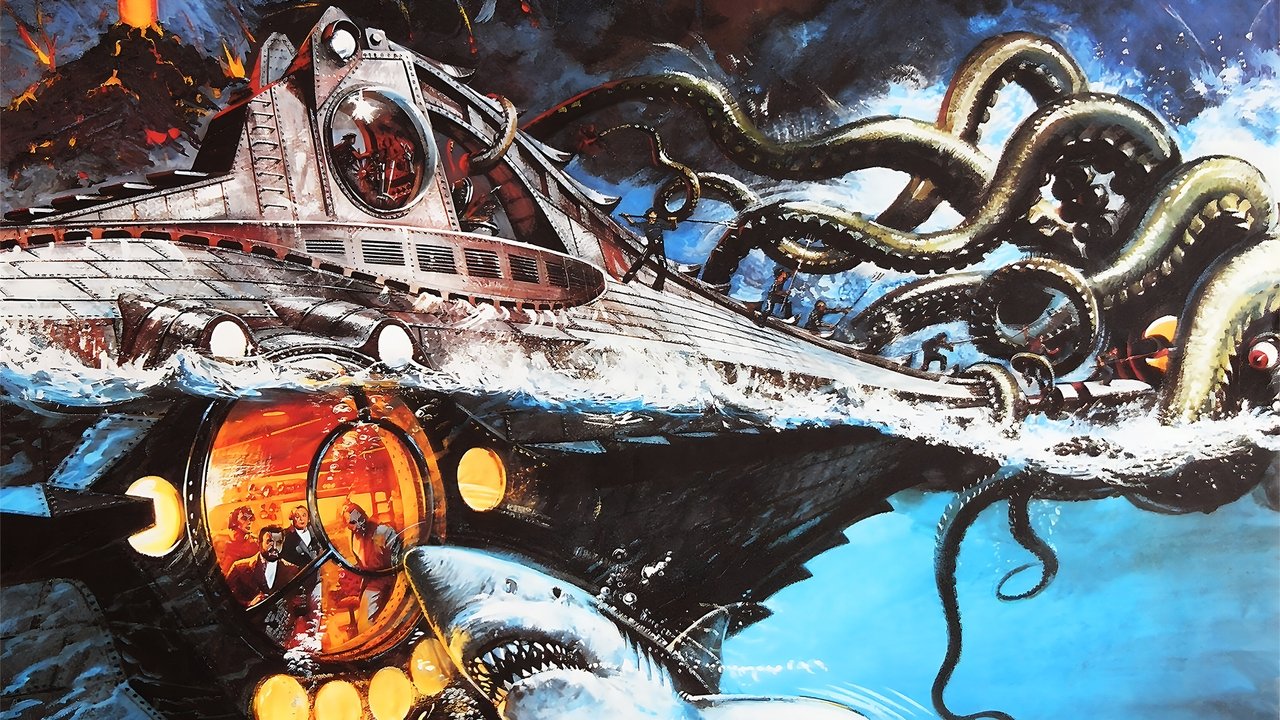
Of course, we have to talk about the squid. The battle with the giant cephalopod is the film's climax, but it was almost a disaster. Originally, the scene was filmed on a calm, sunlit sea, but the mechanical squid looked like a cheap bathtub toy. The wires were visible, and the rubber skin glistened with all the menace of a wet balloon. Fleischer insisted on a total re-shoot, demanding a nighttime storm to hide the mechanics.
It was a brilliant pivot. The rain, the crashing waves, and the flashing lightning turned a potential B-movie moment into an iconic sequence of pure cinematic dread. The giant squid is more expressive than most modern CGI monsters, precisely because it was a physical, multi-ton nightmare that the actors actually had to wrestle with on a tossing set.
The behind-the-scenes drama was just as thick. Walt Disney was under immense pressure; if this film failed, it could have sunk the studio's live-action ambitions entirely. He even faced internal pushback for hiring Richard Fleischer, but Walt’s eye for talent surpassed his old grudges. It paid off—the film was a massive hit, proving that the Disney brand could handle sophisticated, somber themes alongside the singing seals (looking at you, Esmeralda).

A Force for Good or Evil?
What strikes me most about 20,000 Leagues today is how well it handles its science-fiction "What If?" Nemo’s "secret of the sea" is a thinly veiled metaphor for atomic energy. Released in the shadow of the Cold War, the film asks whether humanity is actually ready for a source of "infinite power." Nemo’s decision to take his secrets to the grave feels less like a tragedy and more like a necessary mercy.
The film manages to be an adventure for kids—complete with Kirk Douglas singing "A Whale of a Tale"—while remaining a deeply cynical critique of imperialism and war for the adults. It’s a rare bird in the Disney canon: a movie that respects its audience's intelligence enough to let its protagonist be a mass murderer who is also the most interesting person in the room.
If you’ve only ever seen this as a ride at a theme park or a grainy clip on a "Best of Disney" special, do yourself a favor and watch the whole thing. It is a stunning artifact of the Golden Age, a moment when the studio system’s craftsmanship and a visionary producer’s ambition aligned perfectly. It's a film that understands that the deepest mysteries aren't found in outer space, but in the dark, pressurized corners of the human heart—and occasionally, at the end of a giant rubber tentacle.
Keep Exploring...
-
Flight of the Navigator
1986
-

The Rocketeer
1991
-
Jimmy Neutron: Boy Genius
2001
-
Alice in Wonderland
1951
-
Peter Pan
1953
-

Lady and the Tramp
1955
-
Forbidden Planet
1956
-
Time Bandits
1981
-
Titan A.E.
2000
-
DC League of Super-Pets
2022
-
Transformers One
2024
-
The Day the Earth Stood Still
1951
-
Soylent Green
1973
-
E.T. the Extra-Terrestrial
1982
-

Honey, I Shrunk the Kids
1989
-
Teenage Mutant Ninja Turtles
1990
-
Teenage Mutant Ninja Turtles II: The Secret of the Ooze
1991
-
A-X-L
2018
-
The Wages of Fear
1953
-
North by Northwest
1959