Godzilla
"The ashes of a nation given terrifying form."
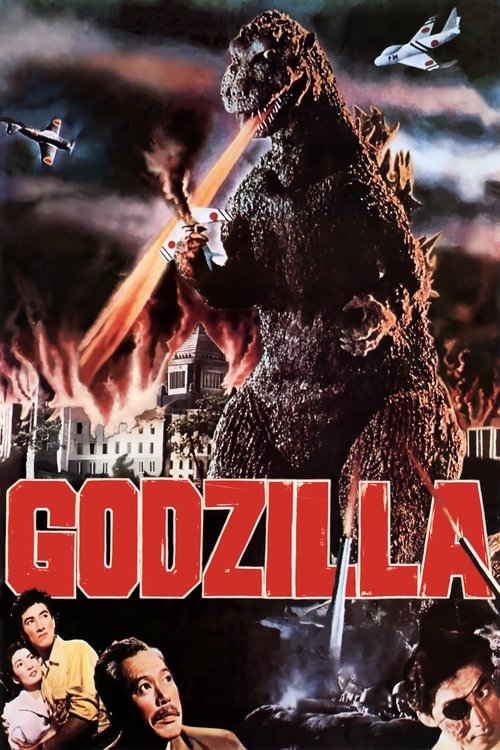
I watched this on a Tuesday night while trying to ignore the smell of my neighbor’s burnt toast, which weirdly added a layer of sensory realism to the scenes of a smoldering Tokyo. If you’ve only ever known the Big G as a pro-wrestling lizard who slides on his tail or fights three-headed dragons in neon-soaked blockbusters, the original 1954 Godzilla (or Gojira) is going to be a shock to your system. It isn't a fun movie. It is a funeral march.
The Weight of the Suit and the Soul
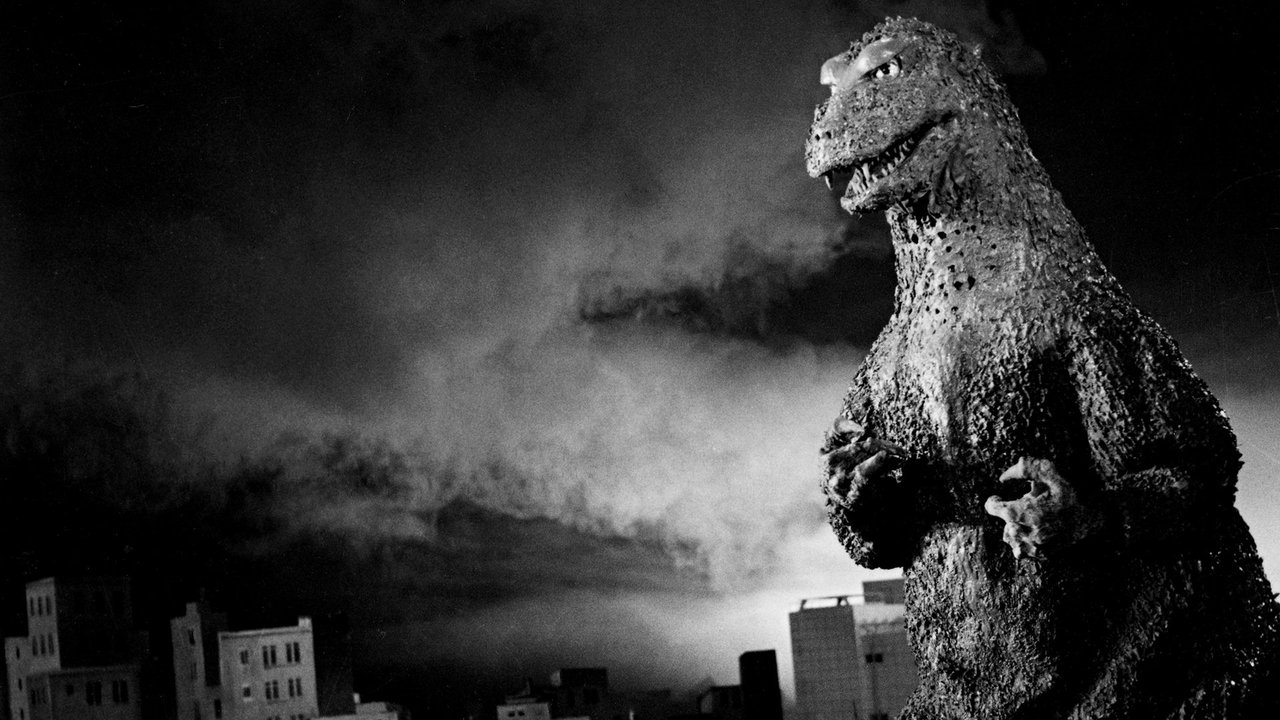
While Hollywood was busy churning out giant ants and radioactive spiders that felt like campy drive-in fodder, Ishirō Honda was busy exorcising a national demon. I’ve always found it remarkable that this film was made for a reported $60,000—a pittance even by 1950s standards—and yet it carries more psychological weight than any $200 million CGI fest I’ve seen recently. Because they couldn't afford the frame-by-frame luxury of stop-motion animation like King Kong, they birthed "Suitmation."
Haruo Nakajima, the man inside the original latex nightmare, wasn't just playing a monster; he was dragging around 200 pounds of lead and rubber that made every step look agonizing. That physical struggle translates on screen as a terrifying, lumbering inevitability. Godzilla is the most successful piece of group therapy in human history, turning the abstract horror of the H-bomb into a tangible, screaming force of nature. When you see the monster’s skin, designed by Eiji Tsuburaya to mimic the keloid scars found on Hiroshima survivors, the "horror" label stops being about jump scares and starts being about witness.
Serizawa’s Burden and the Science of Death
The heart of the film isn't actually the monster, but a man with a patch over his eye. Akihiko Hirata as Dr. Daisuke Serizawa is one of the most tragic figures in cinema. He’s a scientist who has discovered something worse than the bomb—the "Oxygen Destroyer"—and his fear isn't that it won't work, but that it will. The scenes between Serizawa, Akira Takarada (playing the heroic but relatively standard Ogata), and Momoko Kôchi (as Emiko) are steeped in the kind of moral gloom you’d expect from a post-war noir.
There’s a specific shot where Emiko sees what Serizawa’s invention does to a tank of fish. We don't see the device; we just see her face collapse in pure, unadulterated dread. It’s a masterclass in "less is more." Ishirō Honda understood that the most frightening thing isn't the explosion, but the realization that humanity has invented yet another way to erase itself. The screenplay, co-written by Takeo Murata, refuses to offer a "hurrah" moment. Even when the military is mobilized, they look futile. They are children throwing pebbles at a hurricane.
A Ghost Story in High Contrast
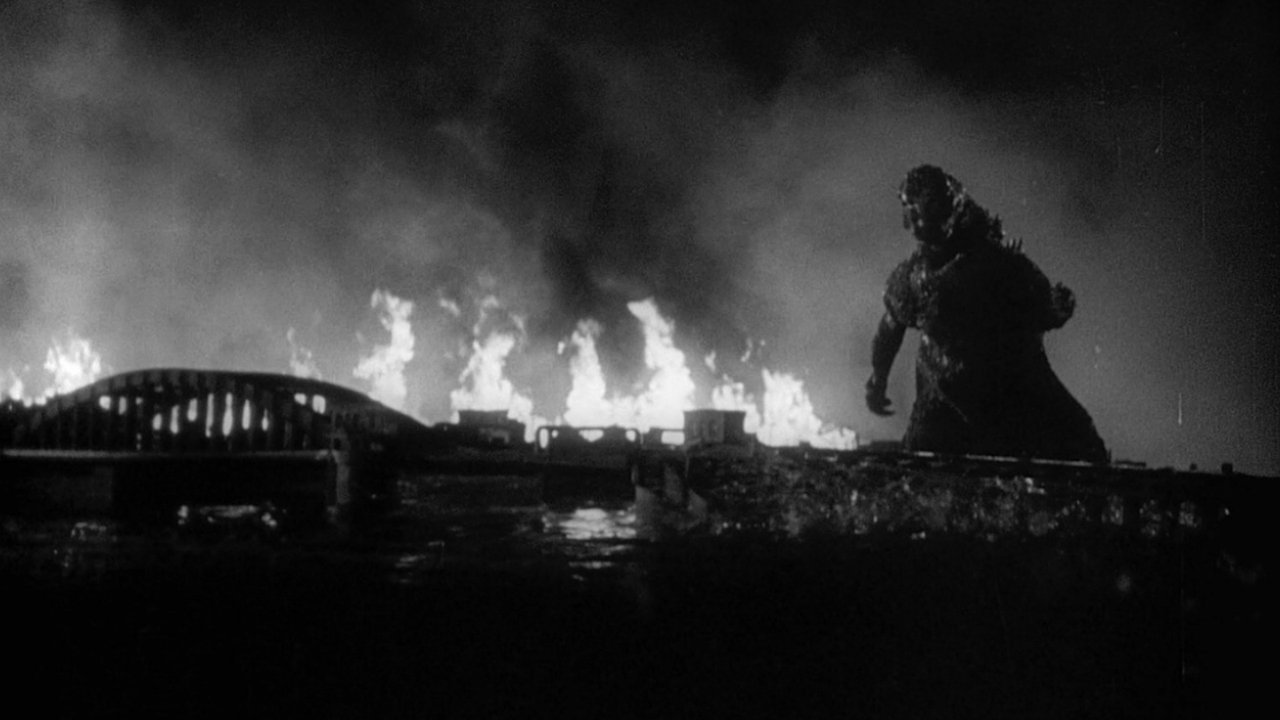
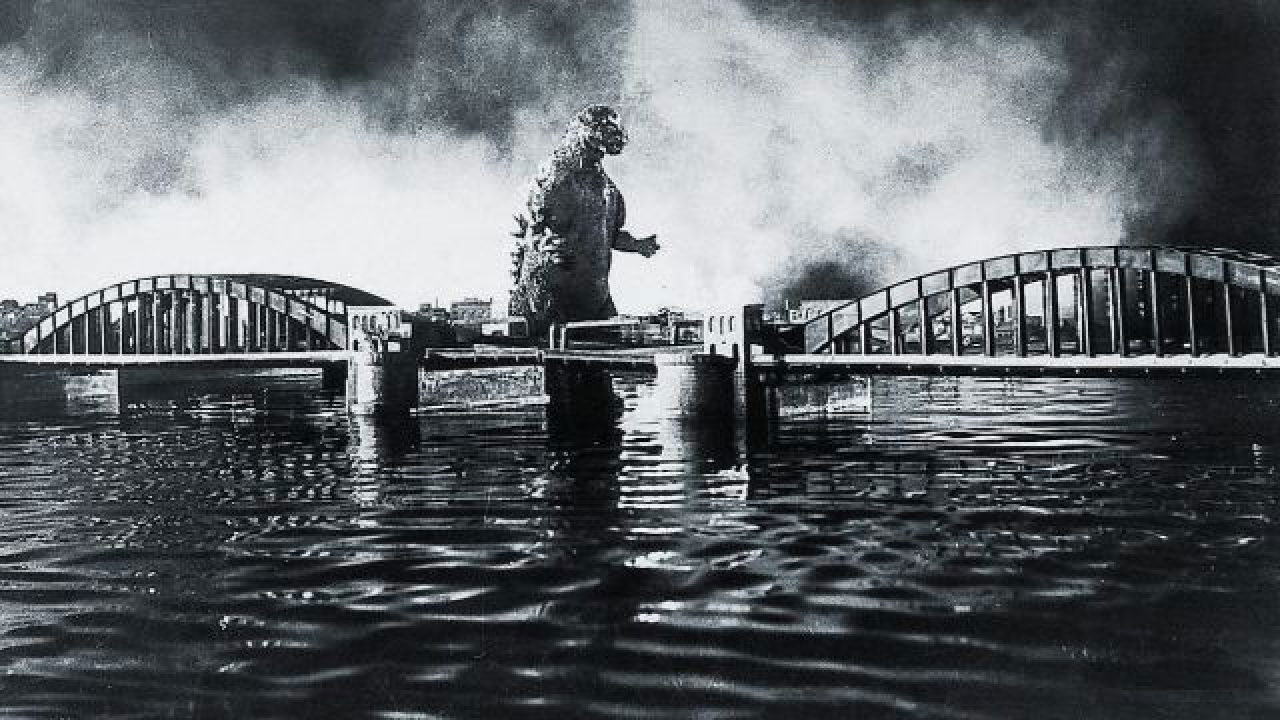
Visually, the film benefits immensely from the limitations of the Toho Laboratory. Masao Tamai’s cinematography uses deep blacks and harsh, flickering whites that make the nighttime raids on Tokyo look like archival footage of a real disaster. There is a sequence involving a mother huddling with her children as the flames approach, telling them they’ll "be with daddy soon." It is genuinely hard to watch. It strips away the "monster movie" artifice and forces you to confront the reality of urban firebombing.
I’d be remiss not to mention the score by Akira Ifukube. Before the iconic, brassy march kicks in, there is that haunting, low-string theme that sounds like the earth itself is groaning under a heavy weight. Ifukube famously created Godzilla’s roar by rubbing a resin-covered leather glove over a double bass string, and that organic, screeching sound does something to your lizard brain that a digital sound library never could. It sounds like a scream from the bottom of a well.
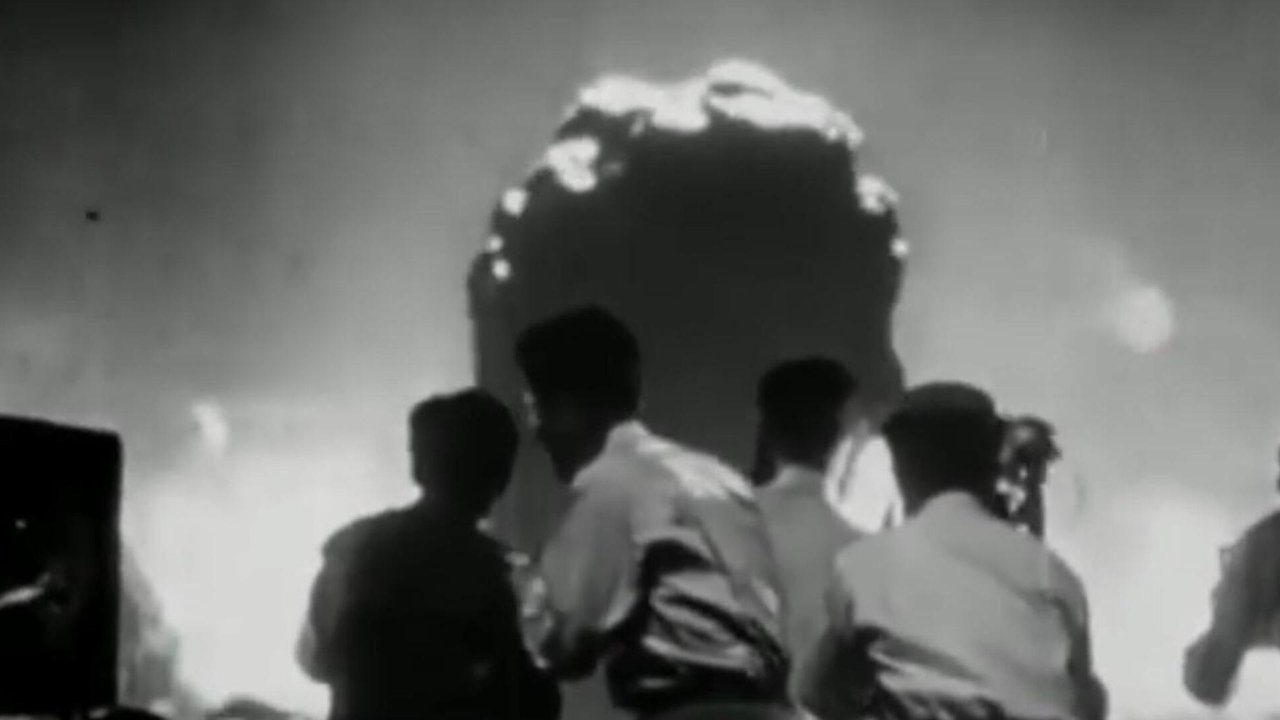
The film's "indie" spirit shines through in its ingenuity. They used a massive outdoor pool and miniature sets that were so detailed Takashi Shimura (of Seven Samurai fame, bringing immense gravitas here as Dr. Yamane) allegedly felt like he was standing on a real island. They didn't have the budget for perfection, so they aimed for atmosphere, and in doing so, they created a masterpiece of shadow and grit.
This isn't just a movie; it’s a monument. It captures a specific moment in the mid-20th century when the world was collectively holding its breath, waiting to see if the nuclear age would be its last. While the sequels would eventually turn Godzilla into a superhero or a punchline, this original 1954 cut remains a grim, essential piece of world cinema. It’s a reminder that the best horror doesn't come from what’s under the bed, but from what we’re capable of doing to one another. Prepare to be moved, unsettled, and forever changed by the sight of a silhouette against a burning skyline.

Keep Exploring...
-

Invasion of the Body Snatchers
1956
-
The Day the Earth Stood Still
1951
-
Rear Window
1954
-
The Night of the Hunter
1955
-
The Killing
1956
-
North by Northwest
1959
-

Rebecca
1940
-
Suspicion
1941
-
Spellbound
1945
-

Notorious
1946
-
Rope
1948
-

Rashomon
1950
-
Ring
1998
-
The Dead Zone
1983
-

28 Days Later
2002
-
The Invisible Man
2020
-
A Quiet Place Part II
2021
-

The Substance
2024
-
Companion
2025
-
The Cabinet of Dr. Caligari
1920