La Strada
"A pebble’s purpose in a world of brutes."
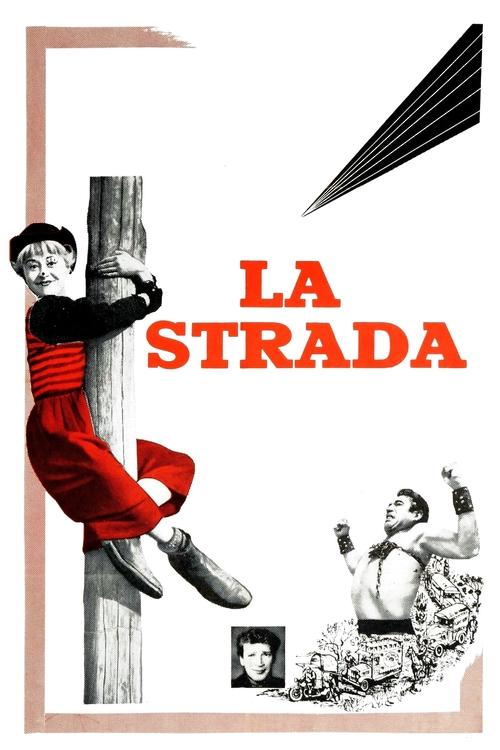
There is a specific kind of dust that only exists on the side of a 1950s Italian highway—a fine, pale grit that seems to coat the soul as much as the tires. While Hollywood was busy polishing its Technicolor musicals and widescreen epics like The Robe (1953), Federico Fellini was out in the mud, reinventing what a movie could feel like. He was moving away from the rigid "rules" of Neorealism—those movies about poor people being poor in very literal ways—and toward something more like a dream, or perhaps a prayer.
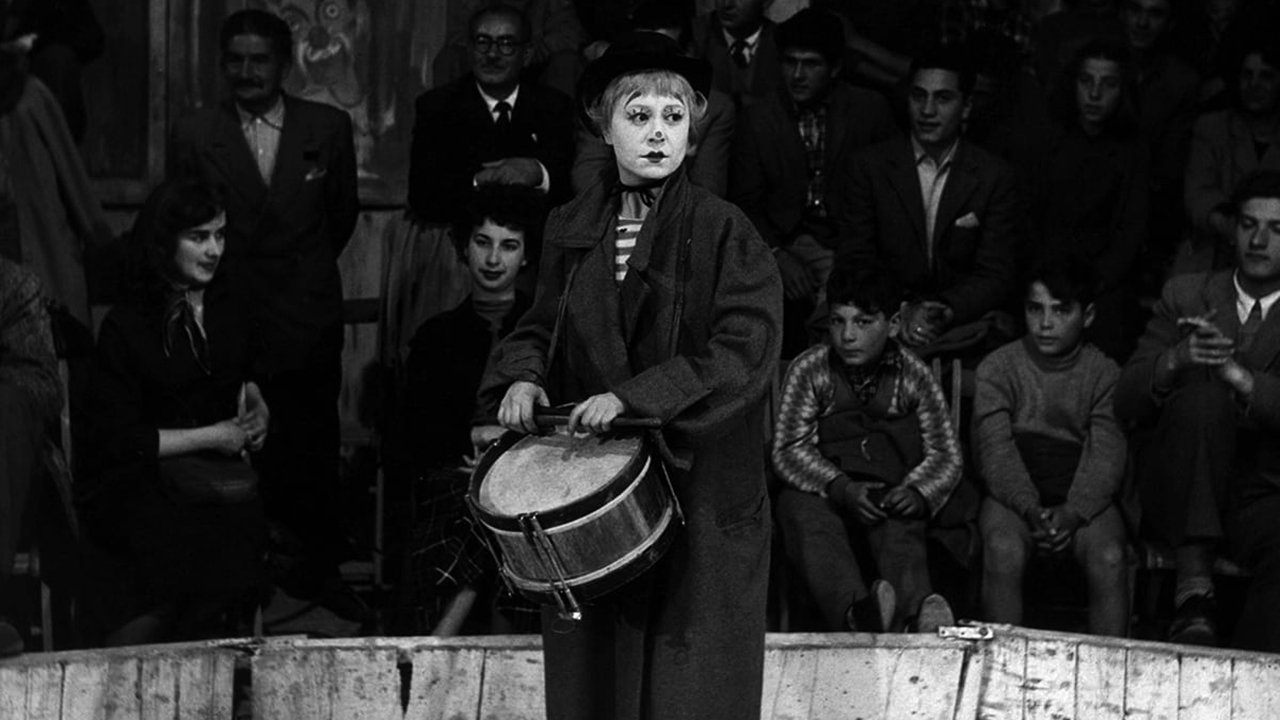
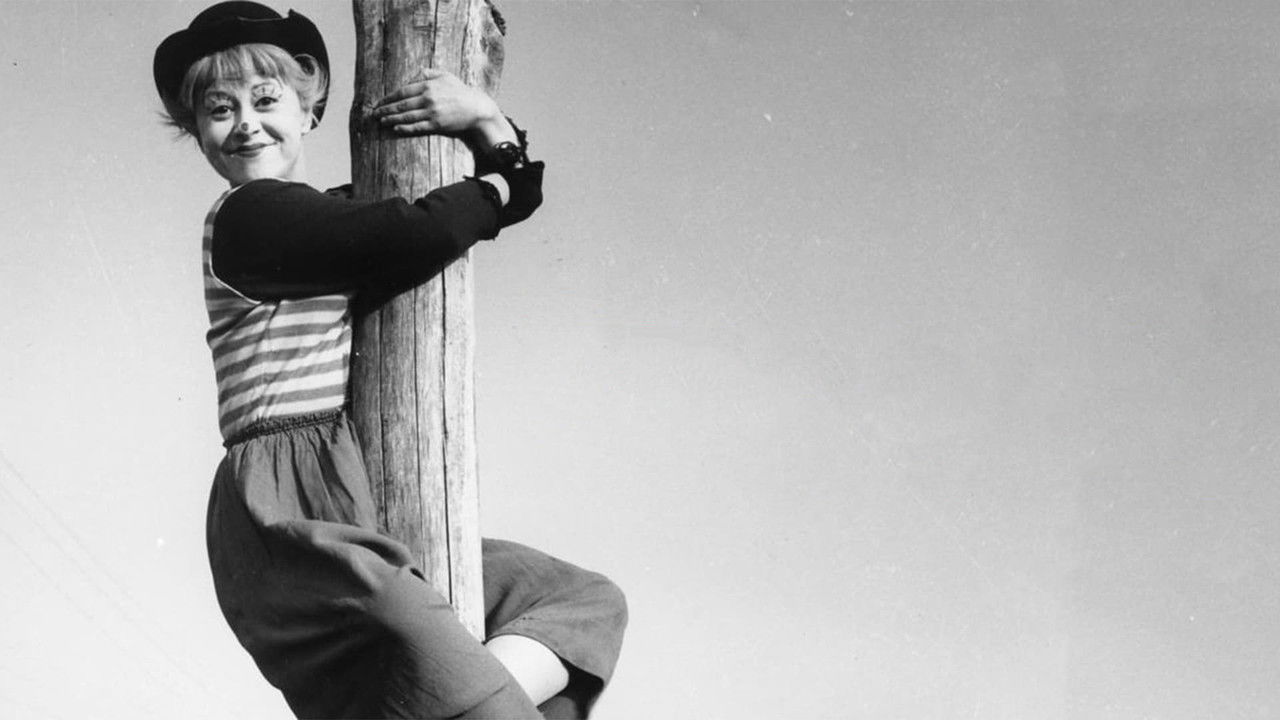
I watched La Strada yesterday while my neighbor was seemingly trying to assemble a flat-pack wardrobe with a sledgehammer, but even that rhythmic thumping couldn't break the spell. There is an ethereal, haunting quality to this film that makes the modern world feel like a noisy, unnecessary distraction. It centers on Gelsomina, played by Giulietta Masina, who is sold by her mother for ten thousand lire and a plate of pasta to a traveling strongman named Zampanò. As she climbs onto his motorcycle-truck hybrid, she isn't just leaving home; she’s entering a spiritual purgatory.
The Clown and the Caveman
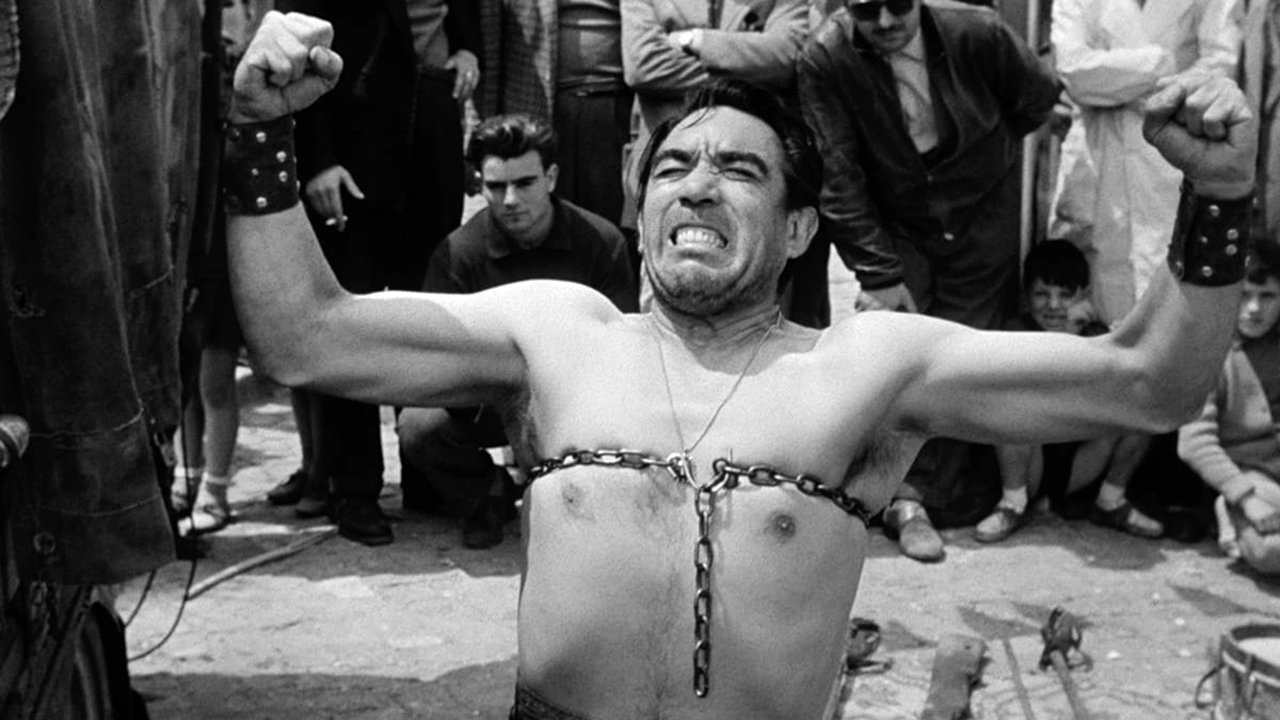
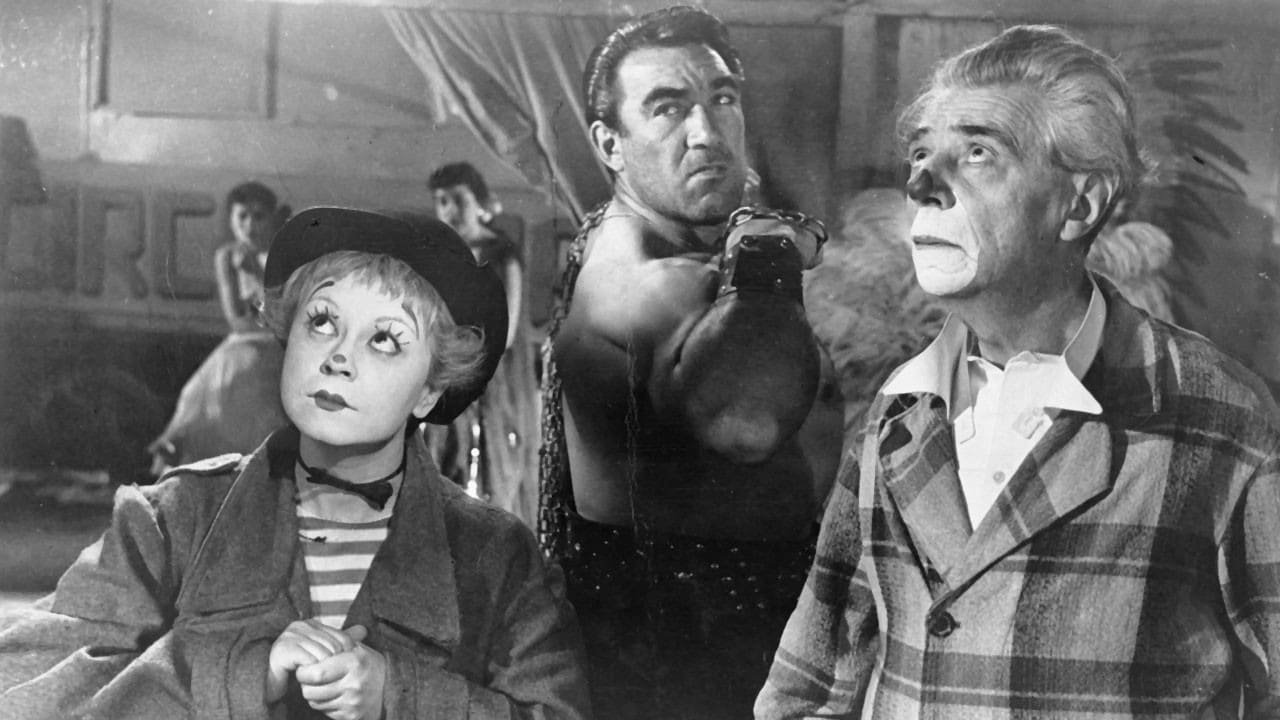
If you only know Anthony Quinn from his later, more "noble" roles like Zorba the Greek (1964), his performance here is a shock to the system. Zampanò is a man of pure muscle and zero introspection. He breaks chains with his chest for pennies and treats Gelsomina with less affection than a damp cigarette. He is essentially a sentient boulder in a leather vest, and Quinn plays him with a terrifying, animalistic vacancy. You keep waiting for the "Golden Age" trope where the brute reveals a heart of gold, but Fellini is more interested in the tragedy of a man who doesn't even know he has a heart until he’s already broken it.
Then there’s Giulietta Masina. With her wide, expressive eyes and Chaplin-esque gait, she is the emotional anchor of the film. She doesn't just act; she radiates. Whether she’s trying to learn the trumpet or simply staring at a hole in her shoe, she represents a radical kind of innocence. Her chemistry with Quinn is fascinating because it’s entirely one-sided. She offers him the world, and he barely offers her a grunt. It’s a dynamic that could feel exploitative, but Fellini frames it with such poetic melancholy that it transcends mere melodrama.
The Philosophy of the Pebble
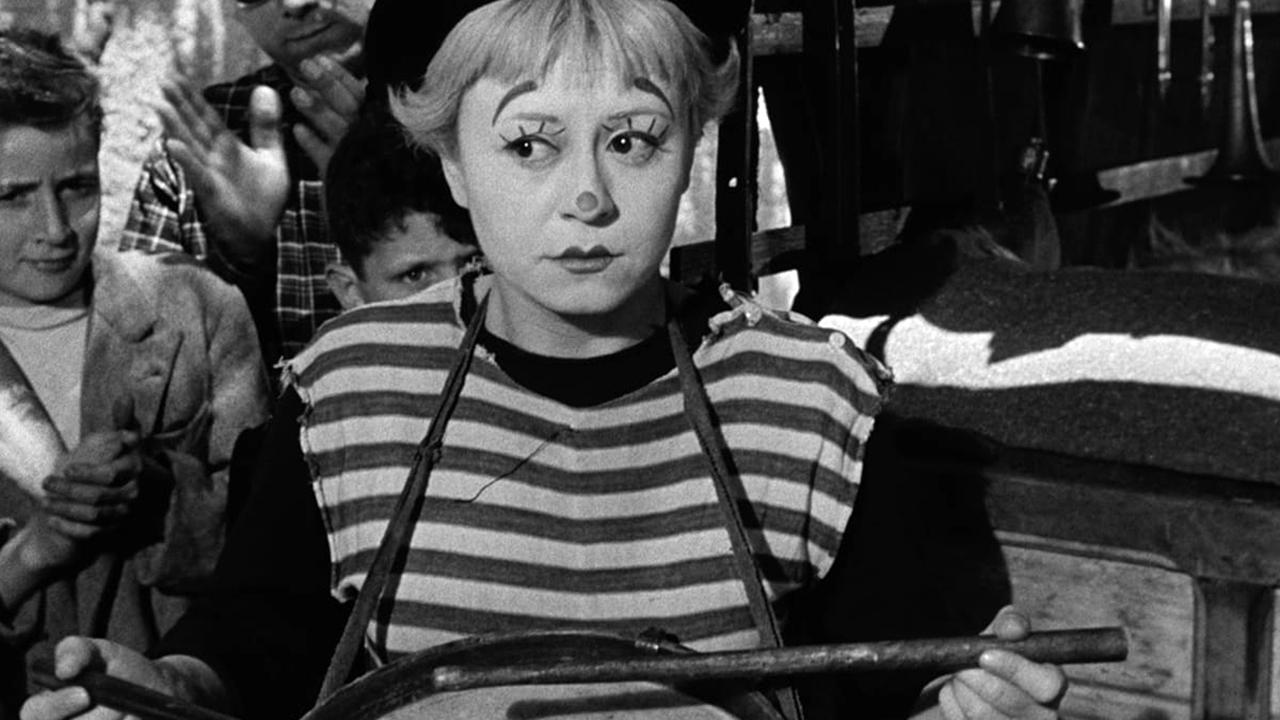
The film shifts gears when they encounter a circus and meet Il Matto ("The Fool"), played by Richard Basehart. If Zampanò is the earth and Gelsomina is the spirit, the Fool is the air. He’s a high-wire artist who taunts Zampanò with an almost suicidal glee. Basehart brings a lightness that the movie desperately needs, but he also delivers the film’s intellectual core.
There is a scene where the Fool picks up a tiny pebble and tells Gelsomina that everything in the universe—even this stone—has a purpose. "If this pebble is purposeless," he says, "then everything is purposeless—even the stars." It’s a simple, crushing bit of existentialism that gives Gelsomina the strength to stay with the man who abuses her. She decides her purpose is to be the one soul who cares for the uncaring Zampanò. Whether that’s a beautiful sacrifice or a tragic delusion is something I’ve gone back and forth on every time I see it. It’s the kind of question that doesn't have an answer, only a feeling.
A Masterpiece Born of Breakdown
Behind the scenes, La Strada was a nightmare. The production was funded by Carlo Ponti and Dino De Laurentiis, who were used to more traditional "star" vehicles. They weren't thrilled with Fellini’s insistence on casting his wife, Giulietta Masina, believing the film needed a bigger name. Meanwhile, the shoot was so grueling that Fellini reportedly suffered a nervous breakdown toward the end, finishing the film in a state of clinical depression. You can feel that raw, frayed energy on the screen.
The score by Nino Rota is also doing a massive amount of heavy lifting here. The main trumpet theme is a haunting, recurring melody that feels like a memory you can’t quite place. This theme will live in your head rent-free until the day you die, and every time you hear it, you’ll see Gelsomina’s face. It’s a perfect example of how sound can elevate a drama into something mythic.
The film was a massive success internationally, winning the very first competitive Academy Award for Best Foreign Language Film. Yet, back in Italy, the hardcore leftist critics hated it. They thought Fellini had "betrayed" the working class by making a movie about souls and pebbles instead of labor unions and economics. Looking at it now, those criticisms feel like ancient history. The politics of 1954 have faded, but the image of Zampanò howling at the stars on a lonely beach remains as sharp as ever.
La Strada is a film that demands you sit still and feel something uncomfortable. It isn't a "fun" watch in the traditional sense, but it is deeply rewarding. It’s a story about the tragedy of being unable to communicate, and the small, quiet miracles that happen when we try anyway. If you can handle a bit of heartbreak mixed with your popcorn, this is a mandatory stop on your cinematic journey. It’s a reminder that even the roughest, most broken among us are looking for a reason to matter.
Keep Exploring...
-
La Dolce Vita
1960
-
Amarcord
1973
-
8½
1963
-

All About Eve
1950
-

Ikiru
1952
-
Tokyo Story
1953
-
Sabrina
1954
-
Rebel Without a Cause
1955
-
Throne of Blood
1957
-
Wild Strawberries
1957
-
Hiroshima Mon Amour
1959
-
The Grapes of Wrath
1940
-

Laura
1944
-
The Treasure of the Sierra Madre
1948
-
Sunset Boulevard
1950
-
High Noon
1952
-
Seven Samurai
1954
-

The Ten Commandments
1956
-
12 Angry Men
1957
-

The Seventh Seal
1957