The Ten Commandments
"The original blockbuster that redefined cinematic scale."
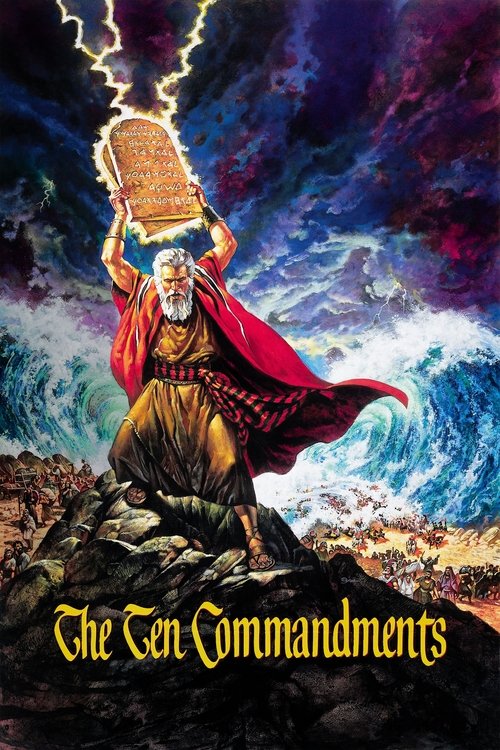
The sheer, stubborn audacity of Cecil B. DeMille is something we don’t see much of anymore. I recently sat down to rewatch The Ten Commandments on a Tuesday night while eating a slightly over-salted bowl of microwave popcorn, and I realized about two hours in—around the time Charlton Heston starts wrestling with his destiny in the desert—that this isn’t just a movie. It’s a 220-minute flex. It’s a director at the twilight of his career, backed by Paramount’s bottomless pockets, deciding to put the entire Book of Exodus on screen with the subtlety of a lightning strike.

Released in 1956, this was the peak of the "Big Picture" era. Hollywood was terrified of that glowing box in everyone’s living room (the TV), so it responded with VistaVision, Technicolor so saturated it practically bleeds, and a runtime that requires a lunch break. If you’re going to watch this, you have to surrender to the spectacle. Watching this film in one sitting is essentially a cardiovascular event.
The Battle of the Egos
At the heart of this sprawl is a casting masterstroke: the showdown between Charlton Heston (Moses) and Yul Brynner (Rameses). Heston, who had previously worked with DeMille on The Greatest Show on Earth, brings a literal stoniness to the role. He doesn’t just play Moses; he becomes a monument. But the real joy for me has always been Yul Brynner. Fresh off his success in The King and I, Brynner plays Rameses as a man who is roughly 40% muscle and 60% pure, unadulterated arrogance.
The chemistry between them isn't friendly; it's tectonic. When Brynner sneers, "So let it be written, so let it be done," you believe him because he looks like he could bench-press the Sphinx. On the other side of the palace, you have Anne Baxter as Nefretiri, delivering lines with a breathless, campy intensity that feels like it belongs in a high-end soap opera. "Oh, Moses, Moses, you stubborn, splendid, adorable fool!" she purrs. It’s glorious, over-the-top, and exactly what a mid-century epic needs to keep from becoming a dry Sunday school lesson.
Philosophy in Technicolor

While it’s easy to get lost in the gold-leaf sets and the sheer number of extras (apparently DeMille used 14,000 people and 15,000 animals, which sounds like a logistical nightmare I wouldn’t wish on my worst enemy), there’s a deeper intellectual layer here. DeMille was a staunch conservative during the Cold War, and he didn't hide it. He actually appears in a filmed prologue to tell the audience that the movie is about whether men should be ruled by God's law or a tyrant's whims.
It’s a drama that asks a very 1950s question: Where does freedom come from? By framing the Hebrews’ struggle against the Egyptian Empire, DeMille was drawing a direct line to the anxieties of the nuclear age. The film treats the concept of "Law" not as a set of boring rules, but as the literal birth of human dignity. When the Ten Commandments are finally carved into stone with those animated fireballs, it isn't just a special effect; it’s meant to be the moment the "individual" is born. It’s a heavy philosophical lift for a film that also features Edward G. Robinson as the sleazy Dathan, sounding suspiciously like he’s still in a 1940s gangster flick like Key Largo.
The Scale of the Impossible
We have to talk about the Red Sea. In an age of CGI where anything is possible (and therefore nothing feels impressive), the 1956 parting of the waters remains a staggering achievement of practical craft. They used giant U-shaped tanks at Paramount, dumping 360,000 gallons of water and then playing the footage in reverse. It took months to composite. When you see those walls of water, you’re seeing the peak of studio-system craftsmanship.
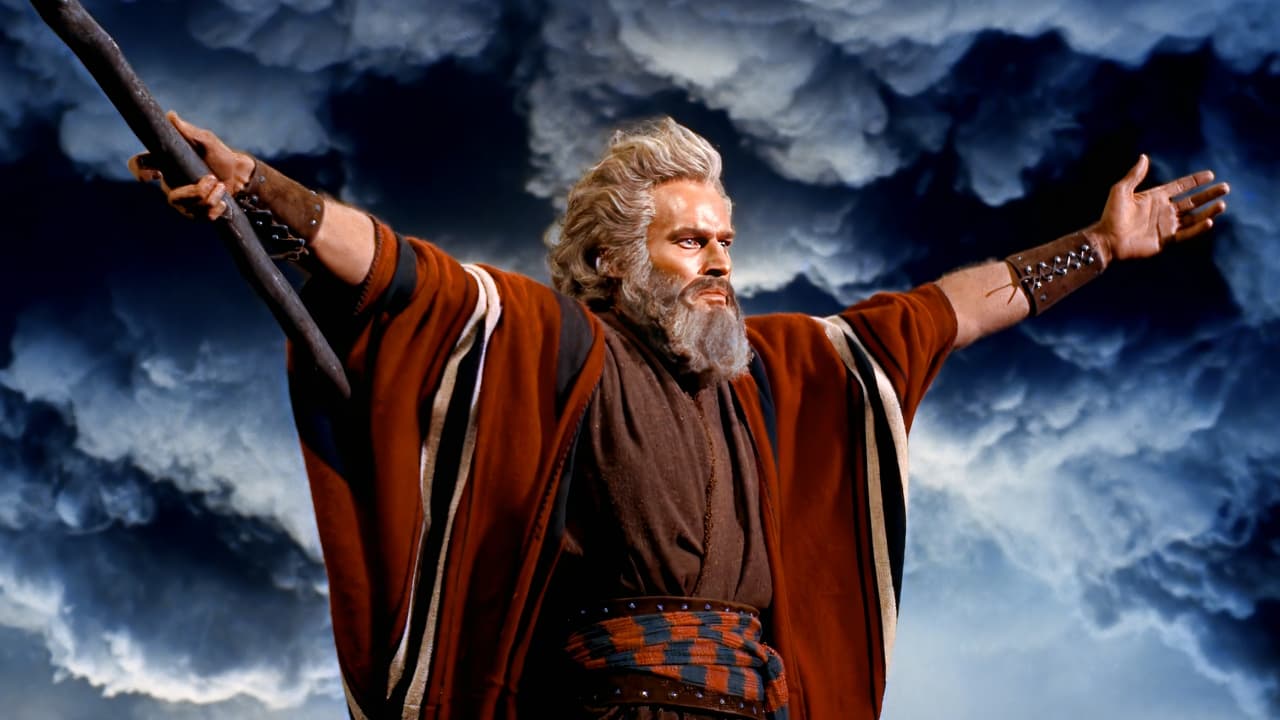
The budget was a then-unheard-of $13 million. To put that in perspective, Paramount was basically betting the studio on the idea that people wanted to see the Bible in widescreen. It worked. The film pulled in over $122 million during its initial run—which would be well over a billion dollars today. People didn't just watch it; they lived with it. My grandmother once told me that when this movie played in her town, the local theater smelled like a mix of floor wax and heavy perfume because everyone treated it like a formal event.
Ultimately, The Ten Commandments is the quintessential "Golden Age" experience. It’s long, it’s loud, and it’s occasionally a bit ridiculous, but it has a sincerity that modern blockbusters often lack. Whether you’re watching it for the historical curiosity of Yvonne De Carlo as Sephora or the sheer technical wizardry of the plagues, it demands your attention. It’s a reminder that once upon a time, Hollywood didn't just make movies—it built cathedrals of light and sound and invited the whole world to walk inside.
Take the afternoon off, turn your phone on silent, and let DeMille tell you a story. Just make sure you have a comfortable chair.
Keep Exploring...
-

Ben-Hur
1959
-

Throne of Blood
1957
-
Hiroshima Mon Amour
1959
-

The Color Purple
1985
-
Apocalypto
2006
-
High Noon
1952
-
Sabrina
1954
-
Rebel Without a Cause
1955
-
12 Angry Men
1957
-
Touch of Evil
1958
-

Hero
2002
-

The King's Speech
2010
-

All About Eve
1950
-

The Bridge on the River Kwai
1957
-

Ikiru
1952
-
Tokyo Story
1953
-
La Strada
1954
-
Seven Samurai
1954
-

The Seventh Seal
1957
-
Wild Strawberries
1957