12 Angry Men
"Twelve men. One room. Justice is on the clock."
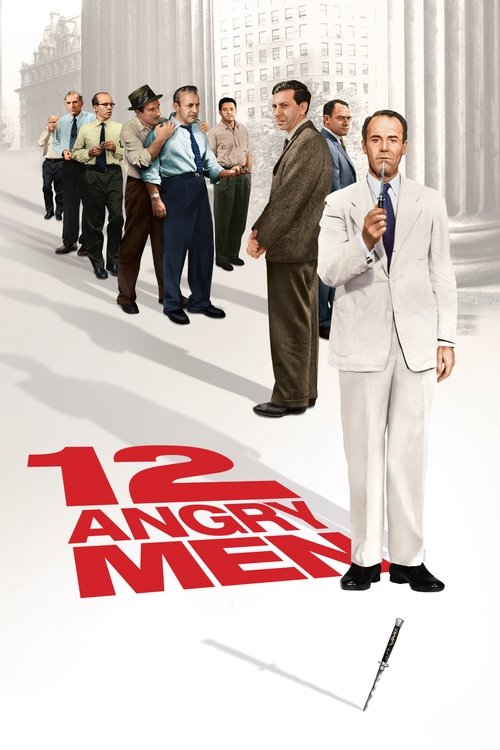
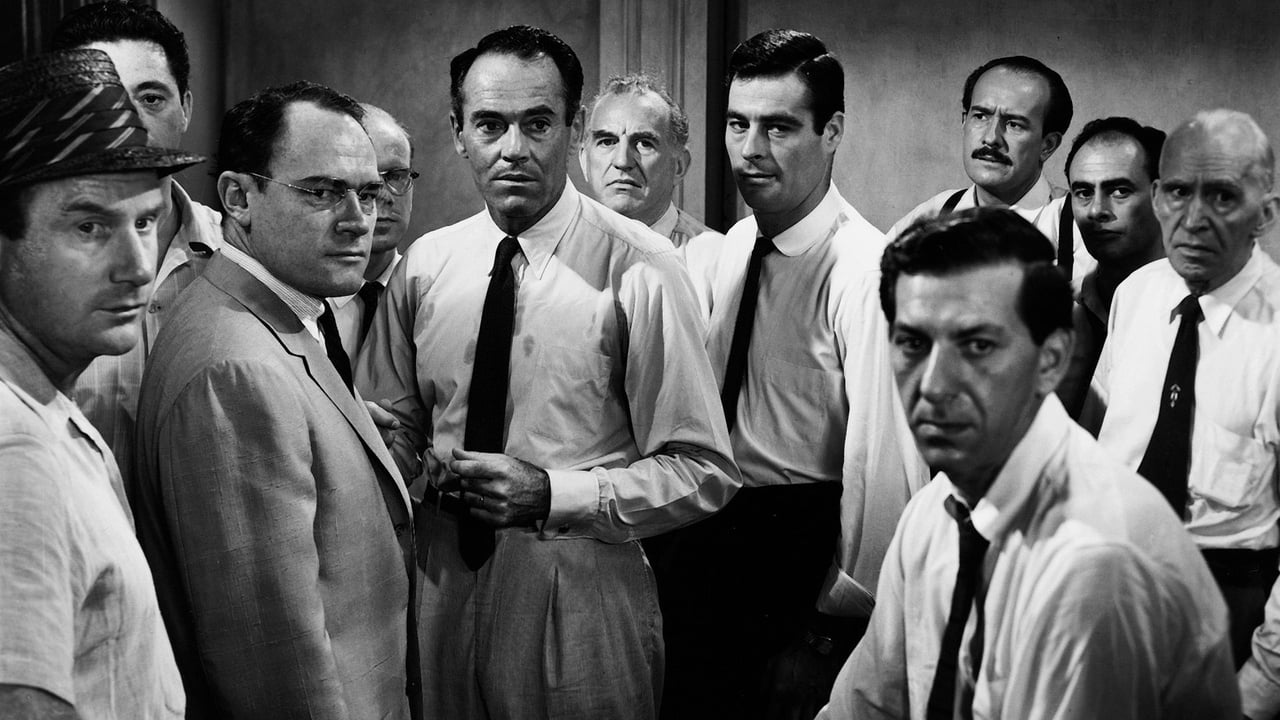
I’m sitting in my living room with the AC cranked down to 68 degrees, yet my palms are sweating. That is the sheer, kinetic power of 12 Angry Men. It is a film that takes place almost entirely within a single, sweltering room, yet it feels more expansive and high-stakes than most modern superhero epics. I first watched this on a grainy laptop screen while eating a slightly burnt grilled cheese sandwich, and even then, I couldn’t look away to reach for a napkin.
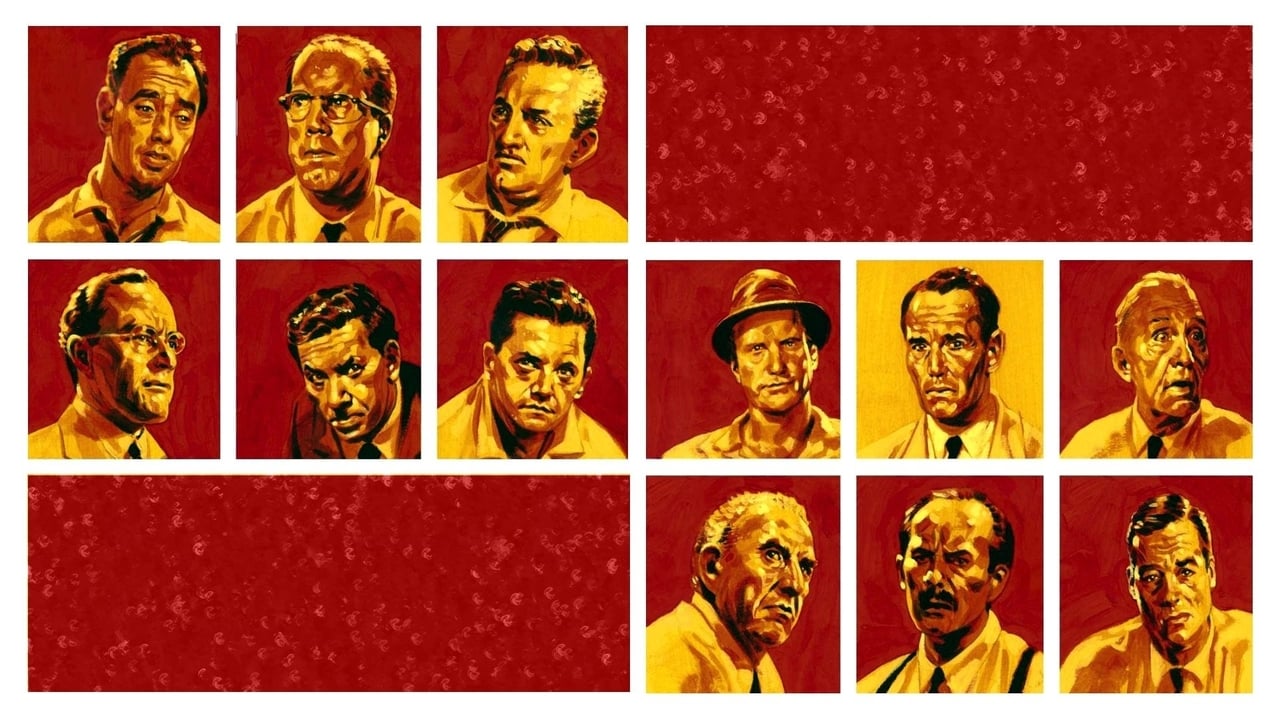
Sidney Lumet’s directorial debut is a miracle of economy. There are no flashbacks, no courtroom theatrics from a surprise witness, and no "gotcha" evidence revealed at the last second. It’s just twelve men, a long table, and a fan that refuses to work. It’s a movie about the process of thinking, which, in the hands of a lesser filmmaker, would be a recipe for a nap. Instead, it’s a masterclass in tension.
The Architecture of a Pressure Cooker
The film starts with a deceptively simple premise: a 16-year-old boy is on trial for killing his father. To the jury, it looks like an open-and-shut case. They want to vote "guilty" and get home to their ball games and dinner dates. But Henry Fonda (Juror 8) stands alone, casting the single "not guilty" vote. He isn’t even sure the boy is innocent; he just thinks they owe it to a human life to talk for an hour.
What follows is a slow-burn psychological interrogation. I love how Lumet and cinematographer Boris Kaufman use the camera to make the room feel smaller as the runtime progresses. In the beginning, the shots are wide and the camera is positioned above eye level. By the end, the lenses have changed, the camera is lower, and the frames are packed tight with faces. You can practically smell the cheap cigars and the nervous perspiration. The legal system would be 50% more efficient if we just fixed the air conditioning in every jury room, because half the conflict here stems from twelve men being trapped in a literal and metaphorical oven.
Performances that Cut Deep
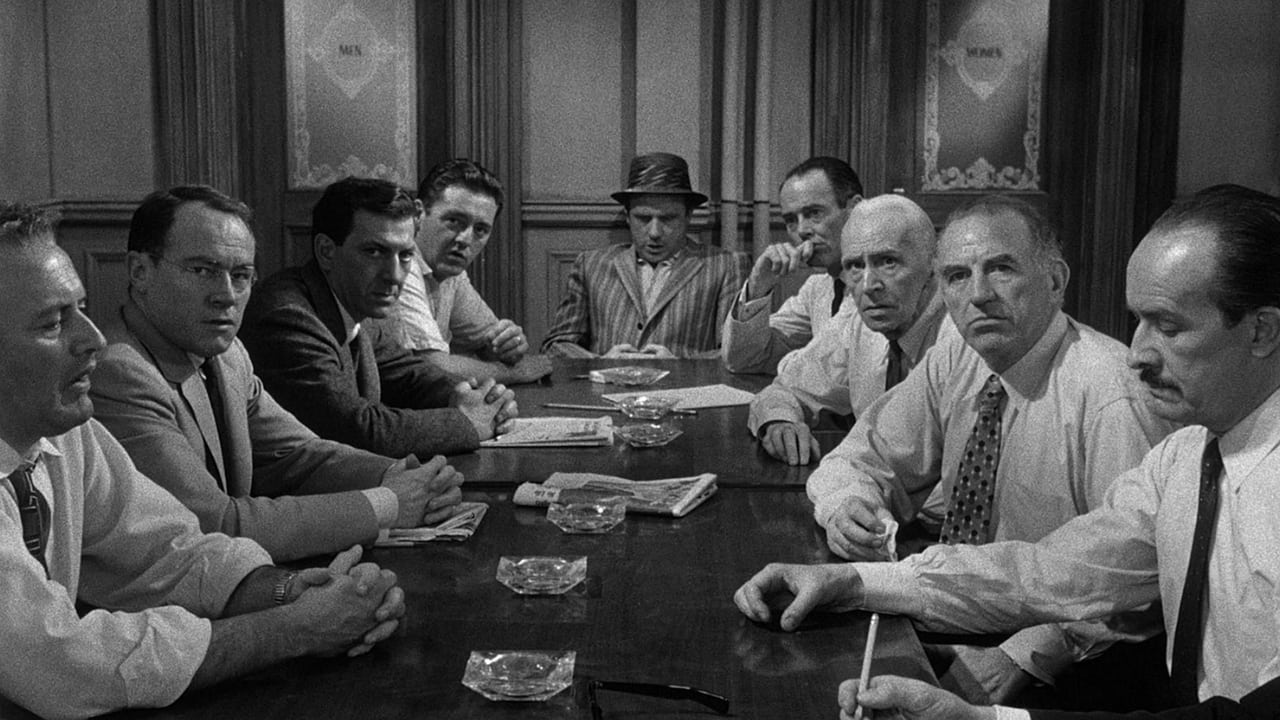
This is an ensemble piece in the truest sense. Martin Balsam tries to maintain order as the foreman, while John Fiedler brings a nervous, mousy energy that makes you want to protect him. On the opposite end of the spectrum is Lee J. Cobb as Juror 3. He is the film’s "villain," if you can call him that, but his performance is heartbreaking. He isn't just angry at the defendant; he’s angry at his own life, his own son, and a world he can no longer control.
The way E.G. Marshall plays Juror 4—the stoic, logical stockbroker—is a perfect foil to the raw, street-smart energy of Jack Klugman. I found myself fascinated by Edward Binns, who plays a "working man" who just wants to do the right thing but isn't sure how to articulate it. These aren't just characters; they are archetypes of the American psyche in 1957. Watching them clash is like watching a live-wire hit a puddle.
A Prestige Masterpiece Born from Television
It’s easy to forget that 12 Angry Men began its life as a television play for Studio One in 1954. Bringing it to the big screen was a gamble, and it’s one that didn't immediately pay off at the box office. Despite its current status as a "God Tier" classic, it actually lost money during its initial run. I think 1957 audiences might have been looking for the widescreen Technicolor spectacle of something like The Bridge on the River Kwai, which ultimately beat 12 Angry Men for Best Picture at the Oscars.
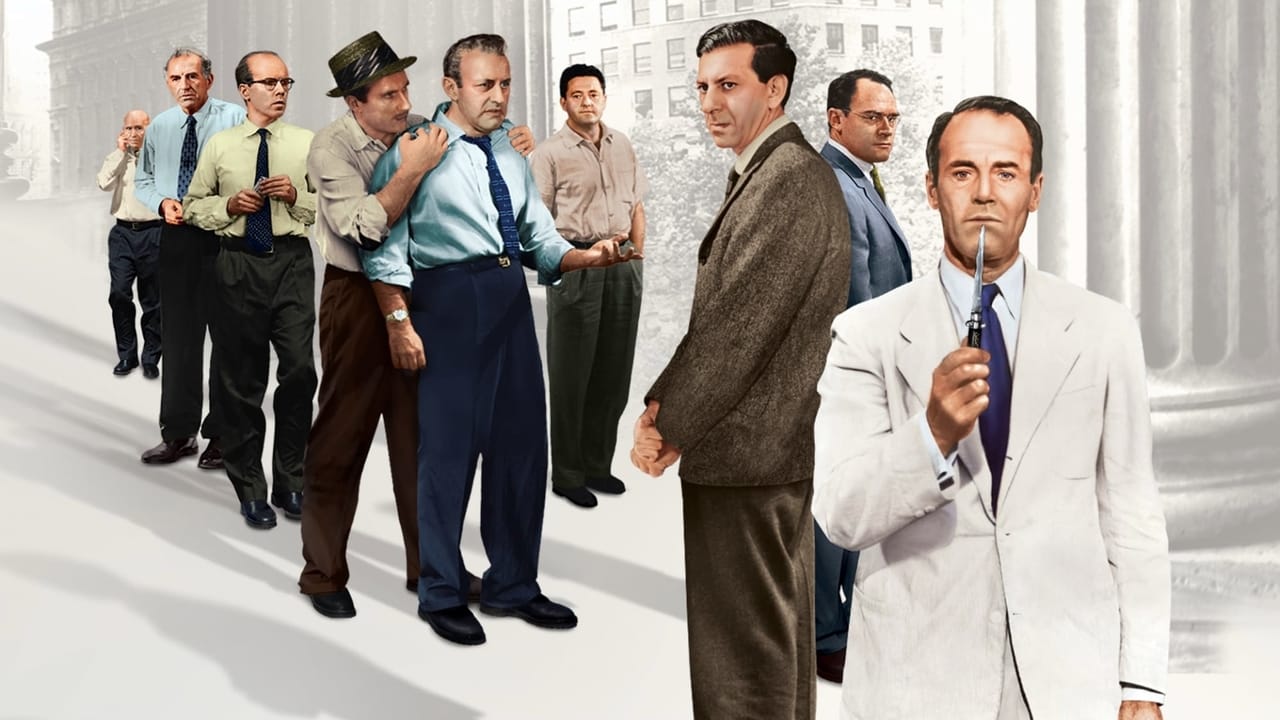
The film earned three Academy Award nominations: Best Picture, Best Director for Lumet, and Best Adapted Screenplay for Reginald Rose. While it walked away empty-handed that night, its legacy has outstripped almost everything else from that year. It’s a "prestige" film that doesn’t feel like homework. It’s a "message" movie that doesn't feel like it's lecturing you. It’s a philosophical inquiry into the nature of "reasonable doubt"—an idea that is the only thing standing between a person and a death sentence.
12 Angry Men is a rare perfect film. It proves that you don't need a hundred million dollars or a globe-trotting plot to create a gripping narrative; you just need a deep understanding of human frailty and a script that treats its audience as adults. It challenges me every time I watch it to examine my own prejudices and the snap judgments I make every day. If you haven't seen it, stop what you’re doing. It’s 97 minutes of pure, uncut cinematic excellence that will leave you thinking long after the credits roll. It’s the kind of movie that makes me proud to be a film fan.

Keep Exploring...
-
Seven Samurai
1954
-
The Seventh Seal
1957
-

Ben-Hur
1959
-
Citizen Kane
1941
-
Casablanca
1943
-
It's a Wonderful Life
1946
-
High Noon
1952
-
Network
1976
-
Paths of Glory
1957
-
Dog Day Afternoon
1975
-

The Ten Commandments
1956
-
The Grapes of Wrath
1940
-

Laura
1944
-
The Treasure of the Sierra Madre
1948
-

All About Eve
1950
-
Sunset Boulevard
1950
-

Ikiru
1952
-
Tokyo Story
1953
-
La Strada
1954
-

On the Waterfront
1954