The Bridge on the River Kwai
"A monument to the madness of duty."
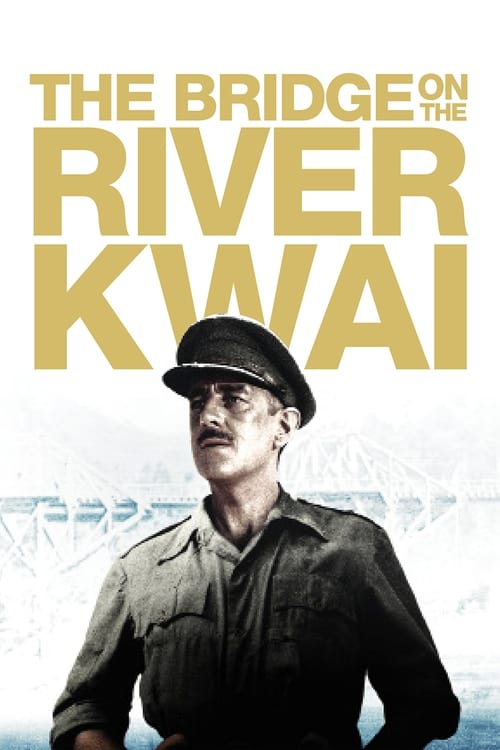
The first thing that hits you isn't the heat or the jungle—it’s that damn whistle. The "Colonel Bogey March" is one of cinema’s greatest bait-and-shifts. It sounds like a jaunty tune of defiance, a musical middle finger to the Japanese captors, but as I sat watching this for the third time, I realized it’s actually the sound of a collective psychological breakdown. By the time the British POWs march into the camp, dusty and rhythmic, you aren't just watching a war movie; you’re watching a study of how the human ego can survive a cage only to build a better one for itself.
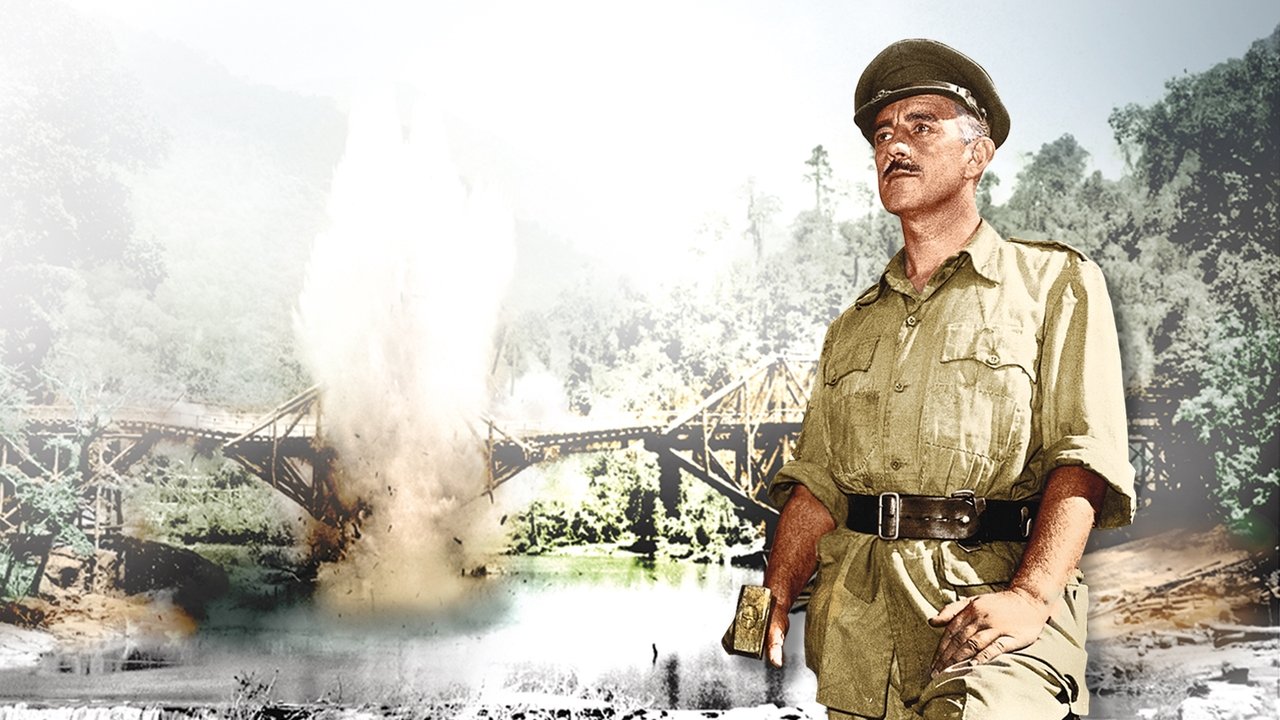
I watched this latest viewing on a grainy laptop screen while my neighbor was aggressively mowing their lawn, and honestly, the roar of the mower outside perfectly mirrored the mounting, inescapable tension of the jungle heat on screen. It’s a film that demands you feel uncomfortable.
The Stiff Upper Lip as a Noose
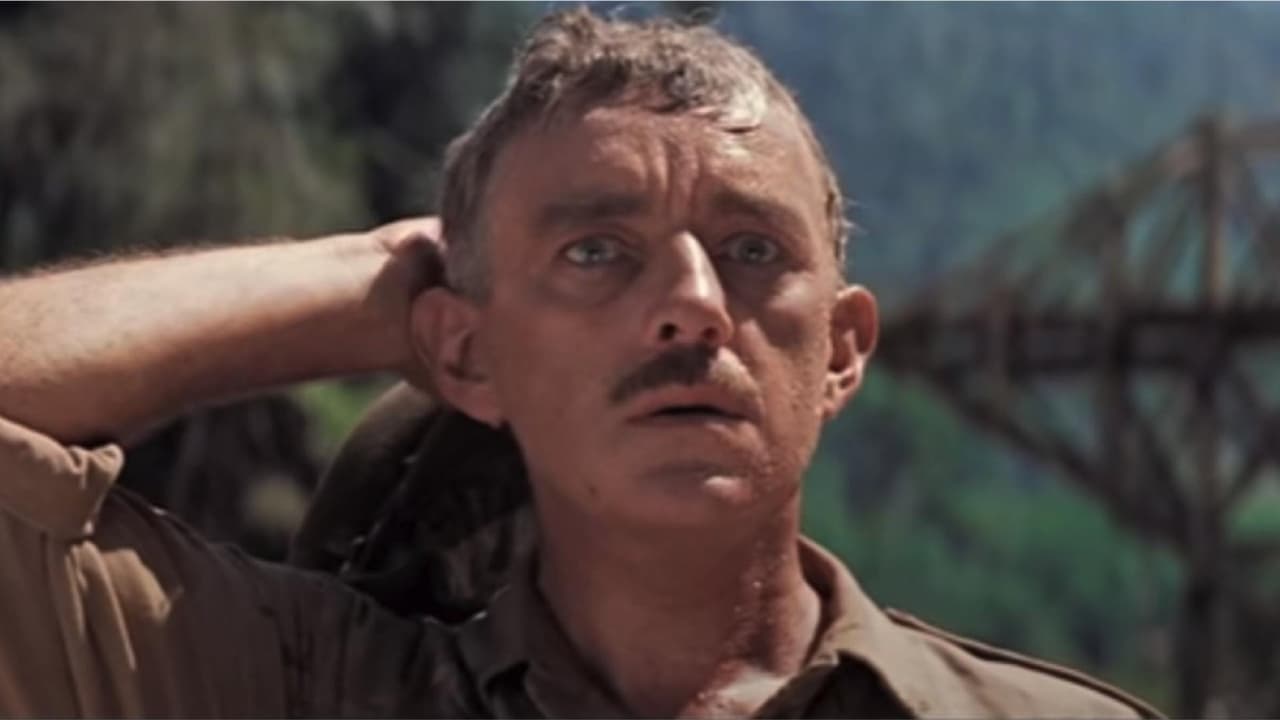
At the center of this hurricane is Alec Guinness as Colonel Nicholson. If you only know him as a certain space wizard, prepare to see a different kind of obsession. Nicholson is the embodiment of the British "stiff upper lip," but David Lean (fresh off his success with Summertime and heading toward the even grander Lawrence of Arabia) shows us how that discipline can curdled into insanity.
Nicholson refuses to let his officers work, citing the Geneva Convention while being slapped across the face with his own swagger stick by Sessue Hayakawa’s Colonel Saito. It’s a battle of wills that is intensely physical, yet quiet. Alec Guinness plays Nicholson with a terrifyingly calm conviction; he believes that by building the best possible bridge for his enemy, he is proving British superiority. Here is my hot take: Colonel Nicholson is the true antagonist of the film, a man whose pride becomes more lethal than any Japanese bayonet.
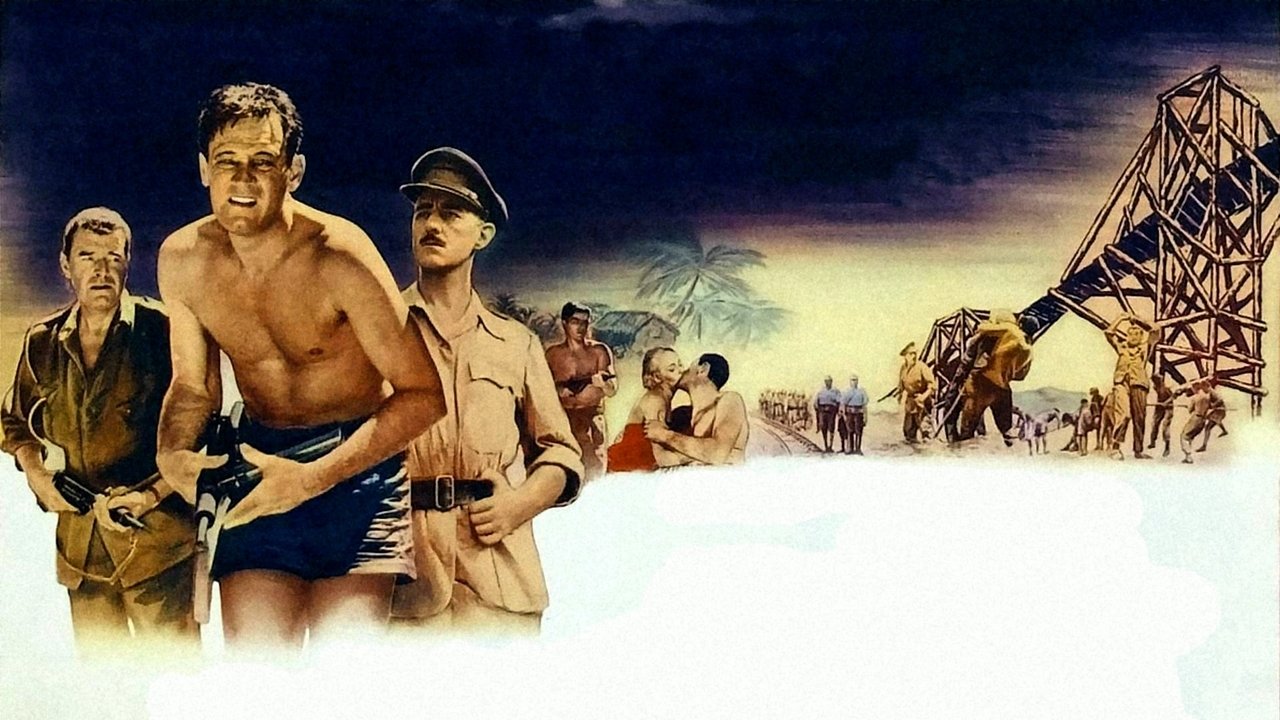
On the flip side, we have William Holden as Shears. Holden was the quintessential American star of the Golden Age, often playing cynical men with a hidden heart (think Sunset Boulevard or Stalag 17). Here, he is the audience’s proxy. He’s the only one who realizes that building a bridge for the people trying to kill you is, well, insane. The chemistry between his pragmatism and the British officers' obsession is where the film's moral gray area lives.
The Subversive Spirit of the Blacklist
While The Bridge on the River Kwai looks like a massive studio epic, it carries the DNA of an "indie" rebellion. This was produced by Sam Spiegel through Horizon Pictures, and it famously bucked the Hollywood system of the time. The most fascinating bit of "independent" hustle? The screenplay.
Because of the McCarthy-era Red Scare, writers Carl Foreman (who wrote High Noon) and Michael Wilson were blacklisted. They couldn't be credited, so the studio gave the writing credit to Pierre Boulle, the author of the original French novel. The irony is delicious and dark: Boulle didn’t even speak English. When the film won the Oscar for Best Screenplay, the man who "wrote" it couldn't have even read the script. This wasn't just a studio product; it was a high-stakes shell game played to get a sophisticated, anti-war message past the censors and the political witch hunts of the 50s.
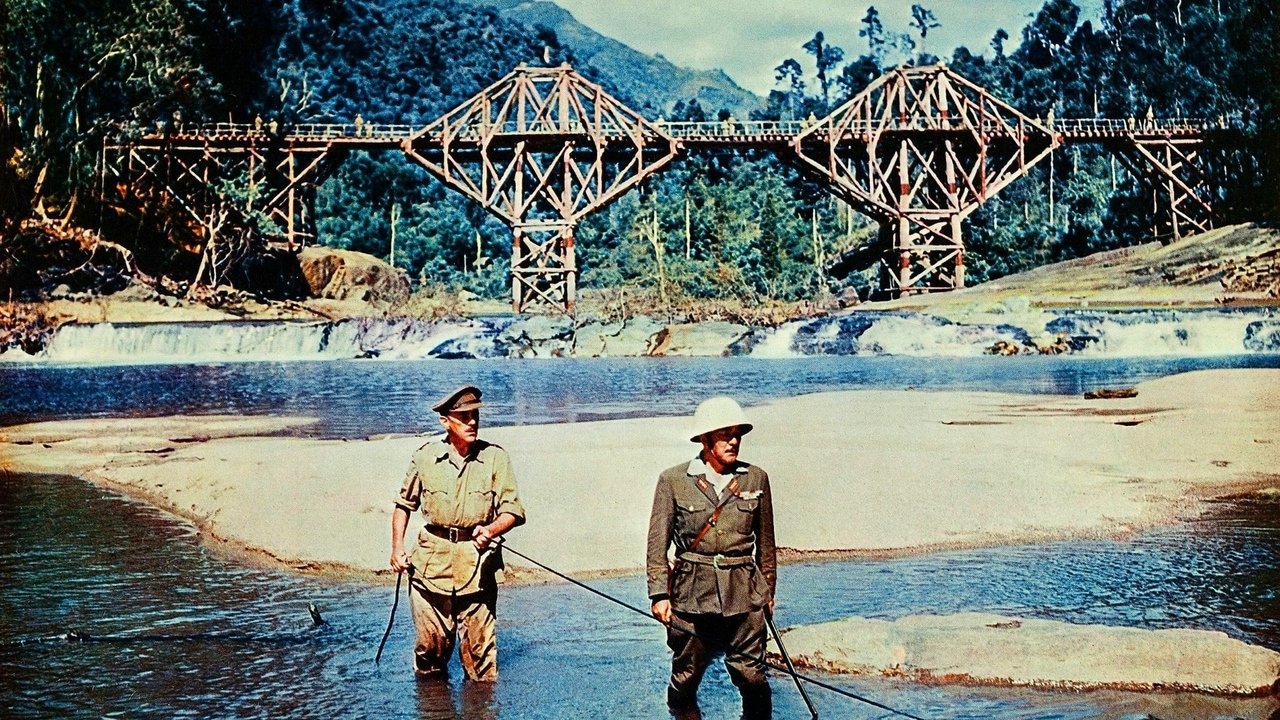
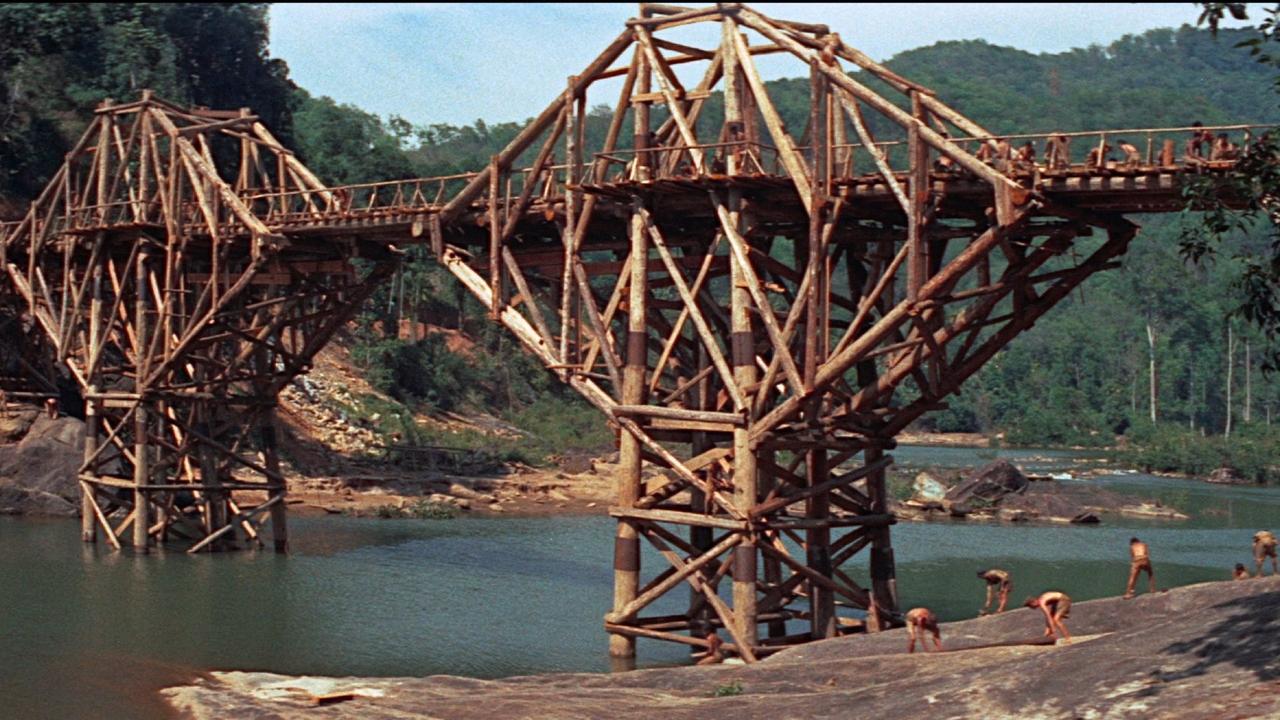
The production was its own kind of madness. They didn't use a backlot or miniatures for the climax. They built a real, massive wooden bridge in the jungles of Ceylon (now Sri Lanka) using 1,000 elephants and then actually blew it up. That's the kind of technical glamour and commitment to realism that defines this era—it’s a $2.8 million gamble that makes modern CGI looks like a child’s drawing.
The Slow Burn to "Madness"
The film is long—161 minutes—but it never feels bloated because the stakes are constantly shifting. We move from a prison drama to a survivalist trek, finally converging on that riverbank for a finale that is as heart-pounding as it is heartbreaking. Jack Hawkins and Geoffrey Horne bring a desperate energy to the commando mission, contrasting with the slow, methodical construction of the bridge.
The cinematography by Jack Hildyard captures the jungle not as a lush paradise, but as a stifling, claustrophobic green wall. And then there is the ending. No spoilers, but James Donald, playing the camp doctor, gets the final word, and it’s the only word that fits. It’s a gut-punch that reminds you that in war, even your "achievements" are just fuel for the fire.
The Bridge on the River Kwai is that rare epic that manages to be both gargantuan in scale and microscopic in its psychological detail. It captures the transition of 1950s Hollywood from simple "good vs. evil" narratives into something much more complex and disturbing. Whether you’re here for the historical craftsmanship or the sheer tension of the ticking clock, it’s a film that stays with you long after the whistling stops. It’s a masterclass in how to tell a story where the greatest explosion isn't the bridge, but the shattering of a man's delusions.
Keep Exploring...
-
Lawrence of Arabia
1962
-
Doctor Zhivago
1965
-
Rome, Open City
1945
-
Paths of Glory
1957
-

On the Waterfront
1954
-
The Night of the Hunter
1955
-
Witness for the Prosecution
1957
-
Anatomy of a Murder
1959
-
High Noon
1952
-
Spartacus
1960
-
The Great Escape
1963
-
Joyeux Noel
2005
-
The Boy in the Striped Pyjamas
2008
-
The Great Dictator
1940
-
Rope
1948
-

Rashomon
1950
-
Ben-Hur
1959
-
Battleship Potemkin
1925
-
Patton
1970
-
Barry Lyndon
1975