Rio Bravo
"The most relaxing standoff in the history of the West."

The first four minutes of Rio Bravo are a masterclass in silent storytelling that would make Buster Keaton proud. There is no dialogue—just a drunk, a bully, and a sheriff with a very disappointed face. We see Dean Martin’s "Dude" crawling for a coin in a spittoon, John Wayne kicking it away in disgust, and the subsequent violence that lands a local tycoon’s brother in a jail cell. By the time the first line is spoken, we know exactly who these men are, what they’ve lost, and the impossible pressure cooker they’ve just climbed into.
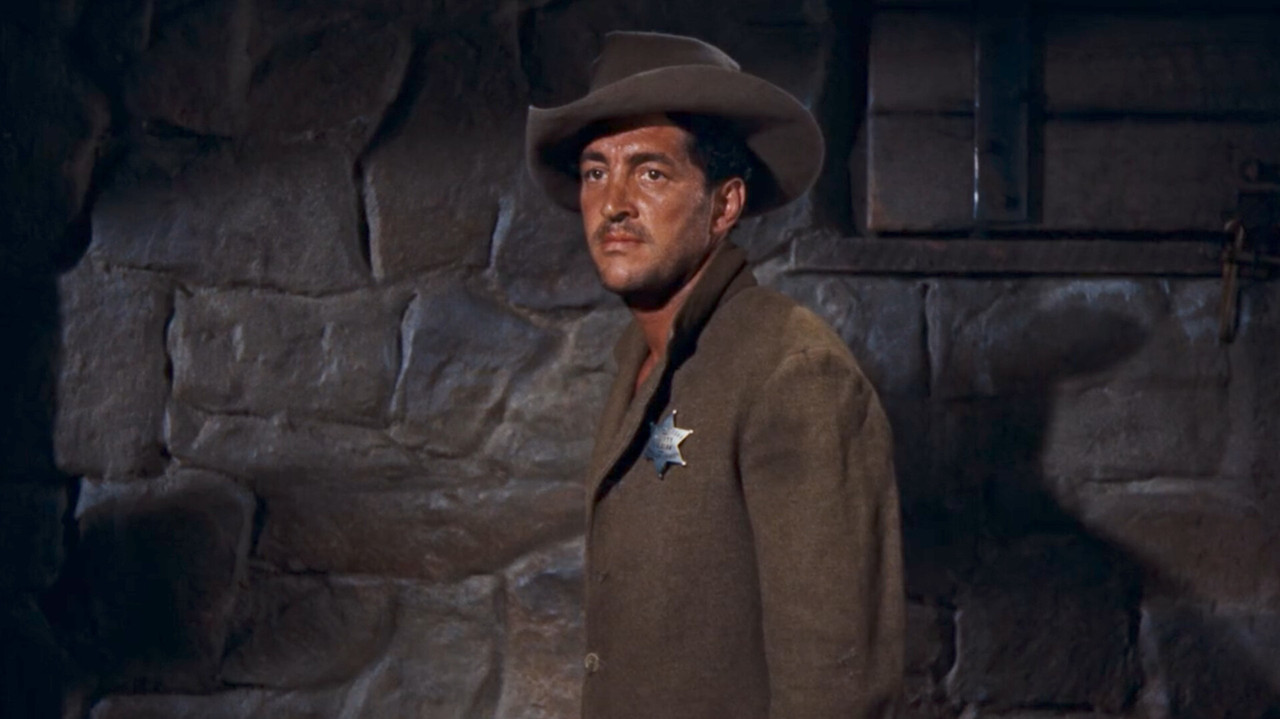
I watched this most recently on a sweltering Tuesday afternoon while my air conditioner was making a sound like a blender full of gravel. Somehow, the dusty, sun-baked streets of Old Tucson on screen made my own living room feel cooler. That is the magic of Howard Hawks; he doesn’t just show you a world, he lets you move in for a couple of hours.
A Western Where Nothing Happens (And It’s Perfect)
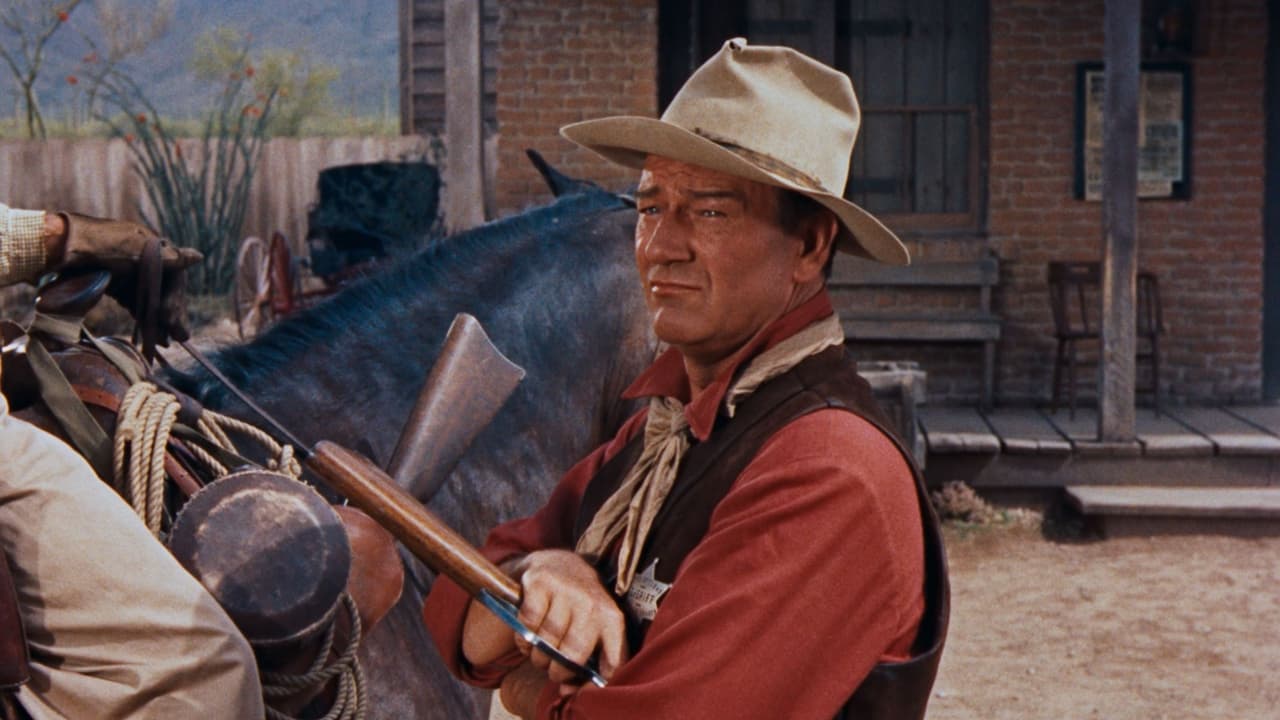
Most Westerns are about the journey or the final showdown. Rio Bravo is about the waiting. It’s essentially a "hangout movie" disguised as a thriller. Sheriff John T. Chance (John Wayne) has a killer in his jail, and a small army of mercenaries is waiting outside the town limits to spring him. Chance’s "deputies" are a recovering alcoholic with the shakes, a gimpy old man with a shotgun named Stumpy (Walter Brennan), and a kid who’s fast with a gun but hasn’t seen enough life to be scared yet (Ricky Nelson).
While other directors of the era were trying to make "Important Films" with capital letters, Hawks was interested in professional dignity. He famously made this film as a "get-off-my-lawn" response to High Noon. Wayne and Hawks hated the idea of a lawman running around town crying for help from the citizens. In their world, if you’re a professional, you do the job with the tools you have—even if those tools are a broken-down drunk and a guy who literally lives in the jailhouse.
The Philosophy of "Good Enough"
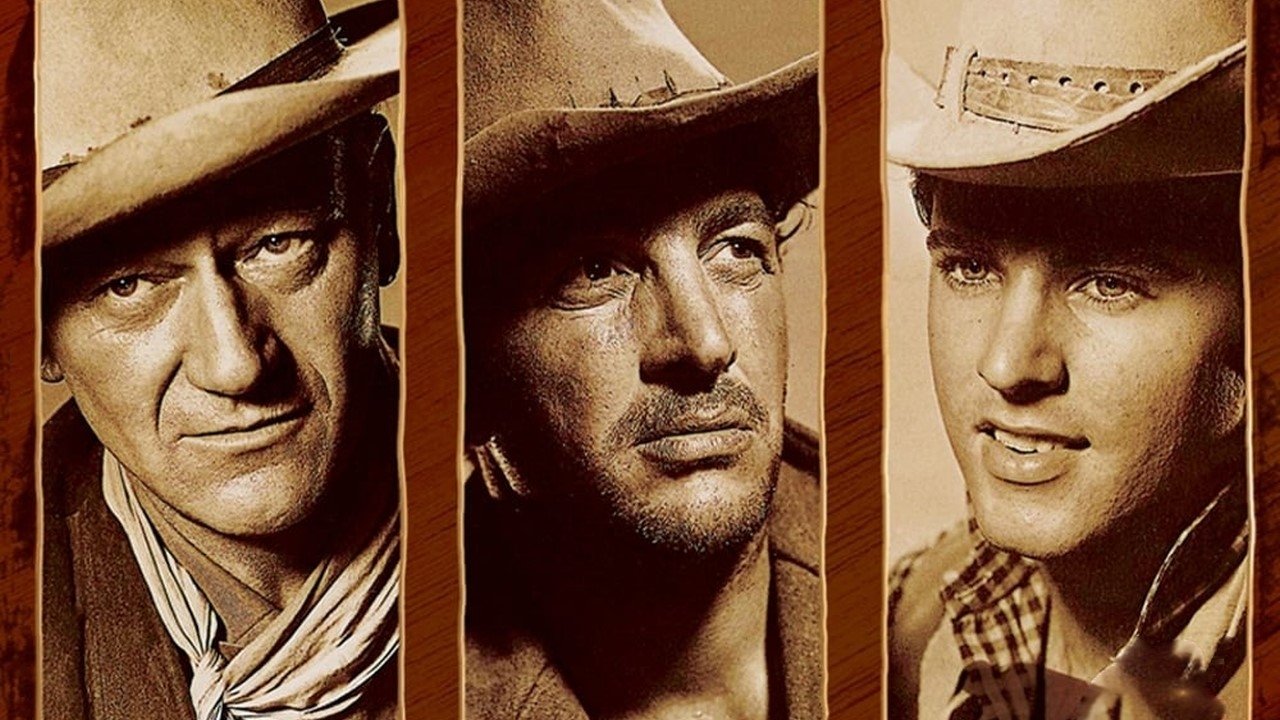
The drama here isn't just about the looming gunfight; it’s about the internal siege of Dean Martin. This might be the finest performance of his career. As "Dude," he has to claw his way back to self-respect, and Hawks gives him the room to do it slowly. There’s a scene where he tries to roll a cigarette with trembling hands, and the silence is agonizing. When he finally gets it right, it feels like a bigger victory than any shootout.
Then there’s Angie Dickinson as Feathers. In a genre that usually treats women as either "The Schoolmarm" or "The Lady of the Night," Feathers is a revelation. She is fast-talking, independent, and she breathes more life into a pair of black stockings than most actors do with a three-page monologue. Her chemistry with Wayne is delightful because she’s the only person in the movie who isn't afraid of him. She mocks his authority, teases his stoicism, and essentially bullies the Sheriff into falling in love with her.
The film asks a recurring question: "Is he good enough?" Chance asks it about the kid, about Dude, and about himself. It’s a deeply human way to look at heroism. It’s not about being invincible; it’s about being reliable when the chips are down.
Technicolor, Tunes, and Tequila
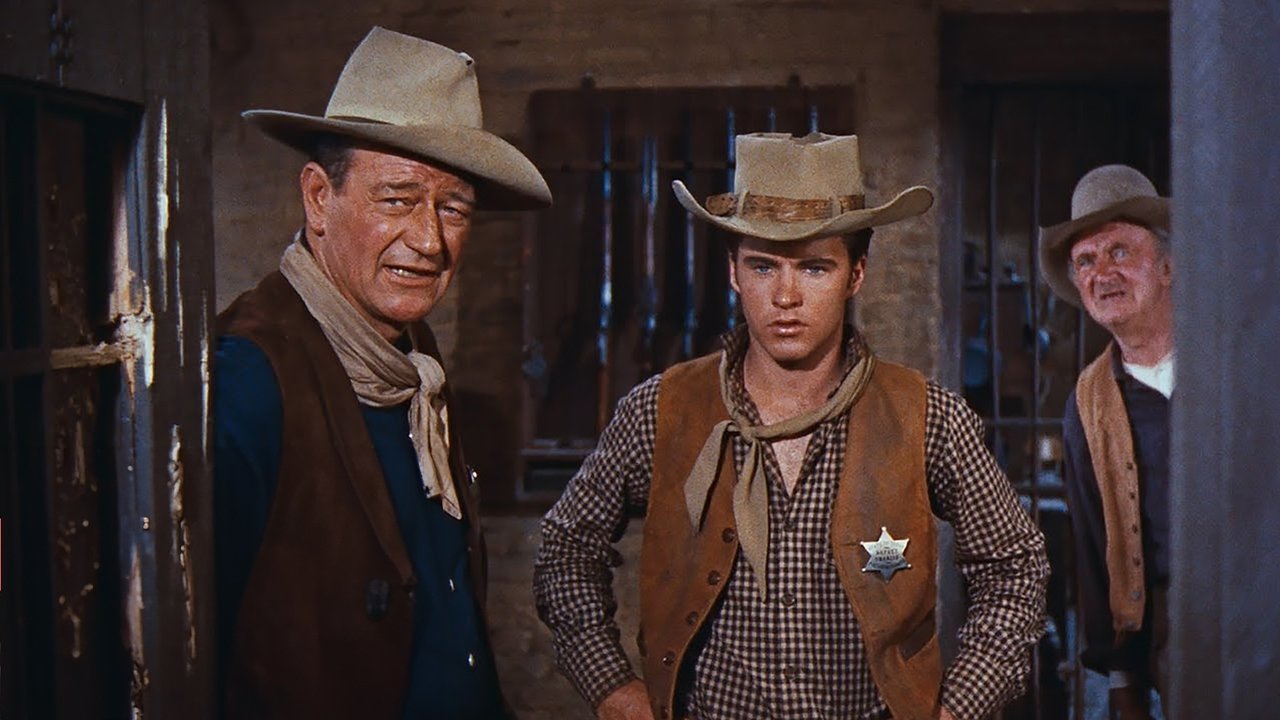
Even though this was a major production, it feels like a boutique project. Hawks produced it through his own company, Armada Productions, giving him the freedom to ignore the frantic pacing of the late 50s. He takes a bizarre, ten-minute detour just to let Ricky Nelson and Dean Martin sing a couple of songs in the jailhouse. In any other movie, this would be a momentum-killer. Here, it’s the soul of the film. It reminds us what they are fighting to protect: a moment of peace, a bit of harmony, and the company of friends.
Behind the scenes, the "indie" spirit was alive in the way they utilized the Old Tucson set. It wasn't a sprawling, epic landscape; it was a claustrophobic, functional town. They shot most of the movie within a two-block radius, creating a sense of intimacy that big-budget Westerns usually lack. Hawks knew that limiting the geography forced the audience to focus on the faces, and what faces they are. From Ward Bond’s sturdy reliability to Walter Brennan’s toothless cackling, every person in Rio Bravo feels like they’ve existed in that town for twenty years before the cameras started rolling.
Rio Bravo is proof that you don't need a thousand horses or a mountain range to make a masterpiece; you just need a few people you’d like to grab a drink with and a script that respects them. It’s a film that values character over plot and competence over bravado. If you’ve ever felt like you were underprepared for a challenge but decided to show up anyway, this is your movie. Put it on, ignore the "fast-forward" urge of modern cinema, and just enjoy the company.
---
Keep Exploring...
-

The Searchers
1956
-
High Noon
1952
-
The Big Sleep
1946
-
Bringing Up Baby
1938
-
The Treasure of the Sierra Madre
1948
-

The Man Who Shot Liberty Valance
1962
-

Gentlemen Prefer Blondes
1953
-

The Magnificent Seven
1960
-
The Philadelphia Story
1940
-

Singin' in the Rain
1952
-
His Girl Friday
1940
-
A Fistful of Dollars
1964
-
Stagecoach
1939
-

Bicycle Thieves
1948
-
Sabrina
1954
-
Rebel Without a Cause
1955
-
12 Angry Men
1957
-
It's a Wonderful Life
1946
-

On the Waterfront
1954
-
Rear Window
1954