La Dolce Vita
"The party is over, but nobody wants to leave."
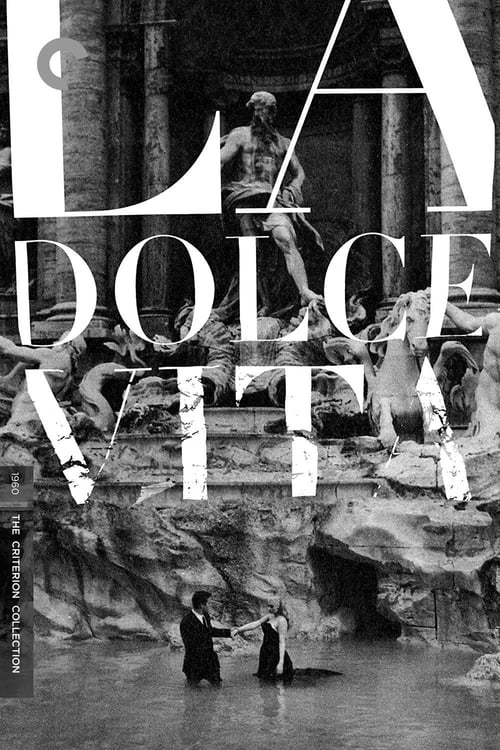
The first time I saw the opening of La Dolce Vita, I was distracted by my neighbor’s power drill buzzing through the wall, but even that couldn't kill the sheer, surreal audacity of the image: a giant statue of Jesus Christ dangling from a helicopter, soaring over the ruins of an ancient Roman aqueduct while bikini-clad women wave from a penthouse terrace. It’s the ultimate "new meets old" flex. Right then, Federico Fellini isn't just making a movie; he’s declaring that the old world is dead, the new world is shallow, and we’re all invited to watch the wreckage in high style.
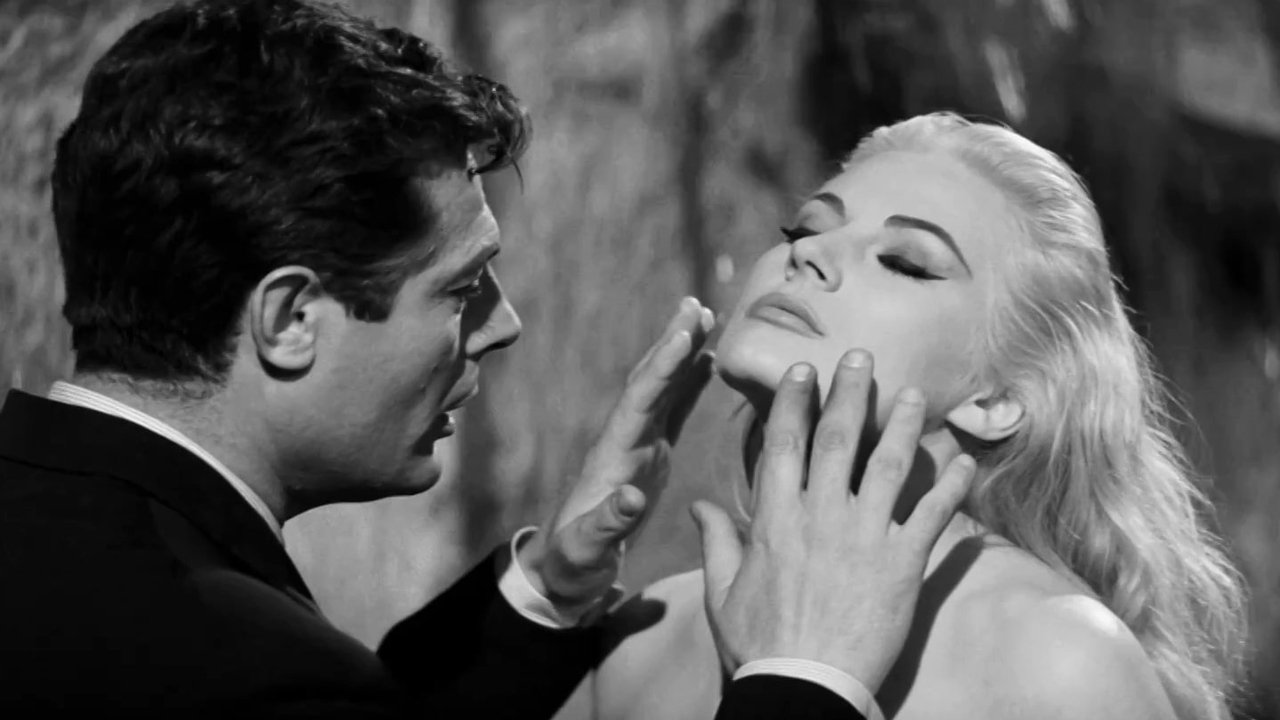
Coming into this from a modern perspective, or even through the lens of the 1970s "New Hollywood" it inspired, it’s hard to overstate how much of a seismic shift this was. Before 1960, movies usually had the decency to tell you where they were going. Fellini decided to just let us wander through seven nights and seven dawns of Roman decadence, following a guy who is effectively the patron saint of "I’ll start my real work tomorrow."
The Man in the Sharp Suit
At the center of the storm is Marcello Mastroianni, playing a character who shares his first name and seemingly his entire soul. Marcello is a tabloid journalist—a guy who spends his nights hunting for "The Sweet Life" in via Veneto’s cafes and his mornings feeling like a hangover in human form. Mastroianni is incredible here because he manages to be both the coolest guy in the room and the most pathetic. He’s got the dark shades, the tailored suit, and the effortless cigarette, but look at his eyes when he’s alone with Anouk Aimée’s Maddalena. He’s bored, he’s tired, and he’s terrified that he’s actually exactly where he belongs: in the gutter of celebrity gossip.
I’ve always felt that Marcello is essentially a high-end gossip columnist with a god complex and a fragile ego. He treats his long-suffering girlfriend, Emma (played with heartbreaking desperation by Yvonne Furneaux), like an anchor dragging him down, yet he’s the one constantly drifting into the orbit of people who don't actually care if he lives or dies. The film doesn't judge him—at least, not out loud—but it lets the silence of the Roman mornings do the talking for it.
The Trevi Fountain and the Modern Buzz

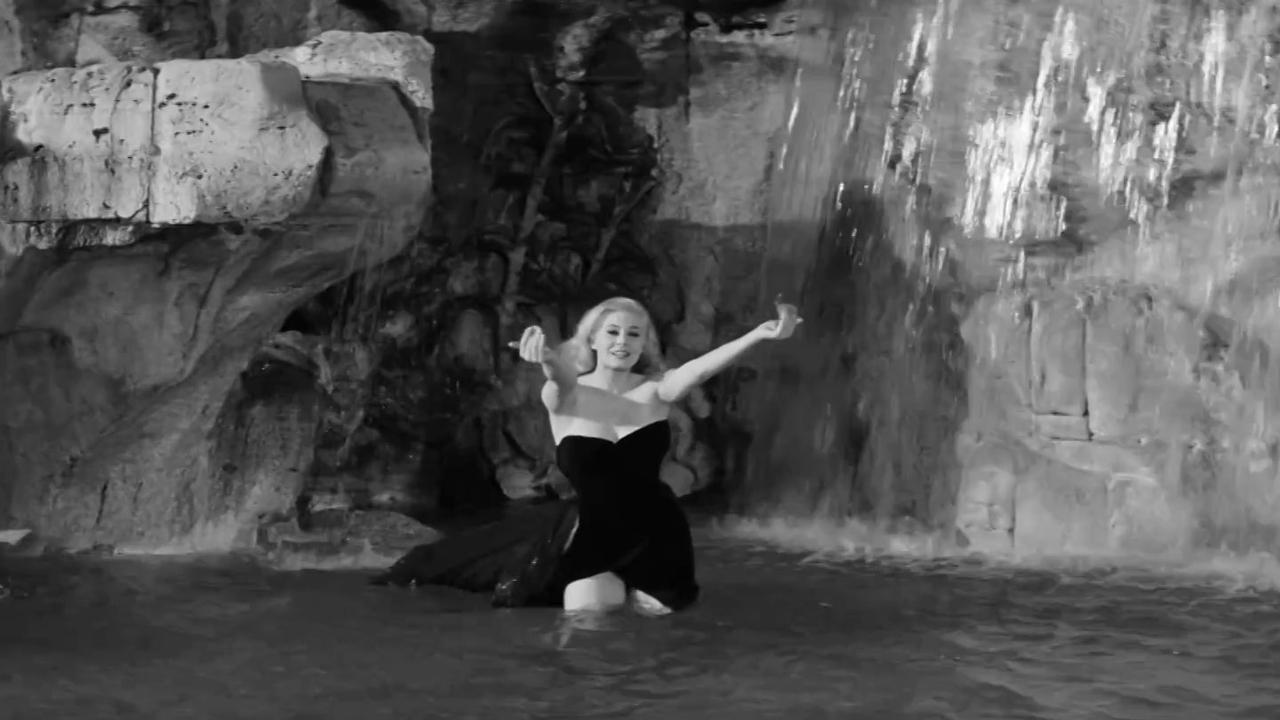
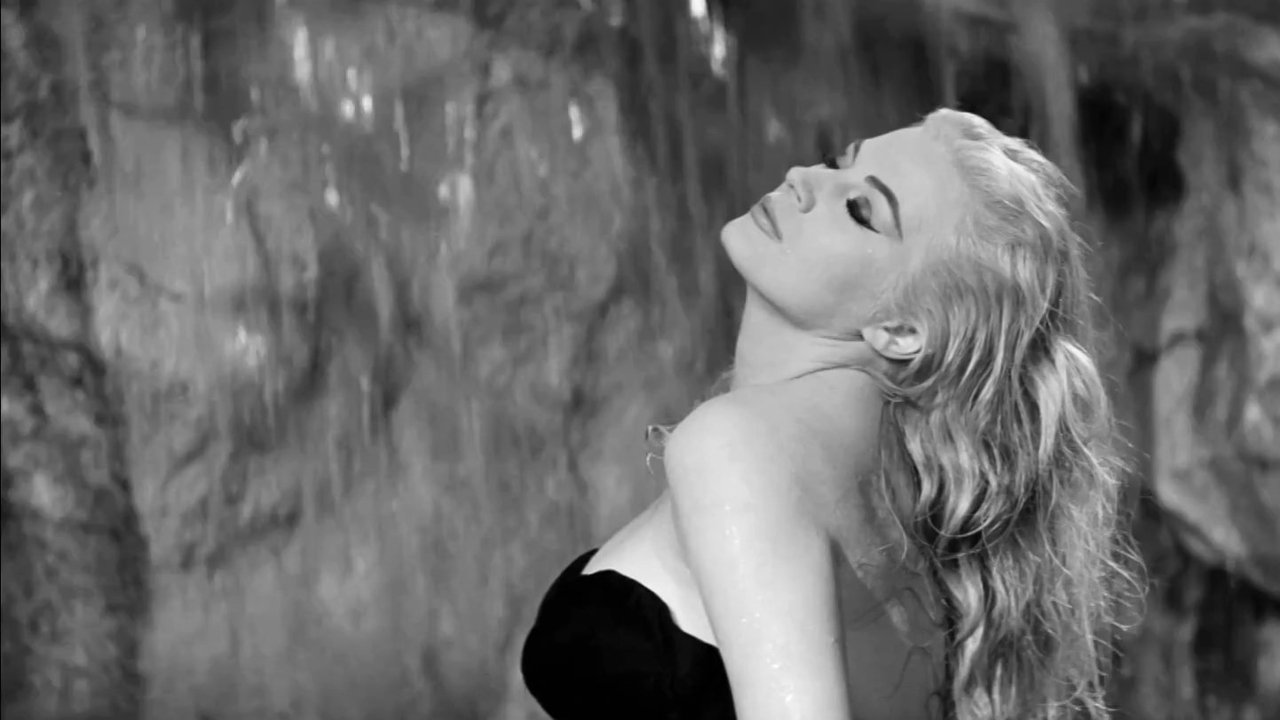
You can’t talk about this film without the Trevi Fountain. Anita Ekberg as Sylvia is less a character and more a force of nature—a "monumental" woman who represents the intoxicating, unattainable allure of Hollywood stardom. When she wades into that water and beckons Marcello to join her, it’s the peak of the movie's seductive power. Interestingly, despite the heat on screen, they shot that scene in the dead of winter. Ekberg reportedly stood in the freezing water for hours without a flinch, while Mastroianni had to wear a wetsuit under his clothes and finish a bottle of vodka just to stop his teeth from chattering.
This is also where we get the term "Paparazzo." The character Paparazzo (played by Walter Santesso) was named after a hotel owner Fellini once knew, but the word itself became the global shorthand for the predatory photographers we see swarming Marcello throughout the film. It’s funny to think that a 1960 art film gave us the terminology for the TMZ era. When I eventually found this on a chunky, double-tape VHS set in the late 80s, the cover art was almost entirely focused on Ekberg in the fountain, promising a level of "European sexiness" that the movie actually uses to hide a much darker, more cerebral core.
The Steiner Shadow
While the parties are grand and the jazz score by Nino Rota keeps things swinging, the film’s real gut punch comes from Steiner (Alain Cuny). Steiner is the "intellectual" Marcello wants to be—a man with a beautiful family, a house full of art, and a calm, philosophical disposition. But Steiner is also the one who voices the film’s biggest fear: that the world is becoming so loud and so fake that there’s no room left for actual meaning.
His arc is the one that always haunts me after the credits roll. It’s the philosophical "check" to the movie’s "mate." It suggests that even the people who seem to have it all figured out are just as lost as the guy chasing starlets into fountains. Fellini isn't just showing us a party; he’s showing us a funeral for the soul.
The 176-minute runtime sounds daunting, but it moves with the rhythm of a long, whiskey-soaked night out. It’s episodic, which made it a perfect "rewatch" film during the VHS era; you could pop in the tape just to watch the "Miracle" sequence or the final beach scene without needing the full context every time. It’s a film that asks big questions—about God, about fame, about why we can't just be happy with a quiet life—and then refuses to answer them, leaving you to stare at the screen as the sun comes up over the Mediterranean. If you haven't seen it, stop waiting for the "right time." The party is happening now, and it’s just as messy and beautiful as it was sixty years ago.
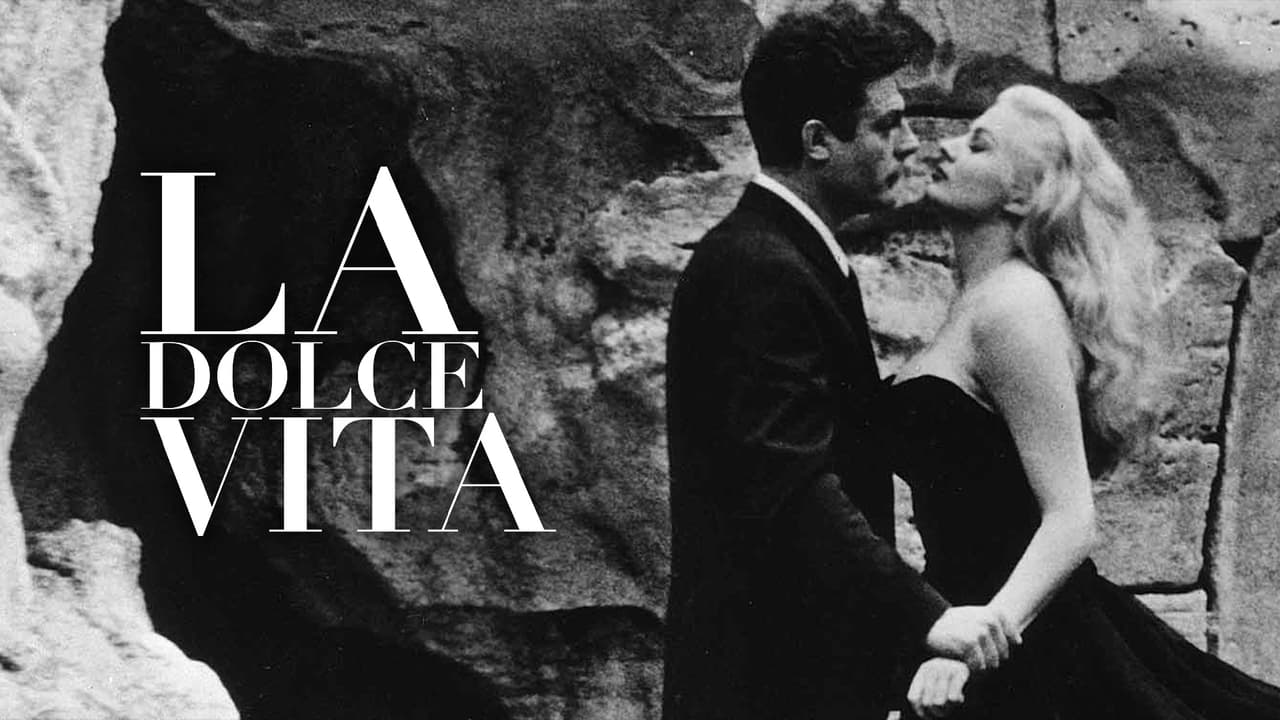
Keep Exploring...
-
Amarcord
1973
-
8½
1963
-
La Strada
1954
-
Harold and Maude
1971
-
Being There
1979
-
The Apartment
1960
-
Breakfast at Tiffany's
1961
-
The Leopard
1963
-

The Hustler
1961
-
Harakiri
1962
-
Jules and Jim
1962
-
La Jetée
1962
-
Charade
1963
-
My Fair Lady
1964
-
Annie Hall
1977
-
Manhattan
1979
-

The Breakfast Club
1985
-
Fantozzi: White Collar Blues
1975
-
Nothing Left to Do But Cry
1984
-
The Last Emperor
1987