Peeping Tom
"The camera doesn't just watch—it kills."
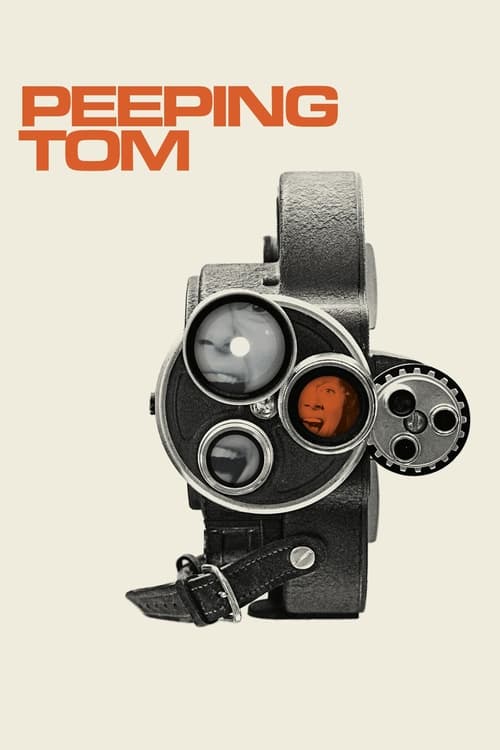
In 1960, Michael Powell was British cinema royalty. Alongside Emeric Pressburger, he’d crafted technicolor dreams like The Red Shoes and Black Narcissus. Then, he released Peeping Tom, and the critical establishment didn’t just turn its back; it tried to burn the house down with him inside. One critic suggested the film be shoveled up and flushed down the nearest sewer. I watched this for the first time on a rainy Tuesday while my neighbor was outside power-washing his driveway—the constant, intrusive hum of his machine felt like the perfect mechanical soundtrack for a movie that makes privacy feel like a terminal illness.
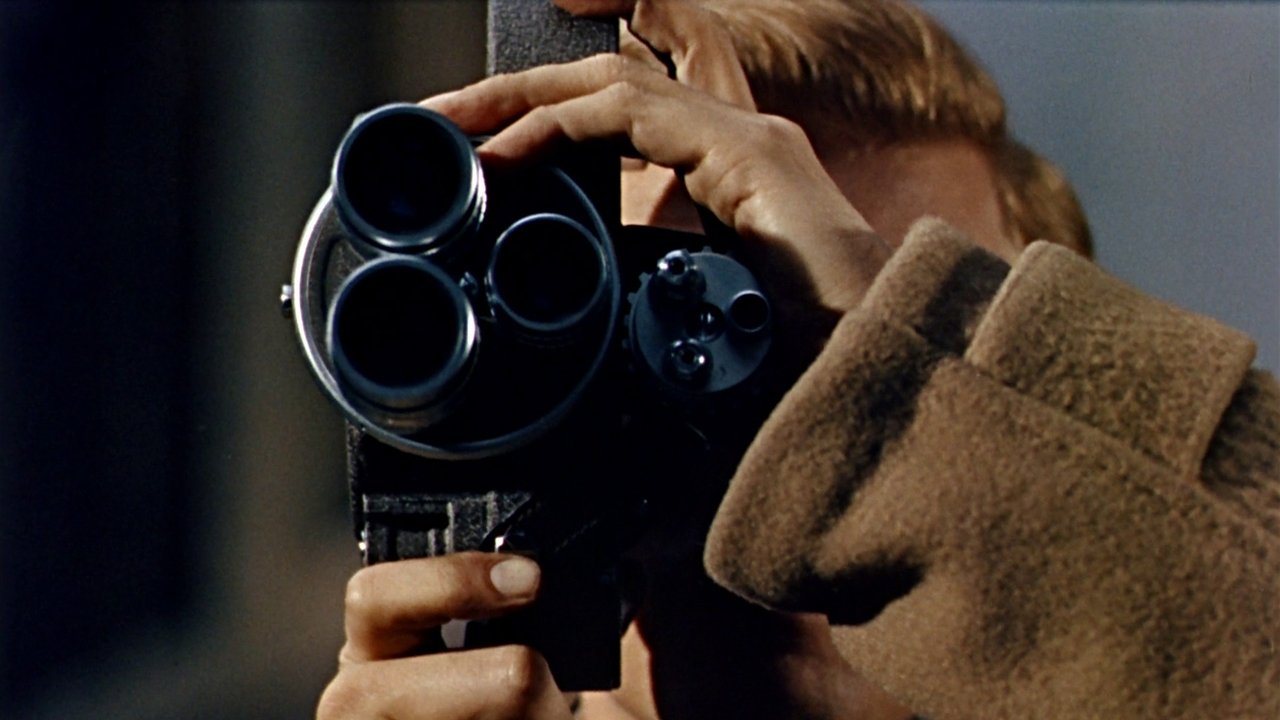
While Alfred Hitchcock’s Psycho (released the same year) became a cultural phenomenon, Peeping Tom effectively ended Michael Powell’s career in the UK. It was too close, too perverted, and far too honest about why we go to the movies in the first place. We don’t just watch; we voyeuristically feast on the lives of others. Powell didn't just break the fourth wall; he turned it into a two-way mirror and forced us to look at our own reflection.
The Lethal Lens of Mark Lewis
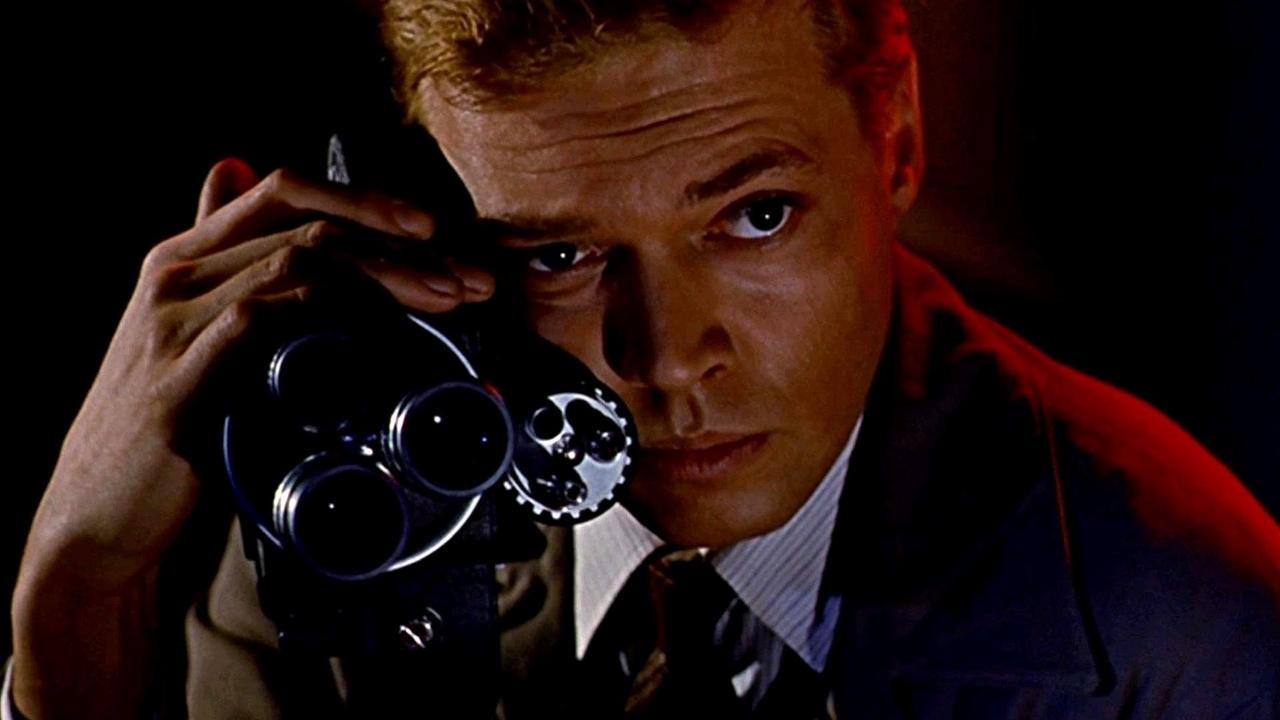
The plot is deceptively simple and deeply unsettling. Karlheinz Böhm—an actor previously known for playing charming, princely types—is Mark Lewis, a focus puller at a film studio who spends his nights filming women. But Mark isn't just a garden-variety creep. He’s a man obsessed with capturing the "purest" expression of fear. To do this, he uses a modified tripod with a retractable blade, forcing his victims to watch their own terrified faces in a mirror attached to the camera as he kills them.
Karlheinz Böhm gives a performance that is painfully polite and utterly soul-crushing. He’s not a cackling slasher; he’s a wounded animal in a beige raincoat. You want to give him a hug and a restraining order at the same time. When he meets Helen (Anna Massey), the daughter of his tenant, there’s a flicker of a "normal" life, but the camera is always there, dangling between them like a loaded gun.
The film operates on a level of psychological dread that most modern horror films can't touch. There are no jump scares here. Instead, there’s the persistent, rhythmic clicking of the 16mm projector. The score by Brian Easdale is nervous and percussive, mimicking the frantic heartbeat of someone who knows they're being watched but can't find the eyes.
A Family Affair in the Dark
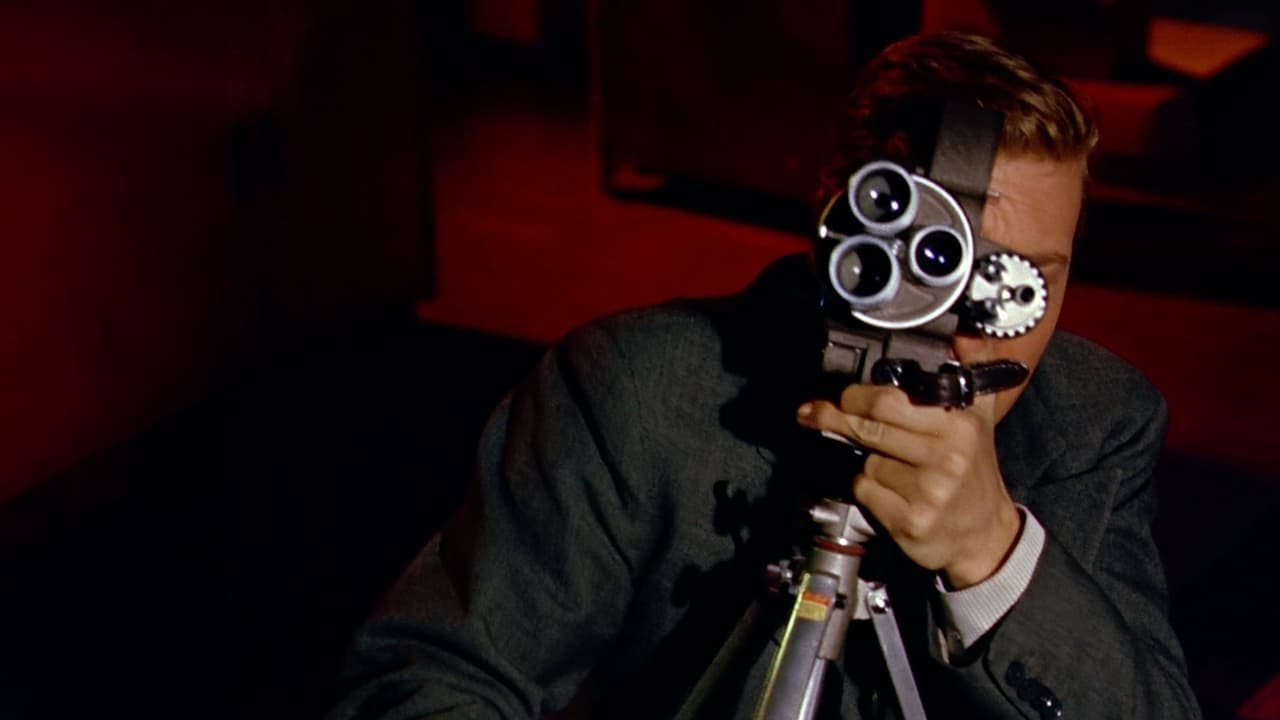
The real horror of Peeping Tom isn't the blade; it’s the back story. We learn that Mark’s father—played in home-movie flashbacks by Michael Powell himself—was a scientist who studied the biology of fear by experimenting on his own son. He’d drop lizards into the boy's bed or wake him up with bright lights just to film the reaction.
This is where the "Indie Gem" spirit of the film shines. Powell didn't have a massive studio budget for this one (roughly $150,000), so he used his own house as a set and cast his own son, Columba, as the young Mark. It’s the ultimate meta-commentary: a director playing a director who destroys his child for the sake of a shot. This level of self-interrogation is rare even today. Powell was effectively admitting that the obsession required to make art can be a form of domestic abuse.
The practical effects are subtle but effective. This was the pre-CGI era of cinema where the "effect" was often just clever lighting and the audience's imagination. The way Otto Heller’s cinematography uses harsh shadows and sickly greens makes the apartment feel like a tomb. When we see the distorted reflection of a victim's face in the mirror-mount, it’s more disturbing than any high-def gore beat.
The VHS Resurrection
For nearly twenty years, Peeping Tom was a ghost. It was pulled from theaters and relegated to the "forbidden" bin. It wasn't until the late 70s and early 80s—thanks largely to a passionate campaign by Martin Scorsese—that the film was rediscovered.

By the time the home video revolution hit, Peeping Tom found its true home. In the 80s, you’d find this in the back corner of a dusty rental shop, often with box art that made it look like a cheap slasher. But for the film nerds who took it home, it was a revelation. It became the ultimate "secret" movie. Watching it on a low-resolution VHS tape actually added to the experience; the grain of the film and the tracking lines on the screen made you feel like you were watching Mark’s actual snuff reels. It transformed the viewer into the very thing the movie critiques: a lonely person in a dark room, obsessed with moving images.
The film’s legacy is everywhere, from the POV shots of Halloween to the meta-narratives of Scream. Yet, none of those films feel quite as dangerous as this. Peeping Tom is a film that hates you for watching it, yet it’s so beautifully constructed that you can’t look away. It’s a masterpiece of discomfort.
Peeping Tom is a high-wire act of psychological horror that remains shockingly modern. It’s a film about the trauma of being seen and the sickness of seeing. If you’ve ever felt a little too invested in a movie, or if you’ve ever wondered why we find tragedy so entertaining, this is the mirror you need to look into. Just be careful—the tripod might be loaded.

Keep Exploring...
-

Repulsion
1965
-
What Ever Happened to Baby Jane?
1962
-
The Birds
1963
-
Rosemary's Baby
1968
-
Blow-Up
1966
-
Straw Dogs
1971
-
Murder on the Orient Express
1974
-
Don't Look Now
1973
-
In the Heat of the Night
1967
-
Night of the Living Dead
1968
-

Fist of Fury
1972
-
Carrie
1976
-
Eraserhead
1977
-

Halloween
1978
-
Nosferatu the Vampyre
1979
-
After Hours
1985
-

Day of the Dead
1985
-

Frenzy
1972
-
The Cabinet of Dr. Caligari
1920
-

The Devil's Backbone
2001