Spartacus
"The chin that conquered Rome and crushed the blacklist."
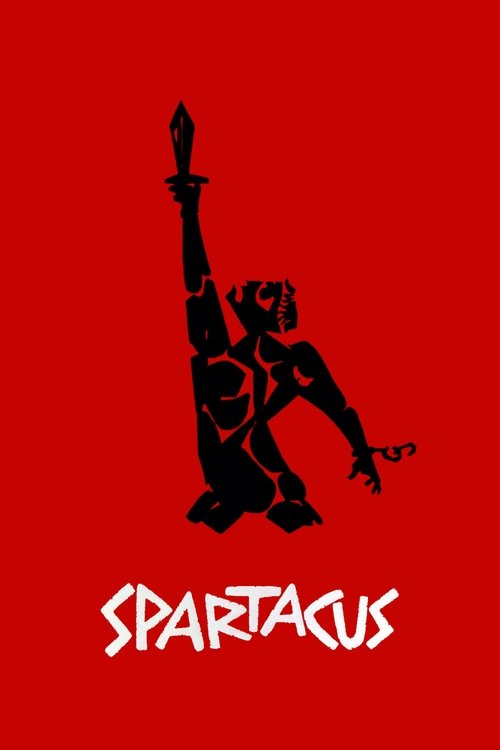
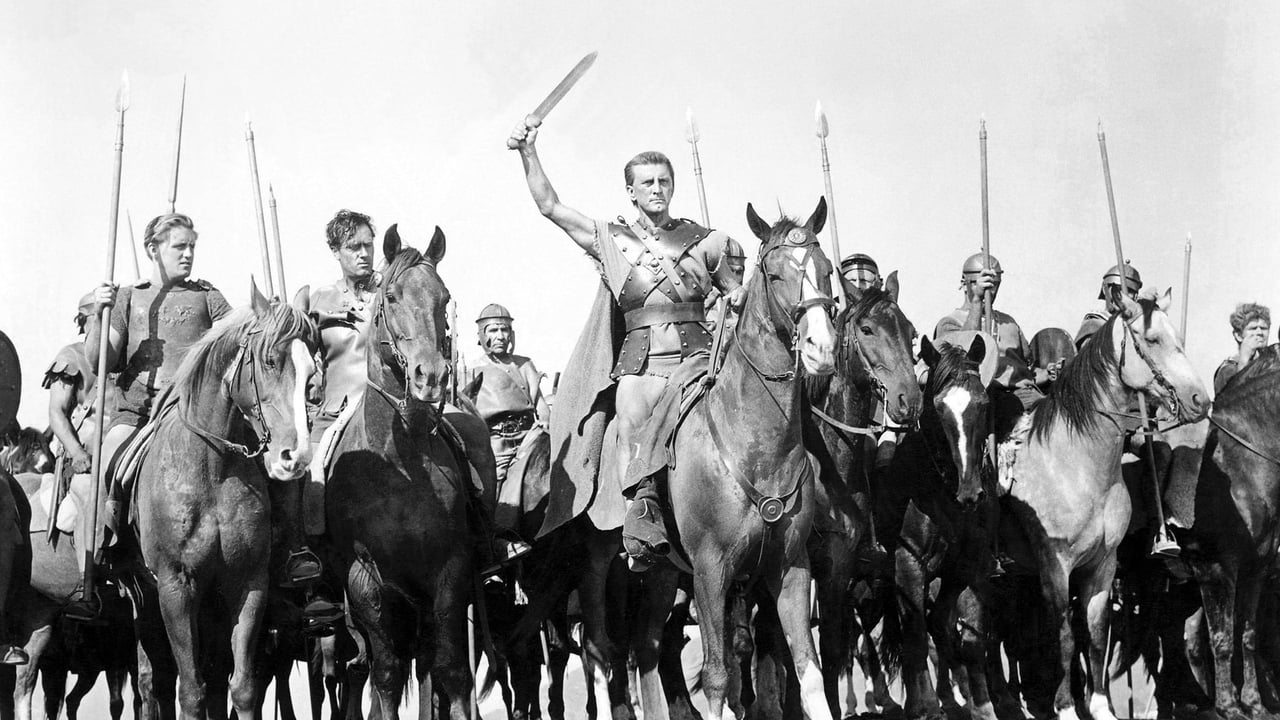
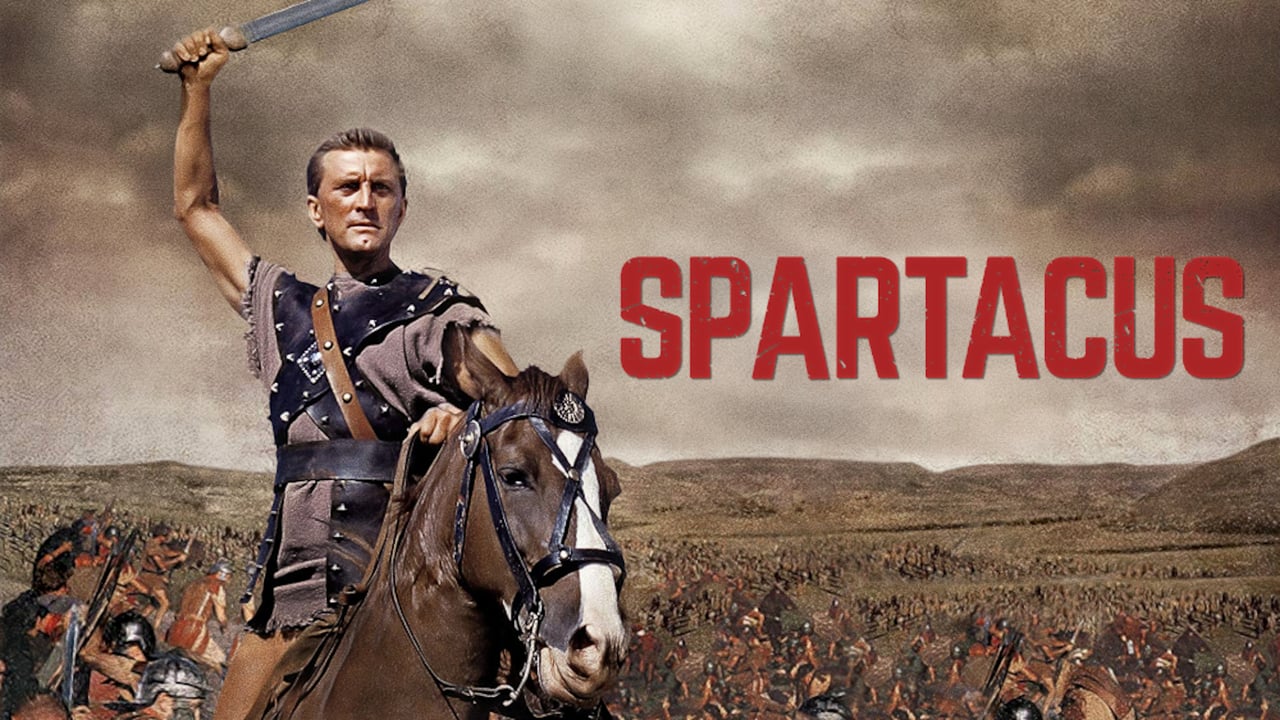
Eight thousand five hundred Spanish soldiers stood on a plain outside Madrid, draped in tunics and brandishing shields, waiting for a 31-year-old kid to tell them how to die. That kid was Stanley Kubrick, a director who had just stepped into the middle of a creative hurricane after the film’s original director, Anthony Mann, was unceremoniously dumped after a week of shooting. Spartacus wasn't just a movie in 1960; it was a gargantuan collision of egos, politics, and the sheer, stubborn will of Kirk Douglas. Watching it today, I’m struck by how much of that friction is visible on screen. It’s a film that feels like it’s straining against its own seams, vibrating with a tension that most "sword and sandal" epics of the era were too polite to invite.
I recently revisited this three-hour behemoth on a DVD I rescued from a thrift store—one that still bore a "Property of Blockbuster" sticker, which felt like uncovering a genuine Roman artifact in its own right. As the overture by Alex North began to swell, I realized that Spartacus occupies a strange, dark corner of Hollywood history. It’s the bridge between the Technicolor sincerity of the 1950s and the cynical, grit-under-the-nails reality of the New Hollywood era that would follow.
The Battle of the British Heavyweights
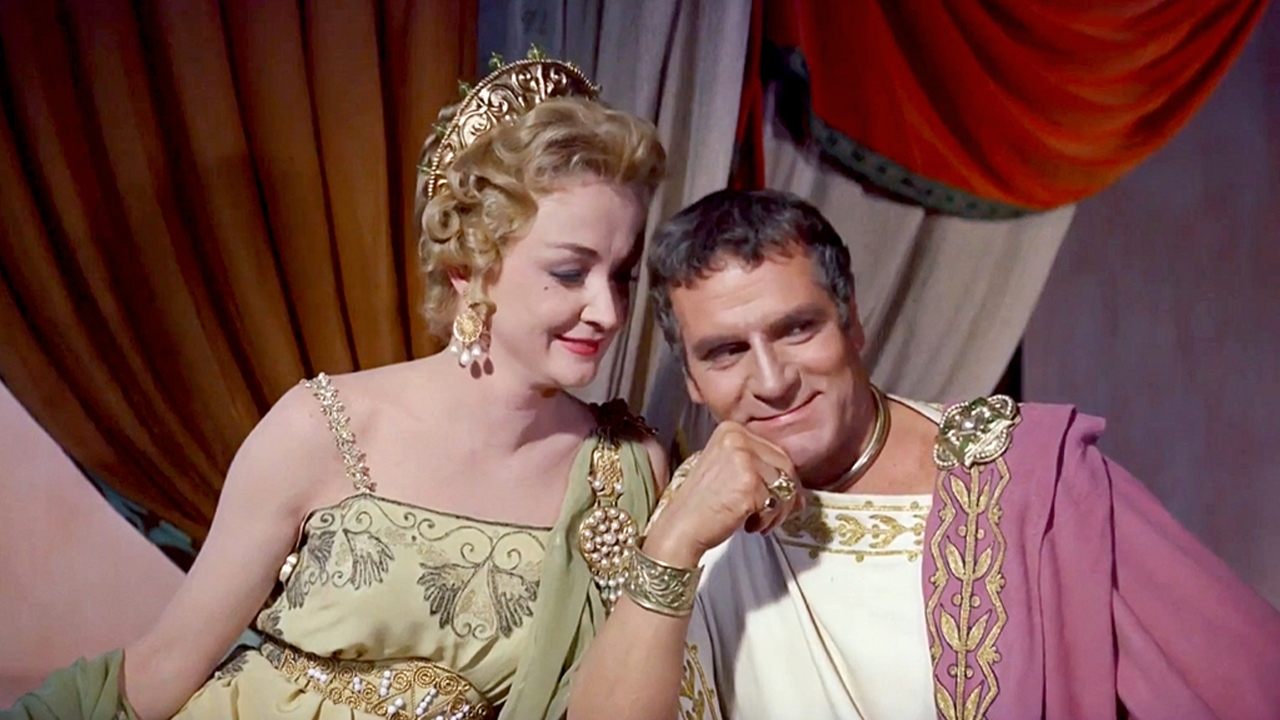
While Kirk Douglas provides the muscular, sweating heart of the film as the titular rebel, the real fun—and the real darkness—lies in the Roman Senate. Here, we get a masterclass in theatrical combat between Laurence Olivier as the cold, aristocratic Crassus and Charles Laughton as the wily, populist Gracchus. Seeing these two on screen is like watching two different species of predator negotiate over a carcass. Olivier plays Crassus with a terrifying, repressed stillness. He’s the personification of a system that views human beings as property, and his scenes possess a chilling, predatory undercurrent.
Then there’s Peter Ustinov as Batiatus, the slave dealer. Ustinov won an Oscar for this role, and it’s easy to see why. He provides the only warmth in a very cold world, playing a man who is essentially a bottom-feeding middle manager trying to survive the whims of tyrants. Apparently, Ustinov and Laughton spent their downtime rewriting their own dialogue because they found the original script too stiff, which explains why their scenes have a conversational zip that the rest of the film occasionally lacks. The Roman Senate scenes basically function as a high-stakes drag show for grumpy, brilliant middle-aged men.
Snails, Oysters, and the Blacklist

For a film made in 1960, Spartacus is surprisingly comfortable with moral rot and psychosexual power plays. The famous "snails and oysters" scene—where Olivier’s Crassus attempts to seduce Tony Curtis’s Antoninus—was famously cut by censors and only restored in the 1991 re-release. It’s a crucial scene because it frames the Roman Empire not just as a political antagonist, but as a decadent, soul-eating machine.
But the most intense drama happened behind the camera. Kirk Douglas, acting as producer, made the world-shaking decision to give Dalton Trumbo—one of the "Hollywood Ten" who had been blacklisted for years—his first onscreen credit. By putting Trumbo’s name on the screen, Douglas effectively broke the back of the McCarthy-era blacklist. It’s a heavy legacy that infuses the film’s themes of rebellion and dignity with a weight that feels incredibly real. When the slaves stand up and shout "I am Spartacus," they aren't just reciting lines; they are affirming the existence of the marginalized against a system trying to erase them.
The Kubrick Touch
Kubrick famously disowned the film later, frustrated that he didn't have total creative control. He was a perfectionist trapped in a "director-for-hire" gig, but his DNA is still all over the visuals. The way he frames the final battle—the terrifyingly geometric precision of the Roman legions advancing like a slow-moving wall of iron—is pure Kubrick. It’s cold, calculated, and emphasizes the hopelessness of the slave revolt.
There is no easy triumph here. The film’s final act is a grueling descent into tragedy. The sight of the Appian Way lined with thousands of crosses is an image that lingers long after the credits roll. It’s a grim reminder that while ideas might be immortal, the people who hold them are agonizingly fragile. Tony Curtis being cast as a 'singer of songs' with a thick Bronx accent is the only thing that keeps the finale from being completely soul-crushing.
Stuff You Didn't Notice
Prosthetic Problems: Laurence Olivier was reportedly very self-conscious about his nose, believing it wasn't "Roman" enough. He spent a significant portion of the budget on various prosthetic noses until he found one that satisfied his ego. The Spanish Army: Those 8,500 extras? They were actual soldiers from the Spanish army. Kubrick had them directed via low-frequency radio, and he supposedly spent days just organizing them into the perfect "Legion" formations. A Real Scrapper: Kirk Douglas and Stanley Kubrick clashed so often on set that Douglas later wrote in his autobiography that Kubrick was a "talented sht." Sound of the Crowd: To get the sound of the massive slave army shouting "I am Spartacus," the production went to a Michigan State vs. Notre Dame football game and had the entire stadium shout the line. Mann’s Mark: Though he was fired, Anthony Mann directed the opening salt mine sequences. The harsh, rocky landscape feels distinctly different from the lushness of the later scenes.
Spartacus is a massive, bruised, and beautiful epic that manages to be a personal character study despite its thousands of extras. It lacks the sanitized "Sunday School" feel of other biblical-era epics like Ben-Hur. Instead, it gives us a world of mud, blood, and difficult choices. It’s a film about the cost of freedom, and while it might be over 60 years old, its teeth are still sharp. If you can handle the three-hour runtime, the payoff is one of the most emotionally resonant endings in the history of the genre.
Keep Exploring...
-
Barry Lyndon
1975
-
Lawrence of Arabia
1962
-
Empire of the Sun
1987
-
Full Metal Jacket
1987
-
Paths of Glory
1957
-
Das Boot
1981
-
The Great Escape
1963
-
Kingdom of Heaven
2005
-
Butch Cassidy and the Sundance Kid
1969
-
Patton
1970
-
A Bridge Too Far
1977
-
Casualties of War
1989
-
Glory
1989
-
Dr. Strangelove or: How I Learned to Stop Worrying and Love the Bomb
1964
-
The Longest Day
1962
-
The Zone of Interest
2023
-
Papillon
1973
-
The Shining
1980
-
2001: A Space Odyssey
1968
-
Red Cliff
2008