The Time Machine
"The ticking clock of progress eventually stops for lunch."

The sound of three dozen clocks ticking in unison is a specific kind of madness. It’s the sound of a man obsessed with the one variable he cannot control. When we first meet H. George Wells in his cozy London parlor, he’s a man vibrating with the nervous energy of a scientist who has just realized that the "now" is the most boring place to be. I watched this again last Tuesday while trying to scrape dried wallpaper paste off my hallway floor with a butter knife, and the sheer envy I felt for a man who could simply slide a lever and skip the next several hours of manual labor was overwhelming.
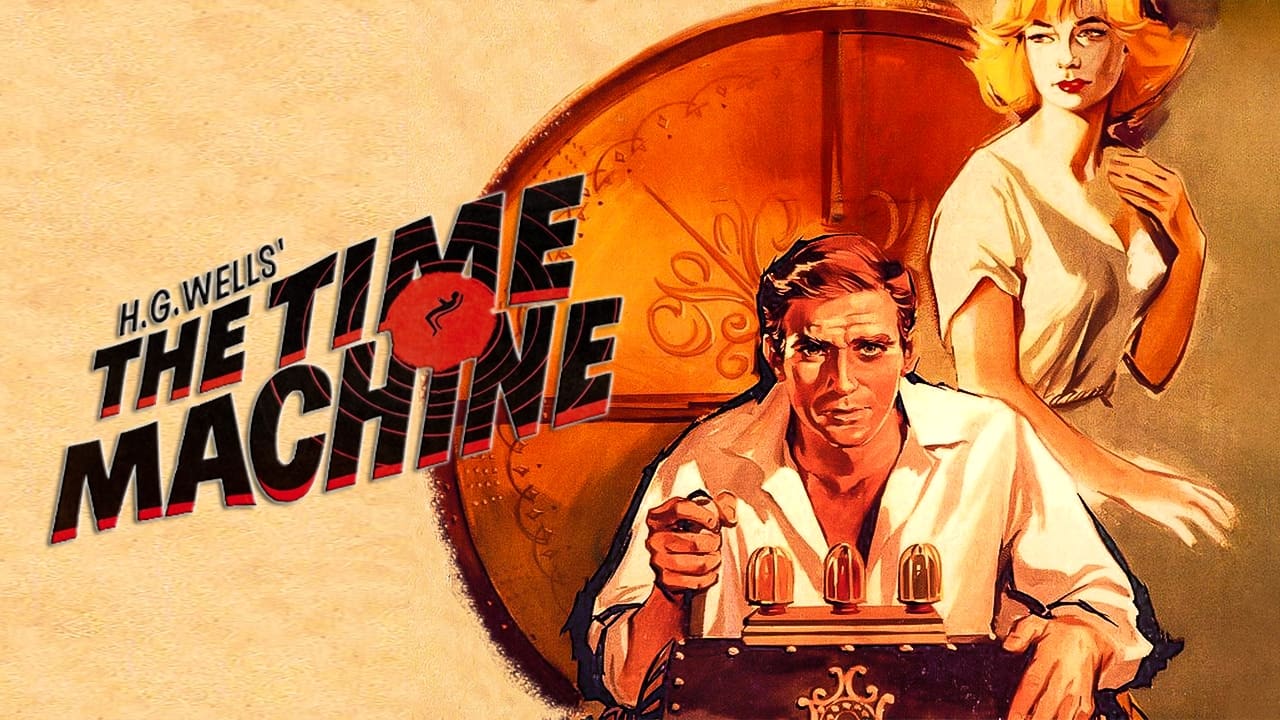
George Pal’s $750,000 Miracle
While modern blockbusters set fire to hundreds of millions of dollars just to make a digital cape flutter correctly, George Pal was operating in a different reality. Working with a budget of roughly $750,000—a pittance even in 1960 for a film of this scope—Pal had to bridge the gap between Victorian drawing rooms and the end of the world using nothing but ingenuity and a deep love for stop-motion.
This was a passion project in the purest sense. George Pal (who also produced) was the king of the "Puppetoons," and you can see that craftsmanship in every frame. He didn't have CGI to show the passage of time; he had a mannequin in a shop window across the street. The sequence where the mannequin’s outfits change rapidly to reflect the shifting decades remains one of the most charmingly effective special effects in cinema history. It’s tactile. You can feel the physical effort of the filmmakers behind the camera, manually swapping out hats and dresses between frames. It won the Oscar for Special Effects, and honestly, it should have won two.
The Rugged Victorian and the Apathetic Future
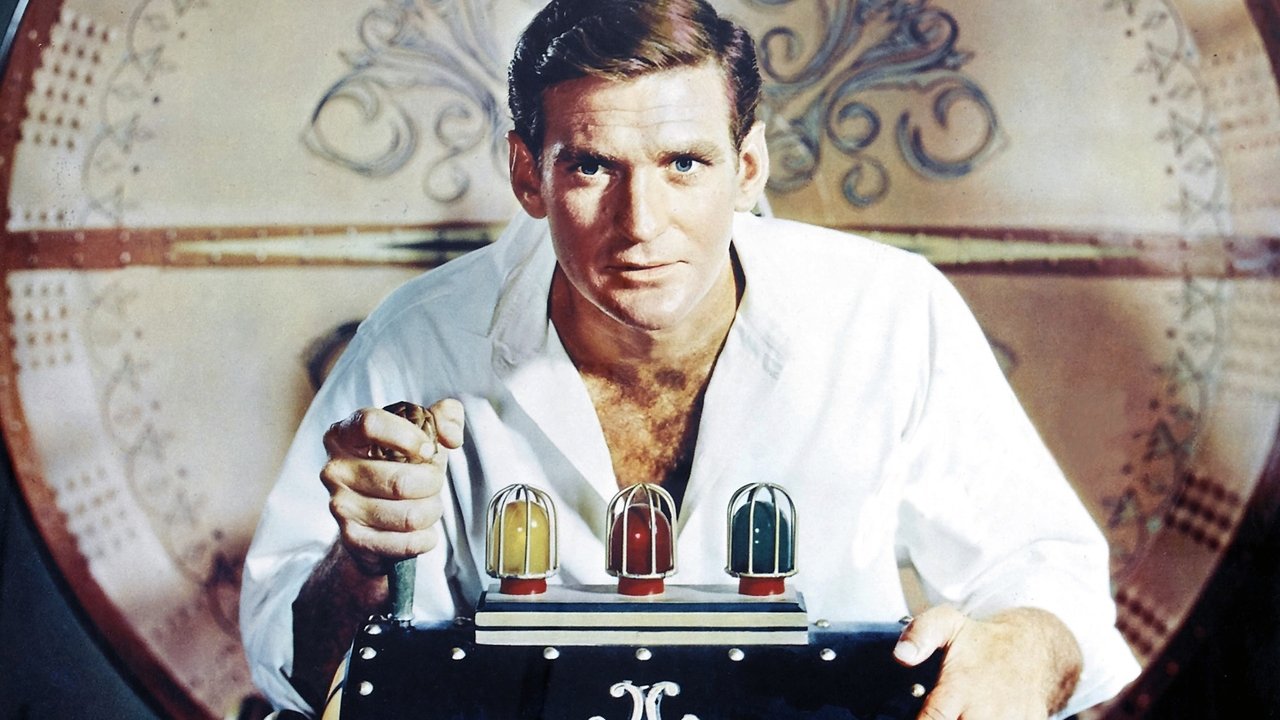
Rod Taylor was an inspired choice for the lead. Most actors would play a 19th-century scientist as a frail, bookish type with a wavering voice. Rod Taylor plays Wells like a man who could invent a time machine and then use it to beat you in a bar fight. He brings a physical urgency to the role that anchors the more fantastical elements. When he sits in that machine—a gorgeous steampunk throne of brass, velvet, and a spinning glass disc—he looks like he belongs there.

His chemistry with Alan Young (playing David Filby) provides the film’s emotional spine. The scene where Wells returns, disheveled and traumatized, to tell his story to his skeptical friends is played with a gravity that grounds the adventure. But the real shift happens when the machine stops in the year 802,701.
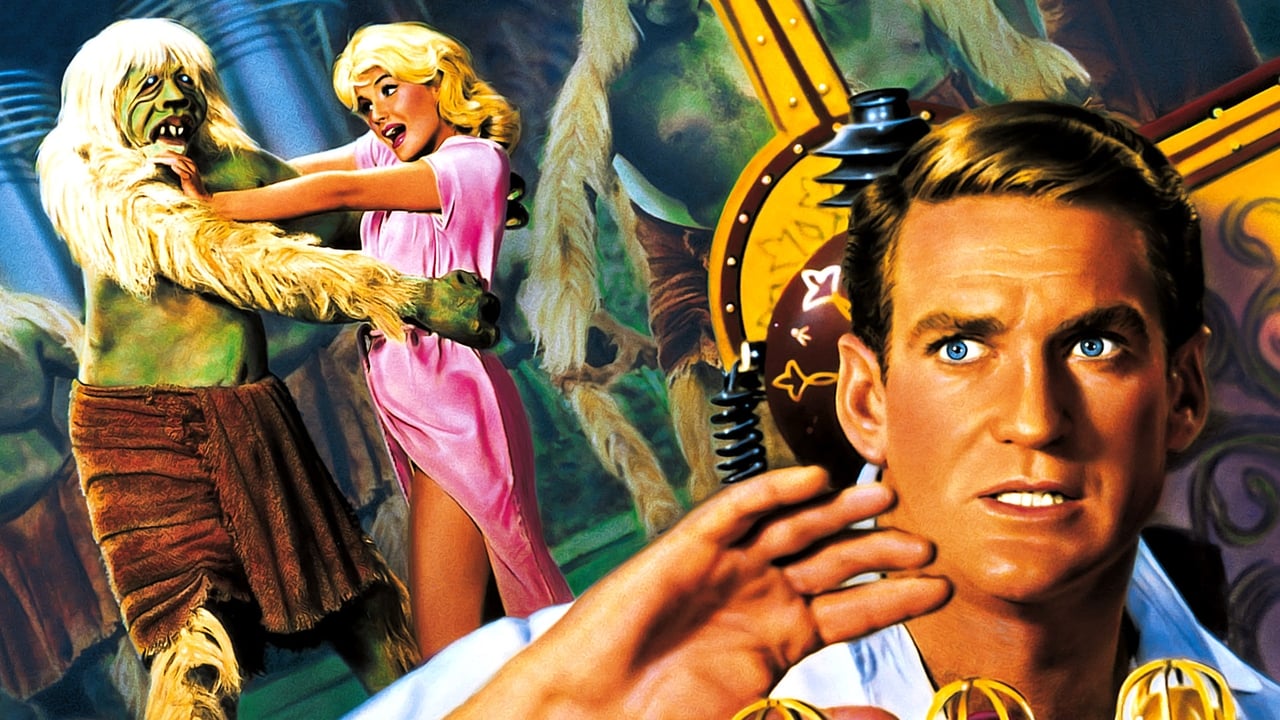
This is where the "adventure" turns into something much bleaker. Wells finds the Eloi, led by the ethereal Yvette Mimieux as Weena. On the surface, it’s a paradise. In reality, it’s a slaughterhouse. The Eloi are beautiful, blonde, and utterly soul-dead. They have no curiosity, no history, and no empathy. I’ve seen more survival instinct in a wet paper towel than in the Eloi watching their friends drown. It’s a chilling commentary on what happens when humanity stops struggling. We don’t become gods; we become livestock.
The Morlock Nightmare
Then come the Morlocks. While the makeup might look a bit "monster-of-the-week" to a modern eye raised on high-definition gore, the concept remains genuinely disturbing. These aren't just aliens; they are the descendants of the working class, driven underground and mutated into cannibalistic overseers.
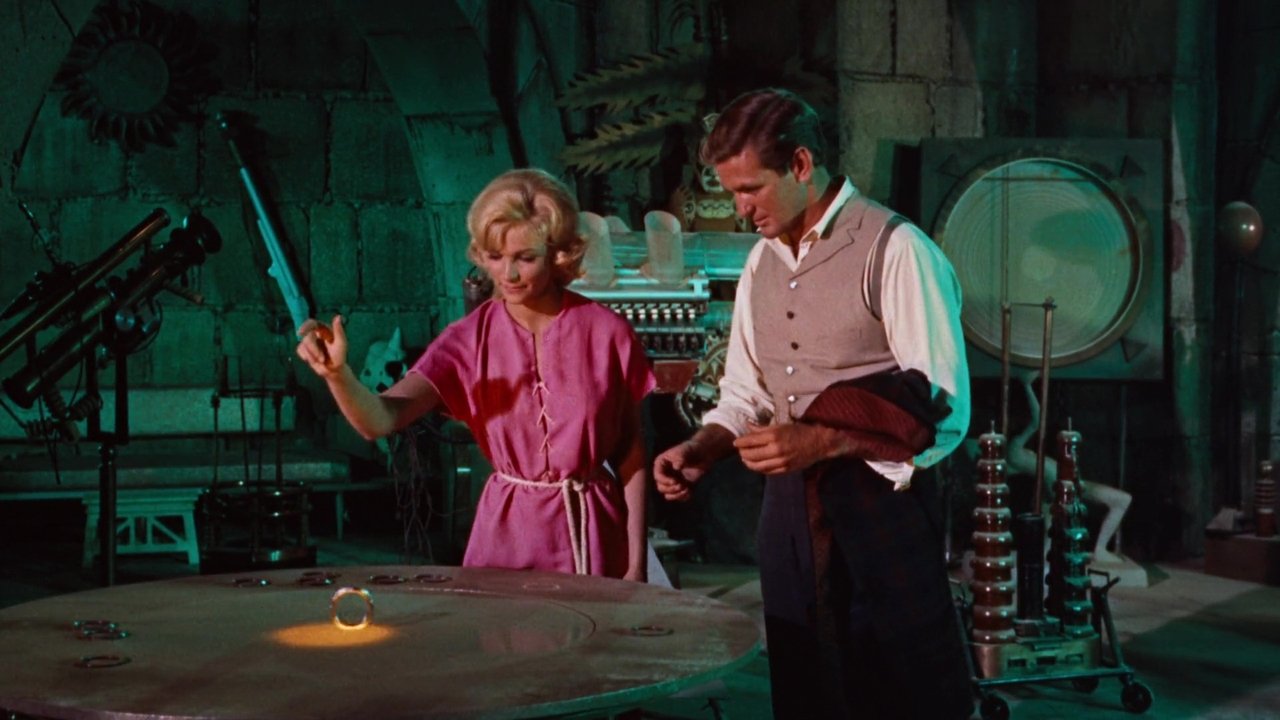
The film leans into the darkness here. The Morlocks use air raid sirens—a sound that signaled the end of the world for the 1940s audience—to herd the Eloi like cattle into their underground lairs. The realization that the "civilized" world has split into the mindless eaters and the mindless eaten is a heavy pill to swallow for what was marketed as a family adventure. George Pal doesn't shy away from the horror of the Morlock sphinx or the glowing eyes in the dark.
I remember the first time I saw this on a grainy MGM/UA home video release back in the late 80s. The box art had this eerie blue tint that made the Morlocks look like something out of a fever dream. On a low-resolution CRT television, those glowing eyes were the stuff of nightmares. Even now, the practical set design of the Morlock caverns, with their churning machinery and piles of human bones, feels more oppressive than any digital landscape. It’s the grit that sells it.
The 1960 version of The Time Machine is that rare specimen: a film that functions as a technical marvel, a thrilling adventure, and a grim social warning. It captures the transition from the polished studio system to the more daring, concept-driven sci-fi of the 60s and 70s. While some of the pacing in the middle act slows to a crawl as Wells explains the concept of "books" to the Eloi, the finale is a masterclass in tension and practical pyrotechnics. It leaves you with the haunting question of what three books you’d take to restart a civilization—and the nagging fear that we might already be heading for the sirens.
Keep Exploring...
-
Mad Max 2
1981
-
From Russia with Love
1963
-

Star Trek II: The Wrath of Khan
1982
-

Predator
1987
-
The Abyss
1989
-
They Live
1988
-
Mad Max
1979
-
Batman vs. Robin
2015
-
Marnie
1964
-

Goldfinger
1964
-
What Ever Happened to Baby Jane?
1962
-
The Birds
1963
-
The Great Escape
1963
-

Masters of the Universe
1987
-
Dr. No
1962
-
Deliverance
1972
-
The Rocky Horror Picture Show
1975
-
E.T. the Extra-Terrestrial
1982
-
Star Trek III: The Search for Spock
1984
-
Weird Science
1985