The Hustler
"Talent is cheap. Character is the price of admission."
There is a specific, hollow thwack that occurs when a cue ball strikes home in a room filled with too much cigarette smoke and not enough hope. It’s a sound that defines Robert Rossen’s The Hustler, a film that ostensibly wears the clothes of a sports movie but possesses the soul of a Greek tragedy. I watched this on a Tuesday night while trying to ignore a persistent itch on my left ankle, and by the thirty-minute mark, I’d completely forgotten the itch existed—along with the rest of the modern world.

Released in 1961, The Hustler sits right on the jagged fence between the polished artifice of 1950s Hollywood and the raw, unwashed realism of the New Hollywood movement that would follow. It doesn't care if you like its protagonist, and it certainly doesn't care if you leave the theater feeling inspired. It’s a film about the mechanics of self-destruction, wrapped in a 4x8 slate-top box.
The Philosophy of the Grift
At the center of the smoke is "Fast Eddie" Felson, played by Paul Newman in a performance that effectively weaponized his movie-star charisma. This was Newman at his most dangerous—all blue-eyed bravado and jagged edges. Eddie has "talent," a word that gets tossed around like a cheap coin in this script. He can make a pool ball dance, but as the predatory gambler Bert Gordon (George C. Scott) points out, talent without "character" is just a fancy way to lose.
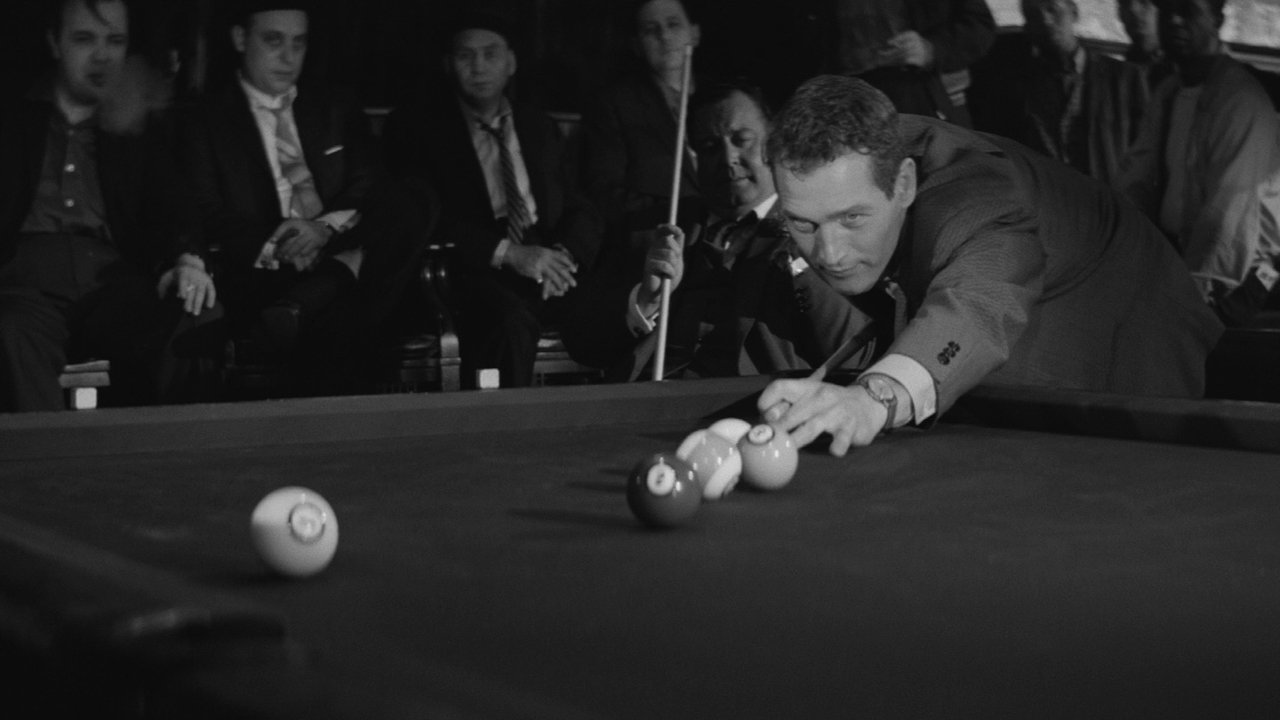
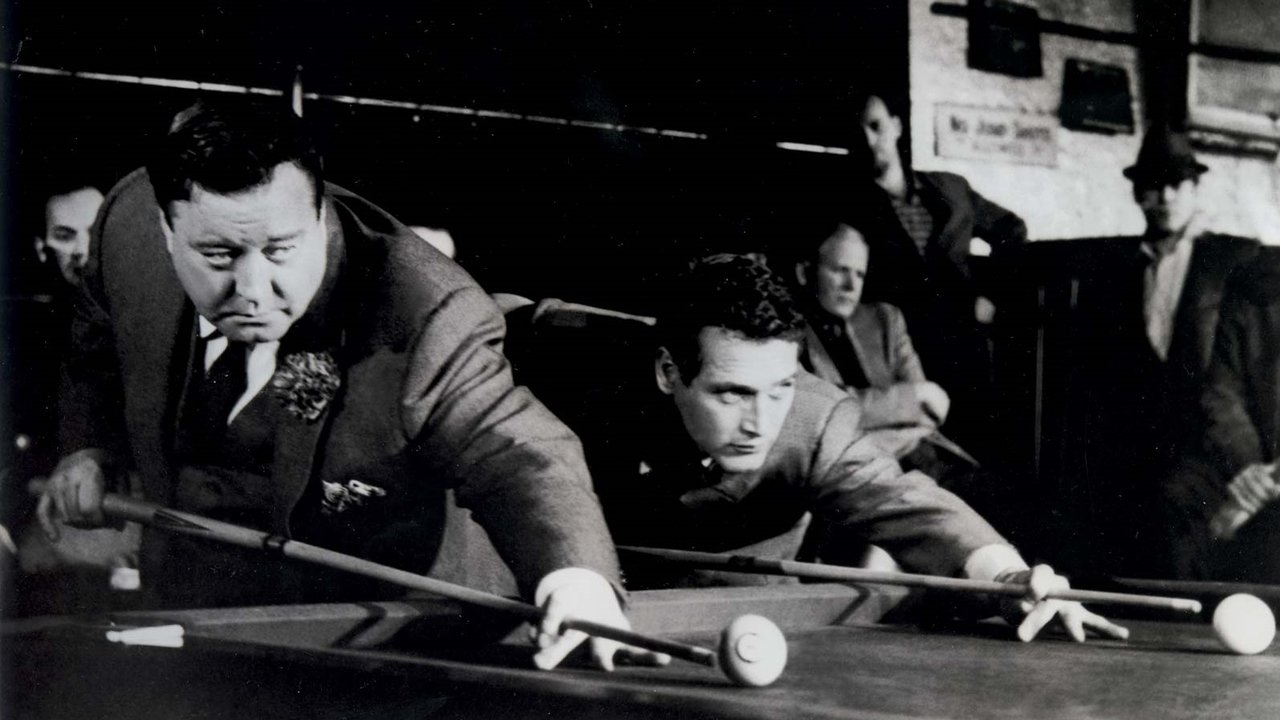
The film treats pool not as a game, but as a crucible for the ego. When Eddie challenges the legendary Minnesota Fats (Jackie Gleason), the match lasts forty hours. It’s an endurance test of the spirit. We see the sweat, the wilting collars, and the slow drift of chalk dust. Robert Rossen uses the CinemaScope frame not to show us wide vistas, but to emphasize the claustrophobia of the pool hall. It’s a landscape of green felt and dark corners. I love how the film suggests that Eddie Felson has the emotional maturity of a wet match, constantly setting fire to his own success because he’s terrified of what happens after the win.
The Shadow of the Fat Man
While Newman provides the heat, Jackie Gleason provides the gravity. It’s one of the great "less is more" performances in cinema history. As Minnesota Fats, Gleason barely speaks, yet he dominates every frame he’s in. He’s the image of professional grace—powdering his hands, adjusting his cufflinks, and staying cool while Eddie unravels. Turns out, Gleason was a legitimate pool shark in real life; he performed almost all his own shots in the film. There’s a quiet dignity to the way he plays that makes Eddie look like a frantic child.
Then there is George C. Scott as Bert Gordon. If Fats is the challenge, Bert is the devil offering a contract. Scott plays him with a chilling, low-frequency hum of malice. He’s the one who identifies Eddie’s "loser" streak, and he spends the rest of the film harvesting it. The chemistry between these three men is purely transactional, which makes the arrival of Piper Laurie as Sarah Packard feel like a splash of cold, tragic water.
Sarah is a "broken-down girl" who finds a "broken-down guy," and their romance is one of the bleakest ever committed to celluloid. Laurie brings a staggering vulnerability to a role that could have been a cliché. She’s the only person in the film who sees the pool hall for what it is—a graveyard with better lighting. Her presence forces the film to move beyond the green felt and into the existential dread of what it means to actually "win" in a world that wants to break you.
A Legacy of Grit and Grain
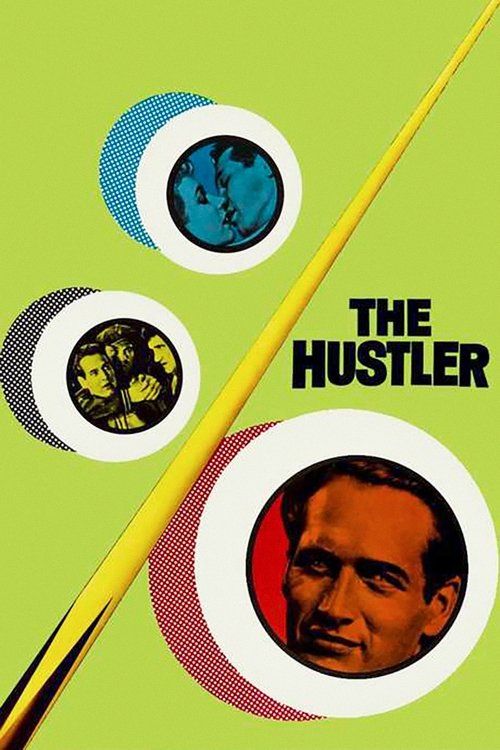
For those who grew up in the 1980s, you might remember The Hustler as that "old movie" your dad insisted on renting after seeing the sequel, The Color of Money (1986). I remember the 20th Century Fox VHS box art, which featured a close-up of Newman's face that looked far more heroic than the actual character in the tape. Seeing it today, without the tracking errors of a worn-out rental, the cinematography by Eugen Schüfftan is even more impressive. He used a "New York style" of gritty, high-contrast lighting that made the interiors feel lived-in and damp. It’s a film you can practically smell.
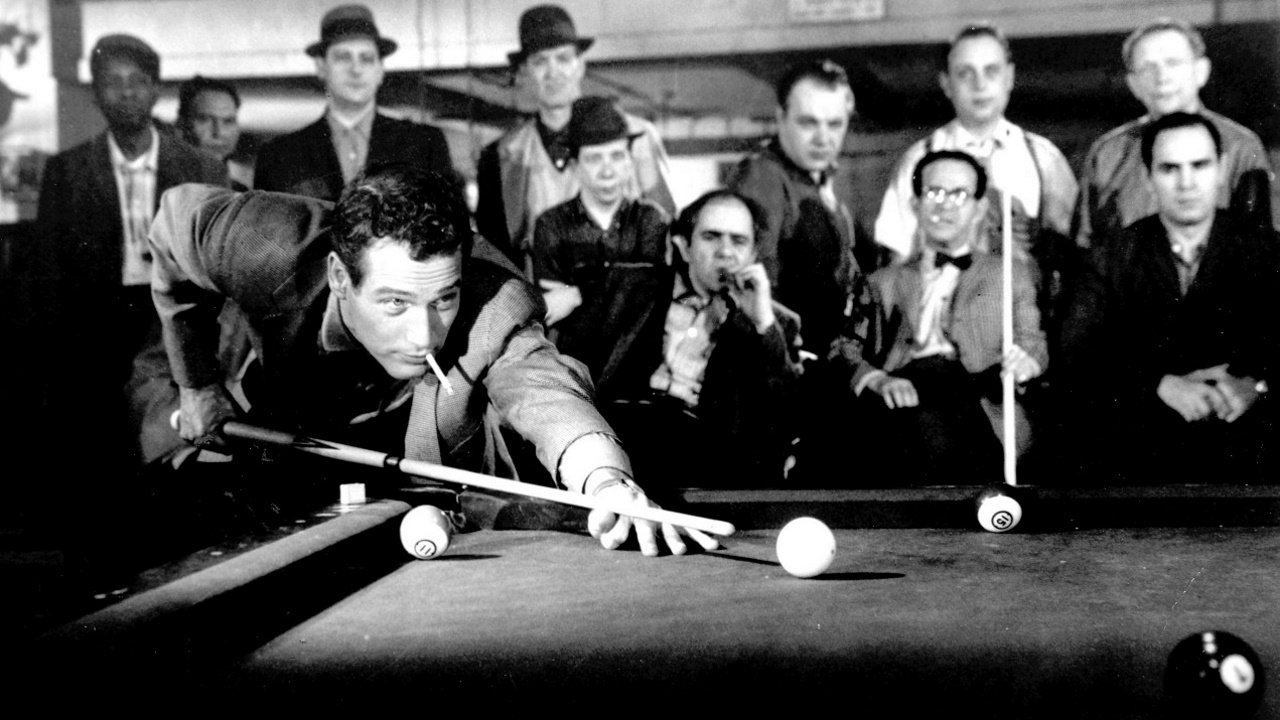
There's a famous bit of trivia that Newman didn't actually know how to play pool when he signed on. He had to have a pool table installed in his dining room and practiced for weeks under the tutelage of world champion Willie Mosconi, who also has a cameo as the guy holding the stakes. You can see that preparation in the way Newman carries himself—it’s not just about the shots, it’s about the way he leans on the cue, the way he waits.
Ultimately, The Hustler asks a question that few films have the guts to answer: What do you do when your only gift is the very thing that’s killing you? It’s a cerebral, often painful look at the American obsession with "being a winner" and the horrific cost of that title. It doesn't offer a thumb on the scale or a happy ending; it just offers the truth, as cold and hard as a billiard ball.
This is essential cinema. It’s a film that manages to be both a propulsive drama and a deep meditation on the human condition without ever feeling like it’s lecturing you. If you’ve only seen the Tom Cruise sequel, you owe it to yourself to see where the legend of Fast Eddie began. Just don’t expect to feel like playing a game of pool afterward; you’ll probably just want to sit in a quiet room and think about your life choices.
Keep Exploring...
-
The Color of Money
1986
-
Harold and Maude
1971
-
Jules and Jim
1962
-
La Jetée
1962
-
The Apartment
1960
-
Breakfast at Tiffany's
1961
-

The Sound of Music
1965
-
Charade
1963
-
West Side Story
1961
-
Guess Who's Coming to Dinner
1967
-
Annie Hall
1977
-
My Fair Lady
1964
-
Who's Afraid of Virginia Woolf?
1966
-
Days of Heaven
1978
-
Manhattan
1979
-
Wings of Desire
1987
-
Cool Hand Luke
1967
-
La Dolce Vita
1960
-
Harakiri
1962
-
The Leopard
1963