Yojimbo
"One sword for hire, two gangs for burial."
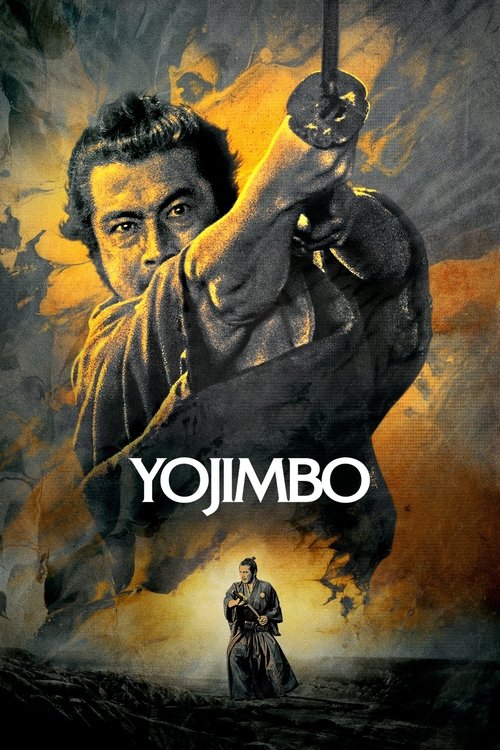
The first thing you see in Akira Kurosawa’s Yojimbo isn't a noble warrior or a sprawling landscape. It’s a stray dog trotting down a dusty street with a severed human hand clamped firmly in its teeth. It’s a hell of an opening statement. I remember watching this for the first time on a humid Tuesday night while my neighbor’s car alarm kept chirping in the background, and that image of the dog immediately cut through the annoyance. It tells you exactly what kind of town we’ve just walked into: a place where life is cheap, the law is dead, and the scavengers are winning.
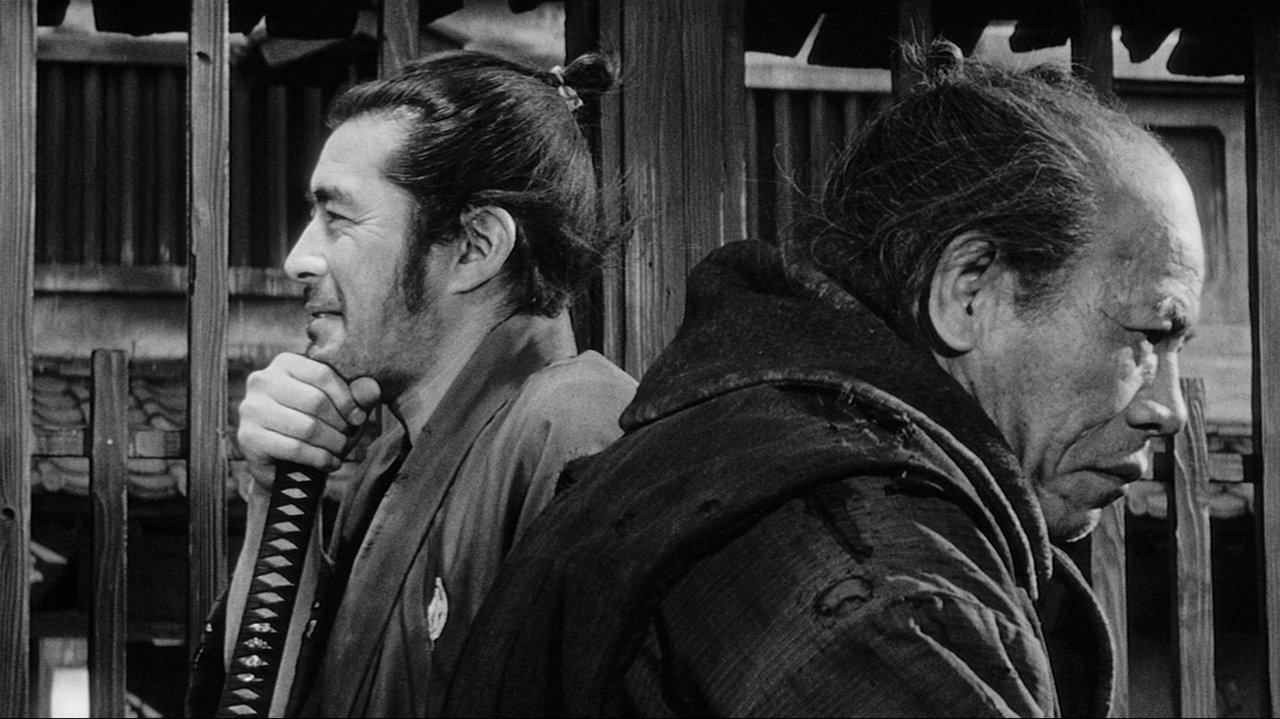
The Ronin With No Name (But a Lot of Itch)
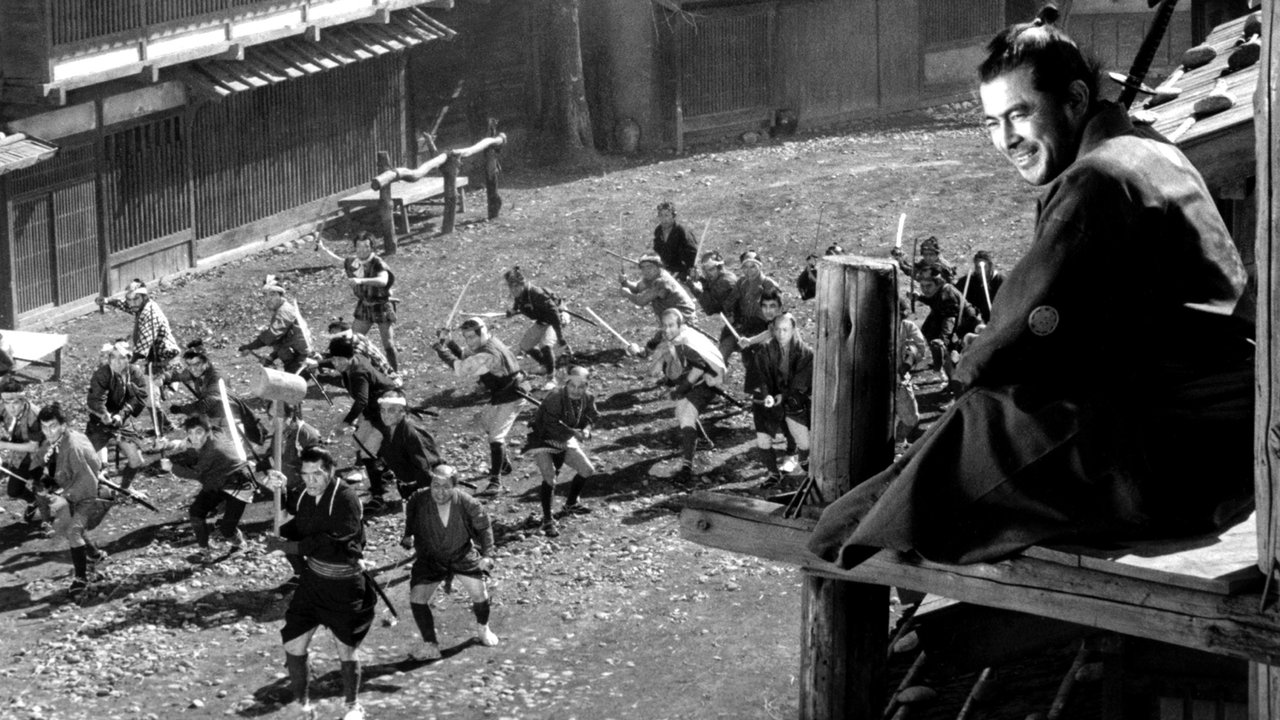
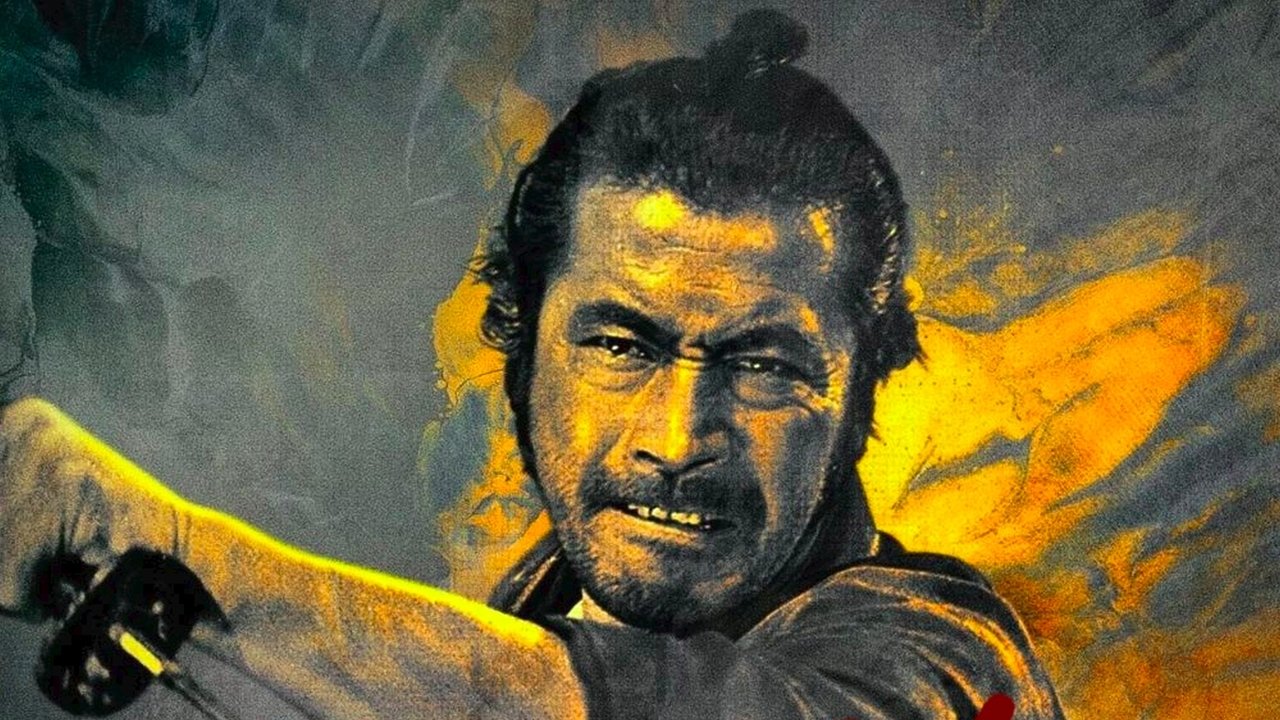
At the center of this chaos is Toshirō Mifune, an actor who didn't just play roles; he occupied them like a force of nature. As Sanjuro, the nameless ronin who claims his surname comes from the mulberry trees he happens to be looking at, Mifune creates the blueprint for the "Coolest Guy in the Room." He’s constantly scratching his scruffy chin, hitching his shoulders inside his kimono, and looking at the world with a mix of weary boredom and razor-sharp calculation.
Unlike the stiff, moralistic samurai of the 1950s Golden Age, Sanjuro is a cynical mercenary. He enters a town torn apart by two rival gangs—one led by a silk merchant and the other by a sake dealer—and realizes he can make a killing by simply being the biggest jerk on both sides. He sells his services to one, then the other, subtly whispering in ears and stoking the fires until the two factions are busy obliterating one another. It’s a dark, intense game of chess where the pieces are made of bone and steel.
A Masterclass in Dusty Dread
Akira Kurosawa was never a director to do things halfway. To capture the oppressive atmosphere of the village, he used long lenses that flattened the image, making the buildings feel like they were closing in on the characters. He also had a giant wind machine on set that blasted a constant slurry of dust and leaves across the frame. You can practically feel the grit in your own eyes while watching.
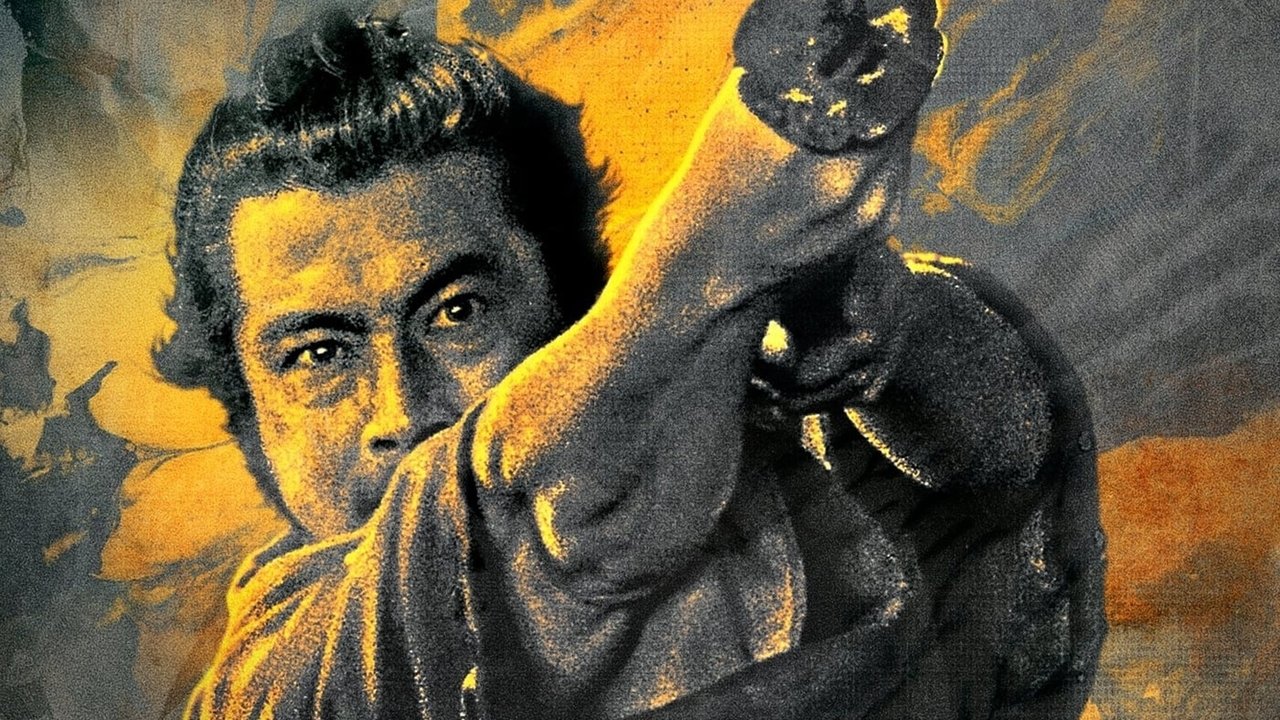
The score by Masaru Satō is equally unconventional. It’s not the sweeping, traditional orchestral swell you’d expect from a 1961 period piece; it’s rhythmic, brassy, and almost jaunty, providing a grimly ironic counterpoint to the carnage on screen. When the violence does erupt, it’s lightning-fast. Kurosawa doesn't linger on the gore—though for 1961, the blood spray was revolutionary—but he makes sure you feel the weight of every strike.
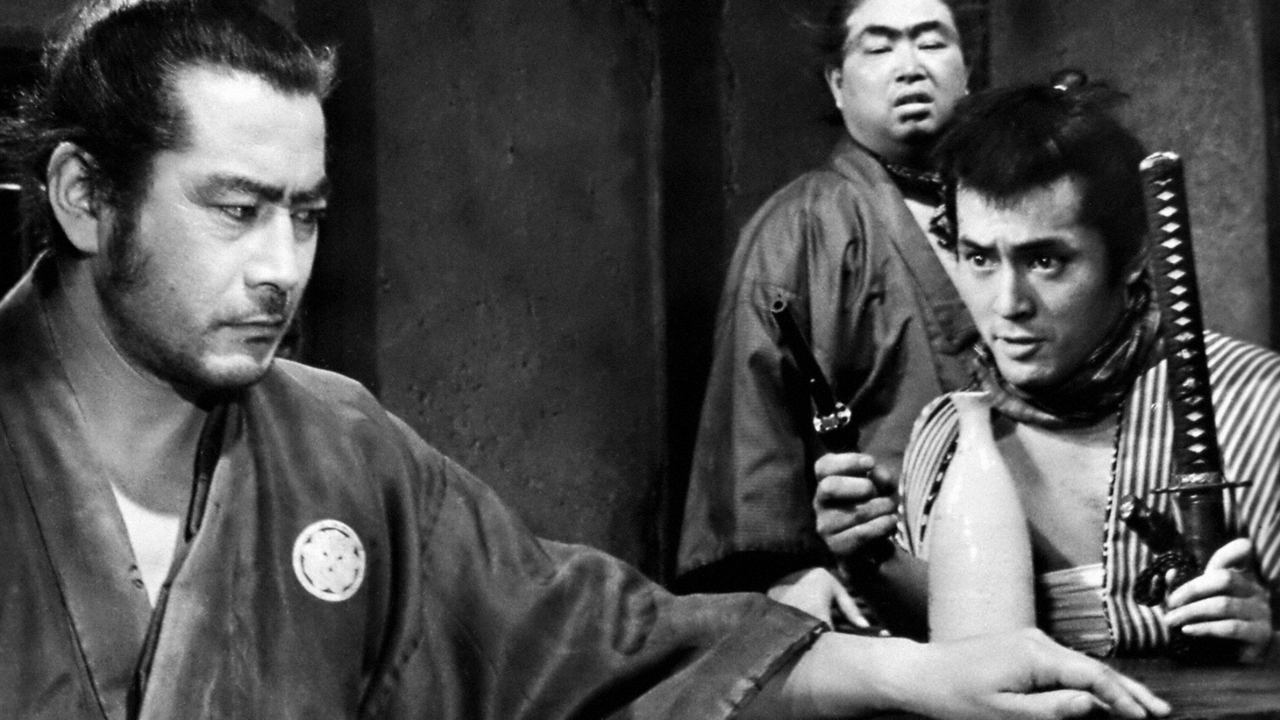
The film takes a particularly dark turn with the arrival of Unosuke, played by a sleek and sinister Tatsuya Nakadai (who also starred in Kurosawa's Ran). Unosuke brings a revolver to a sword fight, representing the cold, impersonal intrusion of modern technology into a world governed by ancient skills. His presence shifts the movie from a clever con-artist tale into a high-stakes thriller where Sanjuro’s cleverness might not be enough to save his skin.
From Japan to the Video Store Shelf
While Yojimbo was a massive hit in 1961, its legacy for many of us was cemented during the VHS revolution of the late 70s and 80s. I first encountered it as part of the "Sanjuro Collection" box set, which sat on the "Foreign/World Cinema" shelf of my local rental shop, right next to the early Spaghetti Westerns. The connection isn't a coincidence. Sergio Leone’s A Fistful of Dollars was such a beat-for-beat uncredited remake of Yojimbo that Toho (the production company) famously sued and won.
Watching it now, it’s fascinating to see the DNA of New Hollywood all over the screen. You can see the roots of Clint Eastwood’s "Man with No Name" and the cynical, anti-hero grit that would define 1970s cinema. There's a particular shot where Toshirō Mifune stands alone at the end of the street as the dust swirls around him that feels like it was etched into the brain of every director who followed.
The practical effects here are simple but effective. When a character gets hit, they don't just fall; they crumple. The stunt work is messy and visceral, lacking the polished choreography of modern wuxia films, which only adds to the sense of danger. The town's businessmen are actually dumber than the thugs they hire, and seeing their greed lead to their inevitable downfall remains one of the most satisfying "moral" endings in film history, even if it's delivered with a shrug and a bloody blade.
Yojimbo is the rare "important" film that never feels like a chore to watch. It is a lean, mean, and darkly funny thriller that understands human greed better than almost any other movie in the genre. Whether you’re a die-hard fan of Kurosawa or just someone who wants to see a master at the height of his powers, this is essential viewing. It’s the ultimate reminder that sometimes, the only way to clean up a town is to let the bad guys take each other out. Just watch out for the dog.
Keep Exploring...
-
High and Low
1963
-
Throne of Blood
1957
-

Rashomon
1950
-
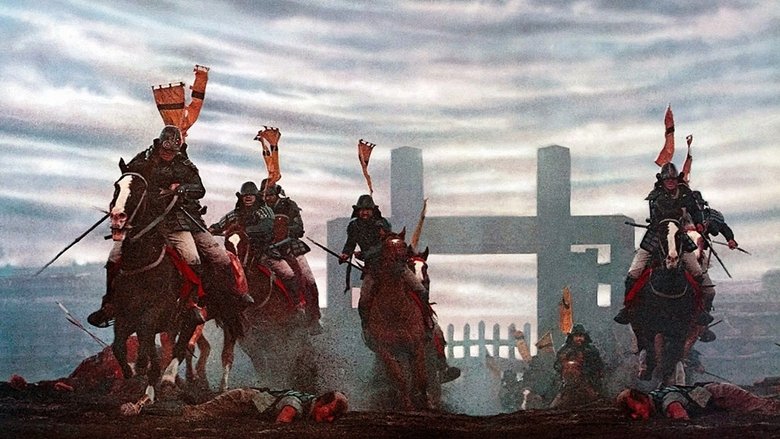
Ran
1985
-
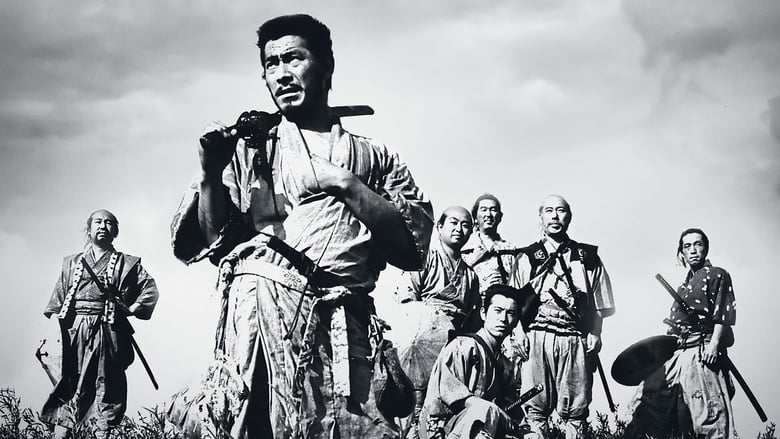
Seven Samurai
1954
-
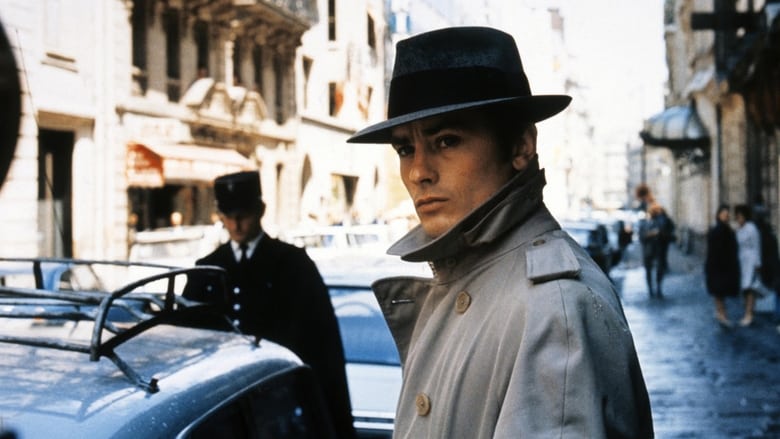
Le Samouraï
1967
-
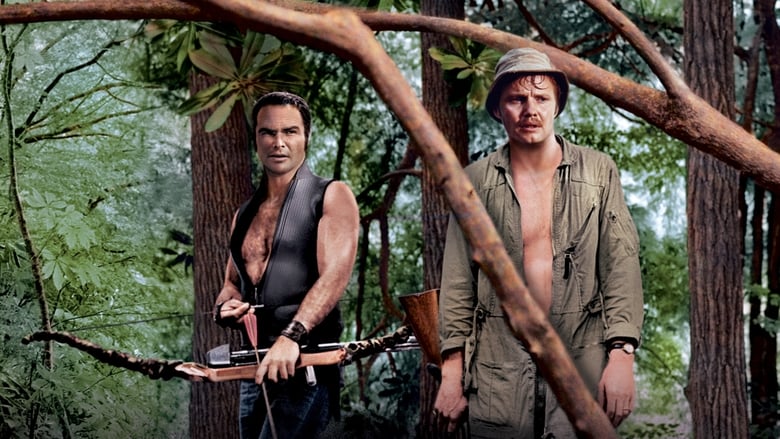
Deliverance
1972
-
The Poseidon Adventure
1972
-
All the President's Men
1976
-
Marathon Man
1976
-
The Tenant
1976
-
Blood Simple
1985
-
Mississippi Burning
1988
-
The Killer
1989
-
Peeping Tom
1960
-
What Ever Happened to Baby Jane?
1962
-

Repulsion
1965
-
Blow-Up
1966
-

Ikiru
1952
-
West Side Story
1961