Harakiri
"The armor is empty, and the code is a lie."
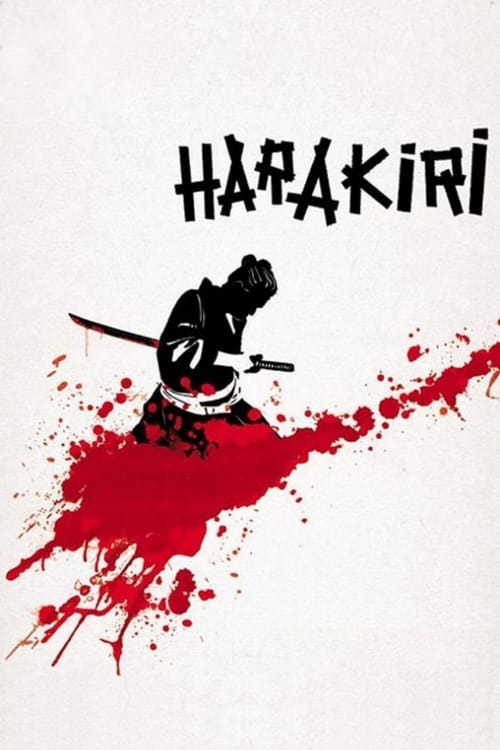
A suit of samurai armor sits on a pedestal, imposing and lacquered to a high gloss, yet there’s nobody inside it. It’s a hollow shell, an ornamental ghost of a "glorious" past that Masaki Kobayashi spends the next two hours systematically dismantling. If you go into Harakiri expecting the sweeping heroics of a Kurosawa epic, prepare to have your worldview adjusted. This isn’t a celebration of the bushido spirit; it’s a forensic autopsy of it.
I watched this most recently on a flickering laptop screen while hiding from a thunderstorm in a coastal Airbnb, and the lightning outside matched the flashing blades on screen with a rhythm that felt almost scripted. Even without a theater-quality sound system, the sheer weight of the silence in this film is deafening.
The Suicide Bluff
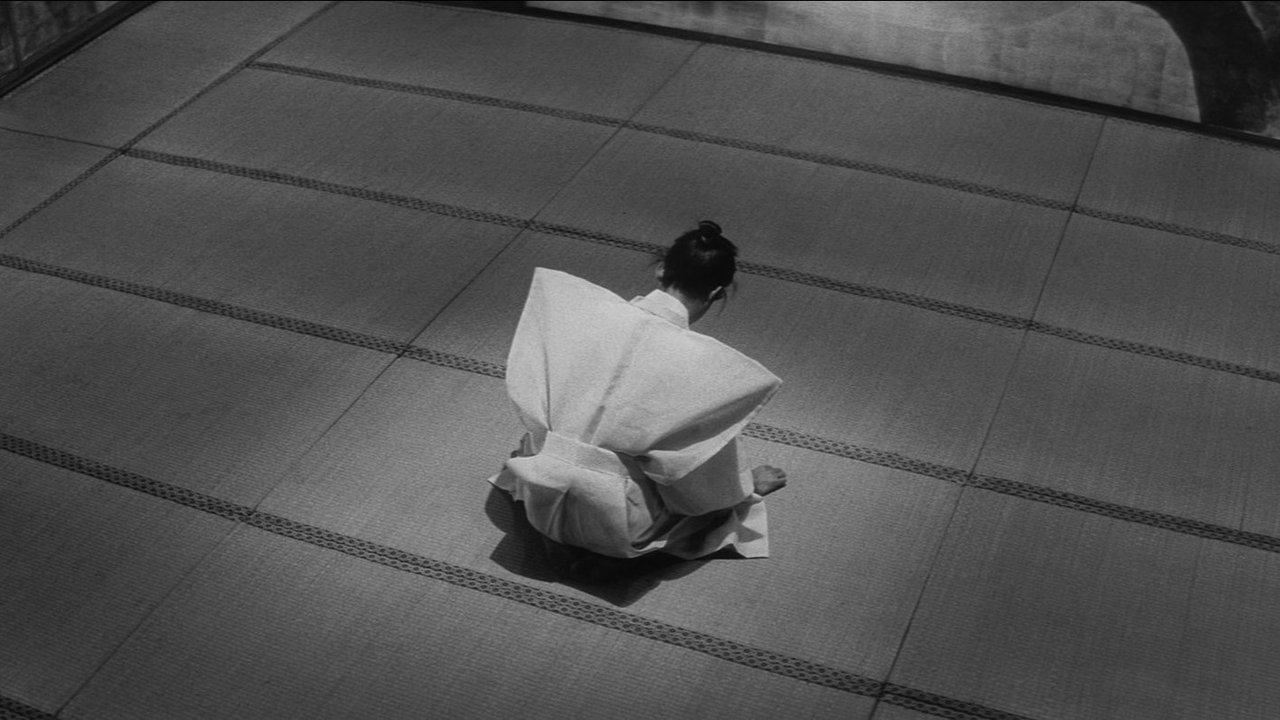
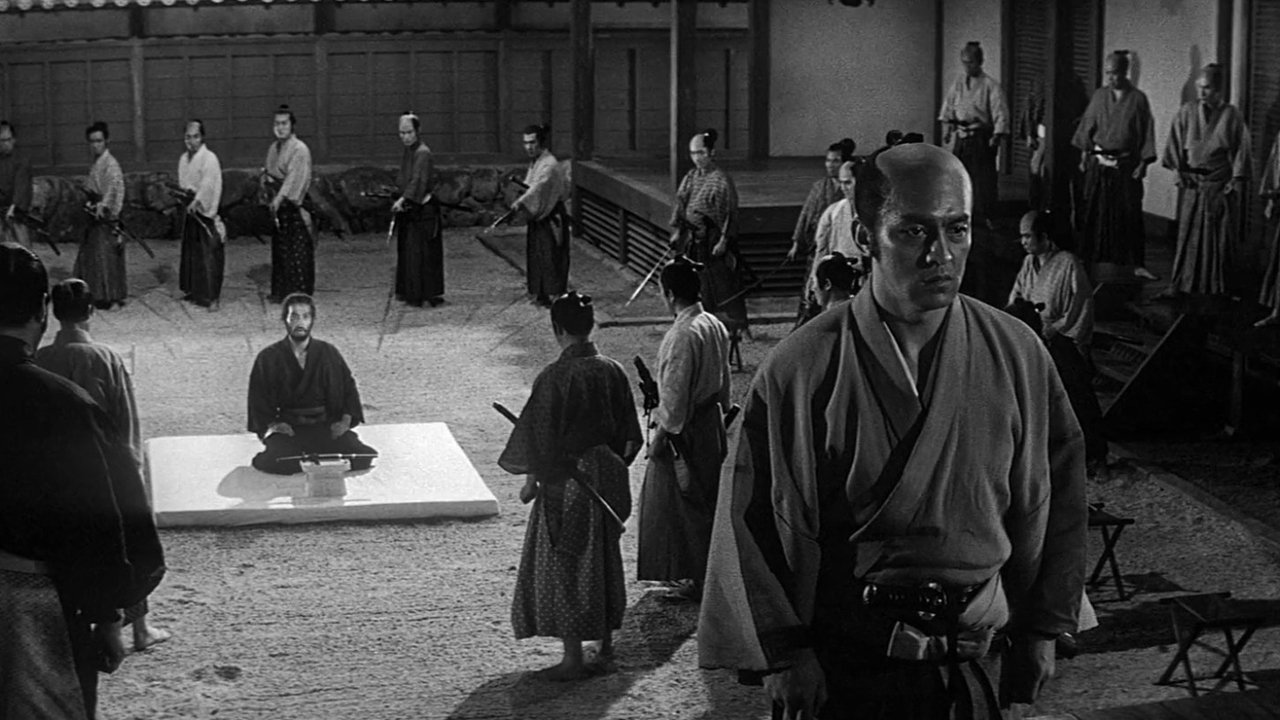
The story kicks off in 1630, a time of "peace" that has left thousands of samurai—the ronin—jobless and starving. Our protagonist, Hanshiro Tsugumo (played by the legendary Tatsuya Nakadai), arrives at the House of Iyi. He asks for a courtyard to commit seppuku (ritual suicide), claiming he can no longer live in poverty. But the clan’s counselor, Kageyu (played with chilly bureaucratic arrogance by Masao Mishima), isn't buying it. He tells Hanshiro a "funny" story about the last guy who came by with the same request—a young man named Motome (Akira Ishihama) who was forced to actually go through with it using a dull bamboo blade because the clan wanted to make an example of "suicide bluffs."
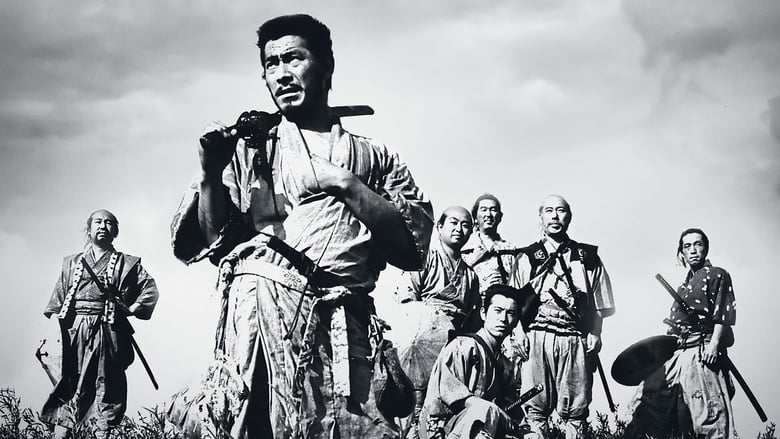
What follows is one of the most perfectly structured screenplays in history, courtesy of Shinobu Hashimoto (the man who also penned Seven Samurai and Rashomon). Through a series of interlocking flashbacks, we learn that Hanshiro isn't just some random veteran; he’s a man with a very specific, very lethal grievance.
Violence With Weight
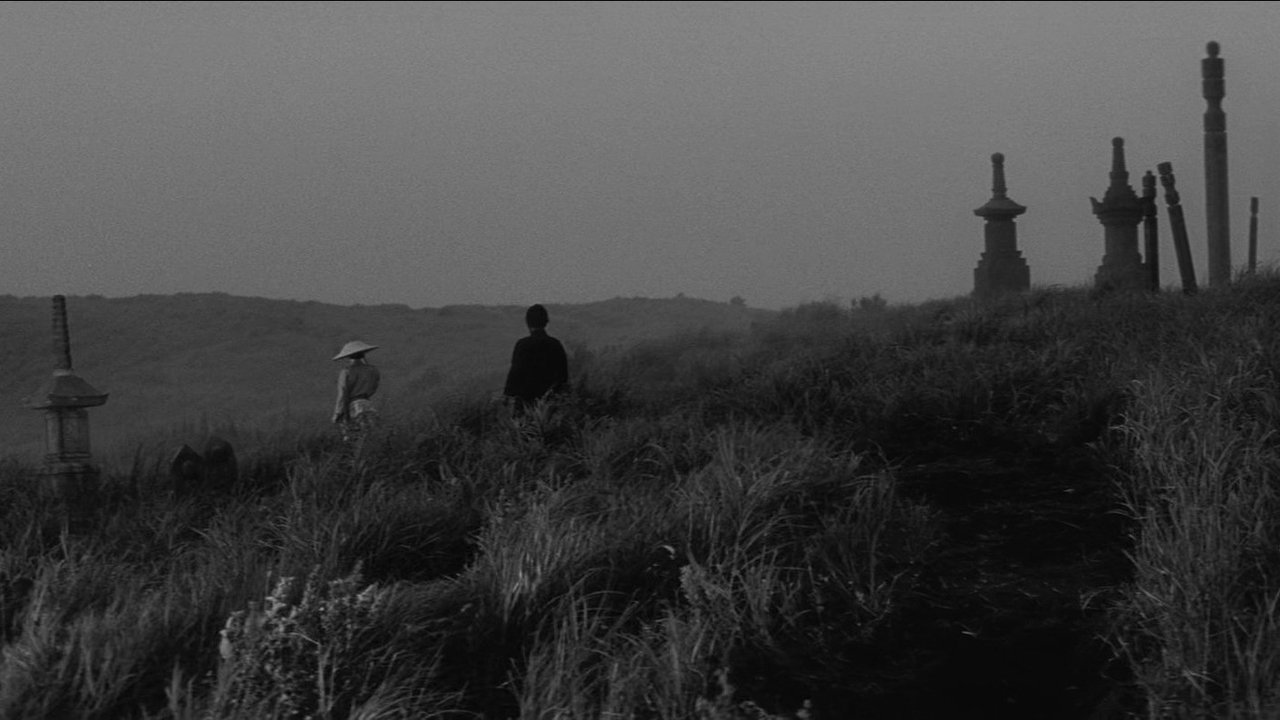
While Harakiri is a slow-burn drama for its first two acts, the "Action" tag in the genre list isn't just for show. When the violence finally erupts, it has a physical impact that most modern blockbusters lack. This isn't the balletic, bloodless swordplay of the 1950s. Masaki Kobayashi directs the action with a frantic, desperate energy. A bamboo sword is scarier than a chainsaw in this film's universe, and the scene where Motome is forced to use one is genuinely difficult to sit through. It’s a masterclass in how to use practical effects and sound design—the literal crunch of the wood—to create a sense of physical agony.
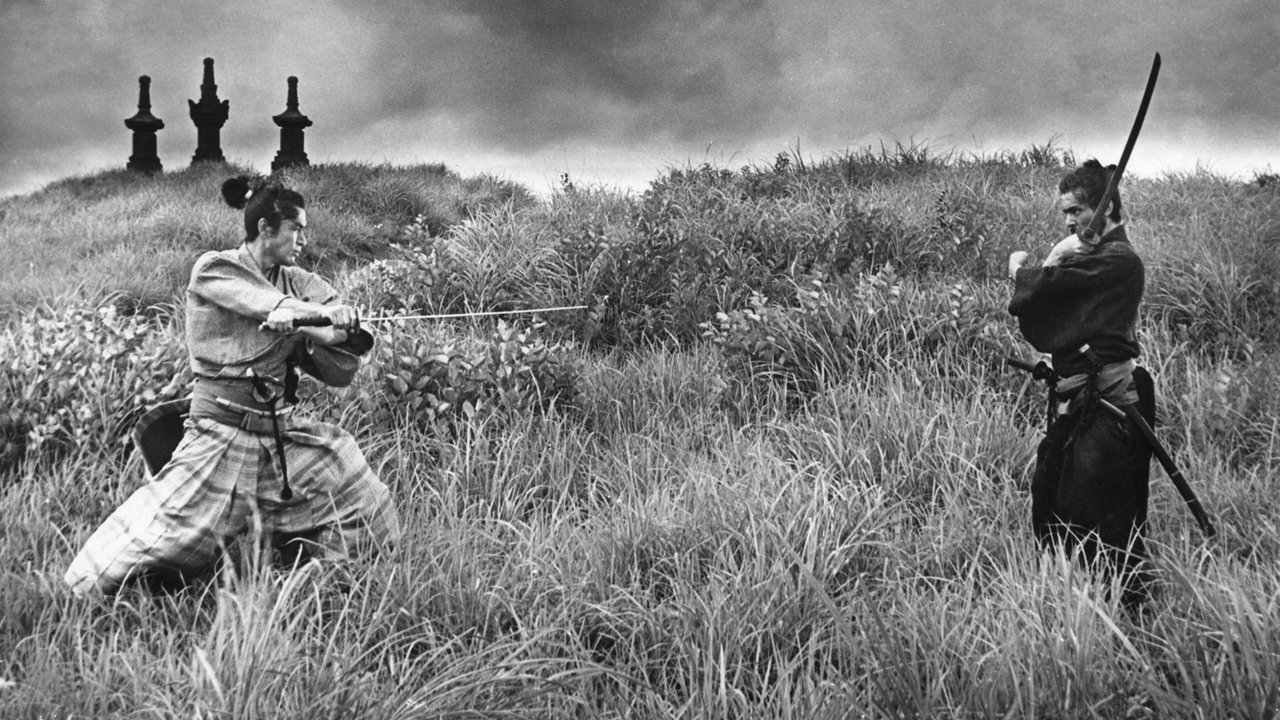
The climax features a duel between Tatsuya Nakadai and the clan’s top swordsman, played by Tetsuro Tamba (who Western fans might recognize as Tiger Tanaka from the Bond film You Only Live Twice). They fought in a wind-swept field of tall grass, and the production stories are wild—apparently, Kobayashi insisted on using real steel swords for several close-up exchanges to capture the genuine fear in the actors' eyes. Nakadai later admitted he was terrified of being accidentally maimed, and you can see that genuine, vibrating tension in every frame of the fight.
The Deconstruction of the Myth
By the time the 1980s home video boom hit, Harakiri became a staple for the "cult cinema" crowd. It was often sandwiched on rental shelves between flashy ninja flicks and cheap action imports, but it stood out because it felt so much more dangerous. While those other films were selling the fantasy of the invincible warrior, Kobayashi was showing us that the samurai code is basically a lethal version of corporate HR. It exists to protect the institution, not the individual.
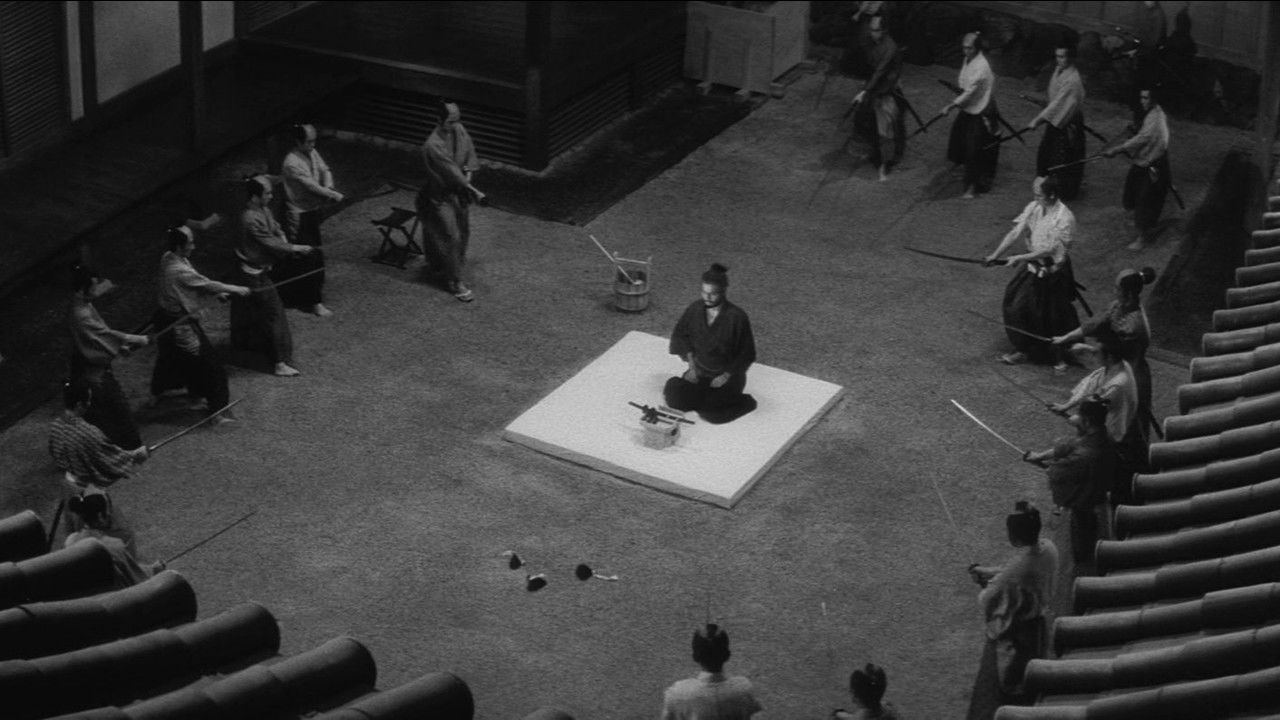
The cinematography by Yoshio Miyajima is intensely geometric. Every shot of the Iyi estate is perfectly symmetrical, cold, and rigid—matching the clan's obsession with appearances. Hanshiro is the chaotic element that breaks that symmetry. Tatsuya Nakadai gives a performance that is all in the eyes; he looks like a man who has already died and is just waiting for his body to catch up. He turns Hanshiro into the original "John Wick" of the 17th century—a man who lost everything and decided to burn the system down on his way out.
Harakiri is that rare 1960s film that feels like it could have been made yesterday. Its cynical take on power and the way institutions use "honor" to exploit the poor is painfully relevant. It’s a gorgeous, brutal, and intellectually sharp film that rewards your patience with one of the most satisfying finales in the genre. If you can handle the tension, it’s an absolute essential.
Whether you're a fan of the technical craft of the "Golden Age" or just someone who appreciates a protagonist who refuses to go down without a fight, this is a masterpiece. It’s the kind of movie that makes you want to look at every modern action film and ask, "Why aren't you this brave?" Get through the subtitles, ignore the black-and-white "old movie" stigma, and let this one wreck you. You won't regret it.
Keep Exploring...
-
Ran
1985
-
Andrei Rublev
1966
-
Throne of Blood
1957
-
The Last Emperor
1987
-
Judgment at Nuremberg
1961
-
A Taxi Driver
2017
-
The Longest Day
1962
-
La Dolce Vita
1960
-

The Hustler
1961
-
Jules and Jim
1962
-
La Jetée
1962
-
The Leopard
1963
-
Who's Afraid of Virginia Woolf?
1966
-
Seven Samurai
1954
-
Planet of the Apes
1968
-
Mirror
1975
-
The Elephant Man
1980
-
Gandhi
1982
-
Amadeus
1984
-
The Color Purple
1985