Contempt
"Cinema’s most beautiful autopsy of a dying marriage."
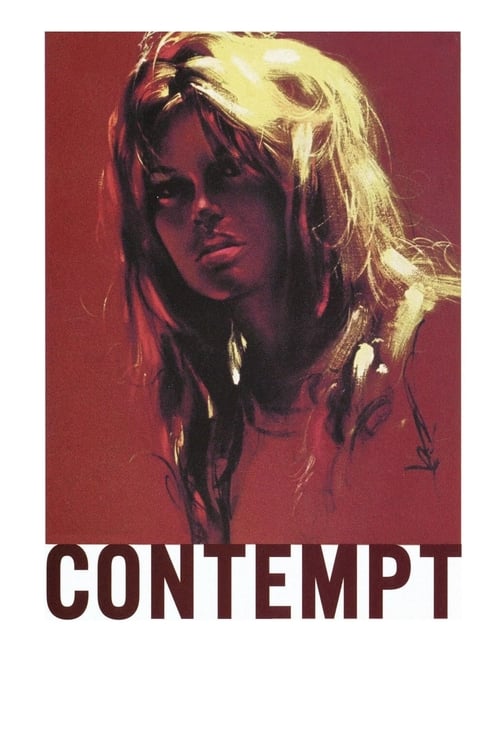
I first watched Contempt in a tiny apartment while wearing a red bathrobe that I thought made me look like a French intellectual, but I ended up spilling an entire glass of cheap Merlot on it during the infamous thirty-minute apartment argument. That stain never came out, and honestly, it felt like a fitting tribute to a movie that is essentially a Technicolor bloodletting of the soul.
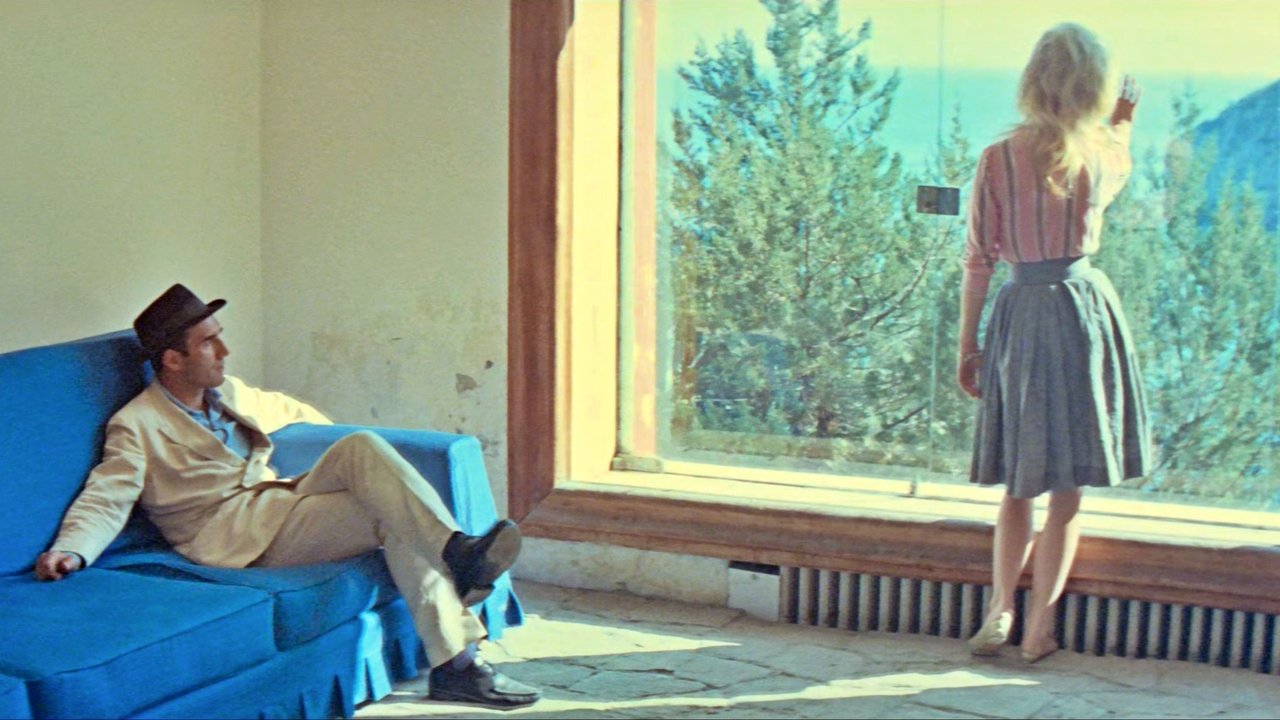
Jean-Luc Godard’s 1963 masterpiece is a paradox: it is one of the most visually stunning films ever made, shot in glorious CinemaScope on the sun-drenched coast of Italy, yet it is profoundly, deeply miserable. It’s a movie about the "art" of movies, the death of love, and the specific way a man can lose his wife’s respect by being a bit too spineless in the presence of a checkbook.
The Slow-Motion Car Crash of the Heart
The setup is deceptively simple. Paul Javal (Michel Piccoli) is a playwright who takes a job rewriting a screenplay for a film version of The Odyssey. The director is the legendary Fritz Lang (playing himself with a regal, weary grace), and the producer is Jeremy Prokosch (Jack Palance), a man who treats art like a vending machine.
The conflict kicks off when Paul essentially "offers" his wife, Camille (Brigitte Bardot), to Prokosch, letting her ride in the producer’s red Alfa Romeo while he follows in a taxi. It’s a small moment of social cowardice, but it’s the spark that ignites a fire of pure, unadulterated disdain. The primary antagonist of this movie isn't the producer; it's the sheer, exhausting weight of a husband’s insecurity.
As they move from the sterile, modern apartments of Rome to the breathtaking Villa Malaparte in Capri, we watch their marriage disintegrate in real-time. The middle third of the film is a grueling, brilliant, thirty-minute sequence inside their unfinished apartment. They walk from room to room, they change clothes, they take baths, and they pick at each other’s scabs until the skin comes off. Michel Piccoli is masterful as a man who knows he’s losing everything but can’t stop talking long enough to save it.
Godard vs. The Money Men
While the marriage is the emotional core, Contempt is also a fascinating look at the transition from the "Golden Age" of Hollywood to the "New Wave." By 1963, the old studio system was gasping for air, and Godard was the punk rock kid coming in to tear down the posters.

The behind-the-scenes reality of the film is as dramatic as the script. The American producers (including the legendary Joseph E. Levine) were furious when they saw Godard’s first cut—they had hired Brigitte Bardot, the world’s biggest sex symbol, and they felt there wasn't enough of her on screen. They demanded more nudity. Godard, ever the rebel, gave them exactly what they asked for in the opening scene, but he filmed it through red, white, and blue filters, accompanied by Georges Delerue’s haunting, repetitive score. He turned a "commercial" requirement into a piece of melancholic art that actually deepens our understanding of the characters' doomed intimacy.
Then there’s Jack Palance. Apparently, Palance was a nightmare on set, frustrated by Godard’s improvisational style and "anti-Hollywood" attitude. He supposedly threw a reel of film at the director’s head at one point. In the film, Jack Palance is essentially playing every studio executive who ever thought a script needed more 'energy' and fewer 'ideas'. He chews the scenery with a terrifying, charismatic arrogance, kicking film cans and quoting poets he doesn't understand.
Why This Indie Vision Still Stings
Despite a budget of $900,000—which was massive for a French director at the time—Contempt feels like the ultimate indie project. Godard used the money to create a critique of the very people who gave it to him. He uses Raoul Coutard’s cinematography to create a world where everything is bright and primary-colored, yet the characters are trapped in a grayscale of emotion.
The film’s use of language is another stroke of genius. Because it’s a co-production, the characters speak French, English, Italian, and German. Giorgia Moll plays Francesca, the translator who stands between the "art" (Lang) and the "money" (Prokosch). She is the most important person on screen, yet she’s treated like furniture. It’s a brilliant metaphor for how much gets lost in translation when commerce tries to buy culture.
Even the location—the Villa Malaparte—is a character. It’s a red, angular house built into a cliffside that looks like it’s trying to crawl into the Mediterranean. It’s beautiful, isolated, and completely inhospitable—just like Camille’s heart by the time the credits roll.

Contempt is a film that demands your attention and then uses it to break your heart. It’s a gorgeous, bitter, and endlessly rewatchable look at why we make movies and why we fail the people we love. If you’ve ever felt a relationship shift because of a single, unspoken moment, this movie will haunt you for weeks. Just be careful with the red wine if you're wearing a bathrobe.
***
Stuff You Didn't Notice
Fritz Lang's Wisdom: Having the director of Metropolis and M play himself wasn't just a stunt. Lang represents the integrity of "Old Cinema," acting as a moral anchor while the younger characters lose their way. The Odyssey Parallels: The film Paul is writing is about Odysseus returning to Penelope. While Paul writes about a hero trying to get home, he is actively destroying his own home. A "Bardot" Movie: This was Brigitte Bardot's most serious role. She reportedly loved working with Godard because he treated her like an actress instead of a pin-up, even while the producers were demanding the opposite. The Red Alfa Romeo: The car Prokosch drives is a symbol of the "modern world" invading the ancient landscape of Italy—a fast, loud, expensive machine that eventually leads to tragedy.
Keep Exploring...
-
Pierrot le Fou
1965
-

Breathless
1960
-

The Umbrellas of Cherbourg
1964
-
Guess Who's Coming to Dinner
1967
-
Belle de Jour
1967
-
Cabaret
1972
-
Last Tango in Paris
1972
-
Badlands
1974
-
Annie Hall
1977
-
Wings of Desire
1987
-
Breakfast at Tiffany's
1961
-

The Hustler
1961
-
Jules and Jim
1962
-
La Jetée
1962
-

The Graduate
1967
-
The Apartment
1960
-
West Side Story
1961
-
Doctor Zhivago
1965
-

The Sound of Music
1965
-
Peeping Tom
1960