The Birds
"Nature has finally lost its patience."
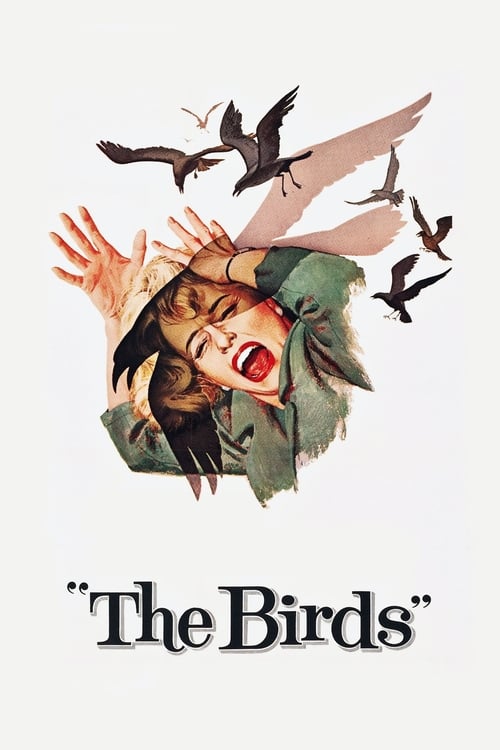
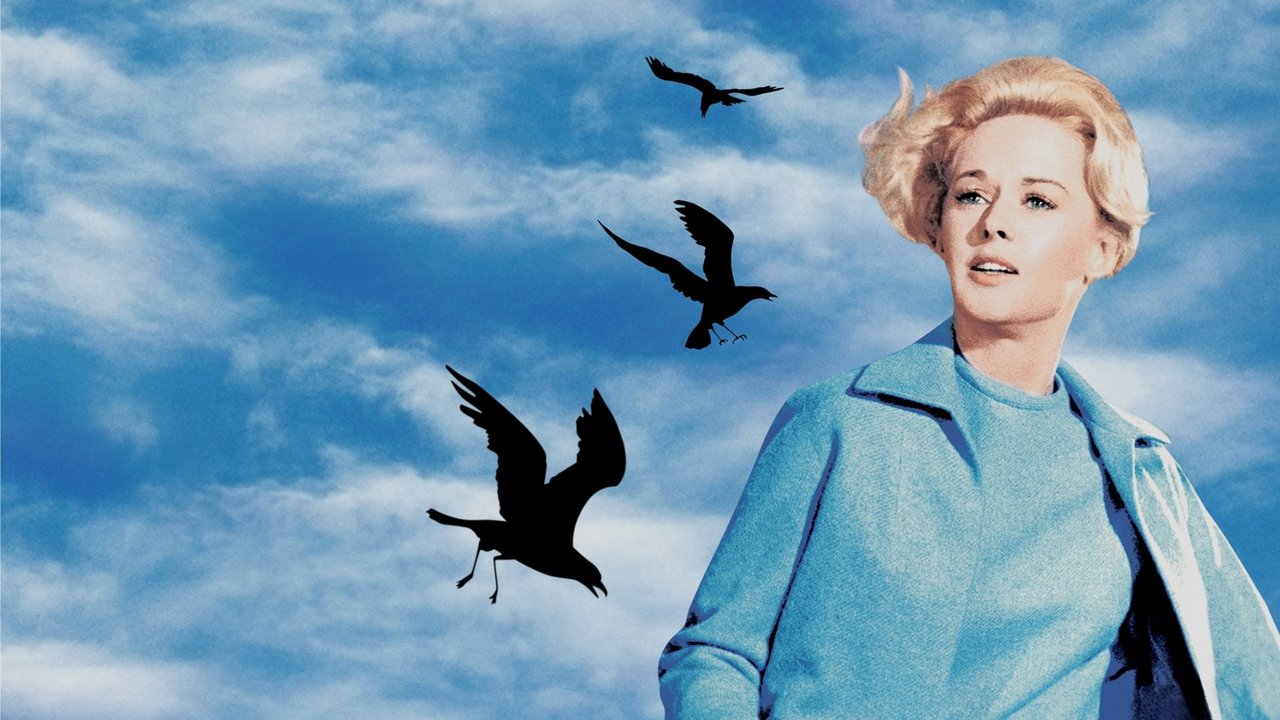
I’m currently sitting on my back porch watching a solitary magpie pick at a discarded crust of bread, and I’m genuinely considering going inside and locking the sliding glass door. It’s the "Hitchcock Effect." I once tried to eat a chicken salad sandwich at a pier in Monterey, and a seagull literally slapped the bread out of my hand with its wing—I felt like a background extra in a deleted scene, and my first instinct wasn't to be annoyed, but to look for a phone booth to hide in. That is the lingering, jagged power of Alfred Hitchcock’s 1963 masterpiece.
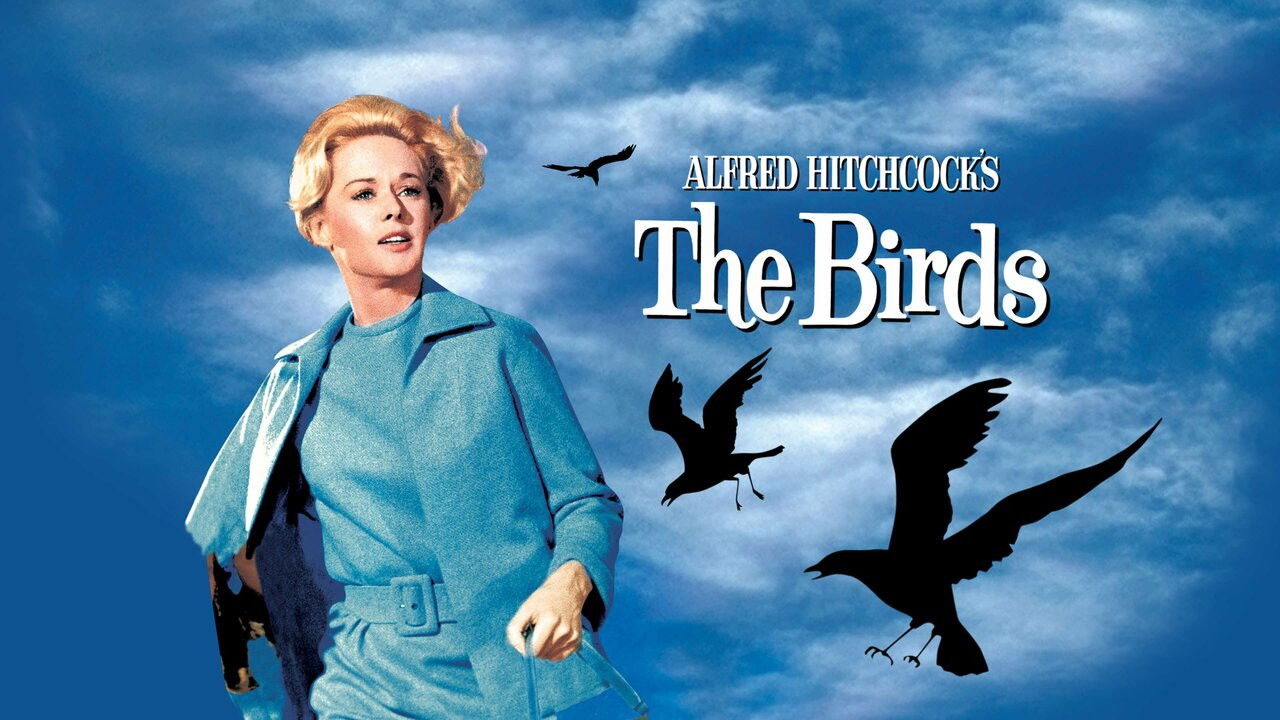
The Sound of Artificial Terror
The first thing that hits you about The Birds isn't what you see, but what you don’t hear. There is no musical score. None. No violins to tell you when to be scared, no orchestral swells to signal a romantic moment between Tippi Hedren and Rod Taylor. Instead, Hitchcock and his frequent collaborator Bernard Herrmann (who served as a "sound consultant" here) opted for a soundscape of electronically synthesized bird cries and flapping wings created on the Trautonium.
It is oppressive. By stripping away the comfort of a traditional Hollywood score, Hitchcock forces us into a vacuum where the only reality is the rhythmic, mechanical thrum of wings. When Tippi Hedren’s Melanie Daniels sits outside the schoolhouse, oblivious to the crows gathering on the jungle gym behind her, the silence is what builds the dread. Every time I watch that sequence, I find myself holding my breath, waiting for the first "caw" to break the tension like a gunshot. It’s a masterclass in using negative space to create anxiety.
A Masterpiece of Practical Panic
In an era long before pixels could simulate a murmuration, the production of The Birds was an absolute logistical nightmare. They used a mix of trained live birds, mechanical props, and complex yellow-screen matte shots (a predecessor to green screen developed by Ub Iwerks, the man who co-created Mickey Mouse).
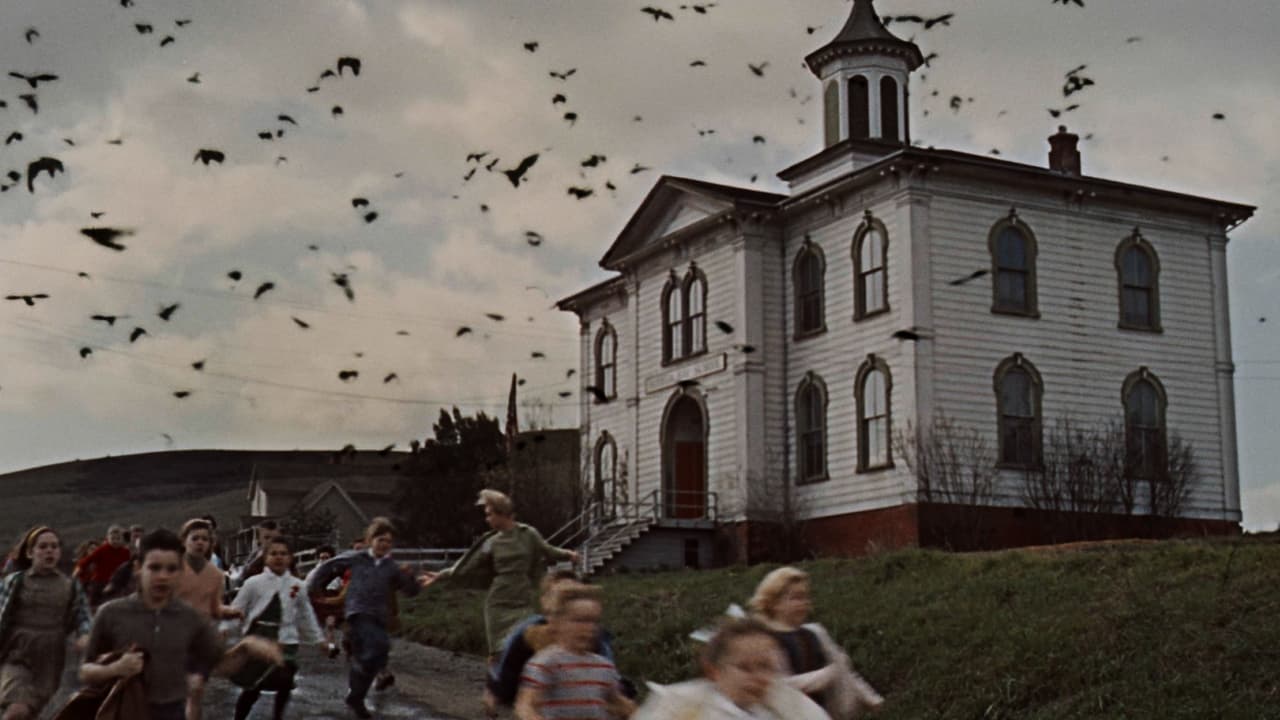
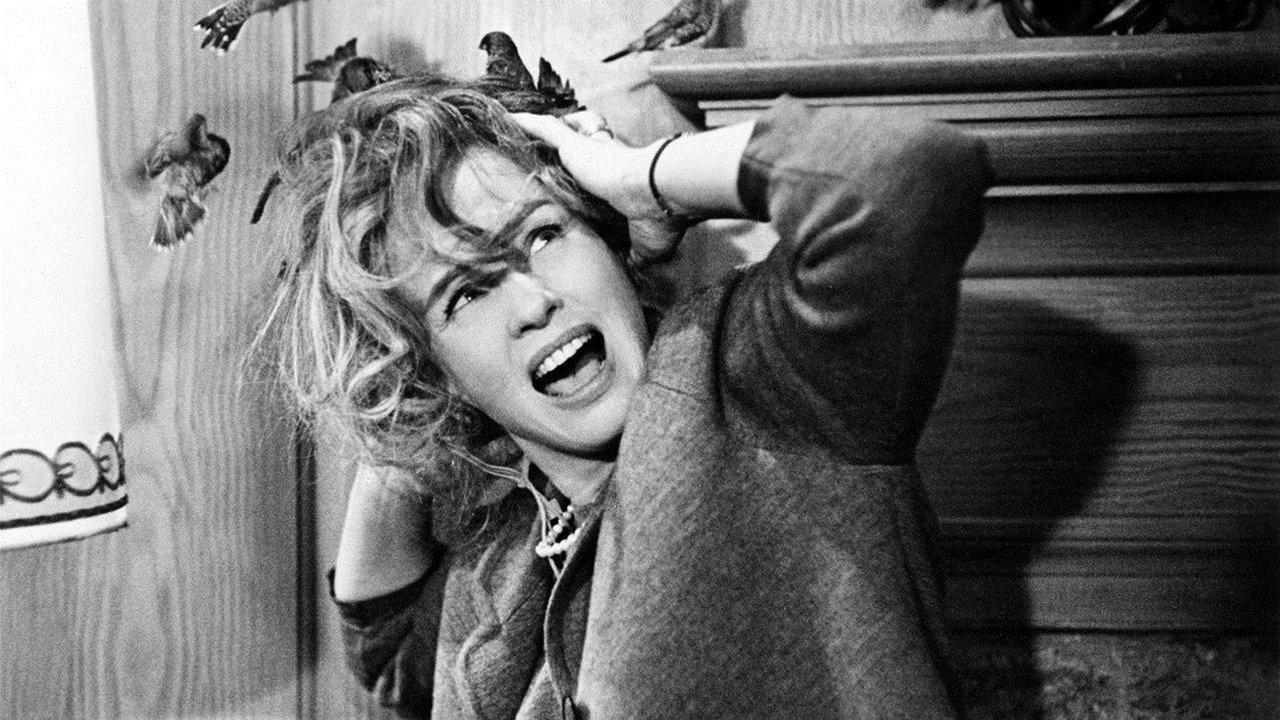
The effects hold up remarkably well because there is a weight to them. When those gulls dive-bomb the birthday party, you’re seeing a blend of real animals and clever editing that feels dangerously chaotic. However, the technical achievement came at a massive human cost. The stories from the set are legendary and, frankly, disturbing by modern standards. For the climactic attic scene, Tippi Hedren was told the mechanical birds weren't working, and instead, bird handlers spent five days throwing live gulls and ravens at her. The fact that Hitchcock prioritized a shot of a bird clawing a woman's eyelid over her actual sanity is the darkest part of his legacy. You can see the genuine exhaustion and terror in her eyes; it’s not acting, it’s survival.
Jessica Tandy provides a grounded, brittle foil as Mitch’s mother, Lydia. Her silent reaction upon discovering a neighbor with his eyes pecked out is one of the most effective jump-cuts in horror history. It’s quick, brutal, and utterly New Hollywood in its unflinching gore, signaling the end of the polite, "off-screen" deaths of the 1940s.
Why the Mystery Stings
Screenwriter Evan Hunter (who wrote the gritty The Blackboard Jungle) famously clashed with Hitchcock over the ending. Hunter wanted a more traditional explanation or a more definitive escape, but Hitchcock leaned into the existential. There is no "why." There’s no radioactive spill, no ancient curse, and no vengeful god. The birds just decide that humanity’s lease on the planet has expired.
This lack of resolution is what makes the film a bridge into the cynical 1970s. As Melanie, Mitch, Lydia, and the young Veronica Cartwright (who would later face another terrifying "organism" in Alien) slowly drive away from the Brenner house, the horizon is carpeted with thousands of waiting birds. It’s not a victory; it’s a ceasefire.
The townspeople are so busy blaming Melanie for bringing the "curse" that they completely miss the point: nature doesn't need an invitation. This social commentary—the way a community turns on an outsider the moment the status quo shifts—feels uncomfortably relevant every time I revisit it. The film captures that specific 1960s anxiety where the polished veneer of American life starts to crack, revealing something primal and uncontrollable underneath.
The Birds is a cold, calculated, and beautifully shot descent into madness. While the pacing might feel deliberate to those raised on modern jump-scare factories, the slow burn is essential. It builds an atmosphere of domestic unease that eventually explodes into bird-on-human violence that still feels shocking. It’s a film that demands you look at the sky a little differently once the credits roll—and maybe rethink that bird feeder in your backyard.
Those final shots of the sea of birds, standing still and watching the car retreat, remain some of the most haunting images in cinema. Hitchcock didn't just make a movie about scary animals; he made a movie about the fragility of our "civilized" world. It’s a bleak, brilliant, and essential piece of horror history.

Keep Exploring...
-
Psycho
1960
-
Marnie
1964
-
Frenzy
1972
-
What Ever Happened to Baby Jane?
1962
-
Night of the Living Dead
1968
-
Peeping Tom
1960
-

Repulsion
1965
-
Carrie
1976
-

Halloween
1978
-
North by Northwest
1959
-
Rosemary's Baby
1968
-

Rebecca
1940
-
Suspicion
1941
-
Spellbound
1945
-
Notorious
1946
-
Rope
1948
-
Rear Window
1954
-
The Time Machine
1960
-
In the Heat of the Night
1967
-
The Omen
1976