Goldfinger
"The Midas touch of cinematic destruction."
The industrial laser creeps toward Sean Connery’s crotch with a terrifying, rhythmic hum, and in that moment, the gentleman spy genre shifted forever. Before Goldfinger, James Bond was a resourceful investigator in tailored suits; after that laser flickered to life, he became a global icon of high-concept survival. I first saw this on a slightly warped VHS tape where the tracking was so bad I thought the Aston Martin was driving through a blizzard, but even through the magnetic static, the sheer gravity of the stakes was undeniable. This isn't just a movie; it's the architectural blueprint for every blockbuster that followed.
The Cold Heart of the Midas Touch
While later entries in the franchise leaned into the "shaken, not stirred" campiness, director Guy Hamilton maintains a surprising amount of grit here. There is a genuine, oppressive weight to the villainy of Auric Goldfinger, played with a chilling, jovial psychopathy by Gert Fröbe. He isn't interested in world domination in a vague, political sense; he’s a man with a singular, fetishistic obsession with gold that borders on the pathological.
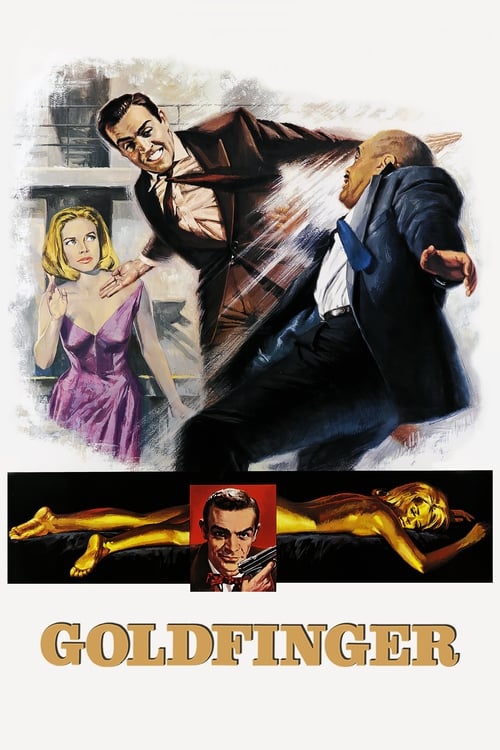
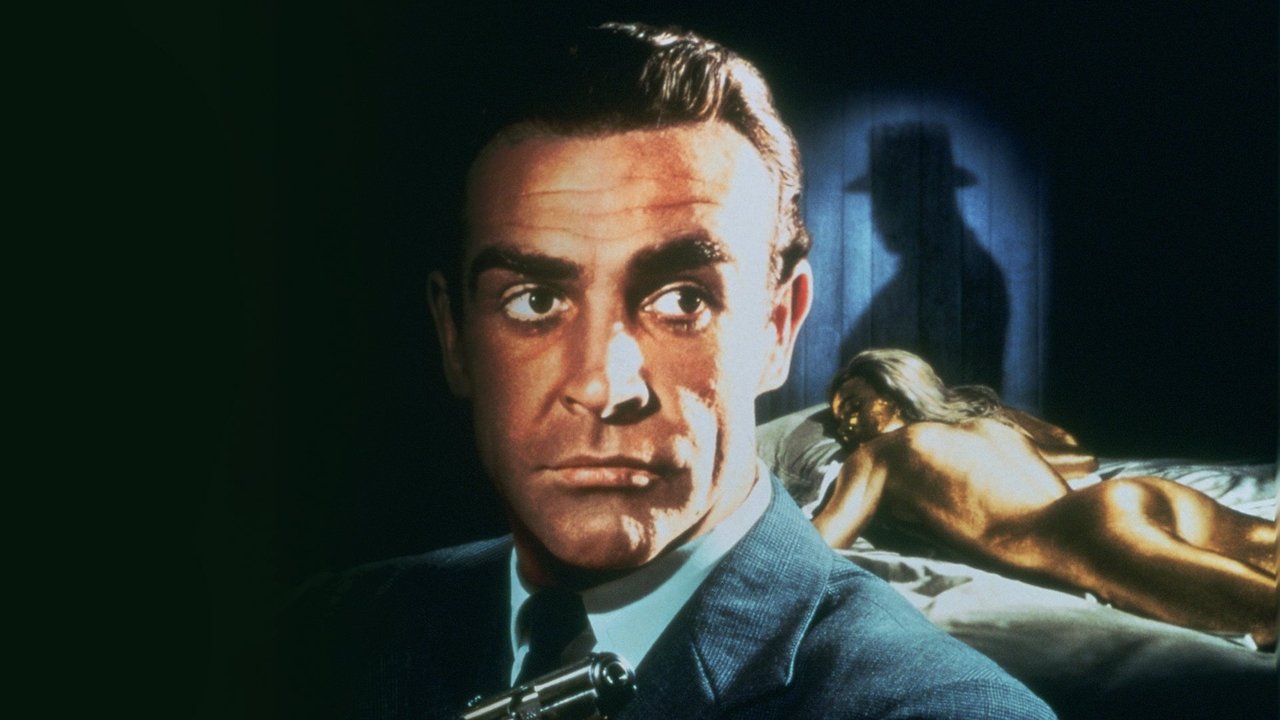
The death of Jill Masterson (Shirley Eaton), discovered face-down and suffocated by a coat of gold paint, remains one of the most haunting images in cinema. It’s an act of "skin-deep" cruelty that feels personal and ritualistic. I watched this scene again recently while my cat was methodically trying to knock a glass of water onto my laptop, and the silence of that room—the golden corpse against the white sheets—still feels like a punch to the gut. It reminds us that for all the gadgets, Bond’s world is one where people are disposable commodities. Even Tania Mallet, as the vengeful Tilly Masterson, meets a cold, mechanical end that underscores the film's refusal to offer easy escapes for its supporting cast.
High Stakes and Heavy Metal
The action choreography in Goldfinger focuses on a sense of mounting pressure rather than just chaotic movement. The fight between Bond and Oddjob (Harold Sakata) in the bowels of Fort Knox is a masterclass in physical storytelling. Oddjob doesn't just feel like a henchman; he feels like an immovable object. The way he shrugs off a blow from a gold bar—let’s be honest, Bond spends half this movie being a terrible spy who gets captured immediately—makes the eventual resolution feel earned and desperate.
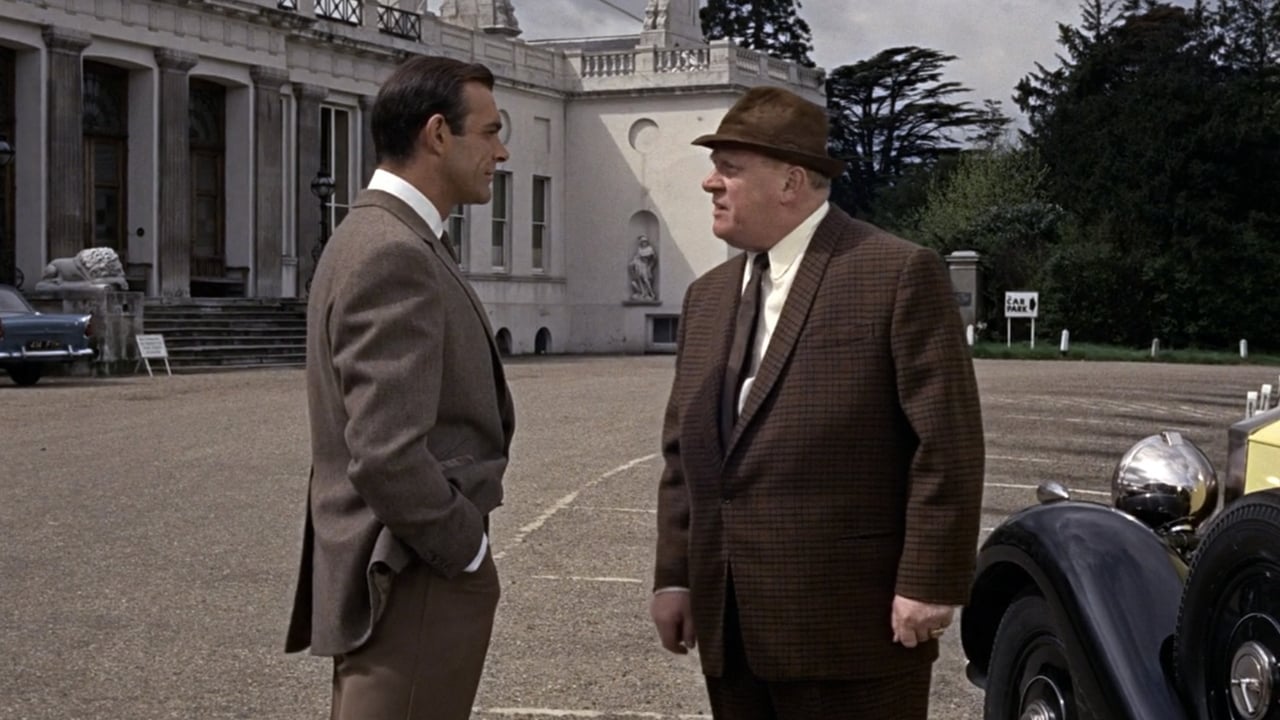
The introduction of the Aston Martin DB5, equipped by Q, changed the "Action" genre from simple shootouts to a showcase of mechanical ingenuity. But the film’s real tension lies in its pacing. It builds toward "Operation Grand Slam" with a ticking-clock intensity that rarely lets up. The score by John Barry, punctuated by that brassy, aggressive theme, drives the momentum forward like a steam engine. It’s loud, it’s arrogant, and it’s perfectly aligned with the film’s opulent scale.
The Birth of the Global Blockbuster
Goldfinger was the moment Bond-mania went nuclear. Produced on a budget of just $3 million, it raked in a staggering $124.9 million—nearly $1.2 billion in today’s money. It was the first Bond film to truly utilize a massive marketing machine, spawning everything from toy cars to "007" toiletries. This was the film that taught Hollywood that a movie could be a cultural event that existed far beyond the theater doors.
Behind the scenes, the production was a marvel of practical problem-solving. That famous laser? It wasn't a laser at all. A technician was crouched under the table with an oxyacetylene torch, carefully cutting through the metal from beneath to create the sparks, while Sean Connery sat inches away, praying the man had a steady hand. Gert Fröbe, despite his legendary performance, actually spoke very little English and had to be dubbed by actor Michael Collins. It’s a testament to Fröbe’s physical presence that you never for a second doubt the words coming out of his mouth.
Then there is Honor Blackman as Pussy Galore. While the name is a classic piece of 1960s double-entendre, her character was a genuine departure for the era—a competent, high-ranking pilot who led her own squad of aviators. She wasn't just there to be rescued; she was a pivot point for the entire plot.
Ultimately, Goldfinger works because it balances the spectacular with the sinister. It gave us the gadgets, the car, and the larger-than-life villain, but it never forgot to make the danger feel real. It’s the rare blockbuster that feels both like a breezy afternoon at the movies and a tense, high-stakes thriller that leaves you checking the shadows for a flying bowler hat. If you haven't revisited it lately, do yourself a favor: find the biggest screen you can, turn up the volume, and let the gold-plated madness take over.
---


Keep Exploring...
-
From Russia with Love
1963
-
Thunderball
1965
-
Live and Let Die
1973
-
Dr. No
1962
-
You Only Live Twice
1967
-
Diamonds Are Forever
1971
-
The Man with the Golden Gun
1974
-
The Spy Who Loved Me
1977
-
On Her Majesty's Secret Service
1969
-
For Your Eyes Only
1981
-
The Living Daylights
1987
-
Licence to Kill
1989
-
Never Say Never Again
1983
-
Octopussy
1983
-
Casino Royale
2006
-

Skyfall
2012
-
No Time to Die
2021
-
Moonraker
1979
-
A View to a Kill
1985
-
GoldenEye
1995