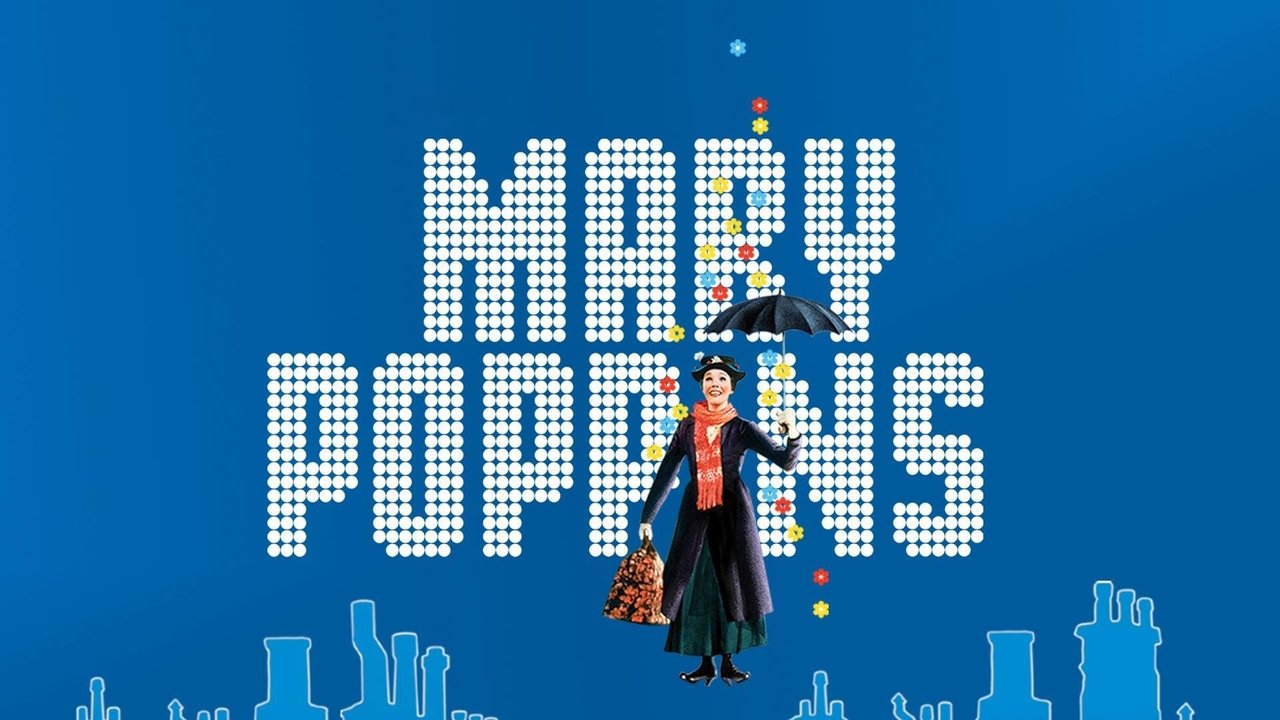
Mary Poppins
"Spit-spot! The most delightful rebellion ever filmed."
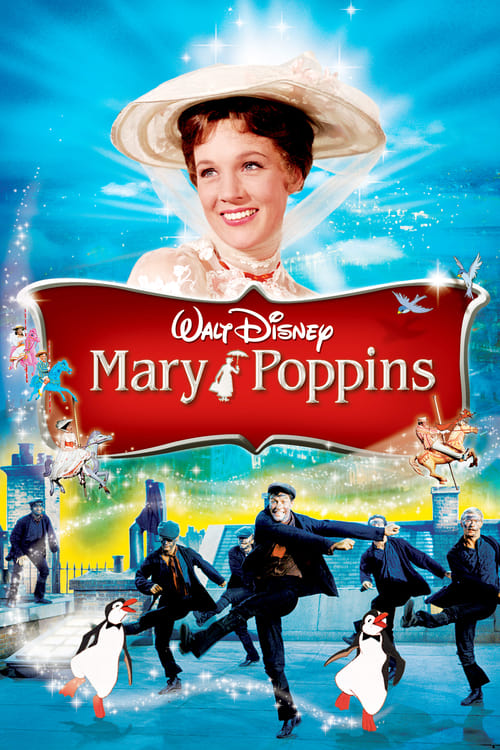
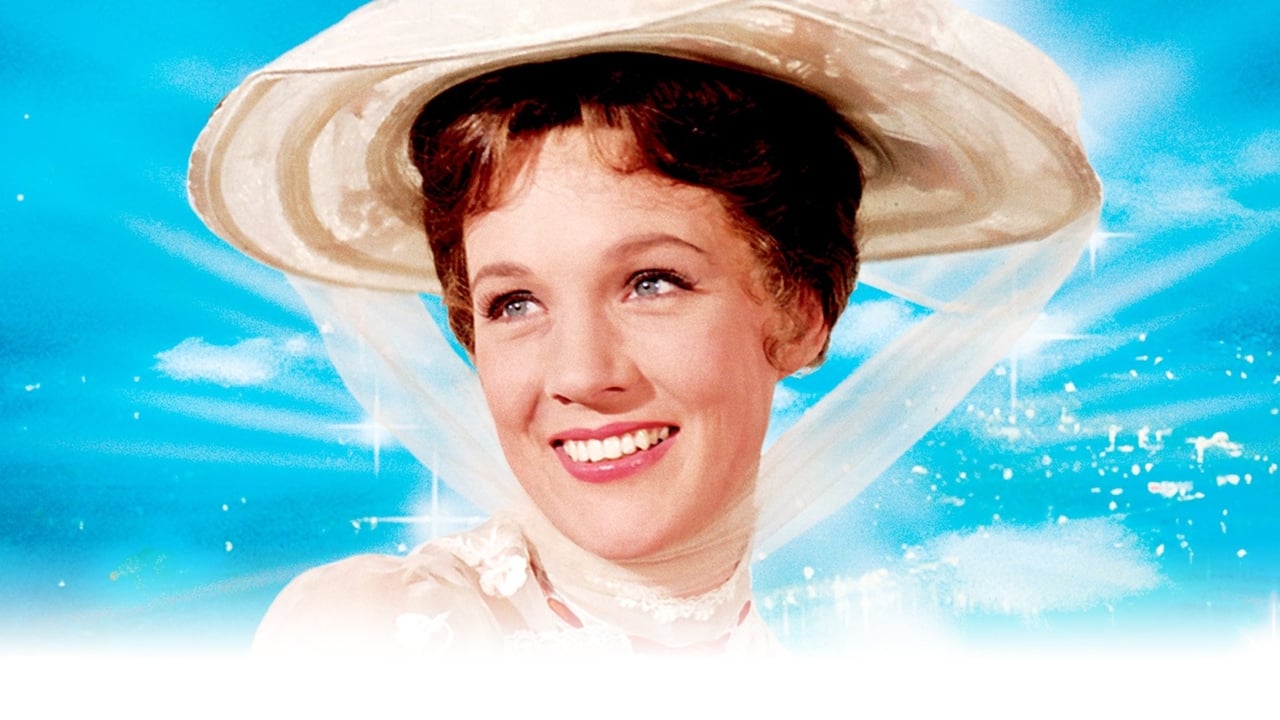
Most people remember the "Sodium Vapor Process" as a dry footnote in a film school textbook, but when I see Julie Andrews floating over the rooftops of London, I don’t see a technical breakthrough. I see a luminous, golden halo that shouldn't exist. This was Walt Disney’s secret weapon—a "yellowscreen" technology that allowed for a level of sharp-edged compositing that makes modern CGI look like a muddy thumbprint. It’s the reason why, even sixty years later, the animated penguins don't look like they’re bleeding into the live-action actors.
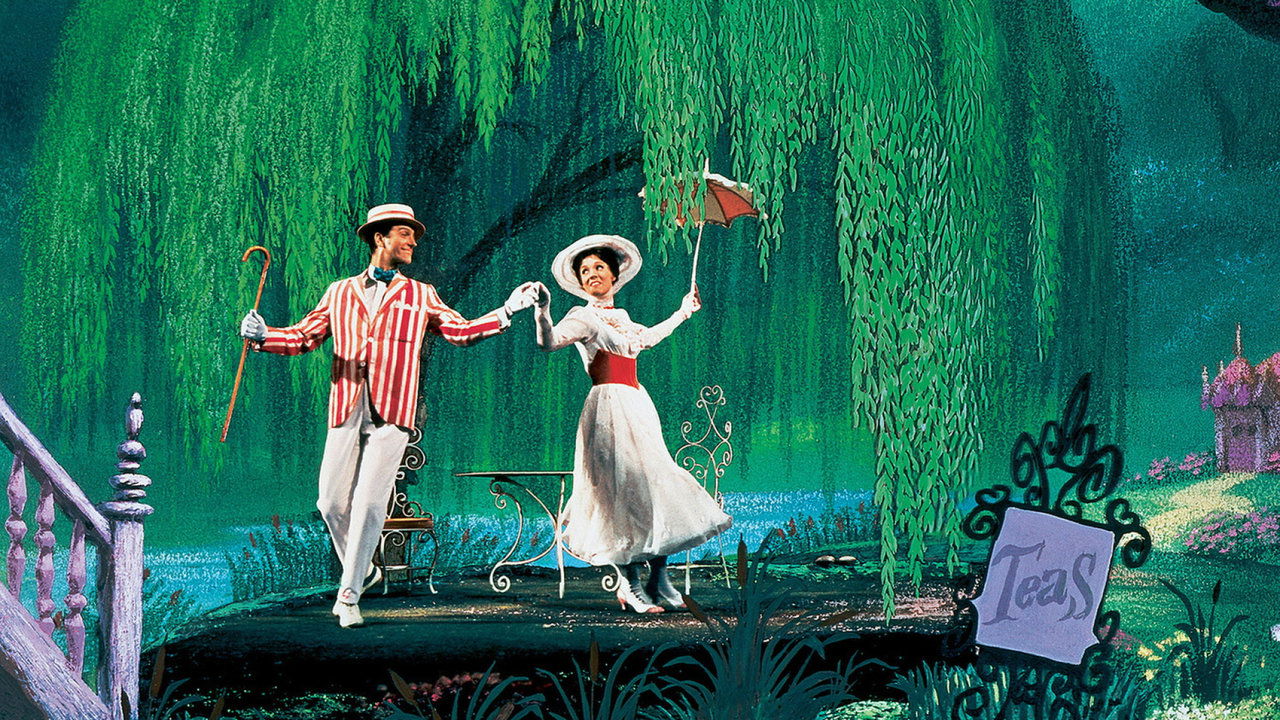
Watching this on a remastered digital screen is great, but my soul still associates this film with the chunky, white clamshell VHS cases of the 1980s. You know the ones—they smelled vaguely of industrial plastic and took up three times more space on the shelf than a standard tape. I watched my copy so many times that the "Jolly Holiday" sequence started to develop a tracking wobble, a rhythmic distortion that felt like the movie was breathing with me. While I revisited this for the review, I was drinking a cup of Earl Grey that I’d accidentally steeped for ten minutes; it tasted like hot pond water, yet somehow, the bitterness perfectly balanced the "Spoonful of Sugar."
The Anarchy of Perfection
There is a common misconception that Mary Poppins is a "sweet" movie. It isn't. It’s a film about a supernatural entity who stages a hostile takeover of a middle-class household. Julie Andrews, in a performance so precise it feels like she was carved from diamond, doesn't play Mary as a cuddly grandma. She is vain, stern, and hilariously gaslights the children into thinking their adventures never happened.
The comedy here is all in the timing of the "practically perfect" delivery. When Mary snaps her fingers and the nursery tidies itself, the humor isn't just in the magic—it's in the way she checks her reflection in the mirror while the kids are doing the actual labor. Julie Andrews was famously "passed over" by Jack Warner for the film version of My Fair Lady (he chose Audrey Hepburn instead), and her Oscar win for Poppins remains the greatest "I told you so" in Hollywood history. You can see that fire in her eyes; she’s playing a nanny with the steel of a high-stakes poker player.
Then there’s Dick Van Dyke. Yes, the Cockney accent is a disaster—it sounds like a man trying to swallow a bag of gravel while riding a unicycle—but his physical comedy is otherworldly. The way he mimics the stiff-legged gait of the penguins or the rubber-limbed exhaustion of a chimney sweep is a masterclass in Vaudeville energy. People mock the voice, but if you can’t enjoy Bert’s sidewalk chalk dance, you might actually be a robot.
The Fidelity Fiduciary Philosophy
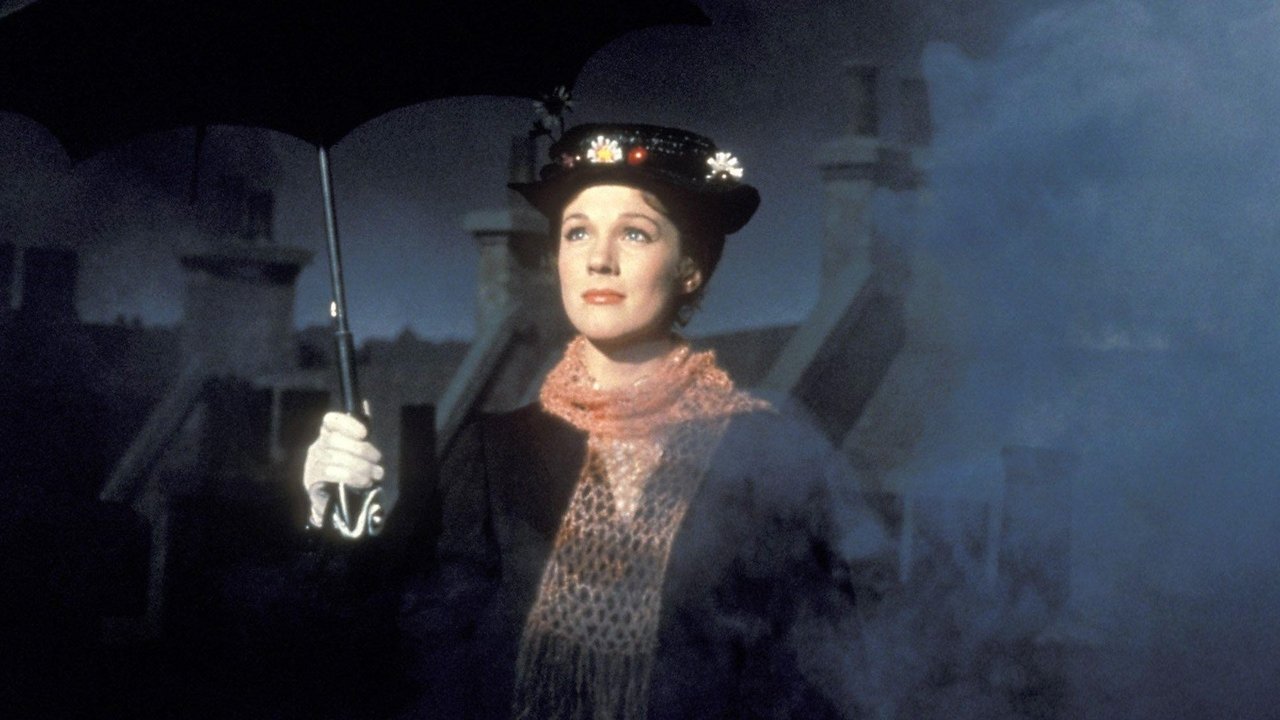
Beyond the kites and the carousel horses, Mary Poppins is surprisingly cerebral. It’s a film about the death of the Victorian era and the terrifying birth of modern capitalism. The "Fidelity Fiduciary Bank" sequence is the most frightening thing Disney ever produced, and I say that as someone who was traumatized by Bambi. It’s a rhythmic, chanting nightmare of gray suits and cold stone.
The movie asks a genuinely philosophical question: What is a tuppence worth? To the father, George Banks (David Tomlinson), it represents the seed of an empire, a tiny brick in the wall of British stability. To his son, it’s a way to feed a bird. The clash between these two ideologies is the heart of the film. The bank sequence is secretly a terrifying critique of the military-industrial complex, disguised as a jaunty musical number. When the run on the bank happens, it’s not just a plot point; it’s a total collapse of the adult world’s logic.
Director Robert Stevenson manages to balance this heavy subtext with a sense of genuine wonder. He captures the transition of the 1960s—where the "Old Hollywood" production values were meeting a new, more experimental way of telling stories. The script by Bill Walsh and Don DaGradi keeps the pace moving, even at a staggering 139 minutes. Most "family" films today would kill for half of this movie's narrative confidence.
The Art of the Practical
We have to talk about the matte paintings. Peter Ellenshaw (who also did incredible work on Spartacus) created a London that never was—a hazy, purple-hued dreamscape of chimneys and starlight. Because this was filmed entirely on the Disney lot in Burbank, every single frame is a deliberate artistic choice. It doesn't look "real," and that’s the point. It looks like an illustration come to life.
The production was a massive financial gamble for Walt Disney, costing a then-unheard-of $4.6 million. It paid off by becoming a cultural phenomenon that defined the era, grossing over $100 million and becoming the must-own title for every family once the home video revolution hit. It’s one of the few films where the merchandising (the dolls, the umbrellas, the Sherman Brothers soundtrack) feels like a natural extension of the magic rather than a cynical cash-grab.
Ultimately, Mary Poppins works because it understands that magic isn't about escapism; it's about changing how you look at the world you already live in. By the time David Tomlinson walks through the fog to meet his fate at the bank, he’s a changed man, and we’re changed viewers. It’s a film that earns its sentimentality through a rigorous, almost cold-blooded commitment to its own internal logic. Whether you’re watching a pristine 4K print or a grainy old tape, the "Step in Time" sequence still hits like a shot of pure adrenaline. It is, quite simply, the high-water mark of the Disney studio.
Keep Exploring...
-

Bedknobs and Broomsticks
1971
-
Mary Poppins Returns
2018
-

The Sound of Music
1965
-
One Hundred and One Dalmatians
1961
-

Willy Wonka & the Chocolate Factory
1971
-
The Princess Bride
1987
-

All Dogs Go to Heaven
1989
-
The Aristocats
1970
-
The Rocky Horror Picture Show
1975
-
Castle in the Sky
1986
-
My Neighbor Totoro
1988
-
Time Bandits
1981
-

Night at the Museum
2006
-
The Sword in the Stone
1963
-
How the Grinch Stole Christmas!
1966
-
The Rescuers
1977
-
E.T. the Extra-Terrestrial
1982
-
Ghostbusters
1984
-
Gremlins
1984
-
Big
1988