Thunderball
"007 dives deep into the ultimate 60s spectacle."
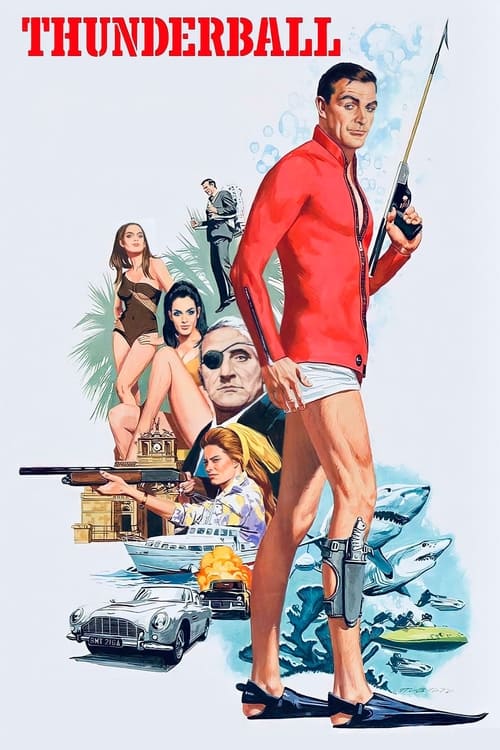
If you want to find the exact moment the James Bond franchise stopped being a series of sleek spy thrillers and started being a global phenomenon, look no further than the opening credits of Thunderball. By 1965, Bondmania wasn't just a trend; it was a fever. This was the film that had to be bigger, louder, and wetter than anything that came before it. It’s the first Bond movie shot in the expansive Panavision 2.35:1 widescreen format, and it feels like the producers were determined to fill every single inch of that frame with turquoise Bahamian water, exploding boats, and Sean Connery looking effortlessly cooler than any man has a right to look in a toweling bathrobe.
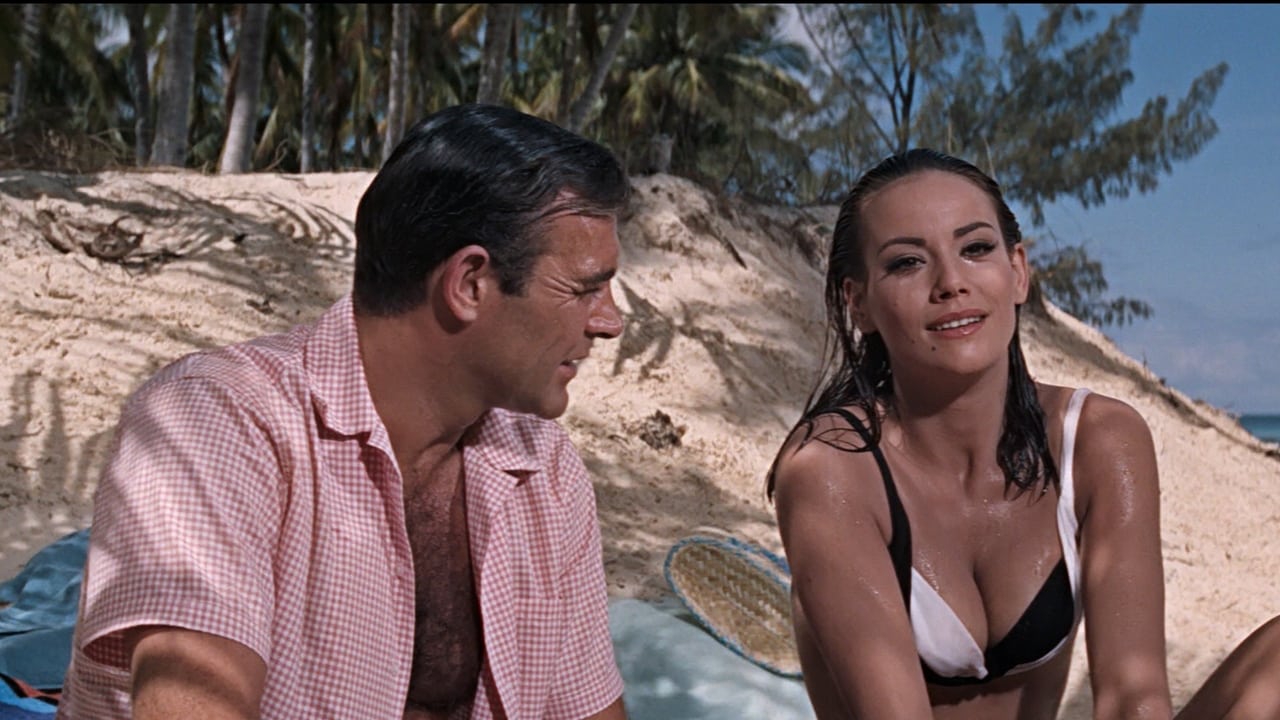
I watched this most recent screening on a Tuesday night while trying to fix a leaky faucet in my kitchen. There was something ironically appropriate about struggling with a stubborn washer while watching 007 navigate the high-pressure world of underwater demolition. My faucet is still leaking, but at least I had John Barry’s brassy, menacing score to make my plumbing failure feel like a high-stakes mission.
The Birth of the Super-Blockbuster
In the mid-60s, the "blockbuster" as we know it today was still in its infancy, but Thunderball carried the DNA of everything that would eventually lead to Jaws or Star Wars. The scale here is staggering. While the previous films like From Russia with Love felt like tense Cold War chess matches, Thunderball is a grand-scale military exercise. We have SPECTRE stealing two atomic bombs, a plot that would become the blueprint for every "ransom the world" movie for the next fifty years.
Sean Connery is at his absolute zenith here. He plays Bond with a physical confidence that borders on arrogance, moving through the luxurious settings of Nassau like a predator who knows he’s the most dangerous thing in the room. Opposite him, Adolfo Celi as Emilio Largo provides a classic villain—the eye patch might be a bit "pirate chic," but his cold demeanor and shark-filled pool set the standard for the Bond-villain aesthetic. However, for my money, the real standout is Luciana Paluzzi as the villainous Fiona Volpe. She’s lethal, charismatic, and far more interesting than the traditional "Bond Girl" archetype of the era.
High Tech, High Stakes, and Heavy Air Tanks
The action choreography in Thunderball was revolutionary for 1965, largely because it went where few cameras had gone before: deep underwater. Director Terence Young and the legendary cinematographer Ted Moore spent a massive portion of the production submerged. The climax, a massive underwater battle involving dozens of divers, spear guns, and propulsion units, remains one of the most ambitious sequences in action history.
However, I have to be honest: the underwater climax is essentially a slow-motion ballet for people who find regular action movies too fast. While it was a technical marvel at the time, the lack of sound (other than the score) and the naturally slowed movement of humans in water can make the sequence feel like it's dragging. It’s beautiful, yes, but it tests the patience of a modern viewer used to the rapid-fire editing of a John Wick film. That said, the practical execution is undeniable. There are no CG bubbles here; those are real men in real danger, and you can feel the physical weight of the equipment in every shot.
The $141 Million Splash
The financial footprint of Thunderball is where the "Blockbuster" label really sticks. With a budget of $9 million—more than the first three Bond films combined—EON Productions was betting the house on 007. The gamble paid off spectacularly. The film raked in $141.2 million globally. To put that in perspective, when adjusted for inflation, that’s over $1.3 billion today. It remains one of the most successful Bond films ever made in terms of ticket sales.

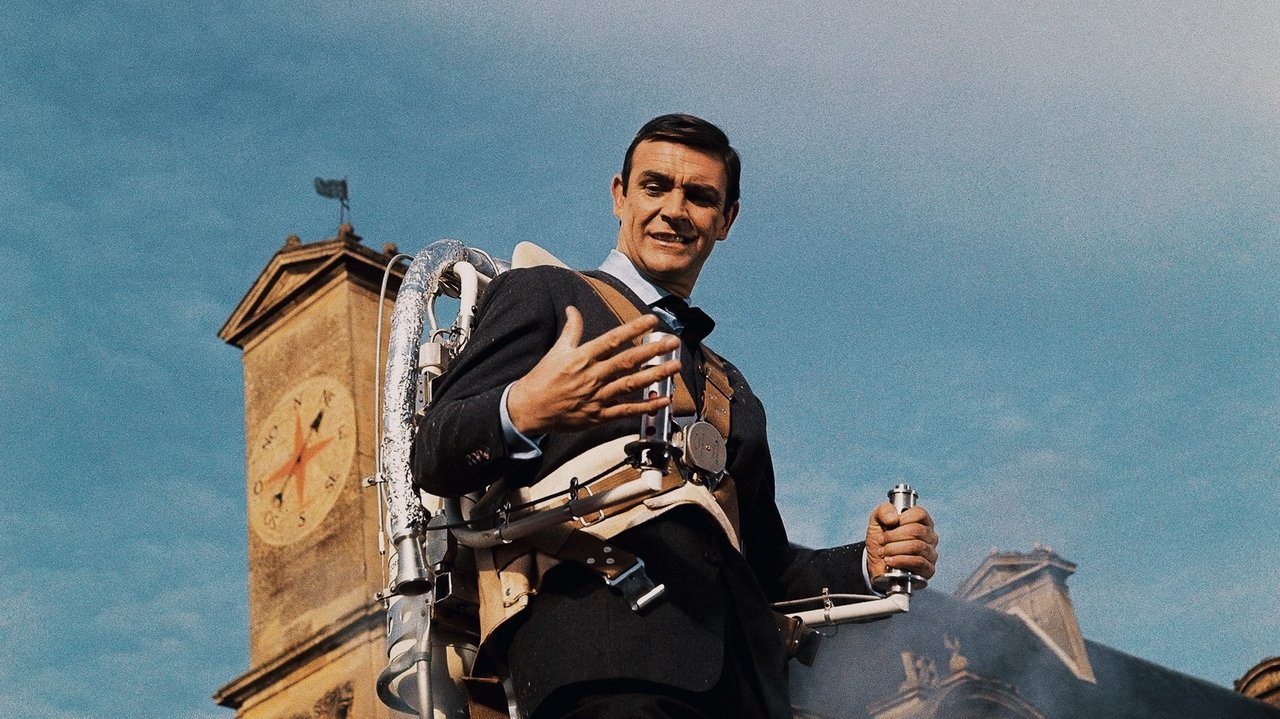
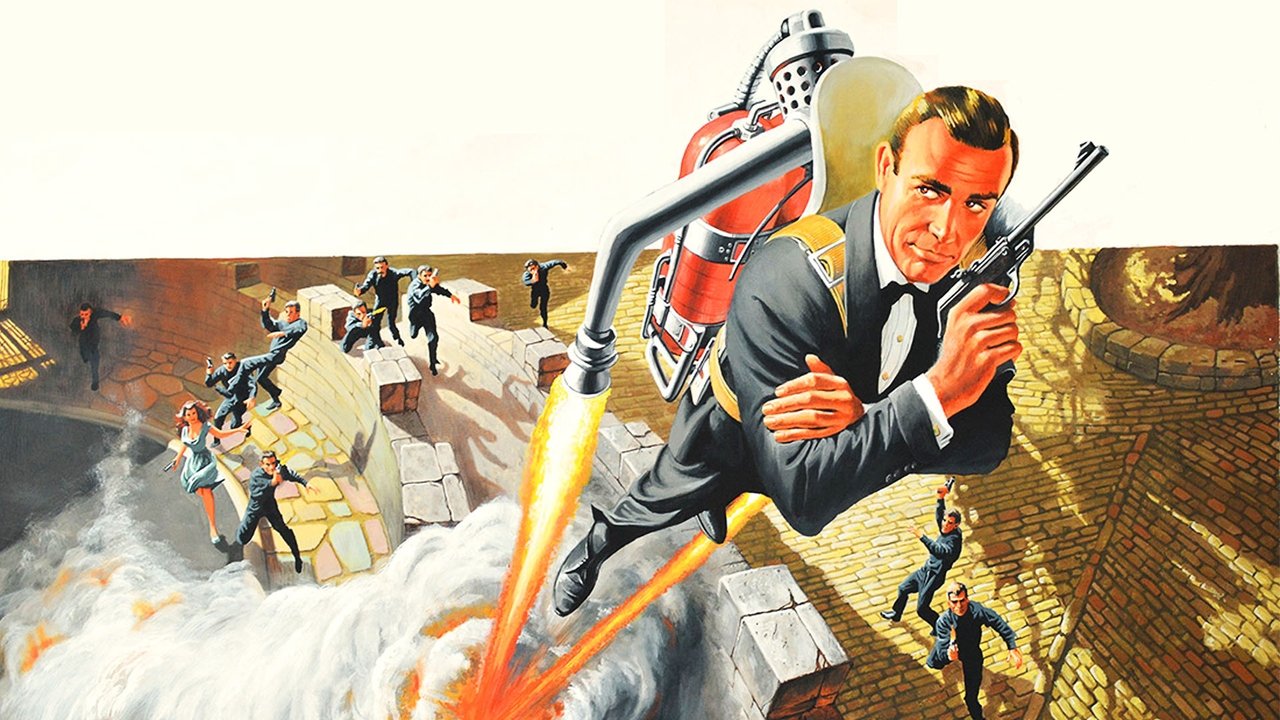
The production was as lavish as the box office. The "Bell Rocket Belt" jetpack Bond uses in the pre-title sequence was a real, functional piece of technology developed for the military. It could only fly for about 20 seconds, and the pilot, Bill Suitor, performed the flight without a helmet because the producers thought it looked "more Bond." Then there’s the Disco Volante, Largo’s hydrofoil. It cost $500,000 to build and was a genuine marvel of marine engineering for the time. Even the sharks were real; during the scene where Bond is trapped in the pool, a plexiglass partition was supposed to protect Sean Connery, but the sharks found a way around it. That look of genuine alarm on Connery’s face as he scrambles out of the pool? That’s not acting.
Thunderball is the quintessential "Big Bond." It captures the 1960s at their most opulent and adventurous, serving as a time capsule of an era when cinema was learning how to become a global event. While the pacing in the water might feel a bit sluggish by today's standards, the sheer ambition and the magnetic presence of Sean Connery make it an essential watch. It’s a film that demands a big screen, a cold drink, and an appreciation for the days when special effects were measured in sticks of dynamite and gallons of seawater.
Keep Exploring...
-
Dr. No
1962
-
From Russia with Love
1963
-

Goldfinger
1964
-
You Only Live Twice
1967
-
On Her Majesty's Secret Service
1969
-
The Spy Who Loved Me
1977
-
Octopussy
1983
-
The Living Daylights
1987
-
Never Say Never Again
1983
-
Moonraker
1979
-
For Your Eyes Only
1981
-
A View to a Kill
1985
-
Licence to Kill
1989
-
Diamonds Are Forever
1971
-
Live and Let Die
1973
-
The Man with the Golden Gun
1974
-
Tomorrow Never Dies
1997
-
GoldenEye
1995
-
Casino Royale
2006
-

Skyfall
2012