Andrei Rublev
"Silence paints the loudest colors."
The film opens not with a prayer or a painting, but with a crash. A man straps himself into a primitive, patched-together hot air balloon, soaring over the Russian countryside for a few fleeting, ecstatic seconds before gravity remembers its job and slams him back into the mud. It is a sequence that has absolutely nothing to do with the "plot" of a 15th-century monk, yet it tells you everything you need to know about Andrei Tarkovsky’s vision: humanity will always try to transcend the muck, even if it kills us.
I first tackled this three-hour giant while sitting on a hardwood floor because my couch was being delivered, and I honestly think the physical discomfort helped. Andrei Rublev isn't a movie you lean back and relax into; it’s a film that demands you meet it halfway in the dirt. It’s a series of eight short stories—chapters in the life of the titular icon painter Anatoliy Solonitsyn—that trace his journey from a wandering monk to a man who loses his voice, his faith, and his will to create, only to find them again in the most unlikely place.
A Medieval Apocalypse on Magnetic Tape
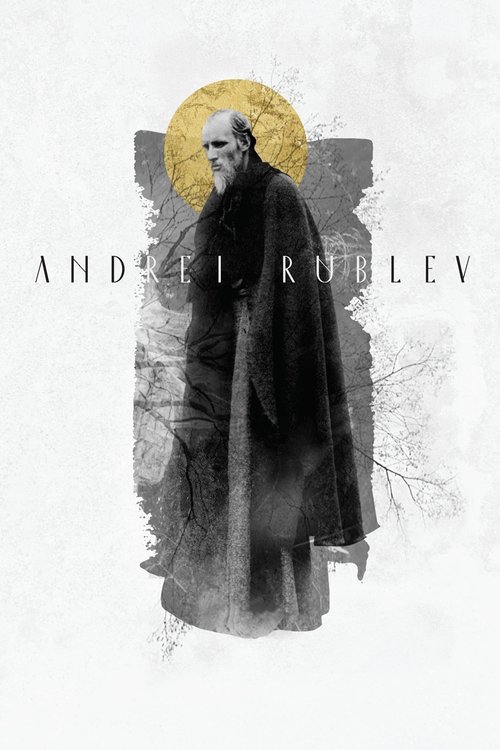
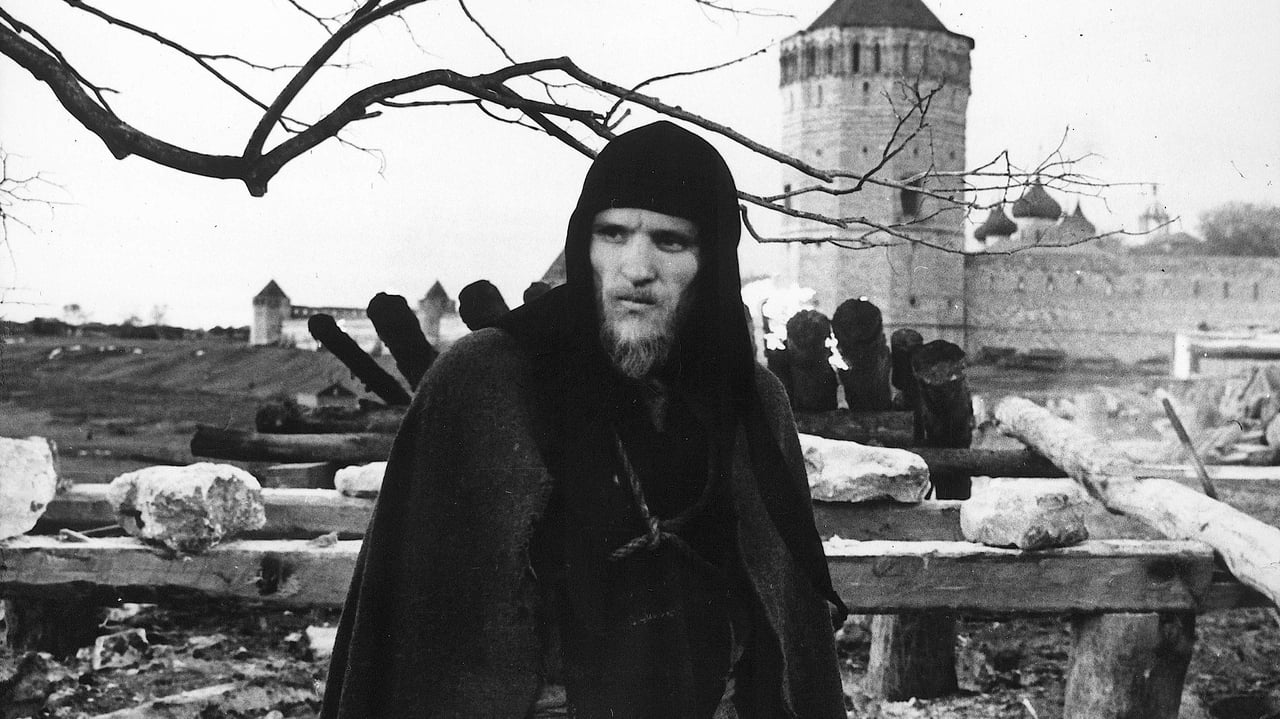
For decades, Andrei Rublev was the ultimate "ghost film" for Western cinephiles. Finished in 1966, it was promptly shelved by Soviet authorities who weren't exactly thrilled by a movie that suggested spiritual faith was more important than state ideology. By the time it trickled into the video stores of the late 70s and 80s, it had a mythic reputation. I remember seeing the oversized, double-tape clamshell case at a specialty rental shop tucked between a slasher flick and a workout video. The box art was usually just Anatoliy Solonitsyn’s gaunt, haunted face looking like he’d personally witnessed the end of the world.
Because it was shot in high-contrast black and white, it survived the "VHS massacre"—that grainy, low-res degradation of home video—better than most. The lack of color actually heightens the texture of the film. You can practically smell the wet wool, the woodsmoke, and the damp earth of 15th-century Russia. Tarkovsky and his cinematographer, Vadim Yusov, don’t treat the past like a museum; they treat it like a crime scene. Tarkovsky makes three hours of a monk staring at walls feel like a high-stakes heist, mostly because the stakes are Rublev’s very soul.
The Spiritual Sweat of the Practical Era
In an era of CGI, the sheer physicality of this movie is staggering. When the Tatars sack the city of Vladimir, you aren’t looking at digital extras. You’re looking at hundreds of people, horses, and real fire. There’s a scene involving a horse falling down a flight of stairs that caused a minor scandal regarding animal safety, and while it’s hard to watch, that raw, unpolished reality is what gives the film its weight.
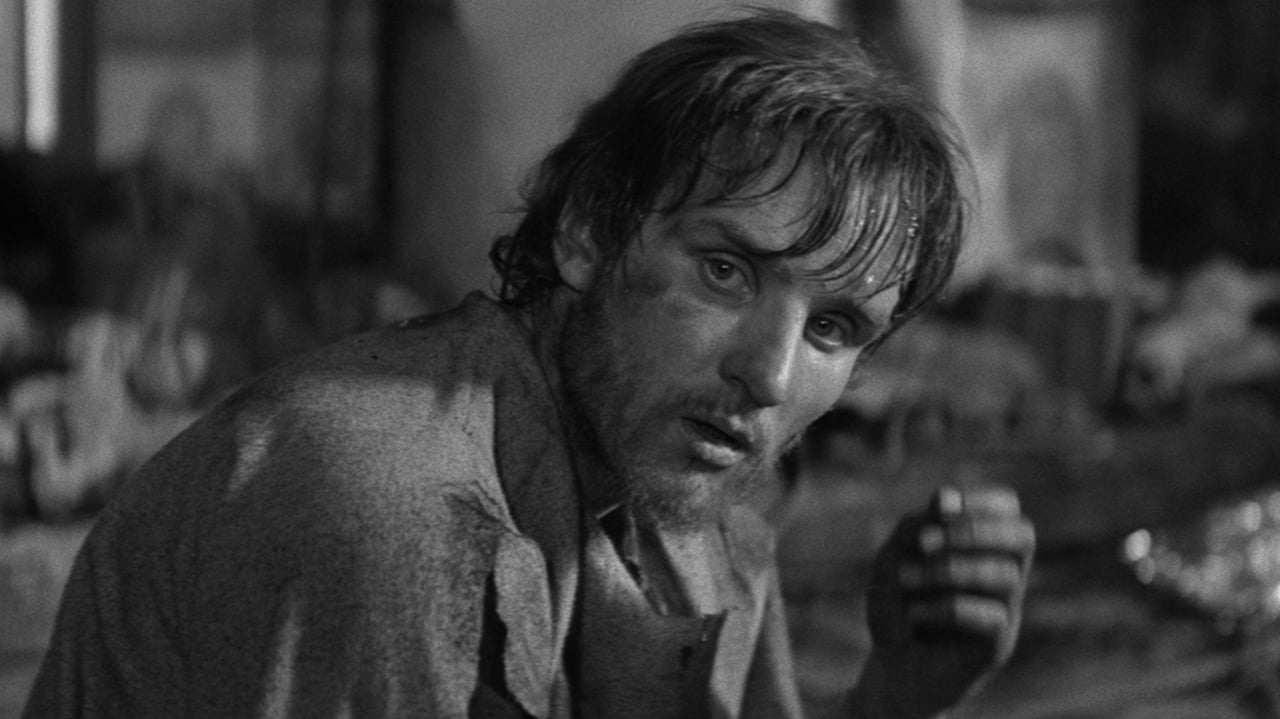
Anatoliy Solonitsyn is a revelation here. He doesn't play Rublev as a saint; he plays him as a man who is deeply, profoundly annoyed by how cruel the world is. Alongside him, Ivan Lapikov as the jealous Kirill and Mykola Hrynko as the gentle Daniil create a triangle of monastic life that feels lived-in and sweaty. These aren't the clean, singing monks of Hollywood. These are men grappling with the fact that their God seems to have gone on vacation while the world burns.
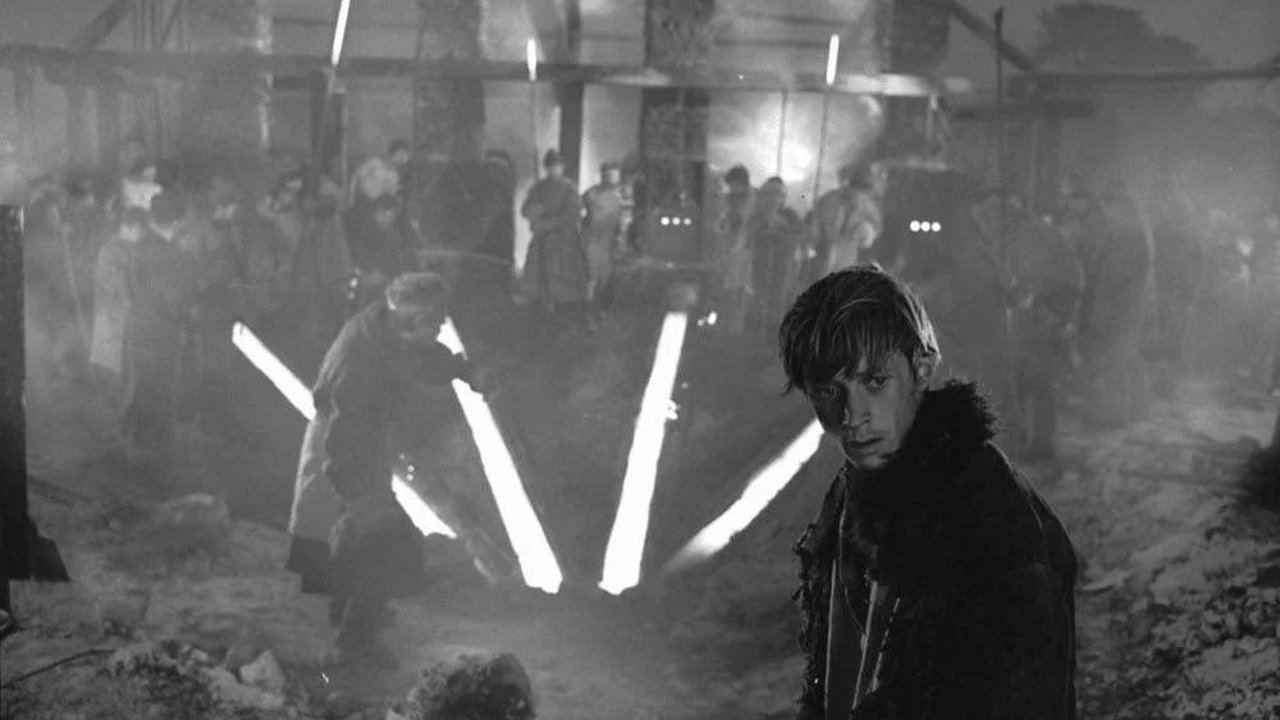
The highlight for me, and the part I’ve rewatched more than any other, is the final chapter: "The Bell." We follow a young boy named Boriska (Nikolay Burlyaev) who claims his father passed on the secret of casting giant bronze bells. He’s a liar and a frantic, desperate kid, but he manages to lead a massive crew of workers through the grueling process of digging the pit and smelting the metal. It’s a masterclass in tension. You’ve sat through two and a half hours of philosophy and war, and suddenly, the whole movie hinges on whether a piece of metal is going to crack when it cools.
The Burst of Color
The film is famous for its final move. After nearly three hours of monochromatic misery and silence, the screen erupts into a montage of the real Andrei Rublev’s surviving icons—in full, vibrant color. It is one of the most earned emotional payoffs in cinema history. Watching this for the plot is like going to the Grand Canyon to look at the dirt; you’re here for the way it changes the air in the room.
By the time the credits rolled, my legs were numb from the floor and my radiator had started a rhythmic clanking that sounded suspiciously like a medieval blacksmith’s hammer. I didn't care. I felt like I’d traveled through a century. Andrei Rublev reminds us that art isn't just a hobby or a career; it’s the only way we have to make sense of the chaos. It’s a difficult, long, and sometimes brutal sit, but it’s a journey that leaves you feeling more human on the other side.
This isn't just a "foreign film" to check off a bucket list. It’s a massive, tactile experience that uses the screen to explore why we bother to make beautiful things in a world that seems determined to break them. If you can handle the runtime, it will stay with you far longer than any modern blockbuster. It’s a testament to the idea that even in the mud, someone is always looking at the sky.
Keep Exploring...
-
Mirror
1975
-

Solaris
1972
-
Stalker
1979
-
Harakiri
1962
-
Ran
1985
-
The Last Emperor
1987
-
Judgment at Nuremberg
1961
-
Patton
1970
-

The Hustler
1961
-
Jules and Jim
1962
-
La Jetée
1962
-
The Leopard
1963
-
Who's Afraid of Virginia Woolf?
1966
-
Harold and Maude
1971
-
The Elephant Man
1980
-
Gandhi
1982
-
Amadeus
1984
-
The Color Purple
1985
-
A Bridge Too Far
1977
-

The Right Stuff
1983