Blow-Up
"Focusing on the truth only blurs the picture."

I first watched Blow-Up on a flickering CRT TV while eating a box of stale crackers, and the rhythmic crunching in my head perfectly matched the sound of gravel under Thomas’s boots as he stalked through Maryon Park. There is a specific, itchy kind of tension in this movie that makes you want to scrub your own eyes. It’s a film that pretends to be a mystery but is actually a cold-blooded autopsy of a decade that was supposed to be about "love" but felt more like a hollowed-out party.
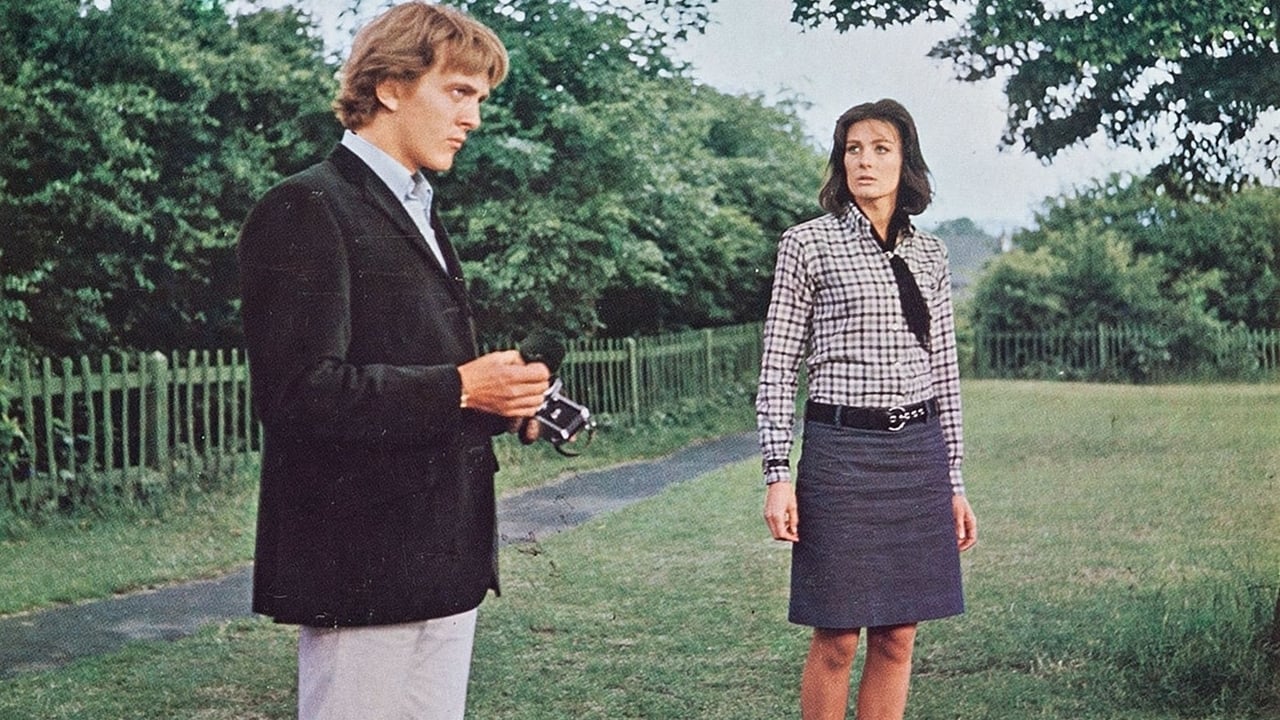
The Man Who Photographed Nothing
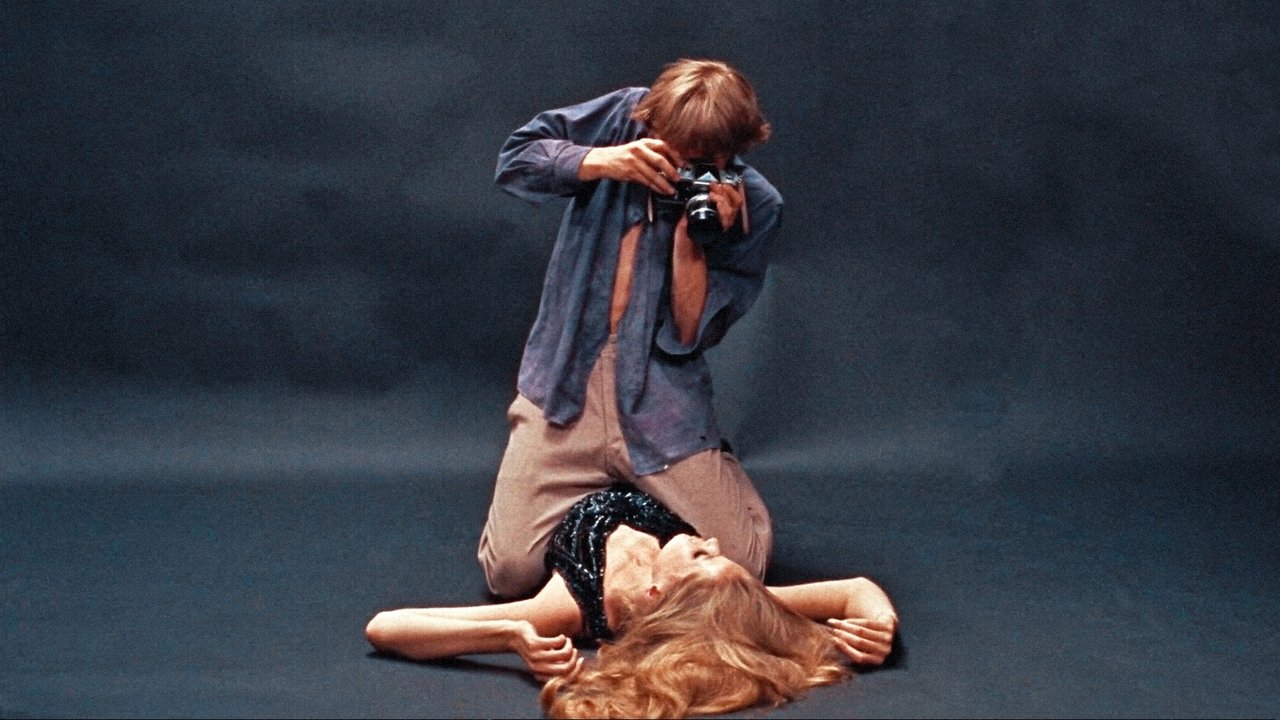
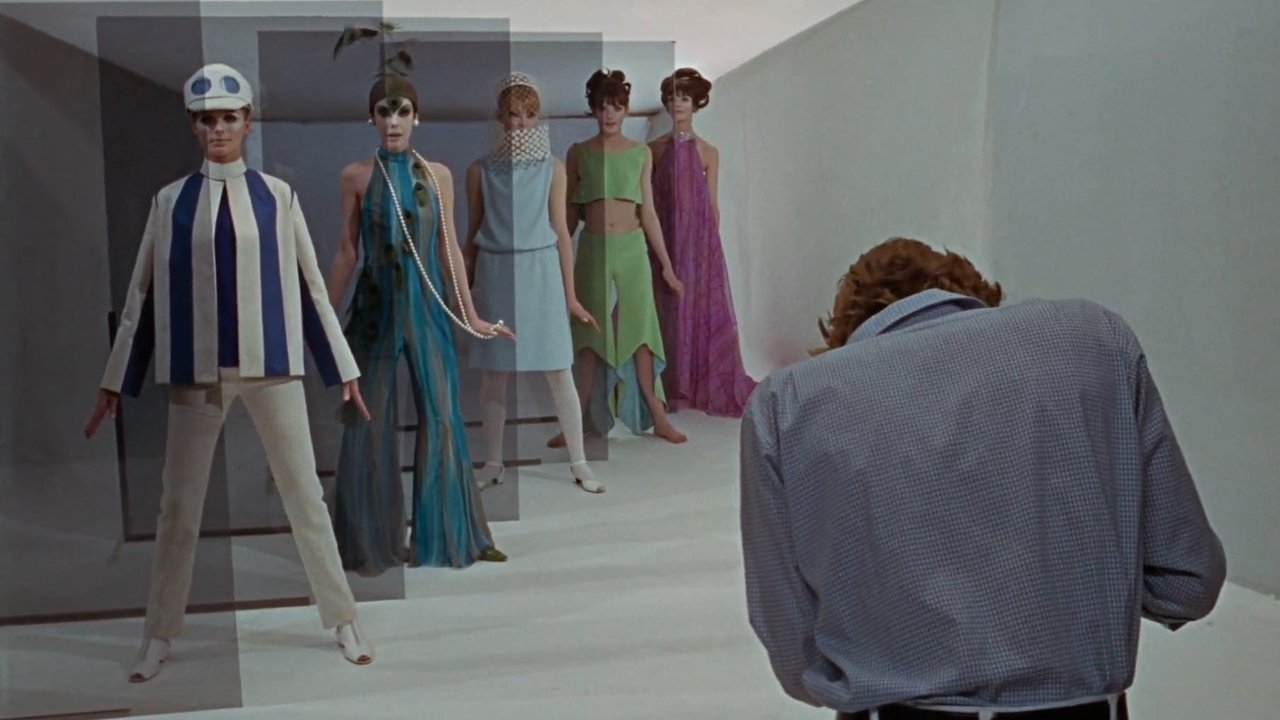
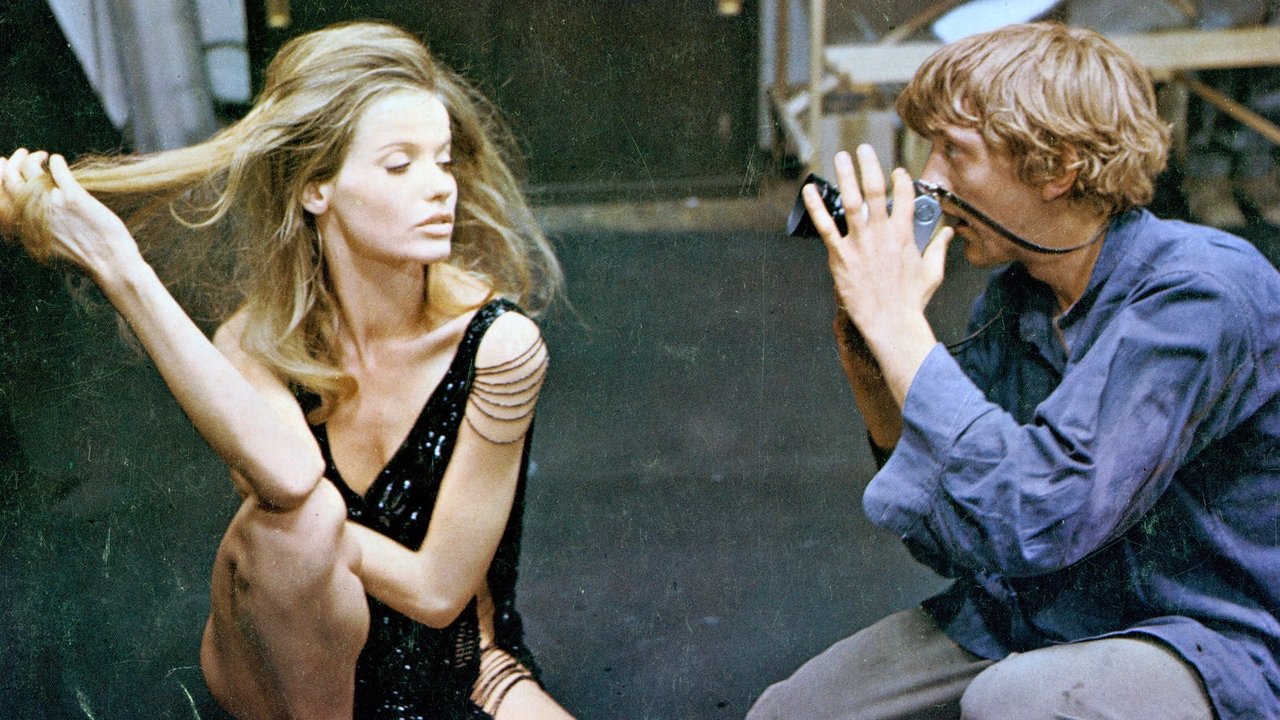
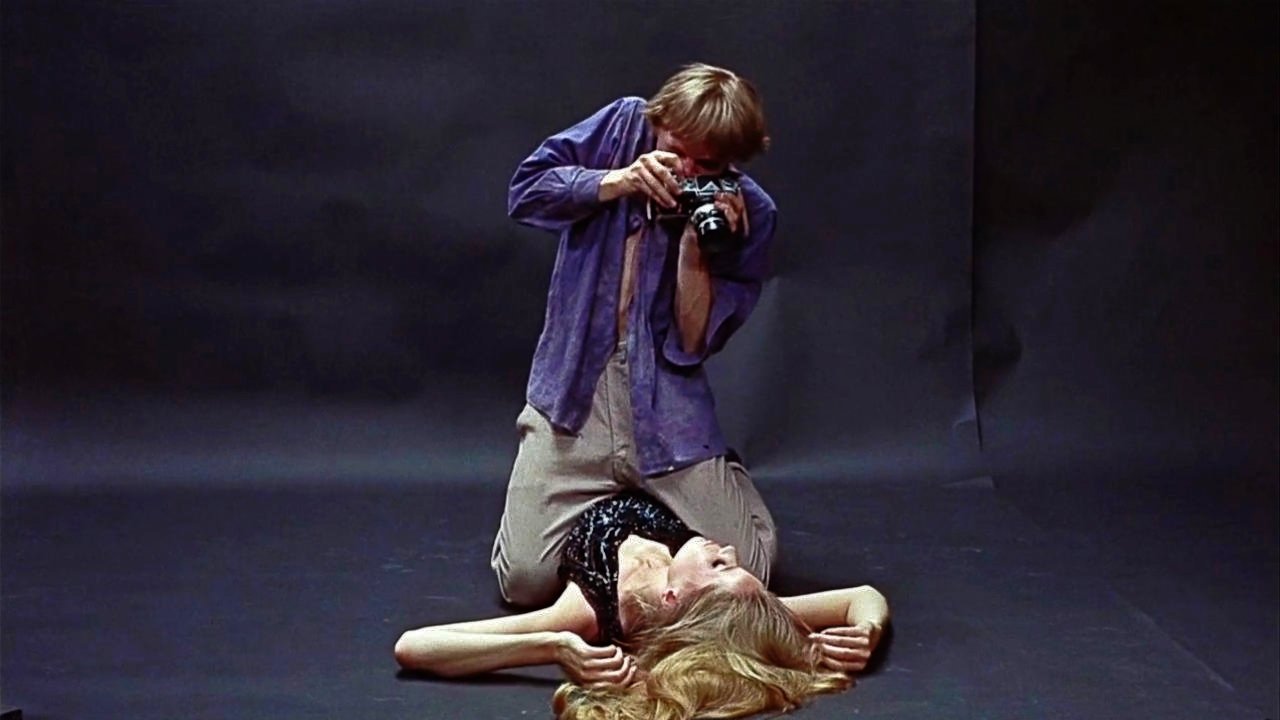
Our "hero"—and I use that term loosely because David Hemmings plays him with the likable charisma of a papercut—is Thomas. He’s a high-fashion photographer in 1966 London, a man who treats his models like mannequins and his life like a nuisance. He’s the original hipster archetype, driving a Rolls-Royce convertible with a police radio installed just so he can find "real" misery to snap for his art book.
The plot kicks in when Thomas wanders into a park and sneaks some shots of a woman (Vanessa Redgrave) and an older man sharing a private moment. When he goes back to his darkroom, he realizes he didn’t just capture a tryst. He might have captured a murder.
The sequence where he "blows up" the photos—zooming in, cropping, re-photographing, and hanging the grainy results across his studio—is one of the most hypnotic things I’ve ever seen. There’s no music. Just the sound of the wind in the trees from the park, echoing in his mind as he stares at the silver-halide dots. Thomas is essentially the original internet sleuth, trying to find a conspiracy in a handful of pixels, and Michelangelo Antonioni captures that descent into obsession with a chilling, clinical detachment.
Painting the Grass Green
While Michelangelo Antonioni had a decent budget of $1.8 million from Carlo Ponti, the way he used it was pure, obsessive indie energy. This wasn't a "point and shoot" affair. To get the specific, oppressive atmosphere of the park, Antonioni famously had the grass and the trees painted a brighter, more unnatural shade of green. He wanted the world to look like a photograph that had been touched up—a reality that was slightly "off."
That level of auteur control is what makes Blow-Up feel so different from the Technicolor romps of the early 60s. It’s an "Indie Gem" in spirit because it refuses to follow any studio rules. There are no clear answers. There’s no big reveal where the killer explains his motive. Instead, we get a scene where The Yardbirds (featuring both Jimmy Page and Jeff Beck) perform in a club while the audience stands like statues, only coming to life when Jeff Beck smashes his guitar.
I’ve always found that scene hilarious and terrifying. Thomas fights like a maniac for a piece of the broken guitar neck, only to throw it on the street the moment he gets outside. It’s a perfect metaphor for his entire life: he wants things desperately until he actually has them, at which point they become trash.
The Grain of Reality
The performances here aren't "big" in the Hollywood sense. Vanessa Redgrave is incredible because she seems like she’s vibrating with a secret she can’t tell. She’s nervous, sensual, and completely unreachable. Sarah Miles shows up as a neighbor’s wife, providing a grounded, depressing contrast to the high-fashion lunacy of the rest of Thomas’s world. Even the smaller roles, like Jane Birkin as one of the "teenyboppers" looking for a break, add to the sense that London is just one giant, hungry machine.
By the time the film reaches its famous ending—the mime tennis match—the movie has fully transitioned from a thriller into a psychological nightmare. Thomas watches a group of mimes play tennis without a ball. He hears the "thwack" of the racket. He even picks up the imaginary ball and throws it back. He has finally accepted that his camera, his eyes, and his "truth" are all unreliable.
For a film from 1966, Blow-Up feels remarkably modern. It’s about the way we consume images and how those images eventually consume us. It’s dark, it’s frustrating, and it’s undeniably cool. It’s the kind of movie that lingered in the back of video stores for decades, usually on a shelf labeled "Art House" or "Experimental," waiting for someone to pick it up and realize that the 60s weren't all sunshine and Sgt. Pepper.
Blow-Up is a masterpiece of mood that dares you to pay attention while simultaneously telling you that your eyes are lying. It’s a beautifully shot, incredibly cynical look at a man who thinks he’s a genius but realizes he’s just a guy with a lens. If you’re looking for a traditional "whodunit," you’re going to be annoyed. But if you want a film that feels like a slow-burn fever dream, this is the one to rent—just don’t expect the grass to stay green once the credits roll.
Keep Exploring...
-
Murder on the Orient Express
1974
-
In the Heat of the Night
1967
-

Repulsion
1965
-
Straw Dogs
1971
-
What Ever Happened to Baby Jane?
1962
-
Peeping Tom
1960
-
Chinatown
1974
-
All the President's Men
1976
-
The Tenant
1976
-

The Name of the Rose
1986
-
Mississippi Burning
1988
-

Fist of Fury
1972
-

The Conversation
1974
-
After Hours
1985
-

Day of the Dead
1985
-
Deep Red
1975
-
Marnie
1964
-

Rosemary's Baby
1968
-
Pi
1998
-
The Secret in Their Eyes
2009