Django
"He doesn't carry a guitar; he drags a coffin."

Forget the purple sage and the pristine white hats of the Hollywood Golden Age. When Franco Nero first appears on screen in 1966’s Django, he isn’t riding a majestic stallion across a Technicolor horizon. He’s trudging through a knee-deep slurry of filth and mud, dragging a full-sized wooden coffin behind him like a cross he's too tired to carry. It’s one of the most arresting opening images in cinema history, and it tells you everything you need to know: the Old West is dead, buried, and currently rotting in the rain.
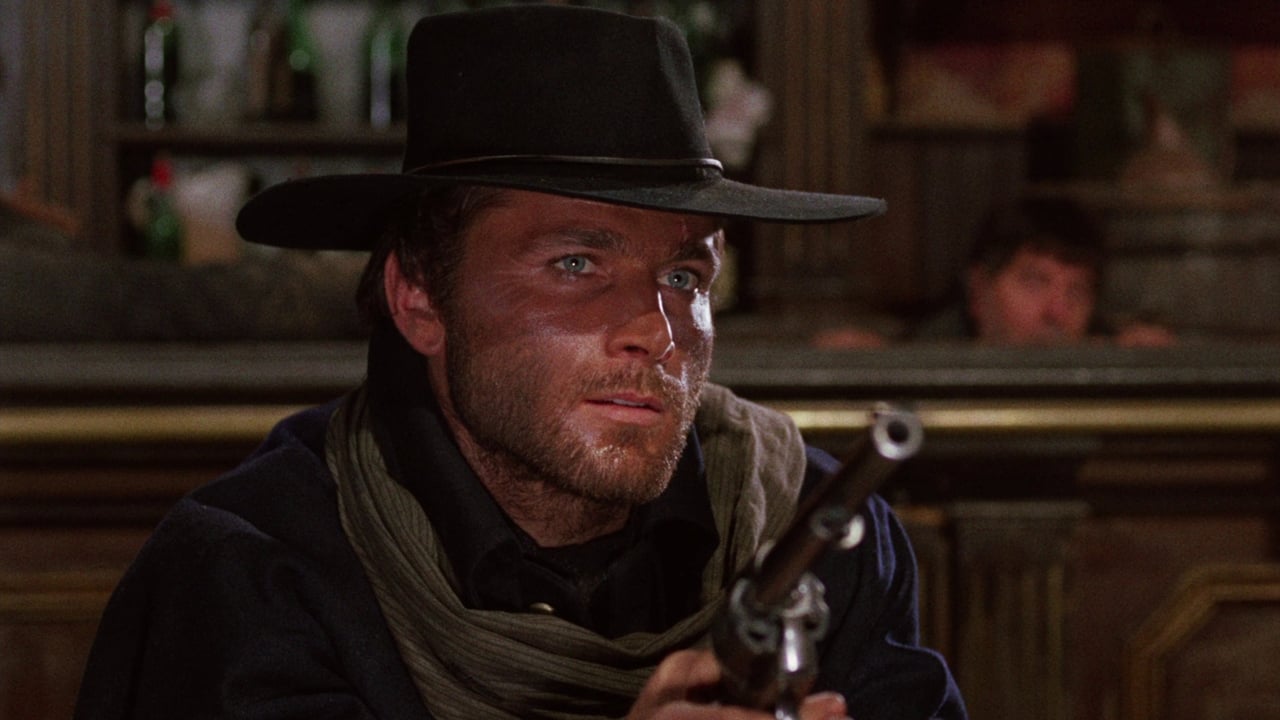
I first encountered this film on a blurry, multi-generation dubbed VHS I found at a swap meet in the late 90s. The box art featured a much older Franco Nero from a completely different movie, but that was the "Django" experience. Because the character became so popular, and because copyright laws in Italy were more of a polite suggestion at the time, there are roughly thirty "official" and unofficial sequels. Watching the original feels like finding the source code for a specific brand of cinematic nihilism.
The Man, the Myth, and the Casket
Directed by Sergio Corbucci—the "other" Sergio of the Spaghetti Western world—Django is significantly meaner, muddier, and more cynical than anything Sergio Leone was putting out at the time. While Leone was interested in the operatic myth of the West, Corbucci was interested in the dirt. I watched this most recent viewing on a Tuesday afternoon while my neighbor was loudly pressure-washing his driveway, and the constant hiss of water actually felt like a fitting 4D soundtrack for a movie where it never seems to stop raining.
Franco Nero was only 23 when he took the role, a fact that still melts my brain. With his piercing blue eyes and a face that looks like it was chiseled out of a cold cliffside, he plays Django with a weary, graveyard-shift energy that suggests he’s seen the end of the world and was bored by it. He arrives in a ghost town caught between two warring factions: a group of red-masked, KKK-adjacent racists led by Major Jackson (Eduardo Fajardo) and a band of Mexican revolutionaries led by General Hugo Rodriguez (José Bódalo). Django isn't there to save anyone; he’s there for a woman named Maria (Loredana Nusciak) and a whole lot of gold.
Mud, Blood, and Machine Guns
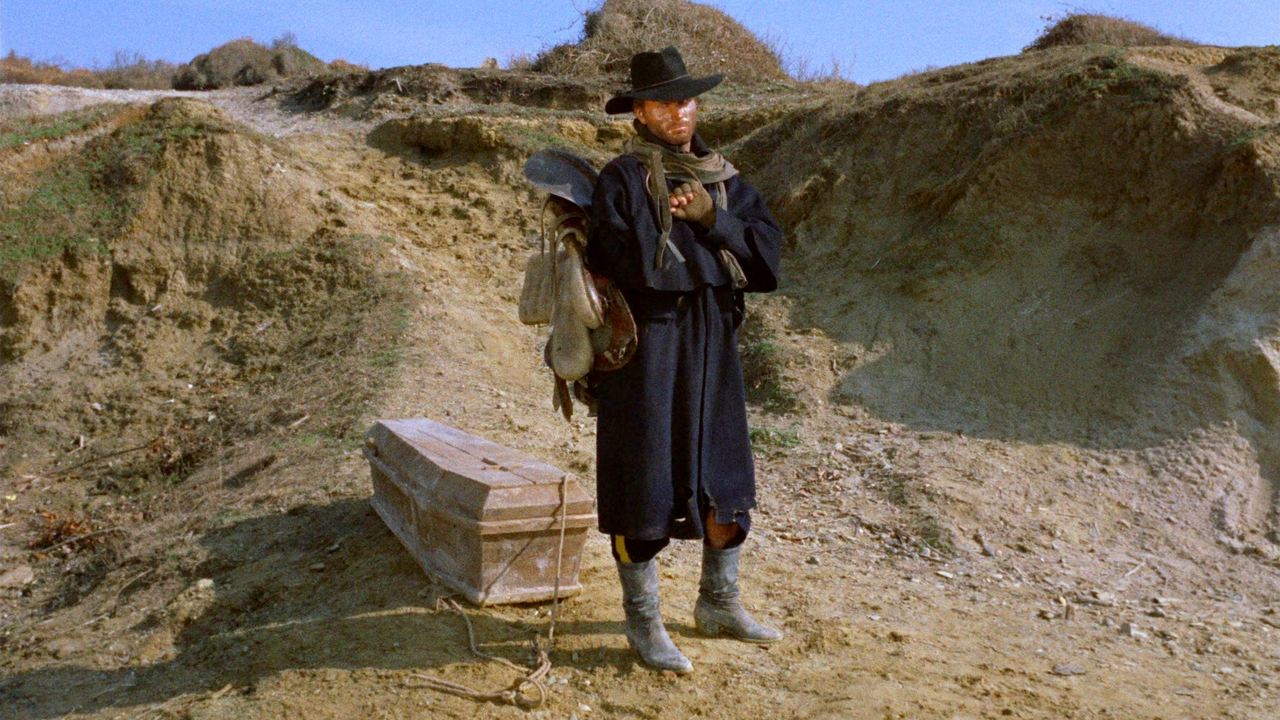
The action choreography here isn't about the "fast draw" or the honorable duel. It’s about slaughter. The centerpiece of the film—and the moment that secured its legendary status—is when Django finally opens that coffin. Inside isn’t a body, but a Belgian Mitrailleuse machine gun. When he unleashes it on Major Jackson’s men, it’s a mechanical massacre. The practical effects are glorious in their messy, pre-CGI simplicity. You can see the squibs popping, the dirt geysers exploding, and the sheer weight of the weapon as Franco Nero wrestles with it.
Django makes Clint Eastwood’s ‘Man with No Name’ look like a well-adjusted boy scout. There is a level of cruelty here that feels shockingly modern. There’s a scene involving a severed ear—later famously paid-homage-to by Quentin Tarantino in Reservoir Dogs—that still makes me wince. Corbucci wasn’t just making an action movie; he was making a protest film disguised as a genre piece, reflecting the escalating violence of the 1960s back at an audience that was used to seeing cowboys kiss their horses and ride into the sunset.
The VHS Ghost and the Final Showdown
Technically, the film is a masterclass in making a low budget look like a stylistic choice. The production design by Giancarlo Simi turns the town of "Las Playas" into a literal swamp. Apparently, the mud wasn't originally in the script, but the location was so flooded during production that Corbucci decided to lean into it. It was a genius move. It gives the film a tactile, heavy atmosphere that you can almost smell. The score by Luis Bacalov is equally iconic—a soaring, operatic theme song that sounds like it belongs in a much more romantic movie, which only makes the on-screen carnage feel more ironic.
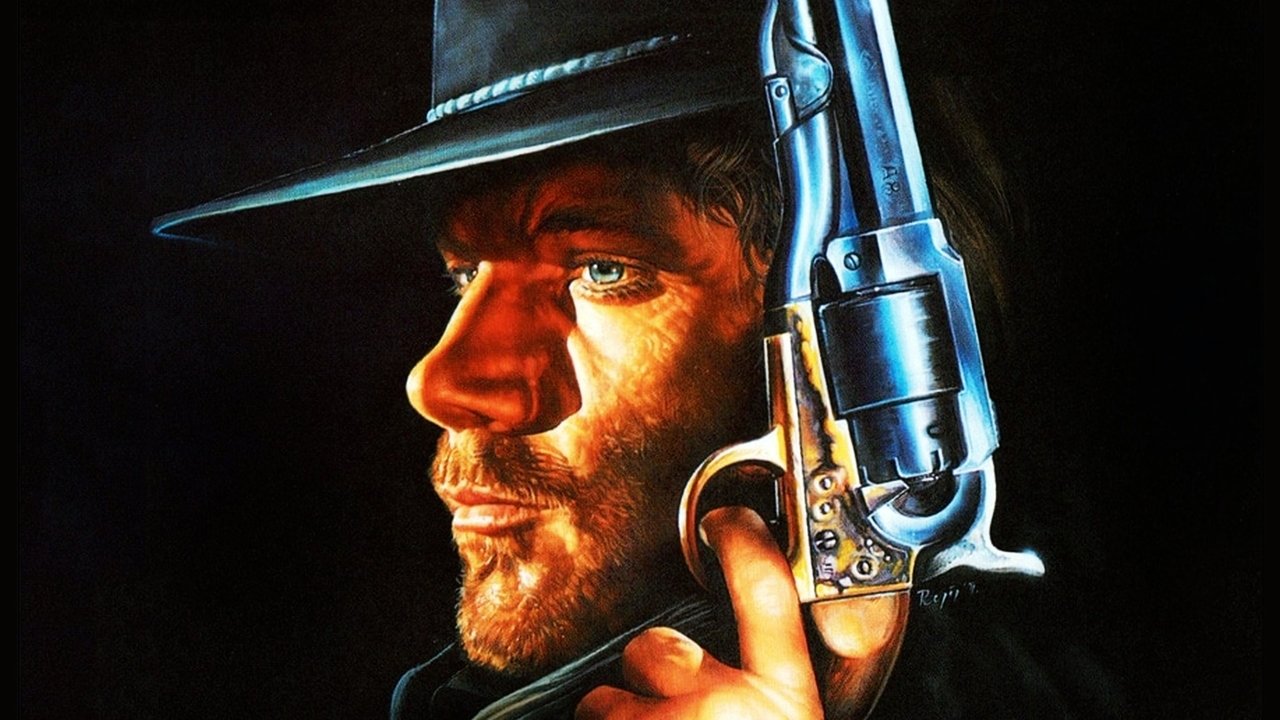
The film’s legacy was cemented during the home video boom of the 1980s. Because so many European Westerns were being rebranded as "Django" sequels to move units at Blockbuster, the original became a sort of holy grail for cult film fans. It’s the kind of movie that looks better on a slightly worn tape; the grain and the tracking errors only add to the "lost relic" vibe of the whole production. The final shootout, set in a cemetery with Django’s hands broken and bleeding, is a triumph of grit over glamour. He has to use his teeth to steady his pistol against a wooden cross. It’s absurd, it’s over-the-top, and it’s absolutely brilliant.
Django remains the gold standard for the "dirty Western." It lacks the polished perfection of The Good, the Bad and the Ugly, but it replaces that polish with a raw, jagged energy that feels dangerous even fifty-plus years later. It’s a film about a man who has lost everything and decided that the only thing left to do is make sure everyone else loses, too. If you’ve only ever seen the polished Hollywood version of the West, grab a shovel and dig this one up. It’s a muddy, bloody masterpiece that earns every bit of its cult reputation.
Keep Exploring...
-
They Call Me Trinity
1970
-
Young Guns
1988
-
Trinity Is Still My Name
1971
-
The Longest Day
1962
-

The Man Who Shot Liberty Valance
1962
-
Batman
1966
-
The Dirty Dozen
1967
-
Bullitt
1968
-
Where Eagles Dare
1968
-
The Wild Bunch
1969
-
Duck, You Sucker
1971
-
Escape from the Planet of the Apes
1971
-

The Magnificent Seven
1960
-

Watch Out, We're Mad
1974
-
My Name Is Nobody
1973
-
A Fistful of Dollars
1964
-
For a Few Dollars More
1965
-
High Plains Drifter
1973
-

Magnum Force
1973
-
Logan's Run
1976