Don't Look Now... We're Being Shot At!
"The Nazis never stood a chance against French incompetence."
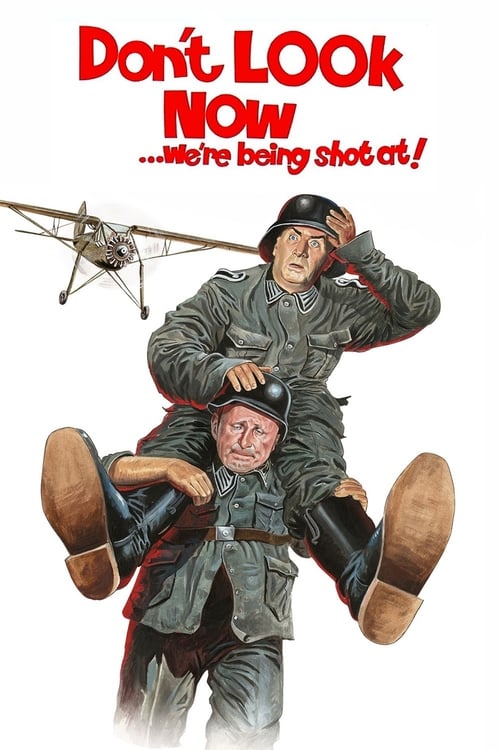
The French have a word for it: le monstre sacré. It refers to a sacred monster of the arts, a performer so gargantuan they define an era. In 1966’s Don’t Look Now... We’re Being Shot At! (or La Grande Vadrouille to the purists), we don’t just get one; we get two colliding like cinematic tectonic plates. I watched this film recently while nursing a lukewarm cup of instant coffee that had a strange, oily film on top, and honestly, the sheer manic energy of the lead duo made me forget the questionable beverage entirely.
In the English-speaking world, this film is often treated as a "forgotten oddity," a quirky European artifact. But in France, this isn't just a movie; it’s a cultural cornerstone. For over forty years, it held the record for the highest-grossing film in French history, only unseated by Titanic and a comedy about northern stereotypes. Imagine if Caddyshack had the production budget of The Bridge on the River Kwai, and you’re starting to get the vibe.
The Human Cartoon and the Everyman
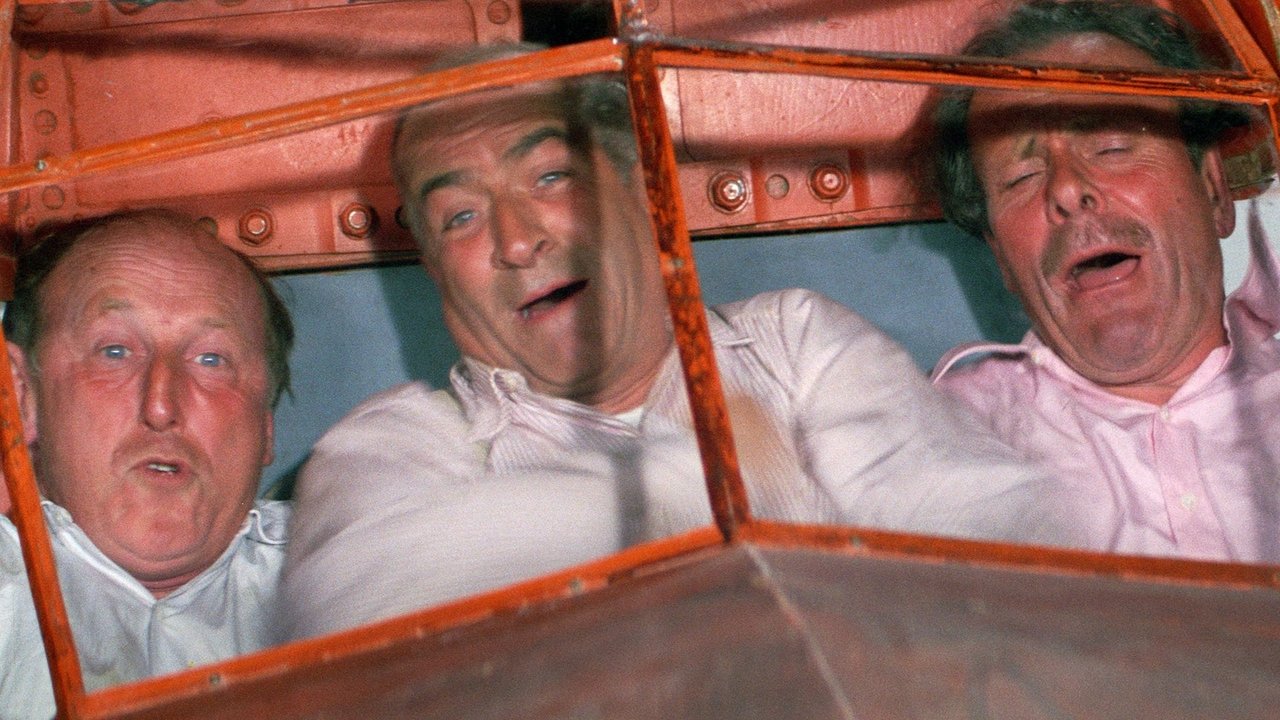
The plot is a classic farce setup: a British bomber crew is shot down over occupied Paris. One lands on the roof of the Paris Opera, one on a painter's scaffold, and another in the middle of a zoo. They need to get to the free zone in the South, but they have no idea how to navigate a city crawling with Wehrmacht. Enter our reluctant heroes: Bourvil, playing the gentle, dim-witted house painter Augustin, and Louis de Funès as Stanislas Lefort, a high-strung, tyrannical orchestral conductor.
Louis de Funès is essentially a human cartoon made of espresso and pure indignation. He doesn't just act; he vibrates. His face is a rubber mask of tics, grimaces, and sudden explosions of temper. Seeing him interact with Bourvil, who operates at the speed of a sleepy sloth, is comedic perfection. Their chemistry relies on the classic "frustrated boss/incompetent subordinate" dynamic, even though they are just two civilians thrown into a war they didn't ask for.
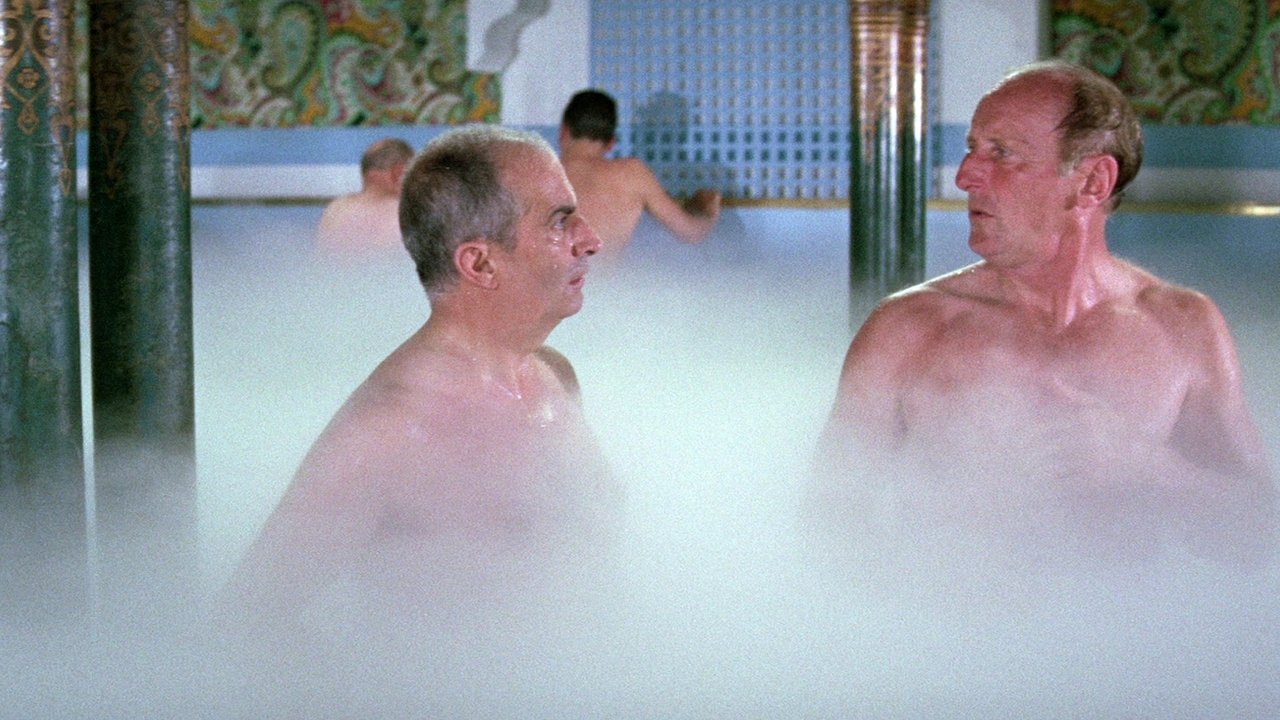
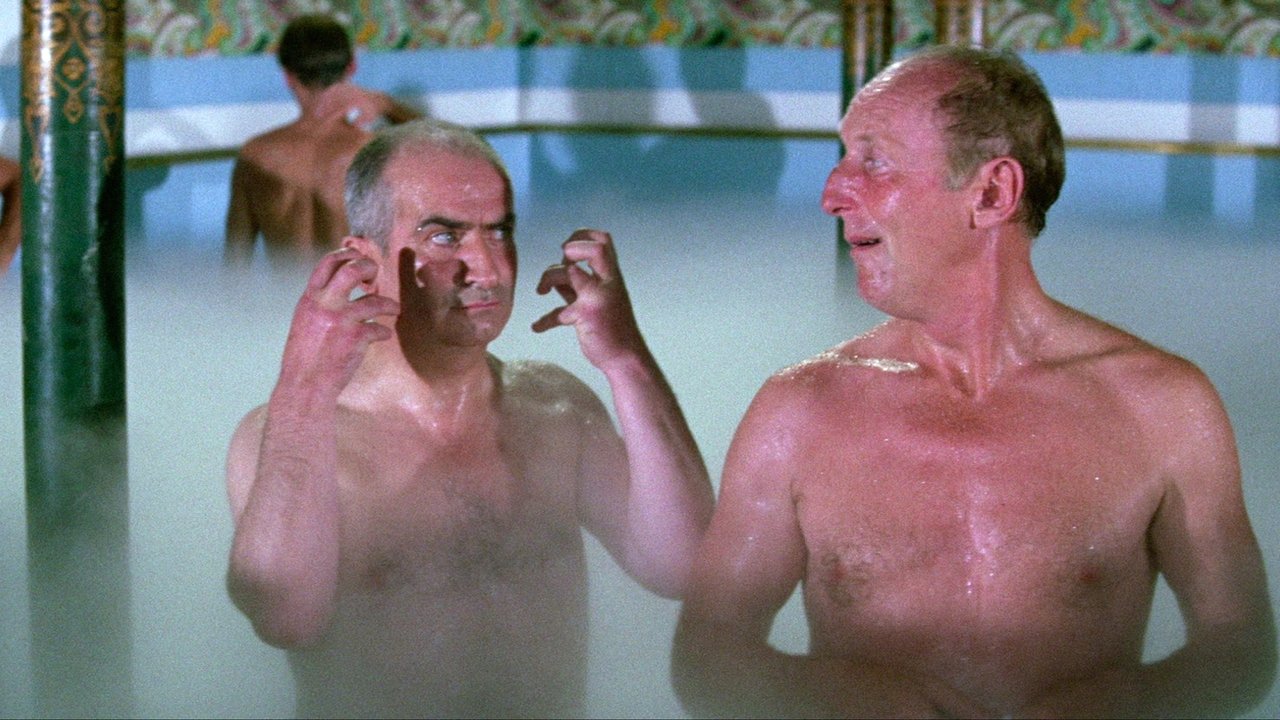
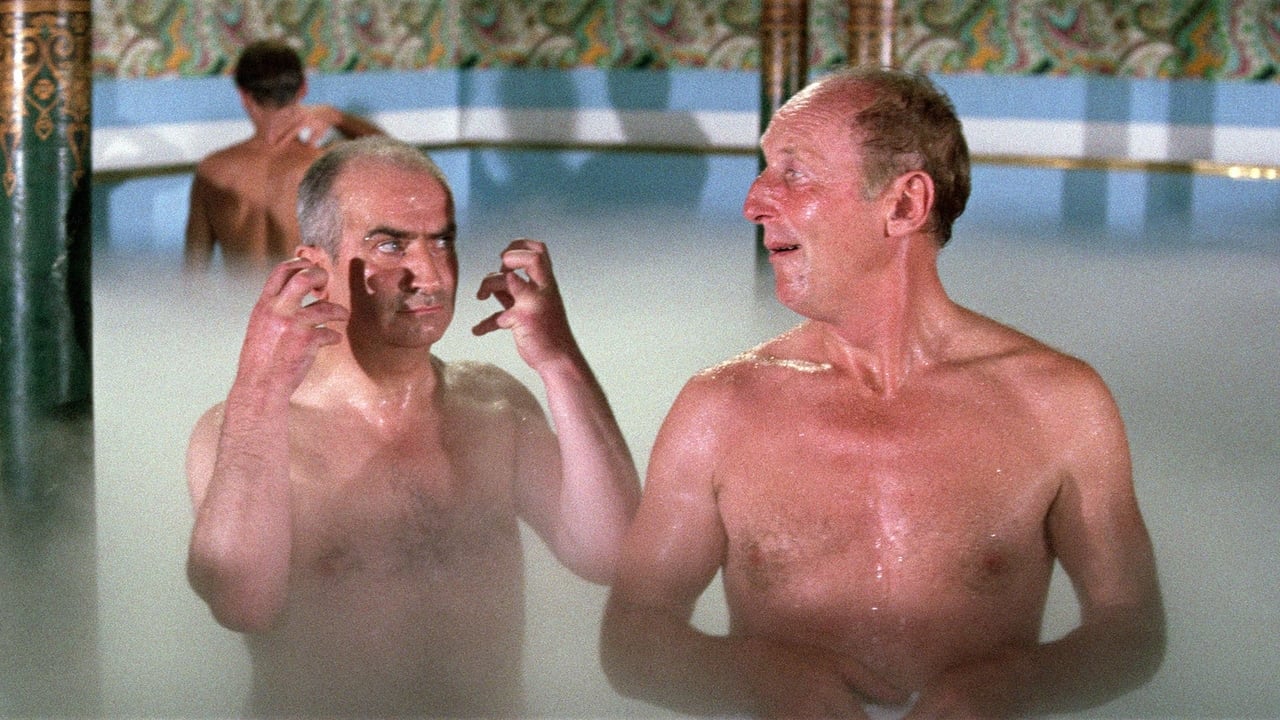
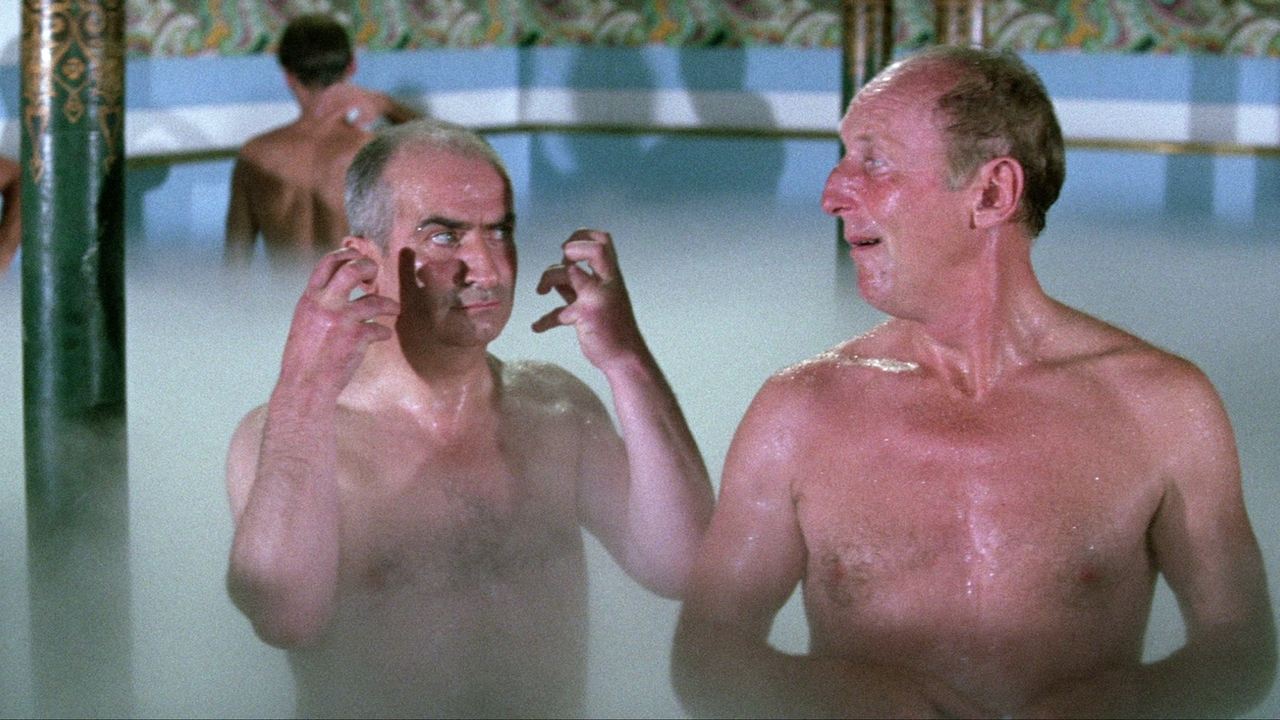
The British contingent, led by the legendary Terry-Thomas as Sir Reginald, adds a wonderful layer of "stiff upper lip" absurdity. Terry-Thomas, with his iconic gap-tooth and mustache that seems to have its own zip code, plays the RAF pilot with a sense of entitlement that feels entirely bulletproof. Watching him navigate a French Turkish bath while whistling "Tea for Two" to identify his contacts is one of those sequences that earns its place in the comedy hall of fame.
Practical Spectacle on a Grand Scale
What strikes me every time I revisit this is how big it feels. Director Gérard Oury didn’t treat this like a stage play caught on film. He utilized the legendary Claude Renoir (cinematographer of The Spy Who Loved Me) to capture Paris and the French countryside with a lush, cinematic sweep. This was the era of the transition from the "Golden Age" polish to the more adventurous location shooting of the late 60s, and it looks spectacular.
The stunts are entirely practical and, frankly, terrifying by modern safety standards. The finale involves a high-stakes escape in actual vintage gliders. There are no green screens here; those are real planes skimming over real cliffs. It gives the comedy a weight and "real-world" stakes that modern CGI-heavy farces lack. The Nazis in this movie have the collective tactical awareness of a bowl of overcooked fettuccine, but the world they inhabit feels tangible and dangerous.
Why Did It Vanish from the Rental Shelves?
So, why isn't this as famous in the States as The Great Escape or The Pink Panther? The culprit is likely the subtitle barrier and a botched international marketing campaign. In the UK and US, it was often truncated or dubbed poorly, stripping away the rhythmic brilliance of the French dialogue written by Danièle Thompson and Gérard Oury.
It’s a shame, because this film is a masterclass in pacing. At 132 minutes, it’s long for a comedy, but it never feels bloated. It moves from one set-piece to another—the opera house, the sewers, the countryside inn, the glider chase—with the precision of a Swiss watch. It’s a "road movie" before that was a standardized genre, utilizing the geography of occupied France as a giant obstacle course.
Interestingly, despite its 1966 release, it became a staple of European VHS culture in the 1980s. While American kids were wearing out tapes of Ghostbusters, French households were playing La Grande Vadrouille on a loop. It’s one of those rare films that bridges the gap between generations; it’s clean enough for a family Sunday but sharp enough to keep an adult engaged with its satirical jabs at both French collaboration and German bureaucracy.
If you can find a decent widescreen version—look for the 4K restoration if you’re a stickler for visual fidelity—give it those two hours. It’s a reminder of a time when comedies were allowed to be epic, when physical slapstick was a high art form, and when a movie could find humor in the darkest chapters of history without losing its heart. It’s a joyous, loud, beautifully shot riot that deserves a spot in your collection right next to the Ealing Comedies and Mel Brooks.
Just make sure you have someone to whistle "Tea for Two" with. It makes the experience much more authentic.
Keep Exploring...
-

The Mad Adventures of Rabbi Jacob
1973
-
Dr. Strangelove or: How I Learned to Stop Worrying and Love the Bomb
1964
-
M*A*S*H
1970
-
The Longest Day
1962
-
The Dirty Dozen
1967
-
Where Eagles Dare
1968
-
Patton
1970
-
Good Morning, Vietnam
1987
-

Murder by Death
1976
-
A Bridge Too Far
1977
-
Sophie's Choice
1982
-
Clue
1985
-
Come and See
1985
-

Fright Night
1985
-
Dirty Rotten Scoundrels
1988
-
Casualties of War
1989
-
Crimes and Misdemeanors
1989
-
Glory
1989
-

Le Gendarme de Saint-Tropez
1964
-
Asterix and Cleopatra
1968