How the Grinch Stole Christmas!
"He’s mean, he’s green, and he’s a holiday machine."
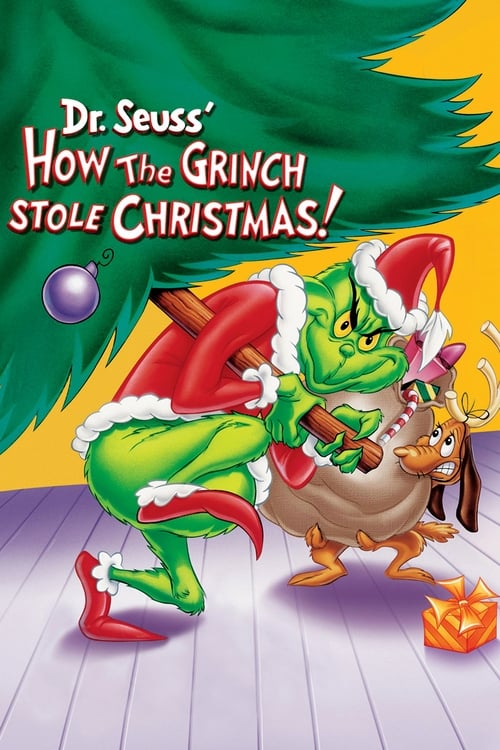
In 1966, CBS took a $315,000 gamble on a twenty-six-minute cartoon about a misanthropic green hermit. To put that in perspective, that’s roughly $3 million in today’s money—nearly $12,000 per finished minute of animation. At the time, television executives thought the budget was astronomical for a seasonal special, especially one based on a book that took about twelve minutes to read aloud. But they weren't just buying a cartoon; they were buying the collision of two of the most distinct creative minds of the 20th century: Dr. Seuss and Chuck Jones.
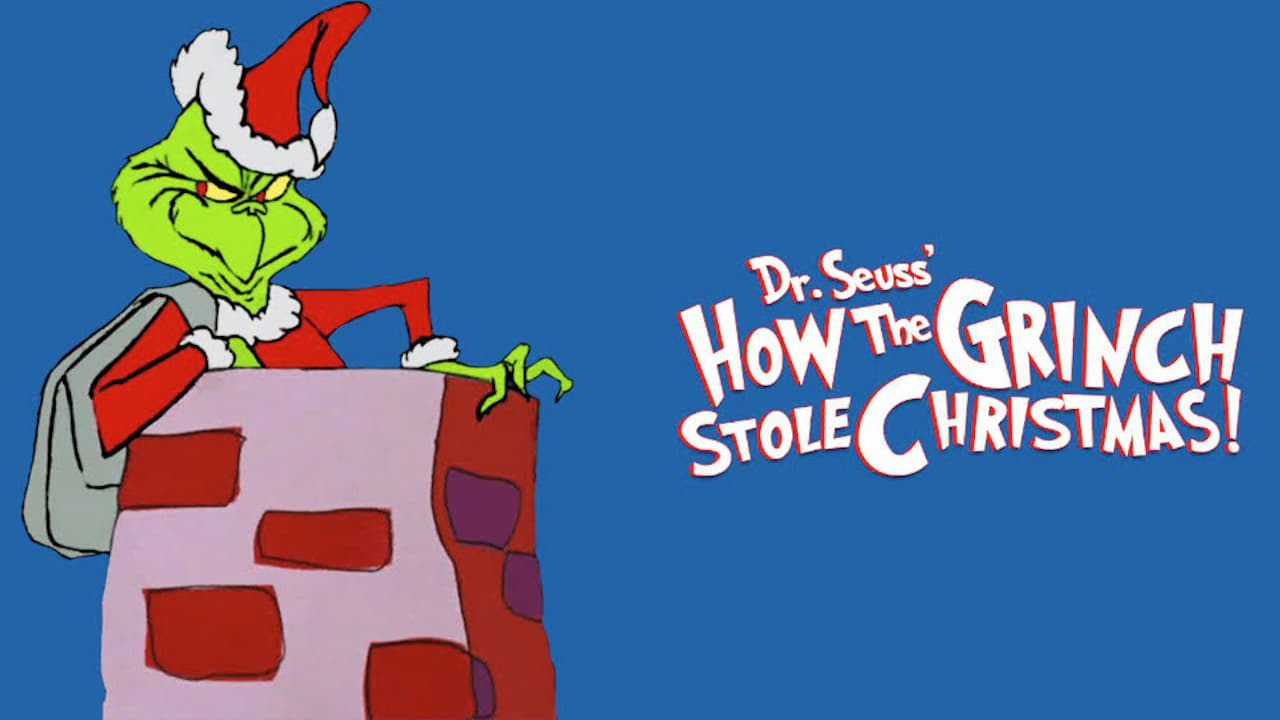
I watched this on a Tuesday afternoon while my neighbor was leaf-blowing his driveway for three hours straight, and the noise actually made me relate more to the Grinch’s hatred of "Noise! Noise! Noise!" with a spiritual intensity I hadn't felt since childhood.
The Looney Tunes DNA
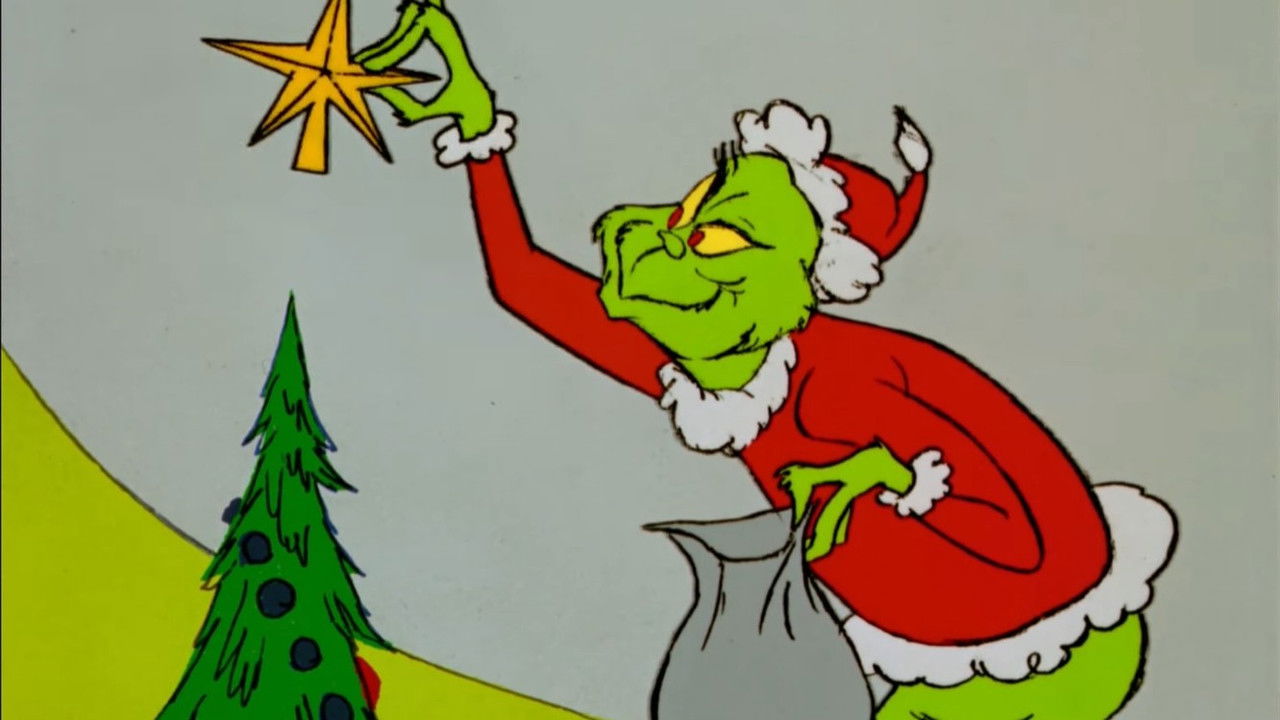
If you grew up watching Bugs Bunny or Wile E. Coyote, the hand of Chuck Jones is immediately recognizable here. While the character designs stay true to Seuss’s original illustrations, the movement is pure Jones. The Grinch doesn’t just walk; he slithers like a liquid shadow. His facial expressions don’t just change; they undergo tectonic shifts of malice. The Grinch has the skeletal structure of a damp pipe cleaner, and Jones uses that flexibility to create some of the best visual comedy of the decade.
The physical comedy is anchored by Max, the world’s most overworked and underpaid dog. Max is essentially the audience surrogate—the silent observer of the Grinch’s absurdity. When the Grinch ties that oversized antler to Max’s head and the poor pup’s face sinks into the floor under the weight of his own "reindeer" status, it’s a masterclass in comedic timing. There’s a specific beat, a half-second pause before Max’s head hits the floor, that serves as a reminder of how much "feel" goes into hand-drawn cel animation. You can’t automate that kind of pathetic, hilarious charm.
The Voice of a Monster
The casting of Boris Karloff was a stroke of genius that almost didn't happen. Producers were worried that the man who played Frankenstein’s monster would be too frightening for a Christmas special. Instead, Karloff brings a gravelly, aristocratic warmth to the narration and a delicious, sharp-toothed edge to the Grinch’s dialogue. It’s a performance that treats the material with absolute sincerity. He isn't "doing a voice" for kids; he’s playing a Shakespearean villain who happens to live in a cave.

Then there’s the song. For years, I assumed Karloff sang "You’re a Mean One, Mr. Grinch." It turns out the deep, floor-shaking bass actually belonged to Thurl Ravenscroft (the man who famously voiced Tony the Tiger). Because Ravenscroft wasn't credited in the original broadcast, Seuss reportedly felt so bad that he wrote a letter to every major columnist in the country to tell them who the real singer was. That song provides the rhythmic spine of the film, turning a sequence of a monster stealing toys into a high-concept music video that predates MTV by fifteen years.
From TV Special to VHS Staple
While How the Grinch Stole Christmas! began as a prestigious "one-night-only" television event, it found its true immortality during the home video revolution of the late 70s and 80s. Before the mid-80s, if you missed the annual broadcast, you were out of luck for a year. But once MGM released this on VHS, it became a permanent fixture of the American living room.
I remember seeing those white-clamshell VHS boxes in every rental store, usually tucked right next to A Charlie Brown Christmas. But where Charlie Brown was contemplative and melancholic, the Grinch was high-energy, colorful, and anarchic. The tape became a babysitter for an entire generation. Because it’s so short, you could watch it three times in a row before your parents finished making dinner. The bright, saturated "Grinch Green"—a color Chuck Jones chose specifically because it reminded him of the rental cars he used to drive—was a perfect test for the tracking on your VCR.
The Craft of the Whos
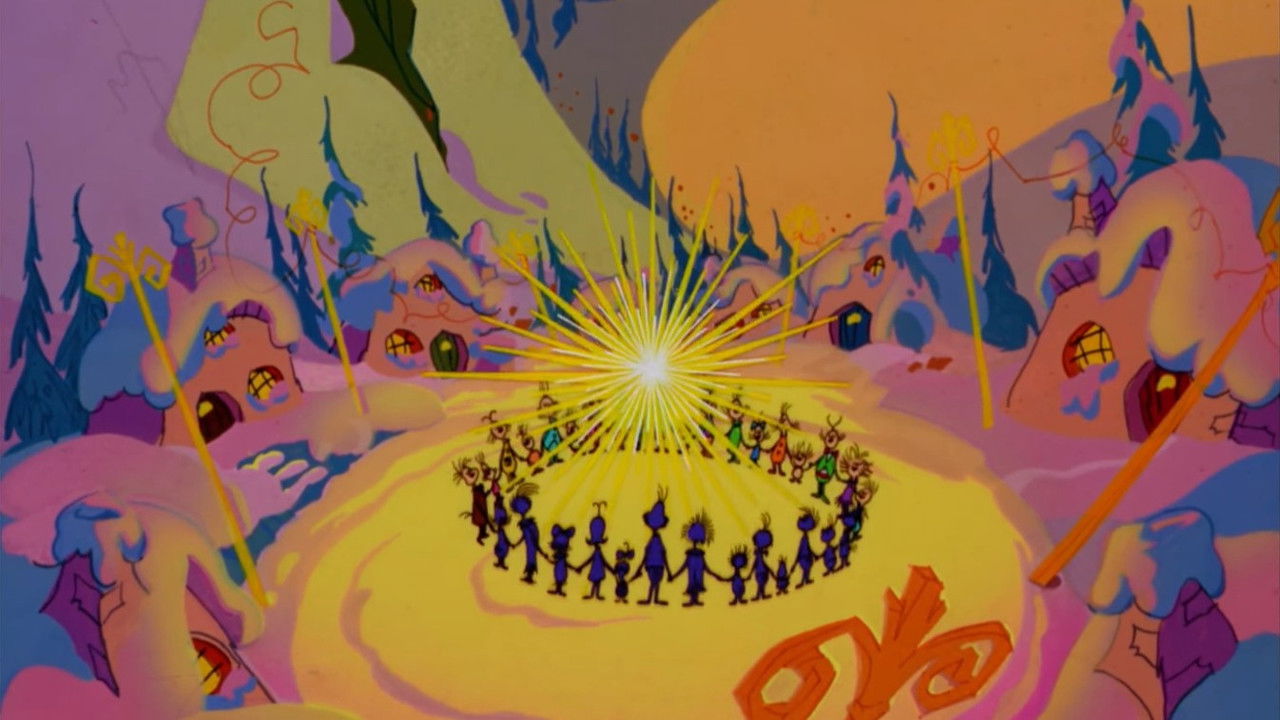
There’s a lot of talk about the "practical effects" of animation, and the Grinch is a prime example of the labor-intensive beauty of the 1960s. Every background of Whoville was hand-painted with a dizzying attention to Seussian geometry. There are no straight lines in this world. The production team had to invent ways to make the "Who-pudding" and "Rare roast beast" look appetizing in a way that fit the aesthetic.
The film also avoids the trap of being overly saccharine. It’s a comedy first, a heist movie second, and a moral tale third. Even the transformation—the famous scene where the Grinch’s heart grows three sizes—is handled with visual wit rather than a lecture. The way the X-ray frame cracks under the pressure of the growing heart is a perfect "Jones-ian" way to show, rather than tell, the emotional climax. It’s a film that trusts its audience to get the joke and the heart at the same time.
How the Grinch Stole Christmas! is a rare specimen: a perfect adaptation that actually improves upon its source material. By adding the slapstick energy of Chuck Jones and the haunting bass of Thurl Ravenscroft to Dr. Seuss’s rhyming genius, the team created something that transcends its 1966 origins. It remains the gold standard for holiday animation, proving that sometimes, the best way to save Christmas is to try and steal it first. This is twenty-six minutes of pure, undiluted cinematic joy that deserves a spot on your shelf (or your hard drive) forever.
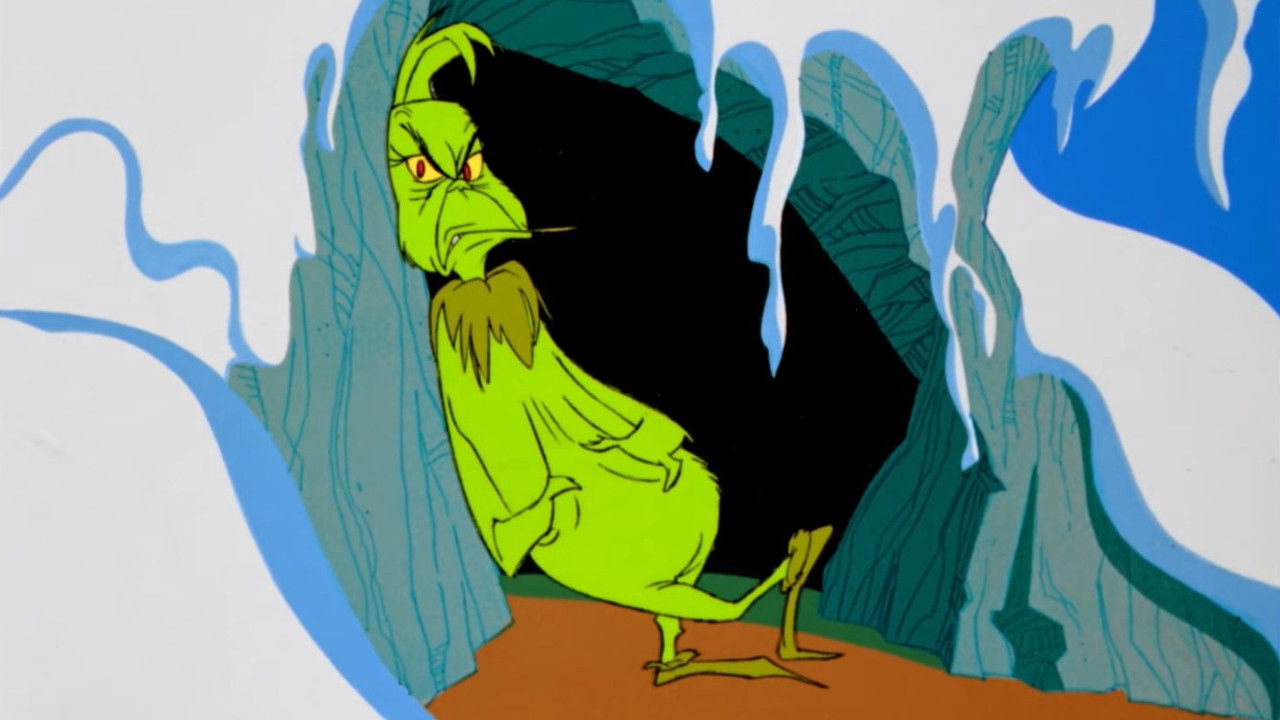
Keep Exploring...
-
The Aristocats
1970
-
One Hundred and One Dalmatians
1961
-

Bedknobs and Broomsticks
1971
-

Willy Wonka & the Chocolate Factory
1971
-
Asterix and Cleopatra
1968
-

An American Tail
1986
-

All Dogs Go to Heaven
1989
-
The Twelve Tasks of Asterix
1976
-
A Grand Day Out
1990
-
The Wrong Trousers
1993
-

Lady and the Tramp
1955
-

Lolita
1962
-
Oliver & Company
1988
-

A Christmas Story
1983
-

DuckTales: The Movie - Treasure of the Lost Lamp
1990
-
The Goonies
1985
-

Short Circuit
1986
-
The Princess Bride
1987
-

Who Framed Roger Rabbit
1988
-

Re-Animator
1985