You Only Live Twice
"Volcanoes, ninjas, and the ultimate space-age showdown."
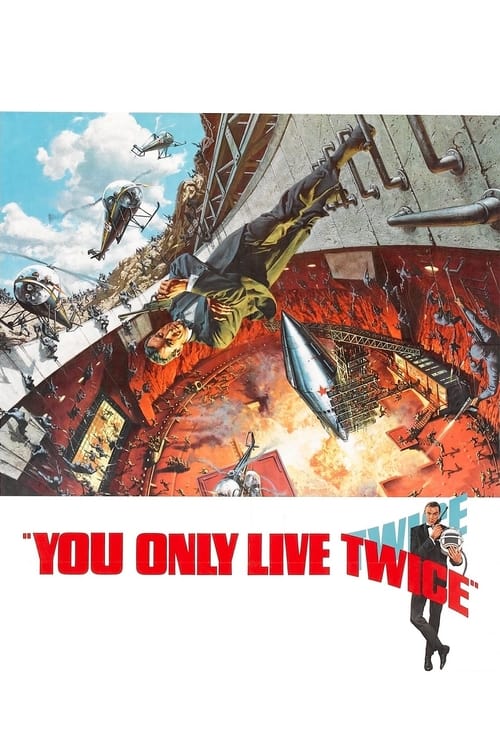
By 1967, the world was obsessed with two things: the Space Race and 007. While NASA was busy crunching numbers, Sean Connery was busy faking his own death in the sparkling waters of Hong Kong. You Only Live Twice marks the exact moment the James Bond franchise decided that "grounded espionage" was a bore and opted instead for high-altitude insanity. It’s a film that trades the gritty shadows of From Russia with Love for a hollowed-out volcano and a fleet of ninjas, and honestly, I wouldn’t have it any other way.
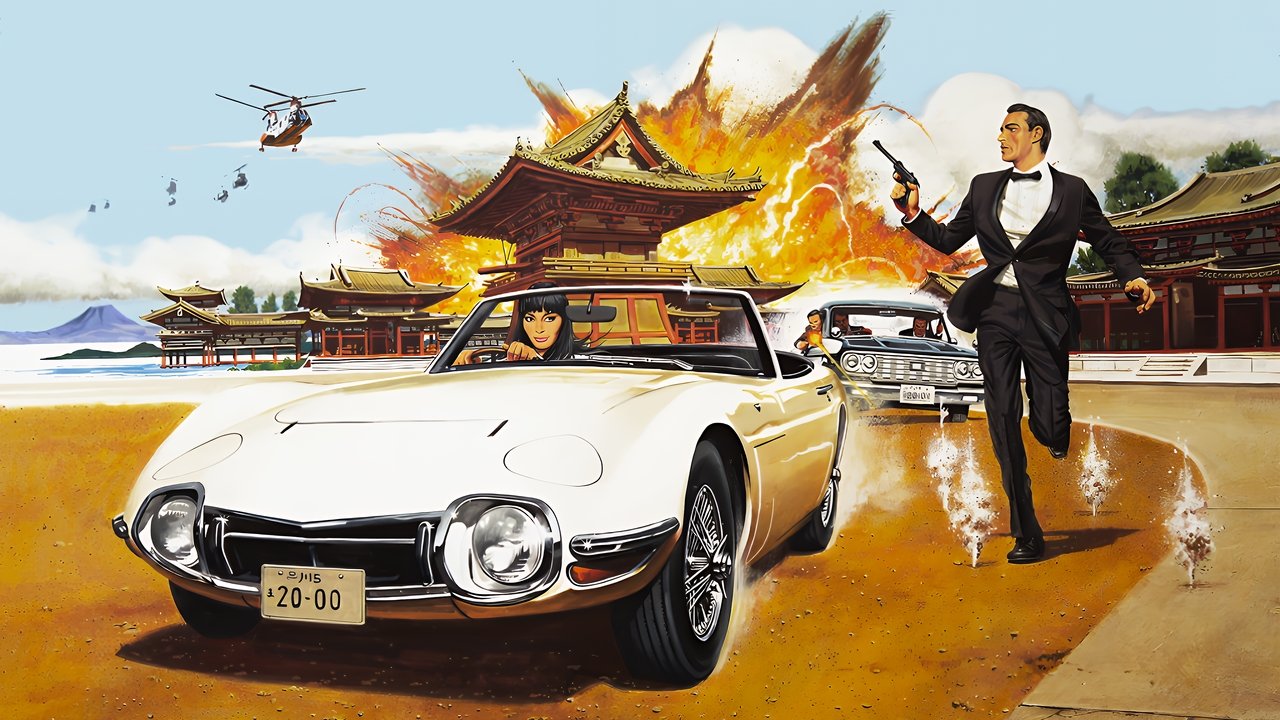
I revisited this one on a rainy Tuesday while my neighbor was outside trying to jump-start a 1998 Corolla in the driveway. The sound of his engine sputtering provided a weirdly rhythmic backing track to the opening titles, and for some reason, it made the lush John Barry score feel even more transportive.
The Dahl Touch and the Space Race
Most people forget that the screenplay was penned by Roald Dahl. Yes, the man who gave us Willy Wonka was the one who decided Bond should go to Japan, train as a ninja, and stop a third world war. Dahl famously threw out most of Ian Fleming’s novel, keeping only the title and the Japanese setting. He recognized that the audience didn’t want a travelogue; they wanted a spectacle.
The plot is peak Cold War paranoia: a mysterious "Bird One" spacecraft is literally swallowing American and Russian capsules whole. It’s a brilliant, if scientifically dubious, MacGuffin that forces Bond into the heart of Japan. The cinematography by Freddie Young (who also shot Lawrence of Arabia) is breathtaking. He captures the Japanese landscape with a scale that feels genuinely cinematic, making the most of the 2.35:1 Panavision frame.
Little Nellie and the Art of the Practical Stunt
If you want to talk about the "Practical Effects Golden Age," look no further than the "Little Nellie" sequence. Long before CGI allowed directors to fake physics, Lewis Gilbert hired Wing Commander Ken Wallis to fly his real-life invention—a heavily armed autogyro—into a dogfight with full-sized helicopters.

Watching those tiny blades whirring as Wallis (doubling for Connery) weaves through the mountains is a masterclass in tension. There’s a physical weight to the action here that modern blockbusters often lack. When an explosion happens, you see the shockwave ripple through the air. Wallis reportedly flew 85 sorties for that sequence alone, proving that the crew was just as daring as the character on screen. It’s the kind of sequence that became a "rewind moment" for anyone who owned the film on VHS. I remember the tape box art—that iconic image of Bond in the autogyro—practically screaming at me from the rental shelf, promising a level of gadgetry that the earlier films only hinted at.
The Million-Dollar Volcano
We have to talk about the lair. Ken Adam, the legendary production designer behind Dr. Strangelove, built a $1 million volcano set at Pinewood Studios. Adjusted for inflation, that’s roughly $9 million today just for one set. It featured a working monorail, a retractable roof, and enough room for a small army of stuntmen to rappel down from the ceiling.
This is also where we finally get the face reveal of Ernst Stavro Blofeld, played with a chilling, feline grace by Donald Pleasence. Before he was the harried Dr. Loomis in John Carpenter’s Halloween, Pleasence gave us the blueprint for every "evil genius" trope that would follow. The scar, the chair, the white cat—it’s all here. While the film’s attempt to "turn Bond Japanese" via a wig and some prosthetic eyelids is arguably the most awkward makeup job in cinematic history, the finale in the volcano lair is so grand that you almost forgive the cultural clumsiness. Bond looks like he had a bad reaction to some shellfish during those "undercover" scenes, but once the grenades start flying and the ninjas descend, the sheer kinetic energy of the direction takes over.
A Box Office Behemoth
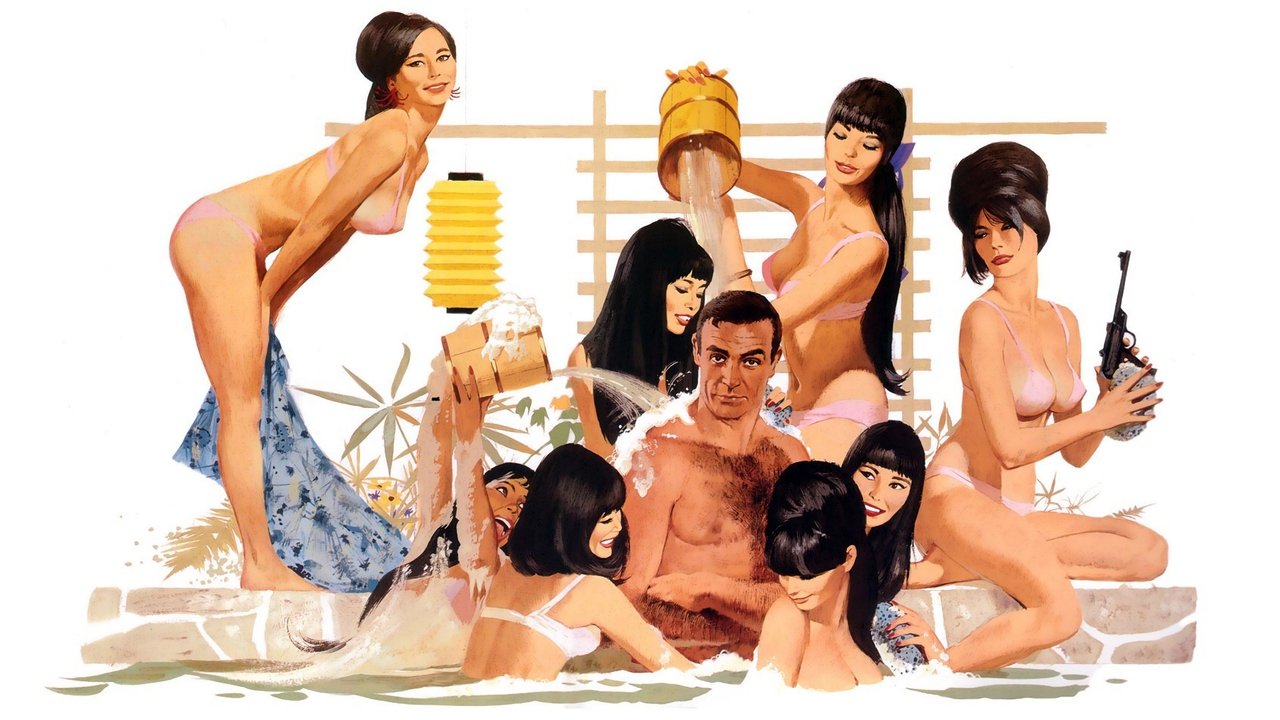
You Only Live Twice wasn't just a movie; it was a cultural event. Produced for $9.5 million, it raked in over $111 million worldwide. To put that in perspective, that’s like a film today clearing a billion dollars with ease. It solidified the "Bond Formula" that would dominate the 70s and 80s: the exotic locales, the megalomaniac villain, and the final battle involving hundreds of extras.
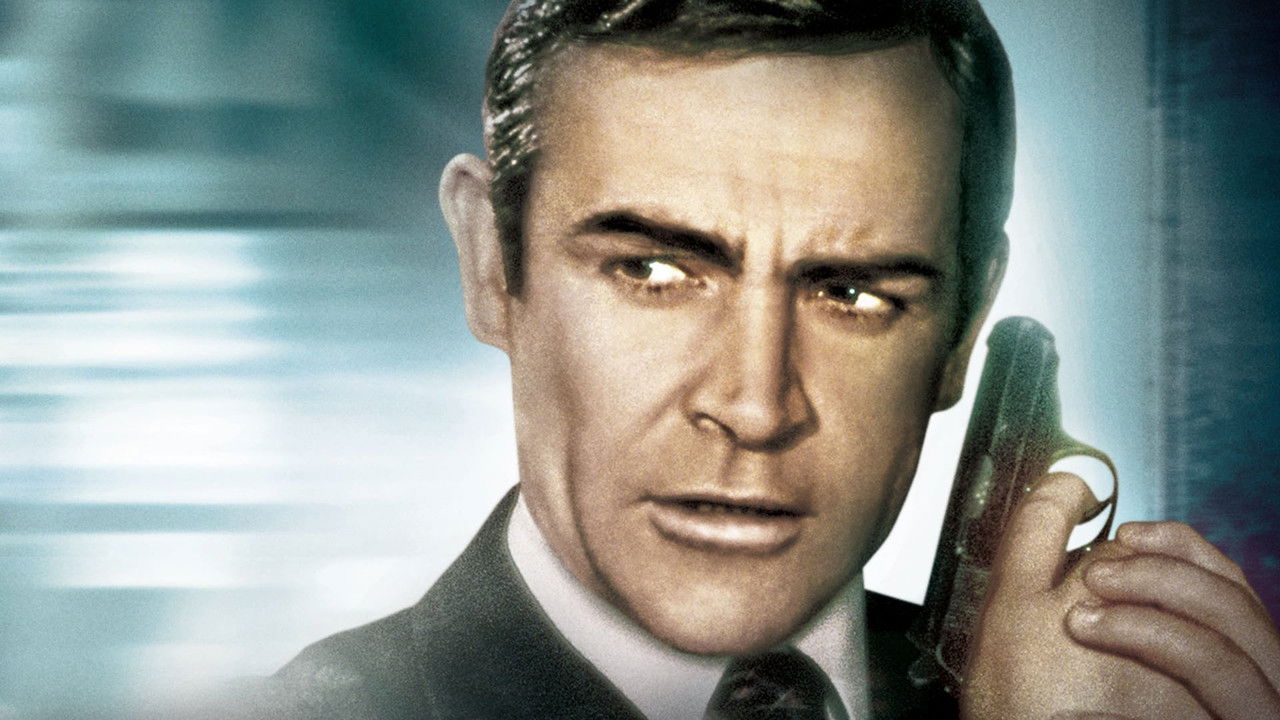
It was a massive success that proved the franchise could survive the increasing absurdity of its own plots. Even as Sean Connery began to tire of the role—this was his "final" Bond film before the brief detour of On Her Majesty's Secret Service and his eventual return in Diamonds Are Forever—he still carries the film with that effortless, masculine charm. He might be sleepwalking through the romantic subplots, but when he’s in the middle of a shootout, he’s still the gold standard.
Ultimately, You Only Live Twice is the ultimate Saturday afternoon movie. It’s grand, ridiculous, and visually stunning. While it lacks the tight, noir-ish tension of the earliest Bond entries, it makes up for it with sheer ambition and the kind of practical stunt work that keeps you glued to the screen. It’s a time capsule of a moment when the world felt both very large and, thanks to a few rockets and a man in a tuxedo, very small. If you can get past the cringe-worthy "transformation" sequence, you’re in for one of the most entertaining rides in the entire James Bond Collection.
Keep Exploring...
-
Moonraker
1979
-
The Spy Who Loved Me
1977
-
Thunderball
1965
-

Goldfinger
1964
-
Dr. No
1962
-
From Russia with Love
1963
-
Never Say Never Again
1983
-
On Her Majesty's Secret Service
1969
-
Live and Let Die
1973
-
Octopussy
1983
-
The Living Daylights
1987
-
Diamonds Are Forever
1971
-
For Your Eyes Only
1981
-
A View to a Kill
1985
-
Licence to Kill
1989
-
The Man with the Golden Gun
1974
-
Tomorrow Never Dies
1997
-
GoldenEye
1995
-
Casino Royale
2006
-

Skyfall
2012