Asterix and Cleopatra
"Building the impossible, one magic swig at a time."
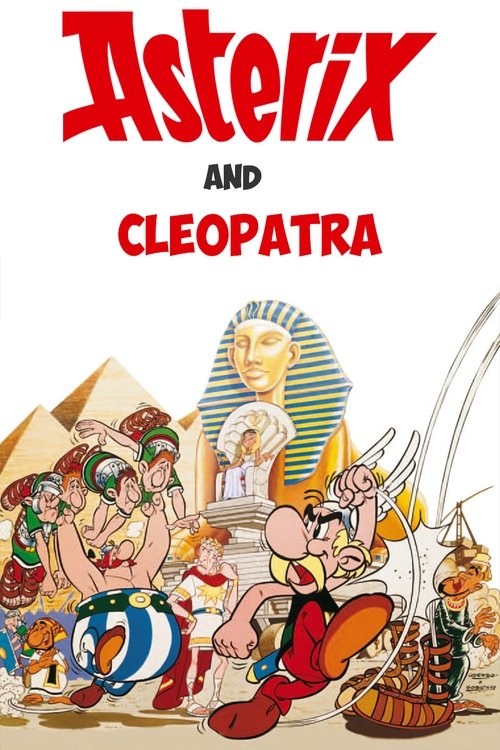
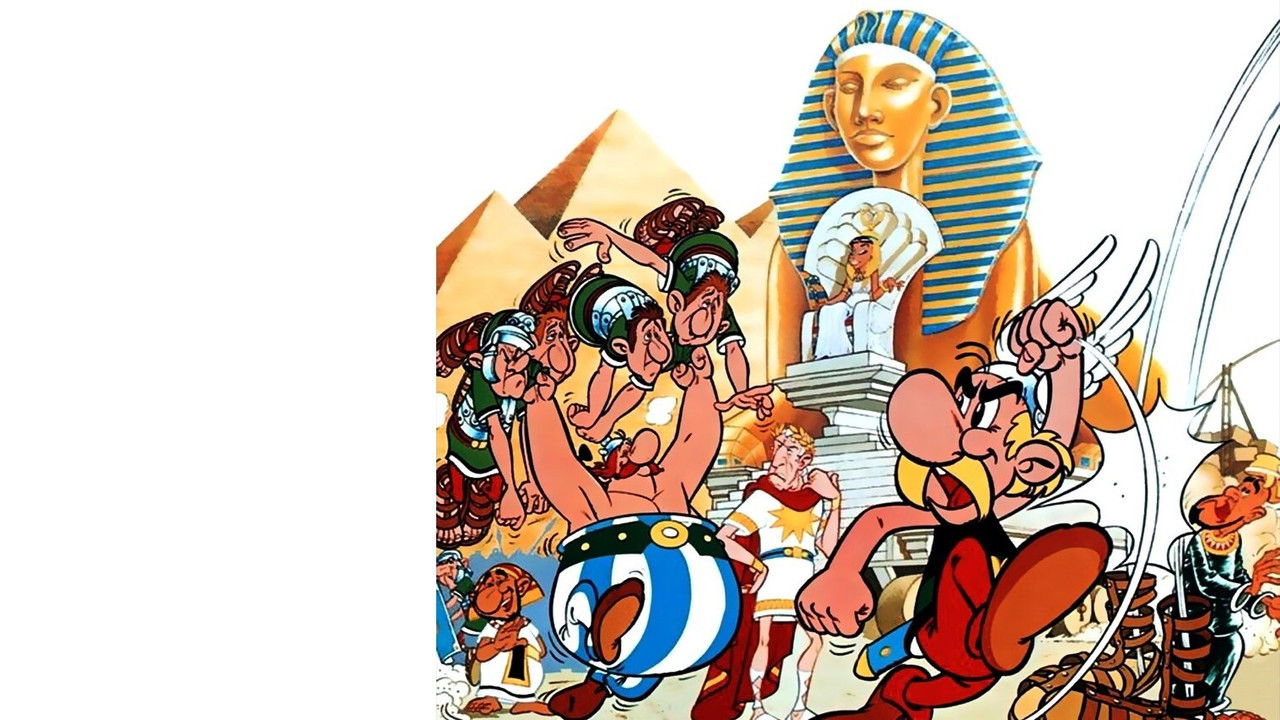
I clearly remember the first time I encountered Asterix and Cleopatra. I was eight years old, browsing the "International" section of a local video store that smelled perpetually of popcorn seasoning and damp carpet. I was looking for Star Wars, but someone had tucked a faded VHS case with a bright yellow spine behind a stack of Godzilla tapes. The cover featured a short, mustachioed warrior and his massive, red-braided friend standing in front of a very unimpressed-looking Queen of the Nile. I took it home, and for the next seventy minutes, my living room became a kaleidoscope of 1960s psychedelic colors and ancient Egyptian puns.
Watching it again decades later, the film feels like a beautiful, hand-drawn relic of a transitional era. Released in 1968, it arrived right as the rigid structures of "Golden Age" animation were being dismantled by a more experimental, counter-culture spirit. While Disney was mourning Walt and leaning into the safe, sketchy lines of The Aristocats, the French-Belgian team at Belvision was busy making a movie where a lion sings about his favorite snacks and a villain prepares a poisoned cake through the medium of a technicolor jazz number.
A Quest for the Mediterranean Soul
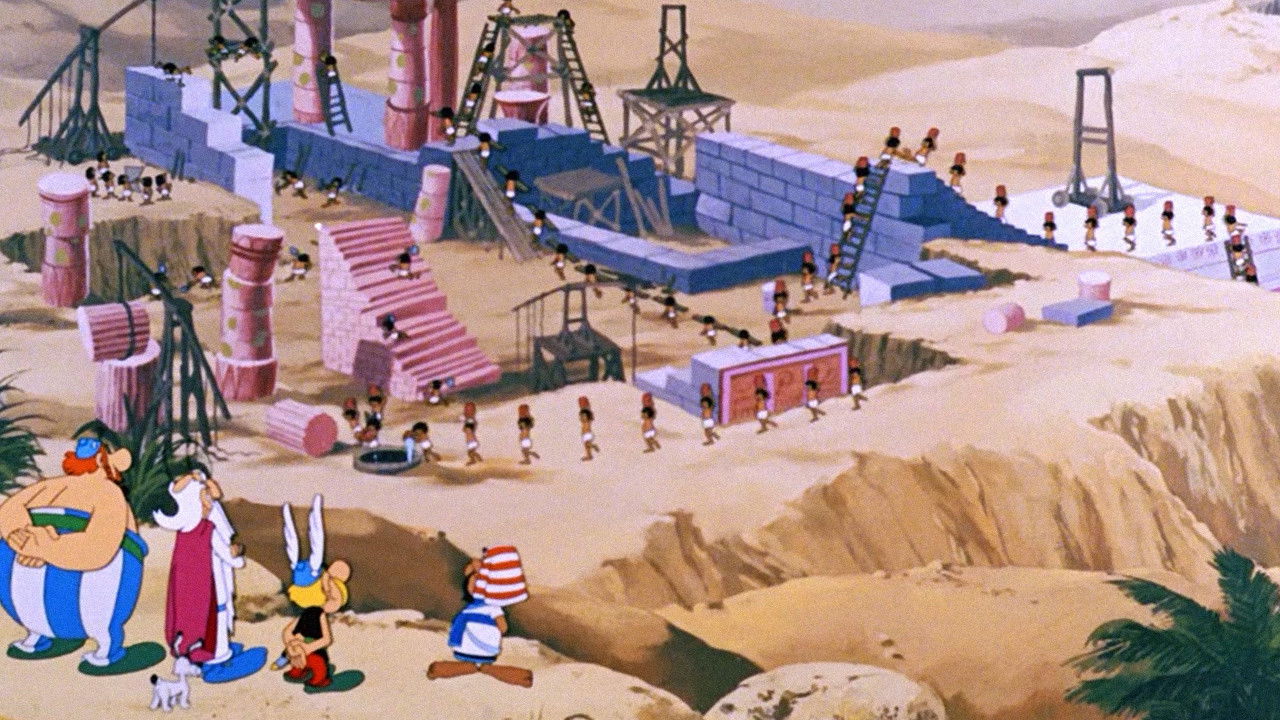
The plot is a classic adventure setup that feels both epic and wonderfully low-stakes. Cleopatra (voiced with delicious haughtiness by Micheline Dax) makes a bet with Julius Caesar: her people can build a magnificent summer palace in just three months, proving Egypt’s glory hasn't faded. She recruits the architect Edifis, who is told he’ll either be covered in gold or fed to the crocodiles. Facing certain death and a workforce that prefers lunch breaks to heavy lifting, Edifis travels to Gaul to find Getafix the Druid, who brings along our titular heroes, Roger Carel’s Astérix and Jacques Morel’s Obélix.
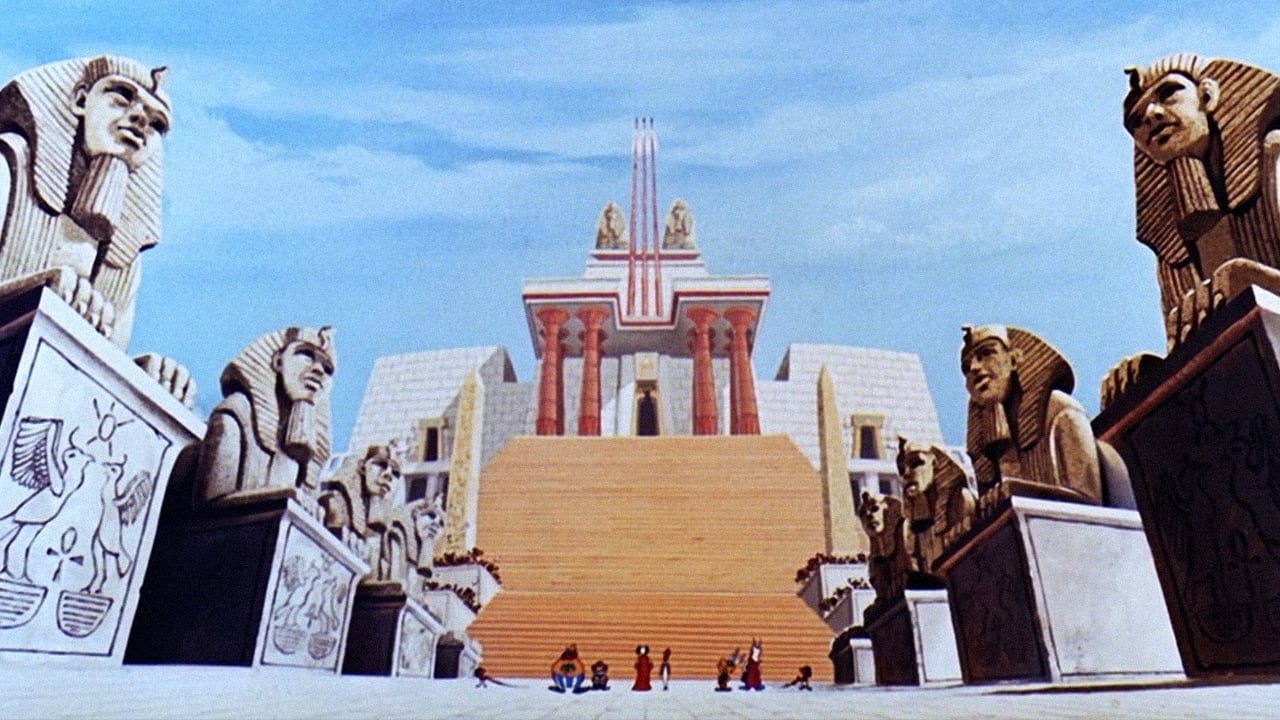
What follows is a delightful travelogue. The "adventure" here isn't just about the destination; it’s about the culture clash. The film captures that specific 1960s fascination with exoticism, but filters it through a lens of gentle parody. When the trio arrives in Egypt, the movie doesn't just show the pyramids—it shows them as a tourist trap. There’s a sense of wonder in the production design, which manages to make the Egyptian vistas look both expansive and like something you’d find on a vintage postcard.
The Weird, Wonderful Texture of 1968
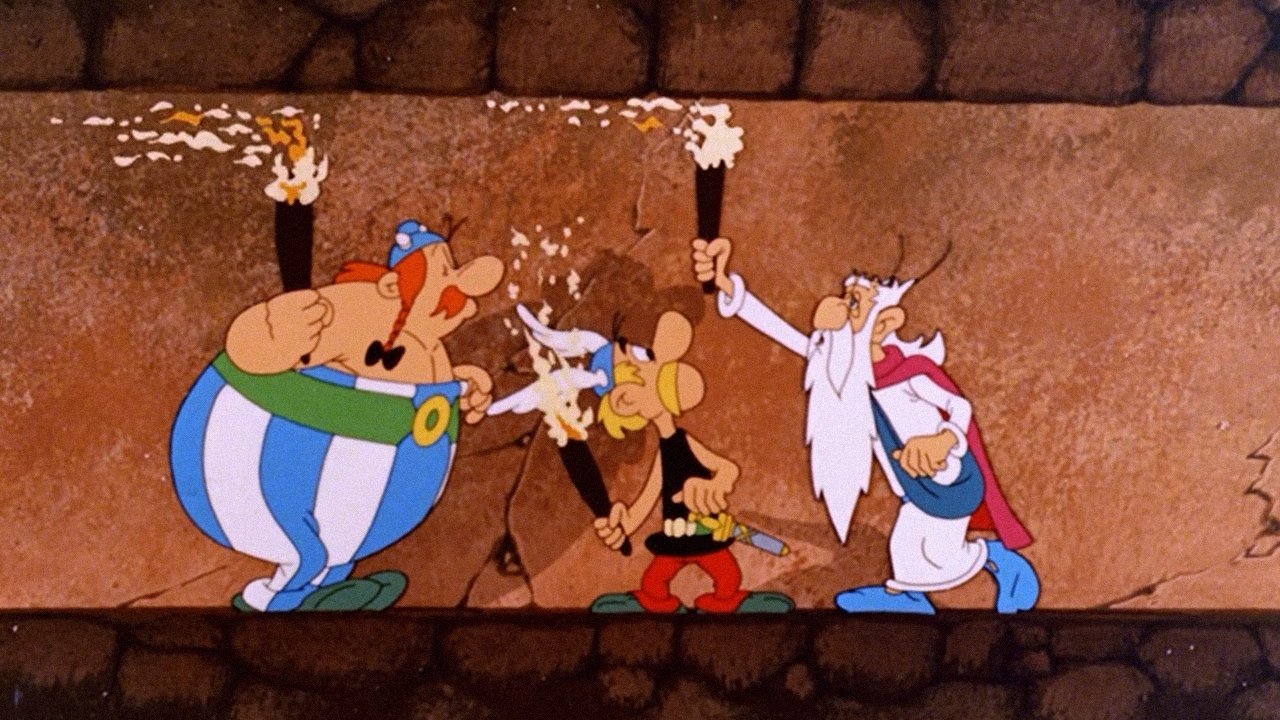
The animation style is where the "New Hollywood" era's influence (or at least its contemporary European parallel) really shines. It’s not the fluid, high-budget realism of modern Pixar. It’s flat, vibrant, and unapologetically "cartoonish." There’s a specific sequence—the "Arsenic Cake" song—that I consider a high-water mark for 60s weirdness. The villains, Artifis and Kruelaman, bake a poisoned gift for Cleopatra while the background shifts into vibrant neon greens and purples. It feels less like a children’s movie and more like a fever dream directed by someone who had spent a bit too much time at a Parisian avant-garde club.
Obelix’s obsession with a dog-sized portion of roast boar is the most relatable character motivation in cinema history. Whether he's accidentally knocking the nose off the Sphinx (a gag that I still find funnier than I should) or trying to figure out if he can have "just a little drop" of the magic potion, Jacques Morel brings a warmth to the character that transcends the language barrier. I watched this most recently on a Tuesday evening while my cat tried to eat my shoelaces, and even that mundane distraction couldn't break the charm of the "Bath Song" sequence, where Cleopatra’s handmaidens scrub her in a tub filled with goat’s milk. It’s absurd, rhythmic, and incredibly catchy.
Why It Vanished (and Why to Find It)
Despite being a titan of European culture, Asterix and Cleopatra remains a "hidden gem" in the English-speaking world. It fell into that weird gap of distribution where the VHS tapes were plentiful in the 80s, but the digital transition was unkind to it. The film vanished from most mainstream radars, likely because it doesn't fit the "Disney formula" that American audiences expected from 60s animation. It’s too snarky, too musical in a non-traditional way, and too focused on historical satire.
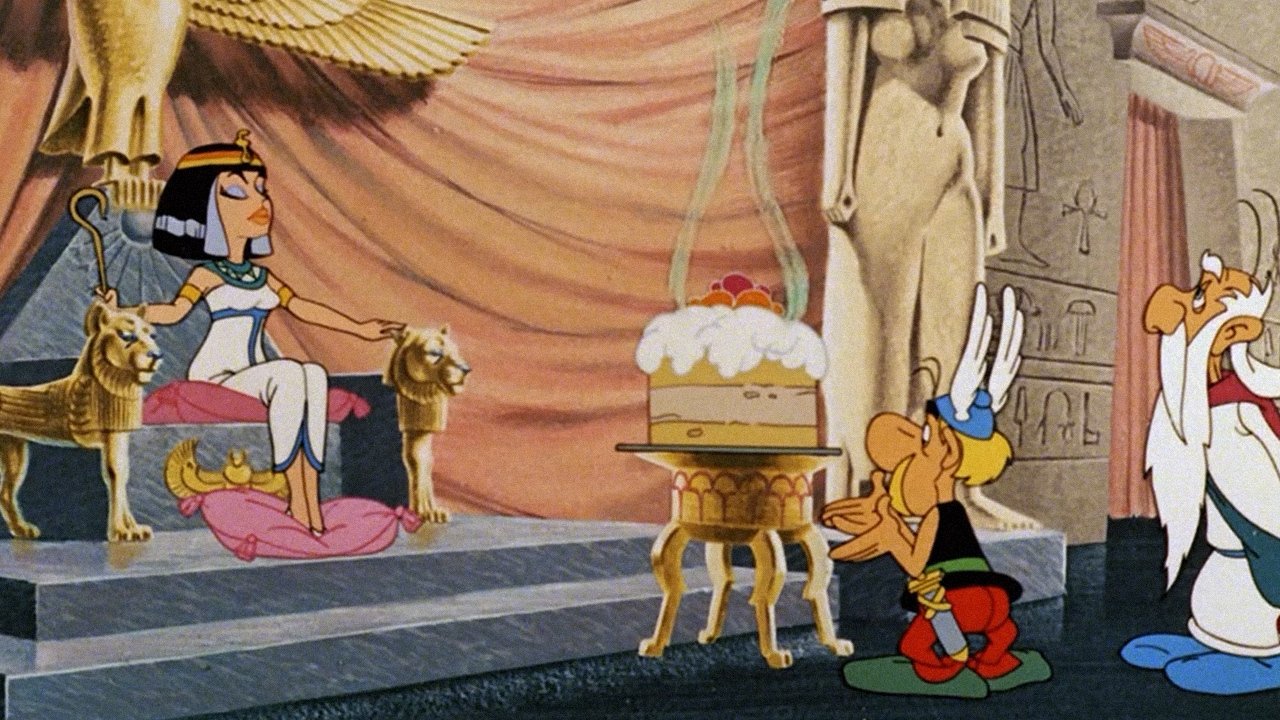
However, the "Practical Effects" of this era—the hand-painted cells and the layered matte paintings used for the palace construction—give it a physical weight that CGI can't replicate. You can almost feel the texture of the stone and the heat of the desert. The humor is sophisticated enough for adults (plenty of jokes about labor unions and architectural bureaucracy) while remaining slapstick enough to keep a kid glued to the screen.
If you can track down a copy—perhaps hidden in the "Obscure" section of a boutique streaming service or a lucky find at a thrift store—it’s a journey worth taking. It’s a snapshot of a time when animation was starting to realize it could be more than just "for kids." It could be a playground for jazz, satire, and the occasional accidentally-demolished ancient monument.
The film is a triumph of charm over polish. It doesn't have the world-changing weight of Jaws or the technical perfection of Fantasia, but it has a soul. It’s a movie that invites you to sit back, ignore the historical inaccuracies, and enjoy the sight of a small Frenchman punching a Roman legionnaire into the stratosphere. It reminds me that sometimes the best adventures aren't the ones where the world is at stake, but the ones where you’re just trying to help a friend build a house on a deadline. It's a colorful, pun-filled relic that deserves a spot on your shelf, right next to your dog-eared comic books.
Keep Exploring...
-
The Twelve Tasks of Asterix
1976
-
Asterix: The Mansions of the Gods
2014
-
Asterix: The Secret of the Magic Potion
2018
-

Bedknobs and Broomsticks
1971
-

An American Tail
1986
-
The Aristocats
1970
-
One Hundred and One Dalmatians
1961
-
The Castle of Cagliostro
1979
-
Time Bandits
1981
-

All Dogs Go to Heaven
1989
-
A Monster in Paris
2011
-
How the Grinch Stole Christmas!
1966
-

DuckTales: The Movie - Treasure of the Lost Lamp
1990
-

The Swan Princess
1994
-
A Goofy Movie
1995
-
The Little Mermaid II: Return to the Sea
2000
-
Jimmy Neutron: Boy Genius
2001
-
Osmosis Jones
2001
-
101 Dalmatians II: Patch's London Adventure
2003
-
Mickey, Donald, Goofy: The Three Musketeers
2004