Duel
"Hell is a 1955 Peterbilt in your rearview mirror."
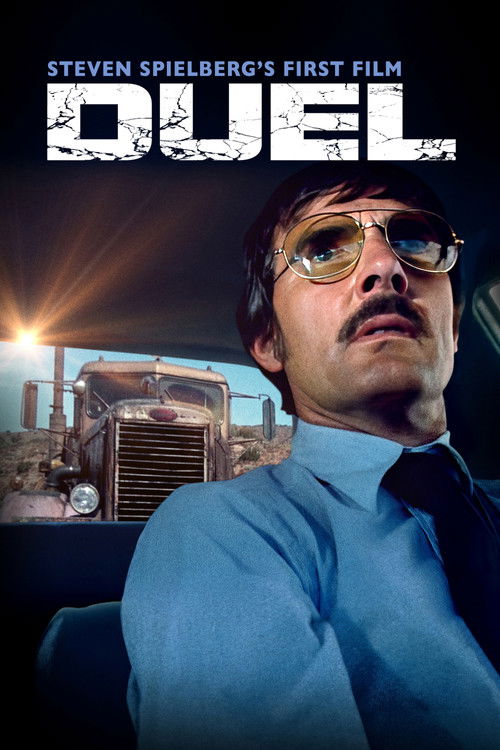
Forget the planet-ending stakes of modern blockbusters for a second. Sometimes, the most terrifying thing in the world is just a persistent jerk in a larger vehicle. I watched Duel last Tuesday while eating a slightly stale bag of pretzels, and by the forty-minute mark, I was so tense I’d crushed half the bag into dust without realizing it. That is the power of early Steven Spielberg.
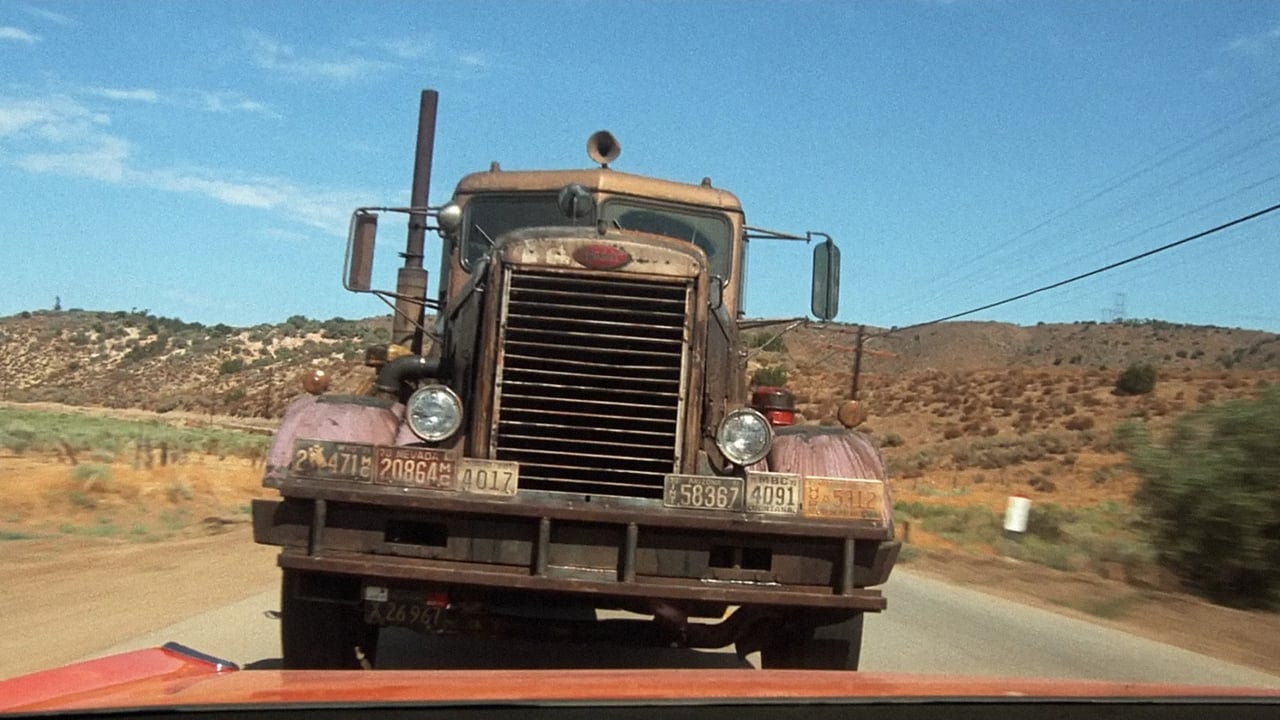
Before he had the budget for a mechanical shark or a park full of clones, Spielberg had a $450,000 budget, thirteen days to shoot, and a dirty desert road. This was originally a "Movie of the Week" for ABC, but it’s so lean and effective that it eventually clawed its way into international theaters and onto the "Must Rent" shelves of every VHS store worth its salt in the 1980s. It’s a masterclass in how to build a nightmare out of nothing but sunlight, gasoline, and silence.
The Predatory Peterbilt
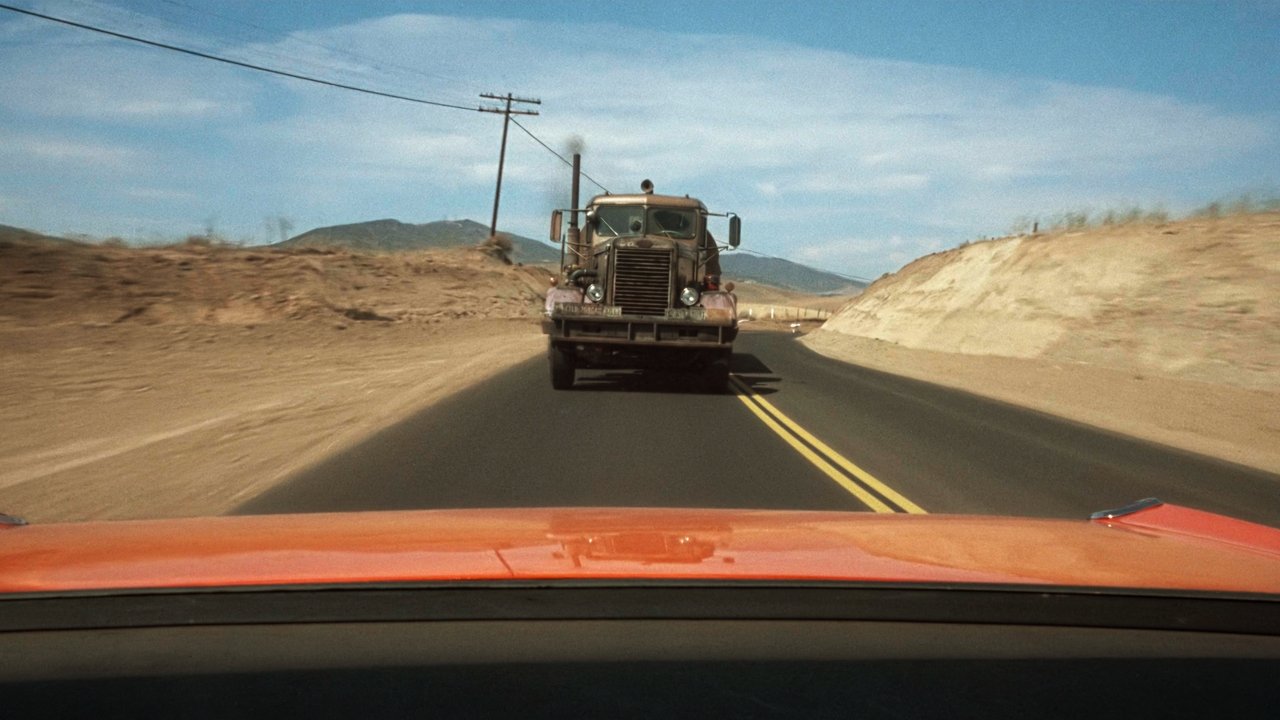
The story, penned by the legendary Richard Matheson (who also wrote I Am Legend and several iconic Twilight Zone episodes), is deceptively simple. Dennis Weaver plays David Mann, a traveling salesman whose name—"Man"—is about as subtle as a sledgehammer. He’s driving a puny red Plymouth Valiant through the California desert to a business meeting. He overtakes a soot-belching, rust-caked 1955 Peterbilt 281 tanker truck. The truck driver takes offense. That’s it. That’s the movie.
But man, what Spielberg does with that truck is pure sorcery. We never see the driver’s face—only his boots and his arm waving Mann past into oncoming traffic. This anonymity turns the truck into a sentient monster. It doesn’t just drive; it looms. It breathes. Spielberg reportedly chose this specific truck model because its rounded cab and split windshield looked like a face. With its collection of license plates from various states pinned to the bumper like trophies from past kills, the Peterbilt is a slasher villain made of steel. The truck is a more intimidating antagonist than 90% of modern CGI monsters.
A Blueprint for Jaws
It’s impossible to watch Duel without seeing the DNA of Jaws (1975). The pacing is nearly identical: a slow-burn introduction to the threat, followed by a series of "attacks" that escalate in complexity and cruelty. Dennis Weaver is fantastic as a guy who is slowly losing his mind. He isn't an action hero; he’s a suburbanite who probably worries about his lawn and his mortgage, which makes his eventual "fight or flight" transformation feel earned.

The cinematography by Jack A. Marta captures the oppressive heat of the desert so well you can almost smell the diesel fumes. I love the way the camera sits low to the asphalt during the chase sequences, making 60 mph feel like Mach 1. There’s a scene in a roadside diner—a classic "Man in Cafe" sequence—where Mann tries to figure out which of the patrons is his pursuer. The internal monologue is a bit dated, but the tension is thick enough to cut with a steak knife. You feel Mann’s isolation. In the middle of a crowded room, he is completely alone in his terror.
The Art of the Practical Stunt
Because this was 1971, there were no digital safety nets. When you see that massive truck barreling toward a telephone booth or shoving a car toward a moving train, that’s real weight and real momentum. The stunt coordination by Carey Loftin (who also worked on Bullitt and The French Connection) is legendary.
One of my favorite "how did they do that" details involves the climax. To get the truck to look like it was screaming as it went over the cliff, Spielberg used a sound effect of a roaring dinosaur—the same sound effect he would later use for the death of the shark in Jaws. It’s those little touches that elevate a simple chase movie into a work of mythic proportions.
Stuff You Didn't Notice
Matheson’s Reality: The script was based on a real experience Richard Matheson had. On the day JFK was assassinated, he was tailgated by a massive truck in a similarly aggressive fashion. He turned that trauma into one of the best thrillers ever written. Touch of Evil Connection: Spielberg cast Dennis Weaver specifically because he was impressed by his performance as the eccentric night manager in Orson Welles’ Touch of Evil (1958). The Cameo: If you look closely during the scene where Mann is in the diner's bathroom, you can see a reflection of Steven Spielberg in the mirror. Even back then, he couldn't resist being part of the frame. A "Foley" Masterpiece: The truck's engine sounds were dubbed with animal growls and hisses. By the end of the film, you stop hearing a machine and start hearing a predator. * The Plymouth’s Color: Spielberg insisted the car be red so it would stand out against the tan and brown hues of the desert landscape. David Mann’s red Plymouth Valiant is arguably the bravest character in 70s cinema.
If you’ve only ever seen Spielberg do big-budget spectacles like Jurassic Park (1993) or Raiders of the Lost Ark (1981), you owe it to yourself to see where it all began. Duel is a reminder that you don't need a hundred million dollars to scare the living daylights out of an audience. You just need a road, a hero who’s easy to root for, and a villain that refuses to die.
Duel remains one of the most effective thrillers ever put to film because it taps into a primal, universal anxiety. We’ve all been on that road. We’ve all seen those headlights in the rearview mirror and wondered, just for a second, if they’re following us. It’s a lean, mean, 89-minute exercise in pure cinema that hasn't lost a single ounce of its horsepower in over fifty years. Turn off your phone, dim the lights, and keep your eyes on the road.
Keep Exploring...
-
The French Connection
1971
-
Jaws
1975
-
Munich
2005
-
The Warriors
1979
-
Bloodsport
1988
-
Dirty Harry
1971
-
Assault on Precinct 13
1976
-

Star Trek II: The Wrath of Khan
1982
-
The Terminator
1984
-

Predator
1987
-
RoboCop
1987
-
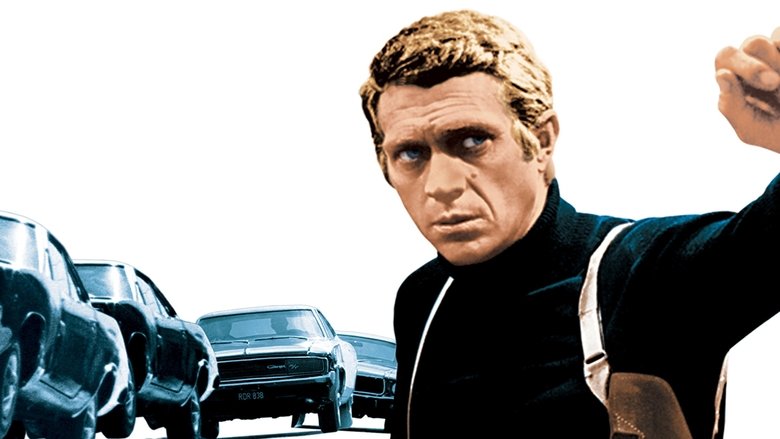
Bullitt
1968
-
Fist of Fury
1972
-

The Towering Inferno
1974
-
Marathon Man
1976
-
Minority Report
2002
-
The Omen
1976
-
Empire of the Sun
1987
-
They Live
1988
-
From Russia with Love
1963