Trinity Is Still My Name
"More beans, fewer bullets, and the world’s heaviest right hand."
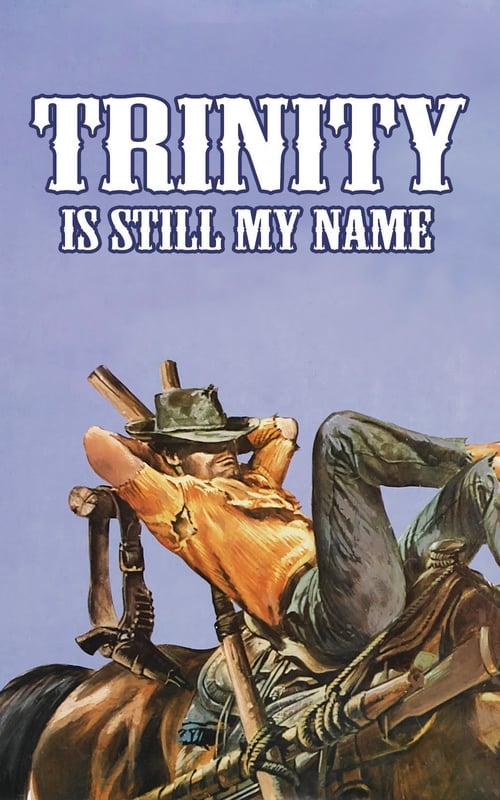
The Spaghetti Western didn’t die with a whimper or a poetic Sergio Leone sunset; it went out with the sharp, rhythmic crack of a heavy palm meeting a dusty cheek. By 1971, the genre had reached a point of grim saturation. After years of squinting anti-heroes and nihilistic body counts, audiences were ready for someone to take the spurs off and relax. That’s exactly what Terence Hill and Bud Spencer did in Trinity Is Still My Name, a film that doubled down on the "slapstick Western" template and somehow became one of the highest-grossing Italian films of all time.
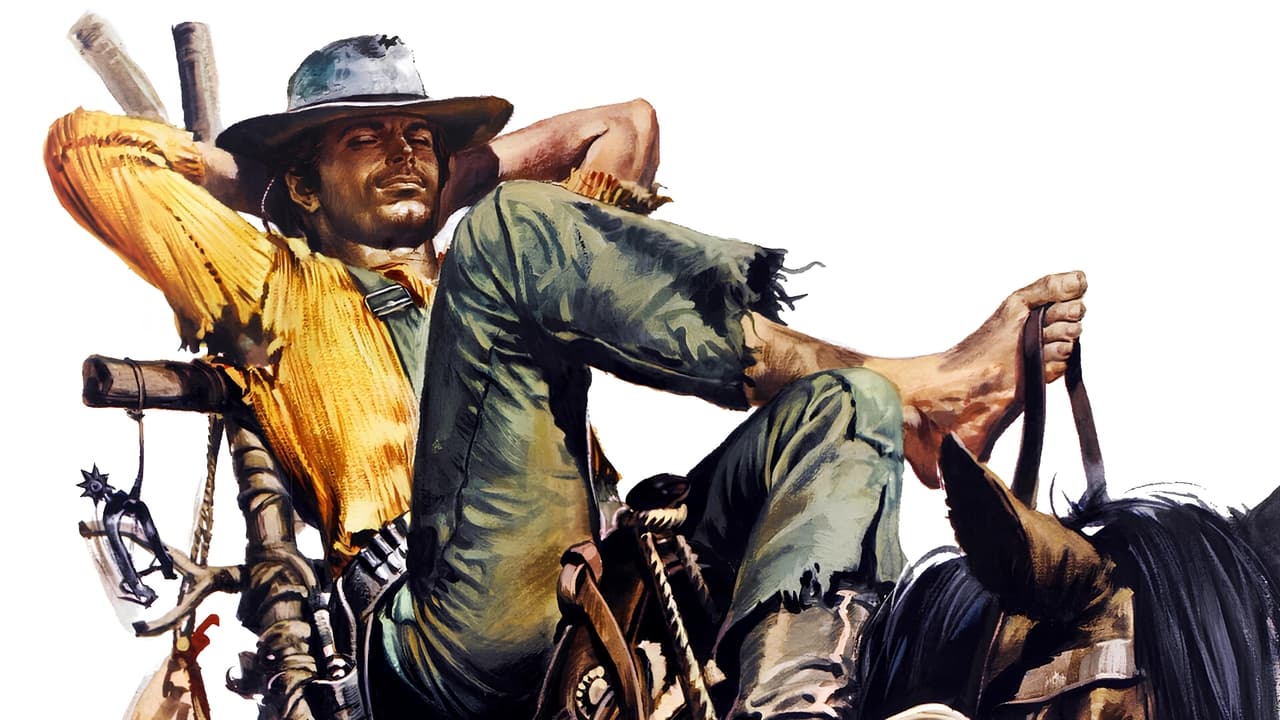
The Zen of the Skillet
I watched this latest viewing while nursing a lukewarm cup of coffee that had a literal film of dust on it because my neighbor decided to sand his deck, and strangely, the grit in my teeth made the movie feel even more authentic. There is a tactile, grimy texture to Enzo Barboni’s direction that betrays his background as a cinematographer (he actually shot the original Django). He knows how to make a set look like it hasn't seen a drop of water in three decades, which makes the cartoonish physics of the fight scenes even funnier.
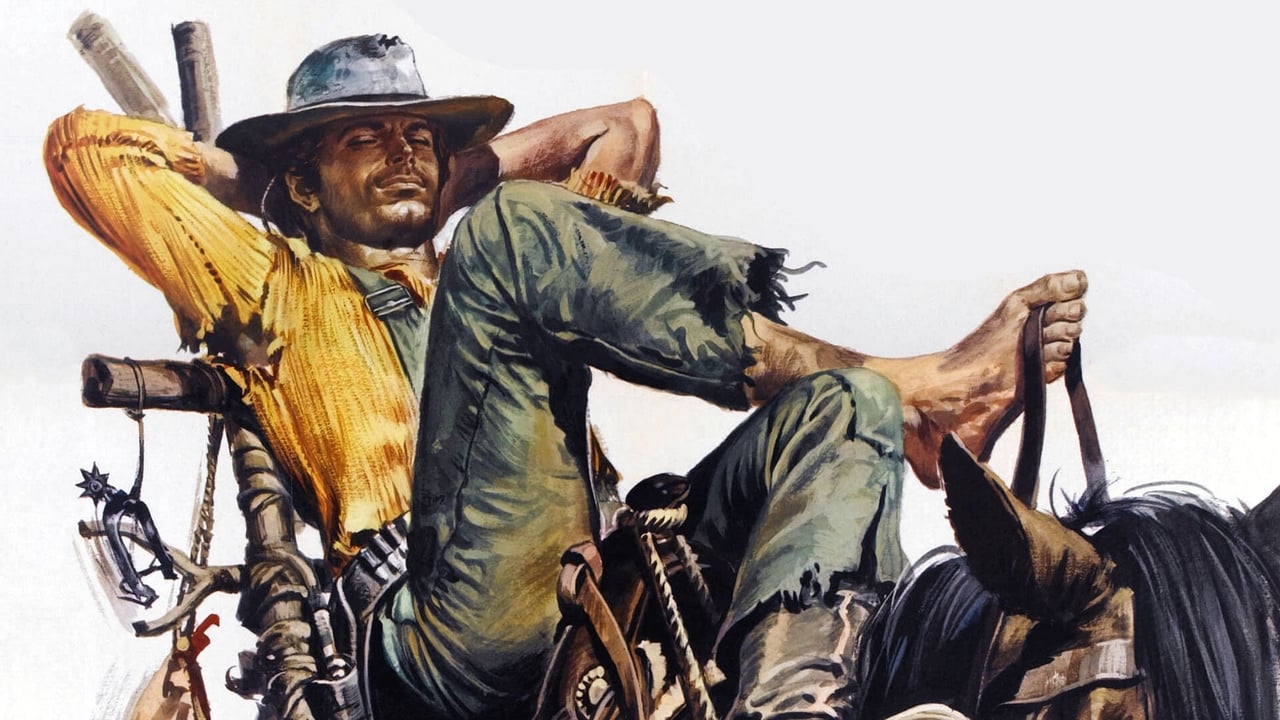
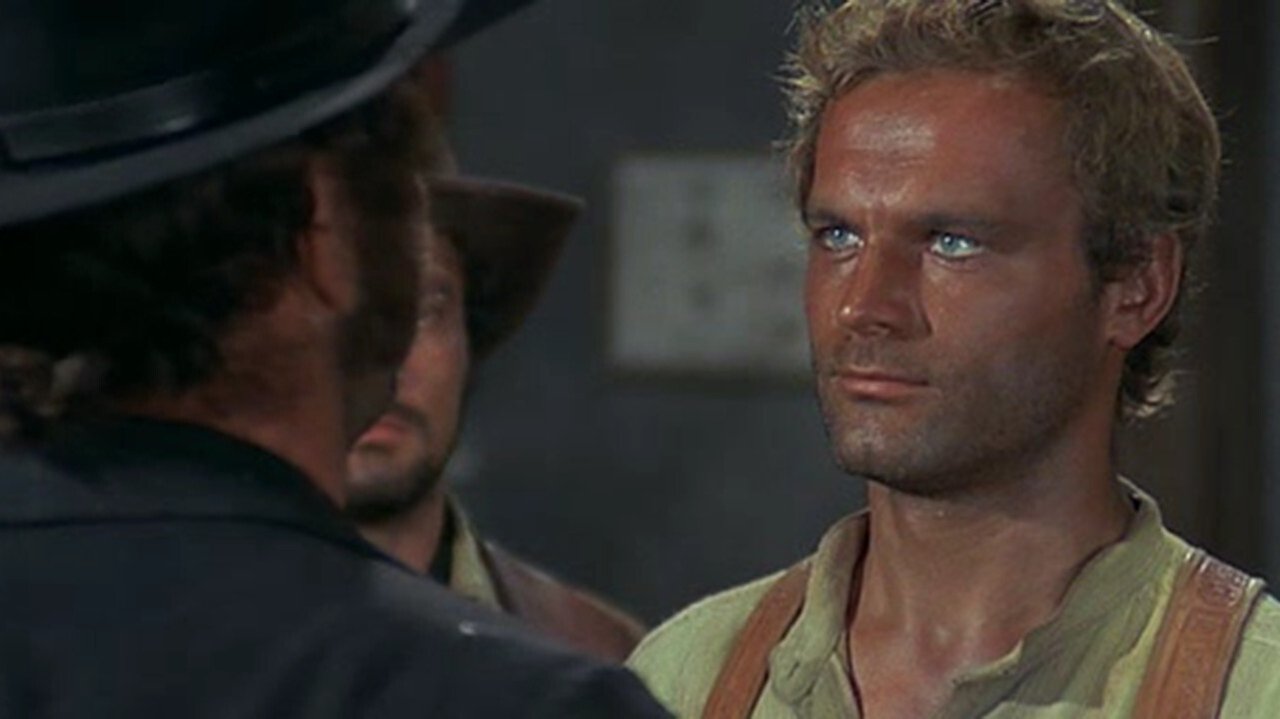
The plot is a loosely strung-together series of sketches involving Trinity and Bambino being mistaken for federal agents—a ruse they lean into primarily so they can eat better food. But the "what" matters far less than the "how." The chemistry between Terence Hill and Bud Spencer is the cinematic equivalent of a perfectly aged steak paired with a very loud, very blunt hammer. Hill is the "right hand of the Devil," a blue-eyed whirlwind of effortless speed, while Spencer is the "left hand," a grumbling mountain of a man who looks like he’d rather be hibernating than hauling his brother out of trouble.
Watching Bud Spencer "double-hammer" a villain’s skull into his shoulders is the purest form of stress relief 1970s cinema ever offered. It’s not violent in the way a Peckinpah movie is violent; it’s rhythmic. It’s percussive. It’s basically a musical where the instruments are human faces.
The VHS Shell Game
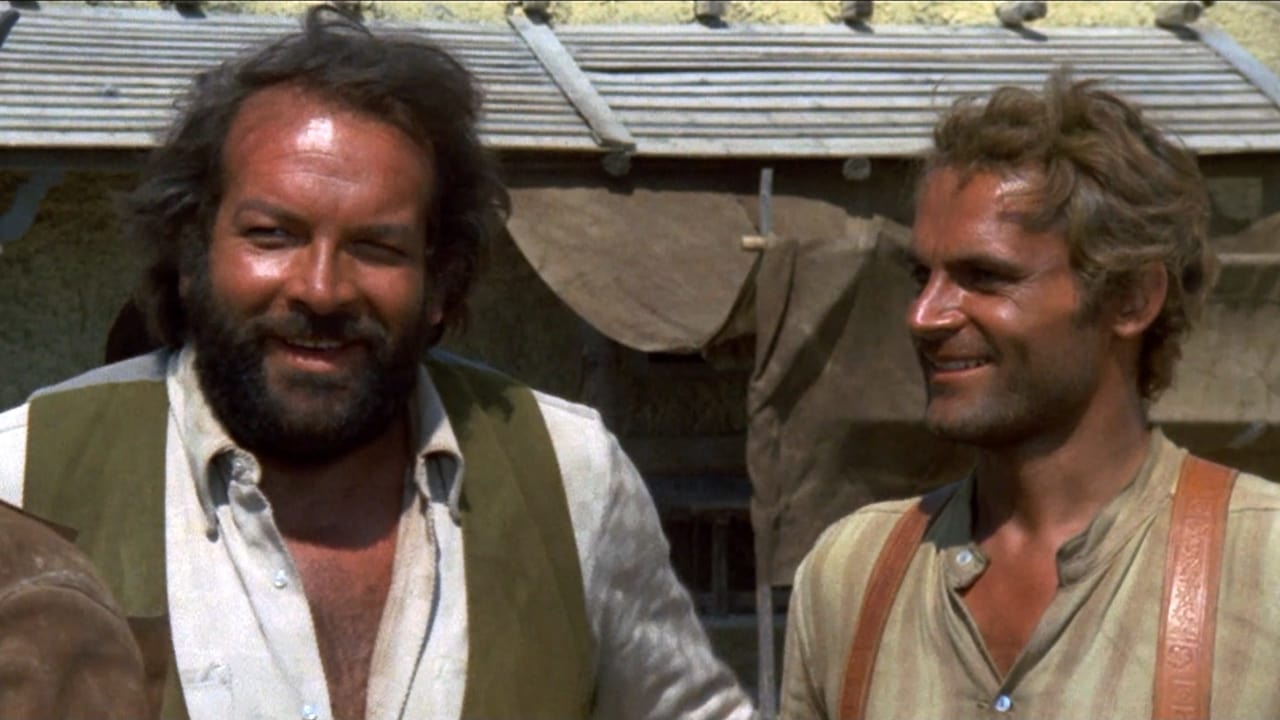
For those of us who grew up prowling the aisles of independent video stores in the 80s, the Trinity collection was a beautiful, confusing nightmare. Because these films were so successful in Europe, distributors tried to capitalize on the "Trinity" name by slapping it onto every unrelated movie Terence Hill or Bud Spencer ever made. You’d rent Trinity Rides Again only to find out it was a pirate movie from 1967 where they barely knew each other.
Trinity Is Still My Name is the genuine article, the direct sequel to They Call Me Trinity, and it carries that specific "Sunday afternoon broadcast" energy. It’s a film built on the "The 5-Minute Test"—if you tune in at any point, there will be a joke or a slap within sixty seconds that makes sense without context. The sequence in the French restaurant, where the brothers try to navigate fine dining with the manners of hungry coyotes, is a masterclass in silent-film-style physical comedy. Hill’s frantic, lightning-fast bread-grabbing and Spencer’s stoic destruction of a wine glass are bits that transcend language barriers.
A Bridge to the Old West
One of the coolest details about this production is the casting of Harry Carey, Jr. as the brothers' father. To the casual viewer, he’s just a funny old man in a nightshirt, but to film nerds, he’s a living link to the golden age of the American Western. Having a guy who starred in John Ford’s The Searchers and 3 Godfathers appearing in an Italian parody of the genre he helped build is a delicious bit of meta-commentary. It’s as if the film is receiving a blessing from the Old Guard to keep being as ridiculous as it wants to be.
The score by Guido De Angelis and Maurizio De Angelis (often credited as Oliver Onions) also deserves a shout-out. It moves away from the operatic tension of Ennio Morricone and moves toward something bouncy, optimistic, and relentlessly catchy. It’s the kind of music that tells you everything is going to be okay, even if someone just got kicked through a saloon window.
While the film is admittedly about twenty minutes too long—a common trait of 70s Italian cinema where they wanted to give the audience their money's worth—the "monastery heist" finale brings it all home. The way the fight is choreographed like a bizarre game of football, with outlaws being tossed around like pigskins, is peak Barboni. The sheer audacity of turning a monastery into a pro-wrestling ring is why these movies survived the collapse of the genre.
This isn't just a "comfort movie"; it’s a reminder that cinema doesn't always have to be a "meditation on the human condition" to be worthwhile. Sometimes, all you need is a man who can outdraw his own shadow and another man who can punch a hole through a brick wall. It’s a dusty, bean-fueled relic of a time when the West was won not with guns, but with perfect comedic timing and a very sore set of knuckles. If you’ve never experienced the Trinity duo, this is the perfect place to see them at the height of their slap-happy powers.
Keep Exploring...
-
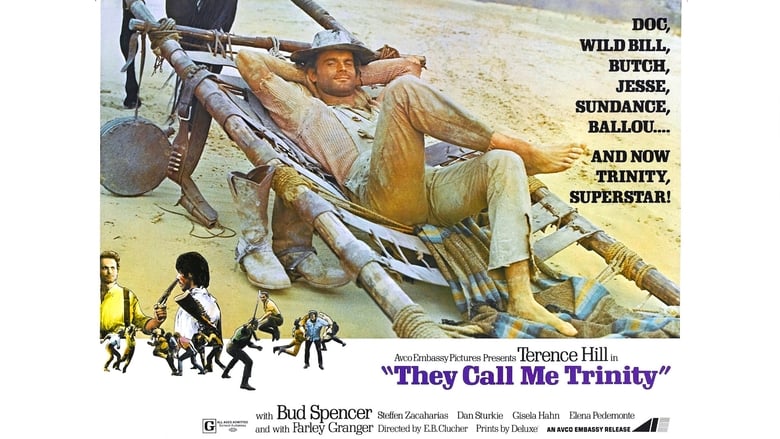
They Call Me Trinity
1970
-
My Name Is Nobody
1973
-

Watch Out, We're Mad
1974
-
Blazing Saddles
1974
-
Django
1966
-
Amarcord
1973
-
Fantozzi: White Collar Blues
1975
-

Don't Look Now... We're Being Shot At!
1966
-
Asterix and Cleopatra
1968
-
The Wild Bunch
1969
-
M*A*S*H
1970
-

Bedknobs and Broomsticks
1971
-
Duck, You Sucker
1971
-
Harold and Maude
1971
-
High Plains Drifter
1973
-

The Mad Adventures of Rabbi Jacob
1973
-

Murder by Death
1976
-
The Outlaw Josey Wales
1976
-
The Twelve Tasks of Asterix
1976
-
The Wing or the Thigh?
1976