Cabaret
"Leave your troubles outside. Life is disappointing."
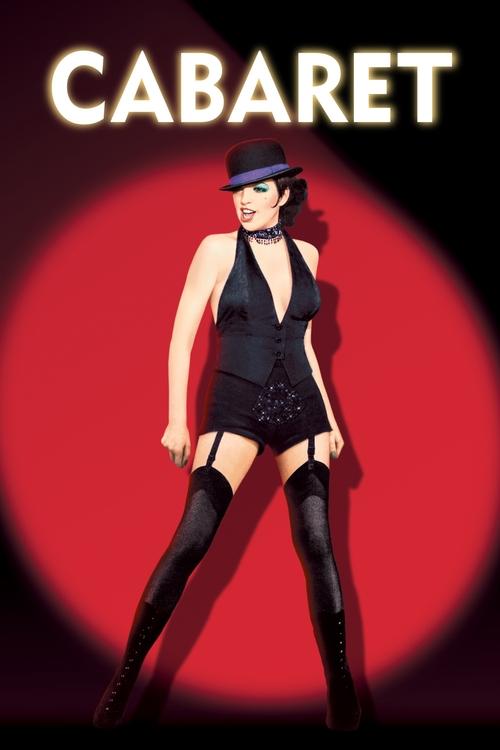
The first time I saw Joel Grey’s face in Cabaret, I thought he looked like a porcelain doll that had been left in a gutter—and I couldn’t look away. With that slicked-back hair, the rouged cheeks, and a smile that feels more like a threat than an invitation, he’s the ultimate gatekeeper to a world that’s rotting from the inside out. I watched this most recent time on a Tuesday night while my radiator was clanking like a broken percussion section, and honestly, the metallic banging perfectly matched the jagged, nervous energy of 1931 Berlin.

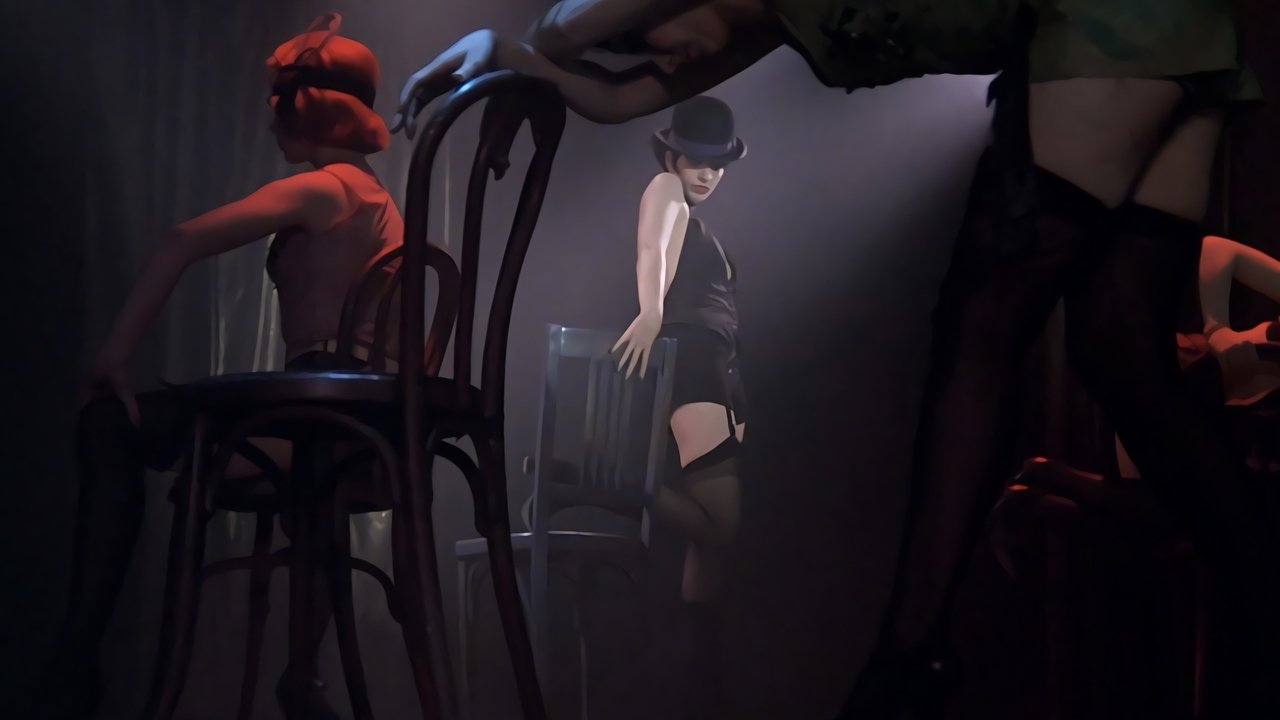
Cabaret isn’t just a musical; it’s a controlled demolition of the genre. Before Bob Fosse (the man who practically invented "cool" with a bowler hat and a cigarette) got his hands on this, movie musicals were mostly bright, airy affairs where people burst into song in the middle of a meadow. Fosse looked at that tradition and decided to kill it. He moved all the music inside the Kit Kat Club, turning every song into a commentary on the crumbling world outside. It’s a film that manages to be both incredibly sexy and deeply repulsive, often in the same frame.
The Divine Decadence of Sally Bowles
At the center of the storm is Liza Minnelli as Sally Bowles. If you’ve only ever seen her as a caricature in later years, her performance here is a revelation. She’s a whirlwind of green fingernails and false eyelashes, playing a woman who is desperately trying to be a "femme fatale" while secretly being a vulnerable, terrified kid. When she sings "Maybe This Time," it’s not just a song; it’s a prayer from someone who knows, deep down, that "this time" is never coming.
She’s joined by Michael York as Brian, a British academic who’s as stiff as a frozen board until he gets swept up in Sally’s chaos and the bisexual charms of Helmut Griem’s wealthy Maximilian. The chemistry between the three of them is a messy, beautiful disaster. I’ve always felt that Michael York’s "confused puppy" energy is the secret weapon of the movie; he provides the audience with a pair of grounded eyes to watch the madness through.
What makes the drama work so well is how it treats the rise of the Nazi party. There are no grand speeches or massive battles. Instead, you see it in the corners of the frame. A uniform here, a "No Jews Allowed" sign there, and then, most chillingly, the "Tomorrow Belongs to Me" sequence. Watching a handsome young boy in a beer garden start a folk song that turns into a chilling anthem of fascism is one of the most terrifying things ever put on film. It hits harder than any war movie because it shows how easily people can be seduced by a catchy tune and a sense of belonging.

A Masterclass in Scrappy Innovation
While Cabaret had the backing of Allied Artists, it feels like an indie gem because of how much Bob Fosse had to fight for his specific vision. The studio was nervous about the "adult" themes—abortion, bisexuality, and the grim ending—but Fosse held his ground. He didn’t want a polished Hollywood look. He hired Geoffrey Unsworth, the cinematographer who shot 2001: A Space Odyssey, and told him to make the club look smoky, yellowed, and lived-in.
The budget was a relatively modest $4.6 million, and you can see the creative ways they stretched it. They shot on location in West Germany, using real old buildings that still carried the scars of the era. Interestingly, Liza Minnelli actually designed her own hair and makeup for the role. She wanted Sally to look like she was trying too hard—someone who did her makeup in a dark room with shaky hands. It’s that kind of personal, actor-driven detail that keeps the film from feeling like a museum piece.
One of my favorite bits of trivia is that the "Money, Money" sequence wasn't originally in the Broadway show; it was written specifically for the movie by John Kander and Fred Ebb. Fosse shot it with such rapid-fire, aggressive editing that it changed how people thought musical numbers could be filmed. He wasn't just capturing a performance; he was using the camera to punch the audience in the gut.

The VHS Legacy and the Red Box
For a lot of us, Cabaret was a staple of the local video store’s "Classics" section. I remember the VHS box vividly—it was usually a bright red or deep black with Liza Minnelli in her iconic pose on a chair. It was the kind of tape that felt "grown-up" in a way that had nothing to do with violence or gore. It felt sophisticated. If you didn't feel slightly cooler just holding the box at the rental counter, you weren't doing it right.
Rewatching it now, the film hasn't aged a day. In fact, its cynicism feels more modern than ever. The way the Master of Ceremonies looks directly into the lens, mocking us for watching the tragedy unfold, is a precursor to the meta-commentary we see in everything today. It’s a film that demands your attention and then mocks you for giving it, and yet, you can’t help but hum the tunes.
Cabaret is the rare movie that manages to be a perfect time capsule of two different eras: the 1930s it depicts and the 1970s "New Hollywood" spirit that birthed it. It’s gritty, flamboyant, and deeply uncomfortable. It’s the kind of film that stays with you long after the credits roll, making you wonder if the world outside your own front door is starting to look a little too much like the Kit Kat Club. Put it on, pour yourself a drink (maybe a Prairie Oyster, Sally’s favorite), and let Joel Grey welcome you to the end of the world. You won’t regret it, even if it leaves you a little haunted.

Keep Exploring...
-
Guess Who's Coming to Dinner
1967
-
Badlands
1974
-
Annie Hall
1977
-
Last Tango in Paris
1972
-

The Sound of Music
1965
-
Dirty Dancing
1987
-
The Apartment
1960
-
Barry Lyndon
1975
-
Contempt
1963
-

The Umbrellas of Cherbourg
1964
-
Pierrot le Fou
1965
-

The Graduate
1967
-
Harold and Maude
1971
-

Saturday Night Fever
1977
-
Wings of Desire
1987
-

High School Musical
2006
-
Once
2007
-
Sing Street
2016
-
Cold War
2018
-
In the Heat of the Night
1967