Fantastic Planet
"Pet humans, blue giants, and psychedelic nightmares."
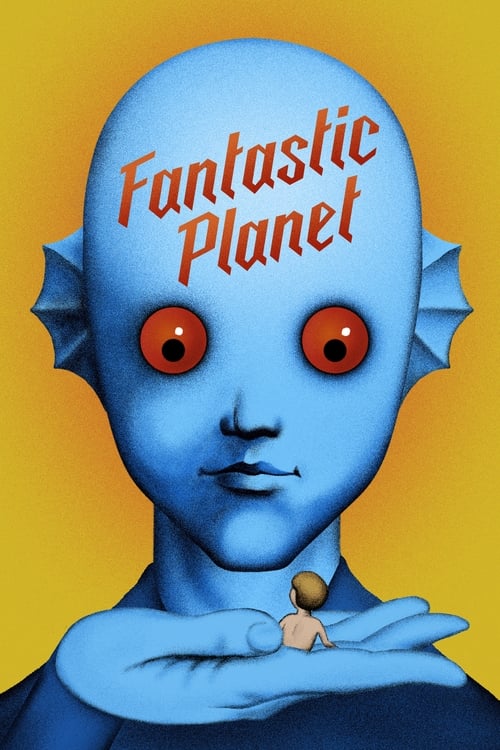
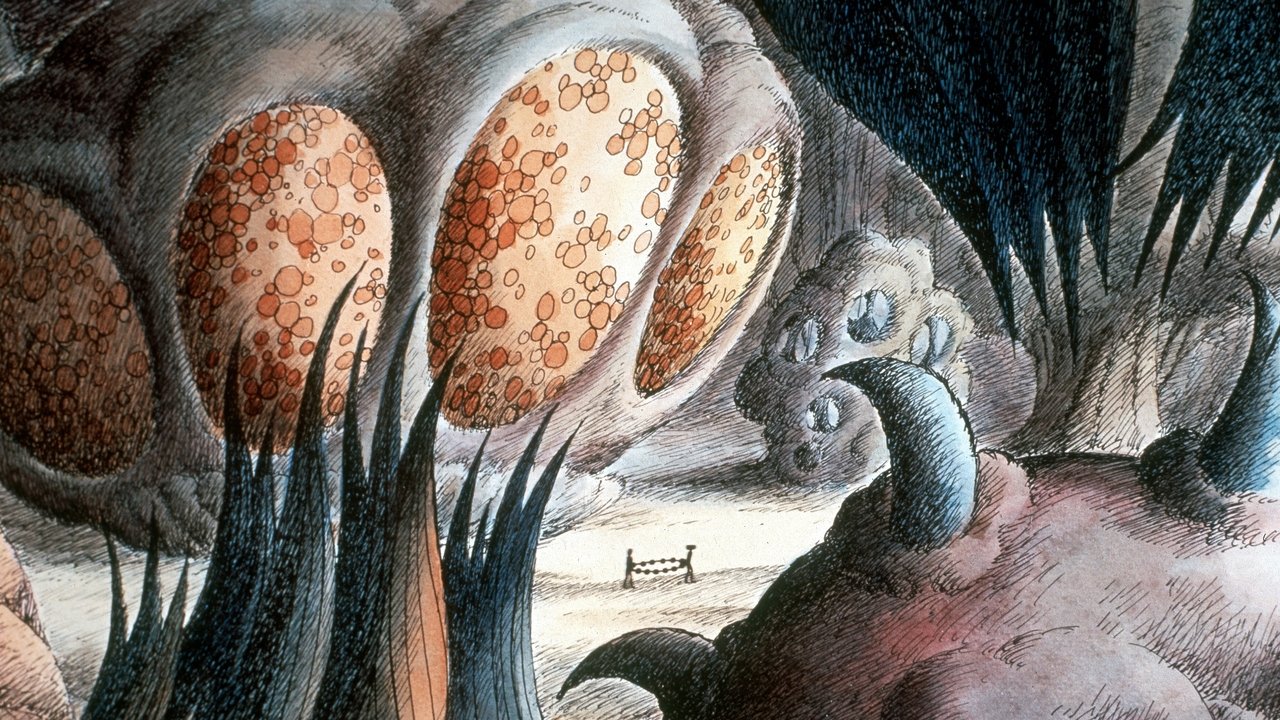
Imagine being a flea on the back of a creature that considers your entire civilization a mildly annoying weekend project. That is the baseline anxiety of Fantastic Planet (La Planète sauvage), a film that looks less like a traditional cartoon and more like a collection of 19th-century etchings that have been cursed into motion. I first encountered this thing on a grainy bootleg DVD I bought from a guy at a flea market who was also selling used power tools, and watching it felt like accidentally tuning into a television broadcast from a parallel dimension.
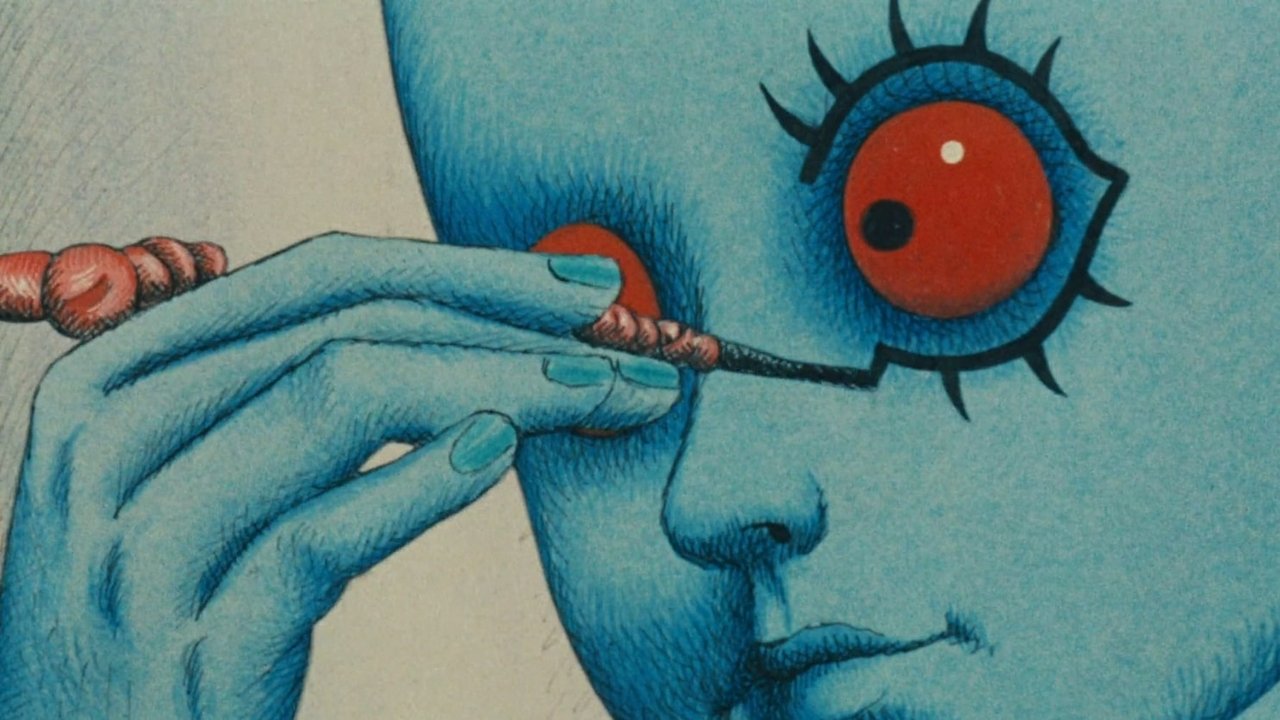
Directed by René Laloux and illustrated by the legendary surrealist Roland Topor, this 1973 French-Czechoslovakian production is the antithesis of the "Disney Style" that dominated the era. There are no singing animals or moral platitudes here. Instead, we get the planet Ygam, where towering, blue-skinned Draags spend their days in deep psychic meditation while treating the tiny, human-like Oms as either domestic pets or garden pests.
A High-Stakes Terrarium
The story follows Terr (voiced by Jean Valmont as an adult), an Om who is kept as a plaything by a young Draag named Tiwa (Jennifer Drake). Thanks to a glitch in a high-tech learning headset, Terr begins to absorb the vast scientific and philosophical knowledge of his masters. When he escapes into the wild to join a tribe of "feral" Oms, he brings that knowledge with him, turning a lopsided struggle for survival into a genuine technological revolution.
What makes Fantastic Planet so haunting isn't just the plot; it’s the sheer weirdness of the ecosystem. The background characters aren't just scenery; they are bizarre, predatory organisms that have nothing to do with the main plot. I noticed a creature that looks like a walking birdcage trapping smaller animals just for the hell of it, and another that seems to exist only to whistle at the wind. It’s a world that doesn’t care if you understand its rules, which makes it feel infinitely more "alien" than anything in a billion-dollar franchise.
The Jittery Magic of Cut-Outs
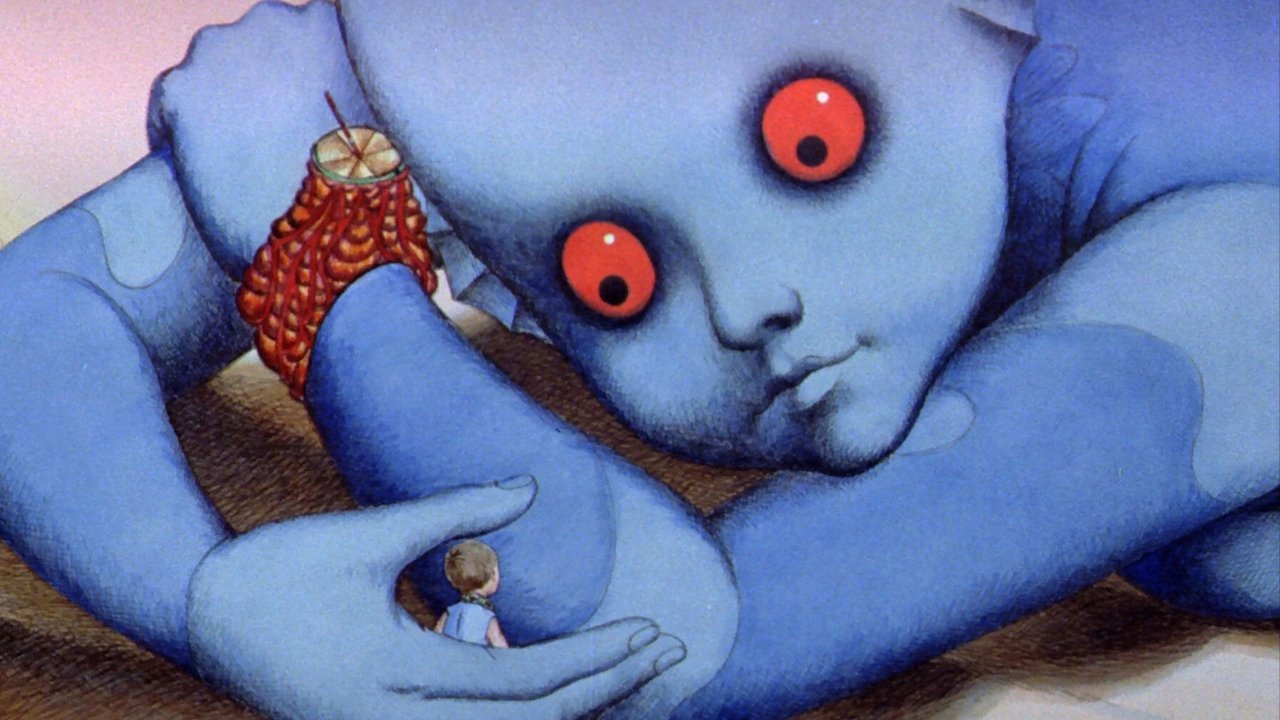
In an era of sleek digital perfection, the "stop-motion cut-out" animation used here feels wonderfully tactile. It’s jittery and stiff, yet that lack of fluid motion creates a dreamlike—or rather, nightmarish—atmosphere. This technique was pioneered in part by the animators at Jiří Trnka Studio in Prague. The production actually had to move from France to Czechoslovakia, and it’s hard not to see the influence of the Soviet occupation of Prague in the film’s depiction of a cold, bureaucratic superpower ruthlessly "thinning the herd" of a smaller population.
The visuals are tethered to the ground by Alain Goraguer’s incredible score. It’s a hazy blend of psychedelic jazz, funky basslines, and wah-wah guitars. If you’ve ever listened to experimental hip-hop, you’ve likely heard this film sampled a dozen times by producers like J Dilla or Madlib. The music is so cool it almost makes the sight of a giant blue hand crushing a human mother feel like a vibe.
The VHS Cult of the Surreal
While it won the Special Jury Prize at Cannes in 1973, Fantastic Planet really found its home in the 1980s VHS revolution. It was a staple of the "cult" section in independent video stores, usually tucked away behind the horror movies. The box art for the New World Video release was iconic—a close-up of a Draag’s face with a tiny human perched on its shoulder, promising a trip that most viewers weren't prepared for.
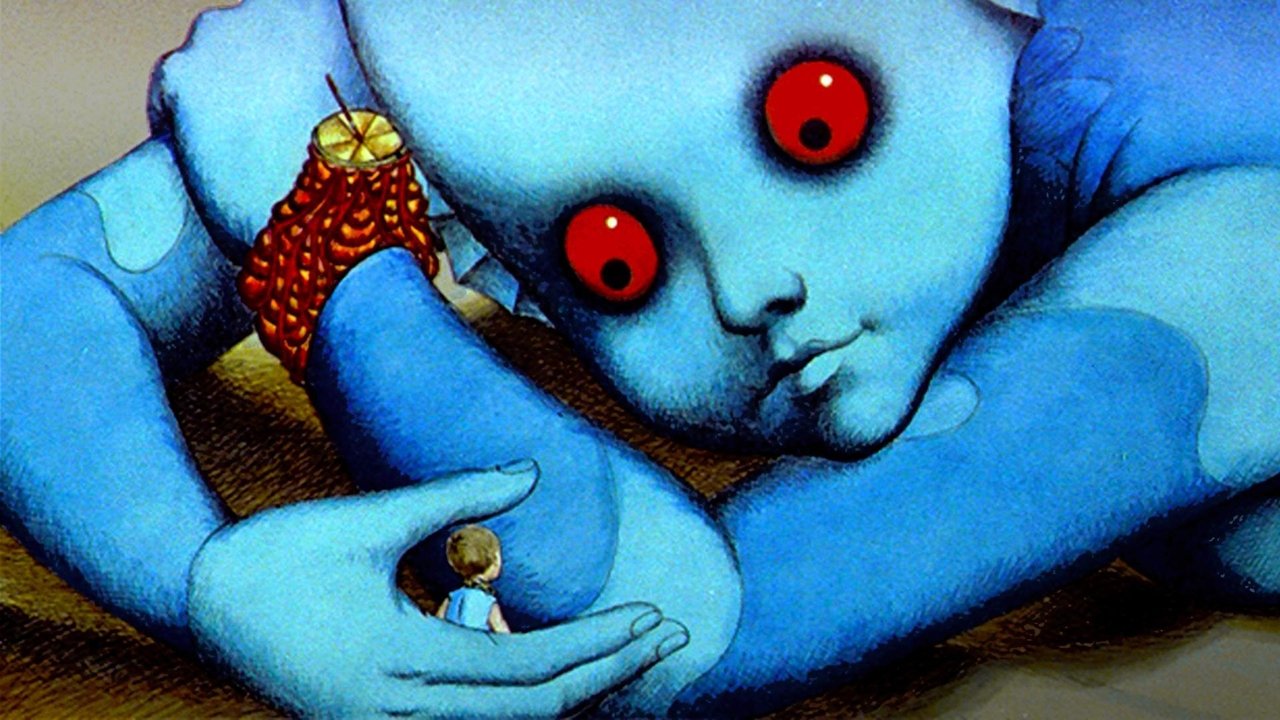
On a standard CRT television, the film’s grainy texture and muted earth tones looked phenomenal. The low resolution of tape actually helped blend the cut-out layers together, making the surreal landscapes of Roland Topor feel like a unified, breathing world. It became the ultimate "midnight movie," the kind of thing you’d pop in at 2:00 AM after a few too many drinks, only to find yourself having a full-blown existential crisis about the ethics of ant farms.
Fantastic Planet is a rare example of science fiction that is truly "speculative." It doesn't just ask "what if we went to space?" but "what if our entire concept of importance is a cosmic joke?" It’s a film about de-centering the human experience, wrapped in some of the most imaginative artwork ever put to celluloid. Most 'adult' animation today is just swearing and gore; this is adult because it makes you feel fundamentally small.
If you’re tired of the same old hero’s journey, seek this one out. It’s only 72 minutes long, but it will linger in your brain for weeks, popping up every time you see a blue sky or a stray beetle. Just don't blame me if you start feeling a little nervous the next time you see a giant shadow overhead. It’s a masterpiece of the "weird," and a reminder that 1970s cinema was a wild, lawless frontier where even a psychedelic cartoon about pet humans could conquer the world.---

Keep Exploring...
-

Solaris
1972
-
Akira
1988
-
La Jetée
1962
-
Vincent
1982
-
Mickey's Christmas Carol
1983
-
Asterix and Cleopatra
1968
-
The Twelve Tasks of Asterix
1976
-
Planet of the Apes
1968
-

Dragon Ball Z: Fusion Reborn
1995
-
Neon Genesis Evangelion: The End of Evangelion
1997
-

Cowboy Bebop: The Movie
2001
-

Evangelion: 1.0 You Are (Not) Alone
2007
-
Evangelion: 2.0 You Can (Not) Advance
2009
-
Justice League: The Flashpoint Paradox
2013
-
Evangelion: 3.0+1.0 Thrice Upon a Time
2021
-
Transformers One
2024
-

Bedknobs and Broomsticks
1971
-
Soylent Green
1973
-
The Many Adventures of Winnie the Pooh
1977
-

The Wild Bunch
1969