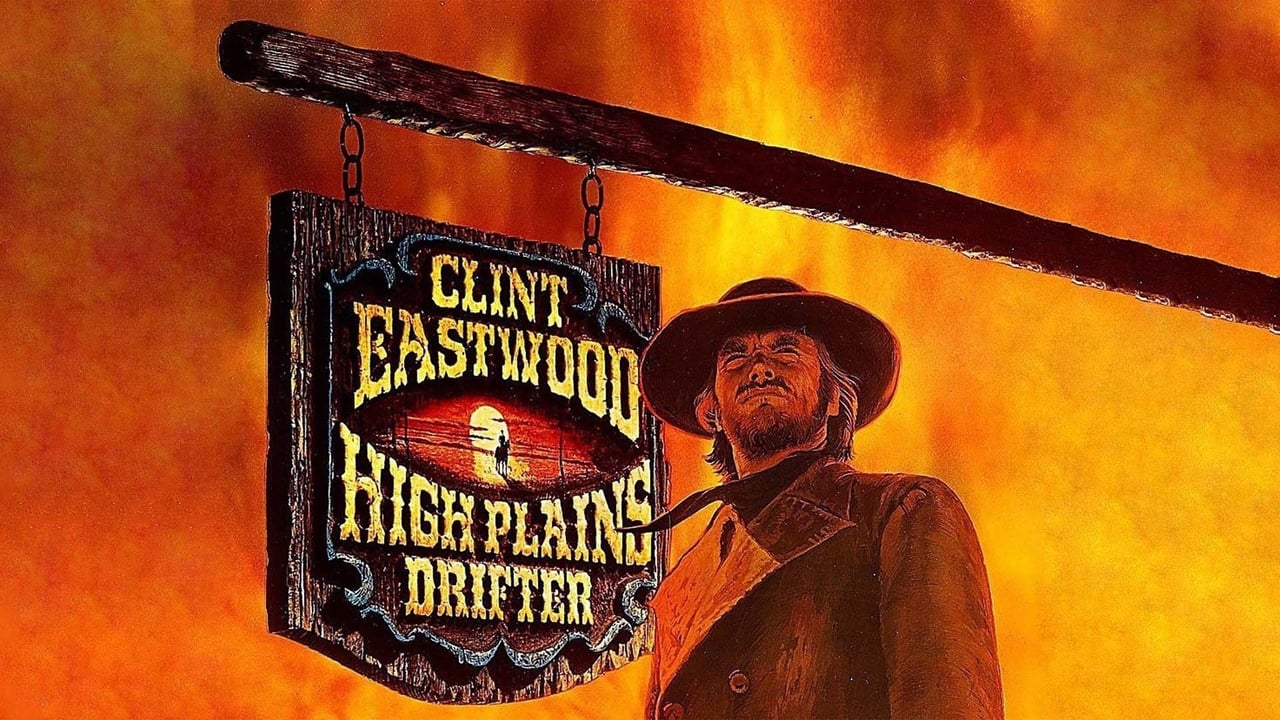
High Plains Drifter
"Vengeance paints the town red. Literally."
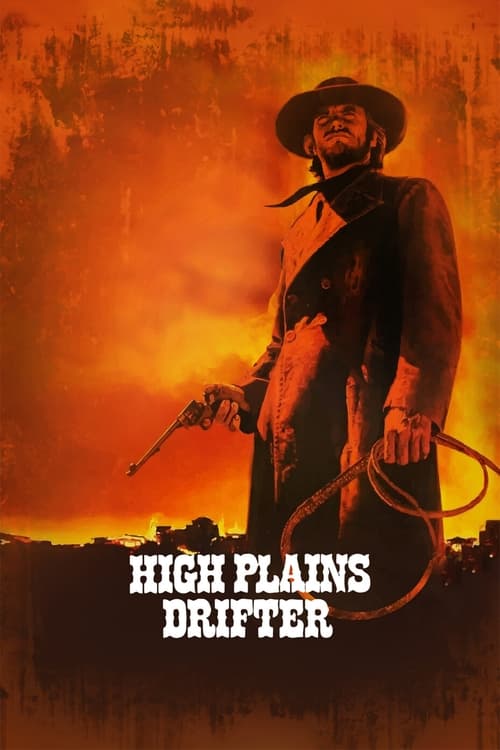
The first time you see the Stranger, he’s shimmering through a desert heat haze like a bad dream you haven’t quite woken up from yet. There’s no soaring Ennio Morricone trumpet here, just the low, unsettling groan of the wind and the rhythmic jingle of spurs. By the time Clint Eastwood rides into the lakeside town of Lago, you realize this isn't the heroic West of John Wayne, or even the stylish, operatic West of Sergio Leone. This is something far more nihilistic. This is a ghost story disguised as a gunfight.

I recently rewatched this on a humid Tuesday evening while my neighbor was loudly arguing with a delivery driver about a missing pizza. The petty, shrill bickering outside my window weirdly harmonized with the spineless citizens of Lago. It reminded me that while most Westerns are about building a civilization, High Plains Drifter is about a town that deserves to burn.
A Different Kind of Man with No Name
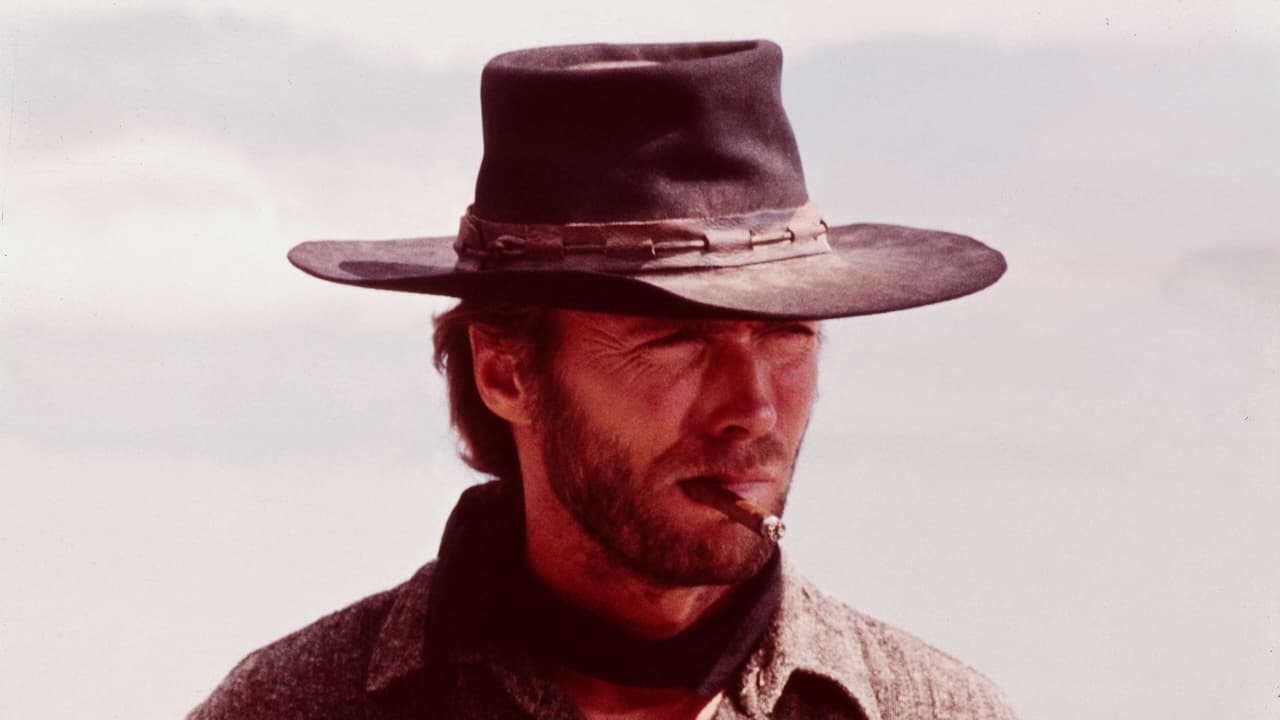
By 1973, Clint Eastwood was done being a student. Having cut his teeth under Leone and Don Siegel (the man who gave us Dirty Harry), Clint stepped behind the camera for his second directorial effort and decided to get weird. He plays "The Stranger," a man who arrives in town, kills three gunmen within minutes, and then casually rapes a woman (Marianna Hill) who insults him. It’s a scene that is, quite frankly, the hardest part of the movie to stomach today, and it cements the fact that the Stranger isn't a "good guy." He’s a force of nature—or perhaps something much darker.
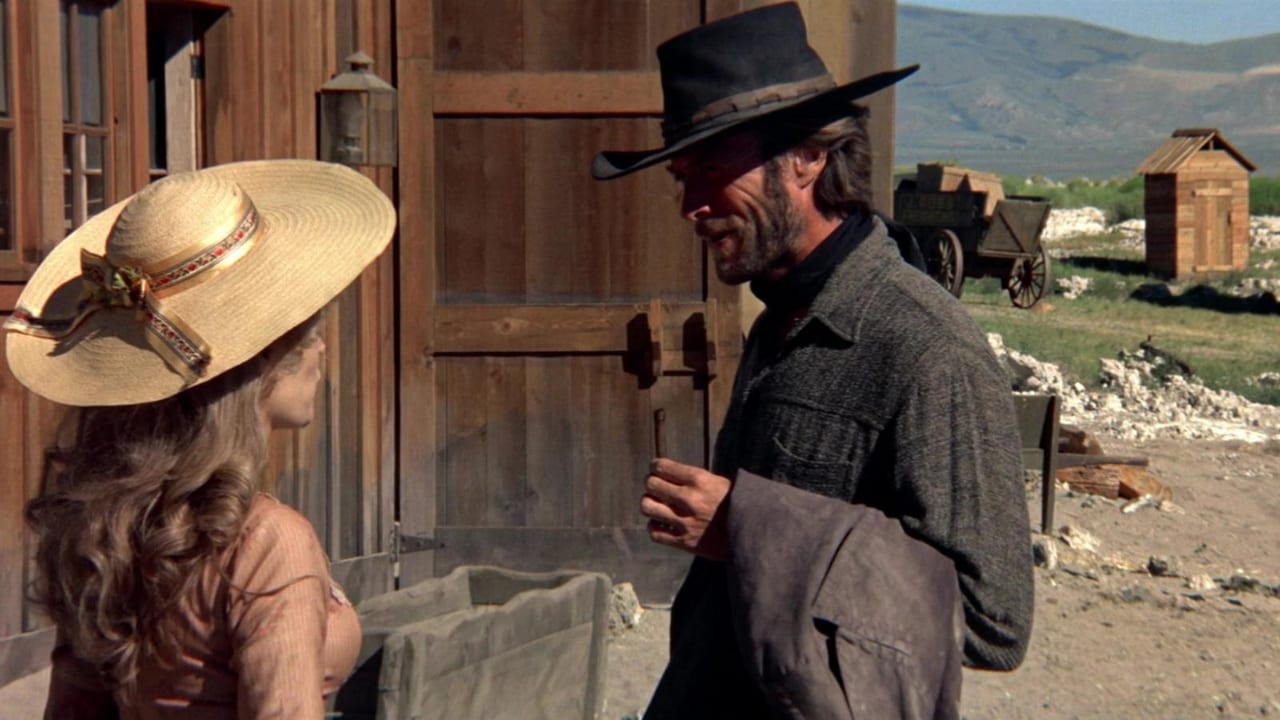
The townsfolk, terrified of three outlaws recently released from prison, hire the Stranger to protect them. He agrees, but only on the condition that he gets whatever he wants. What follows is a slow-burn exercise in humiliation. He turns the local hotel into a private residence, appoints the town’s belittled little person, Mordecai (Billy Curtis), as both Sheriff and Mayor, and eventually demands the entire town be painted blood-red.
The Haunted Vibe of New Hollywood
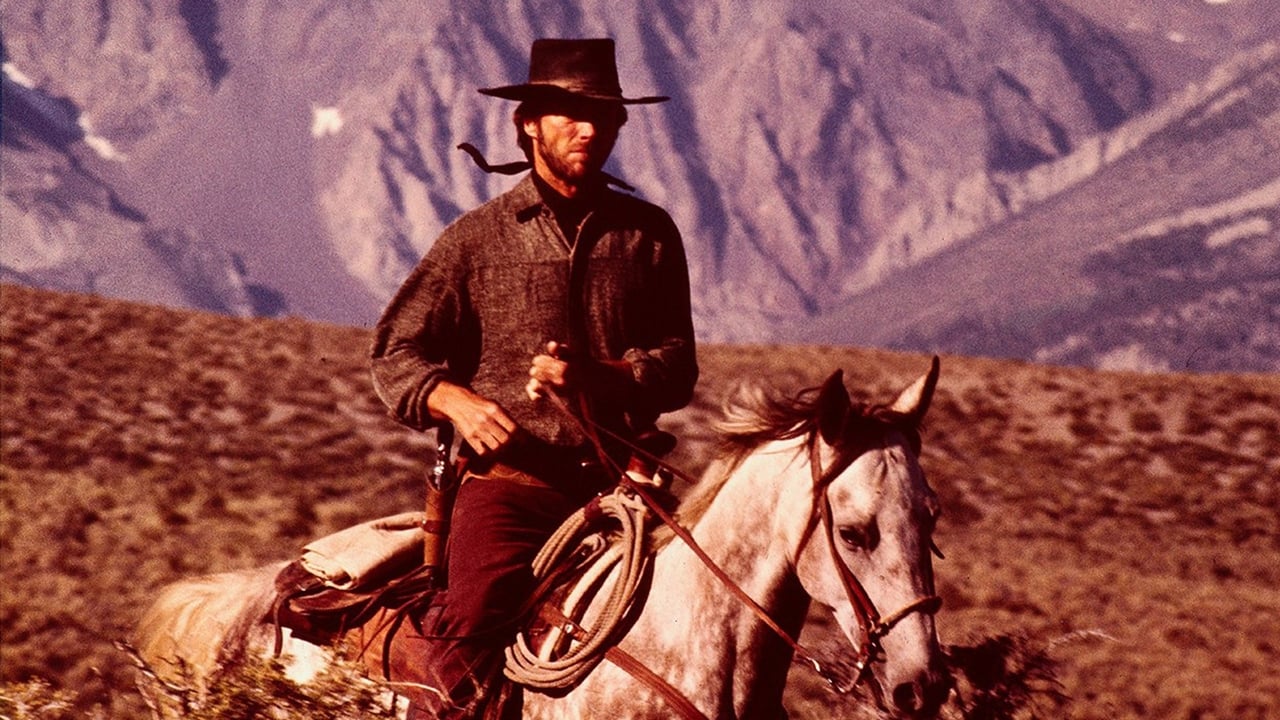
The screenplay was penned by Ernest Tidyman, who was riding high after writing The French Connection and Shaft. You can feel that gritty, 1970s "New Hollywood" cynicism dripping off every frame. There’s a moral rot in Lago; the citizens stood by and watched their previous Marshal get whipped to death, and the film suggests that their cowardice is a far greater sin than the outlaws' violence.
I have a specific memory of seeing the VHS box for this at the local "Video Vault" back in the late 80s. The cover art featured Clint’s face shadowed by a hat, but it was the images on the back—the town of Lago transformed into a literal "Hell"—that stuck with me. On a fuzzy CRT television, those saturated red buildings looked like they were bleeding into the blackness of the night sky. It’s one of those visual flourishes that makes most modern CGI spectacles look like a pile of uninspired beige mush.
The cinematography by Bruce Surtees is legendary for a reason. He used a lot of wide-angle lenses to capture the isolation of the set, which was built entirely on the shores of Mono Lake in California. The water looks cold, the sun looks punishing, and the fires look like they’re actually consuming the world.
Stuff You Didn’t Notice
If you look closely at the graveyard scenes toward the end, there’s a cheeky bit of meta-commentary hidden in the dirt. Clint Eastwood had the names of his mentors, Sergio Leone and Don Siegel, carved into headstones as a sort of morbid tribute. It was his way of saying he’d buried his influences and was finally walking his own path.
The film also nearly featured a different ending. The legend goes that the original script was much more explicit about the Stranger being the literal brother of the murdered Marshal. Clint, leaning into his darker instincts, chose to keep it ambiguous. Is he a ghost? Is he the devil? Is he just a very pissed-off relative? The movie never tells you, and that’s why it lingers in your brain like a fever. It’s basically a slasher movie where the killer has a badge and a horse, and I love it for that.
High Plains Drifter is the bridge between the cool detachment of the 60s Spaghettis and the heavy, soulful deconstruction of Unforgiven. It’s mean, it’s atmospheric, and it has an ending that feels like a punch to the gut. If you’re tired of Westerns where the hero rides off into a golden sunset, give this one a spin. Just be prepared for the fact that in Lago, the sun doesn't set—it just burns everything down to the ground.
Keep Exploring...
-
Pale Rider
1985
-
The Outlaw Josey Wales
1976
-
Heartbreak Ridge
1986
-
All the President's Men
1976
-

Magnum Force
1973
-
Cocoon
1985
-
Mississippi Burning
1988
-
Absolute Power
1997
-

Solaris
1972
-
The Tenant
1976
-
Sudden Impact
1983
-
Butch Cassidy and the Sundance Kid
1969
-
Chinatown
1974
-
Frantic
1988
-
Mystic River
2003
-

Cry Macho
2021
-
Unforgiven
1992
-

Million Dollar Baby
2004
-

Gran Torino
2008
-
Once Upon a Time in the West
1968