Live and Let Die
"Bond gets funky: A voodoo-infused debut for Moore."
The sight of a man in a tailored suit literally sprinting across the backs of three live crocodiles is the moment 1970s cinema decided it no longer cared about your "grounded" expectations. It’s a sequence that feels tactile, terrifying, and completely insane, largely because there isn't a single frame of CGI involved. In 1973, Roger Moore didn’t just step into the tuxedo of James Bond; he vaulted over a swamp full of predators to claim it. I watched this particular outing on a humid Tuesday afternoon while battling a persistent case of the hiccups, and honestly, the sheer absurdity of the finale—involving a compressed air pellet and a human balloon—was the only thing that finally cured them.
A Leisure Suit Revolution
Following the gritty, swan-song effort of Sean Connery in Diamonds Are Forever, the producers at EON were at a crossroads. The world was changing. The counter-culture movement had shifted the cinematic landscape, and the traditional "gentleman spy" was starting to look like a relic of the Eisenhower era. Enter Roger Moore, an actor who decided that if he couldn't out-punch Connery, he’d certainly out-quip him.
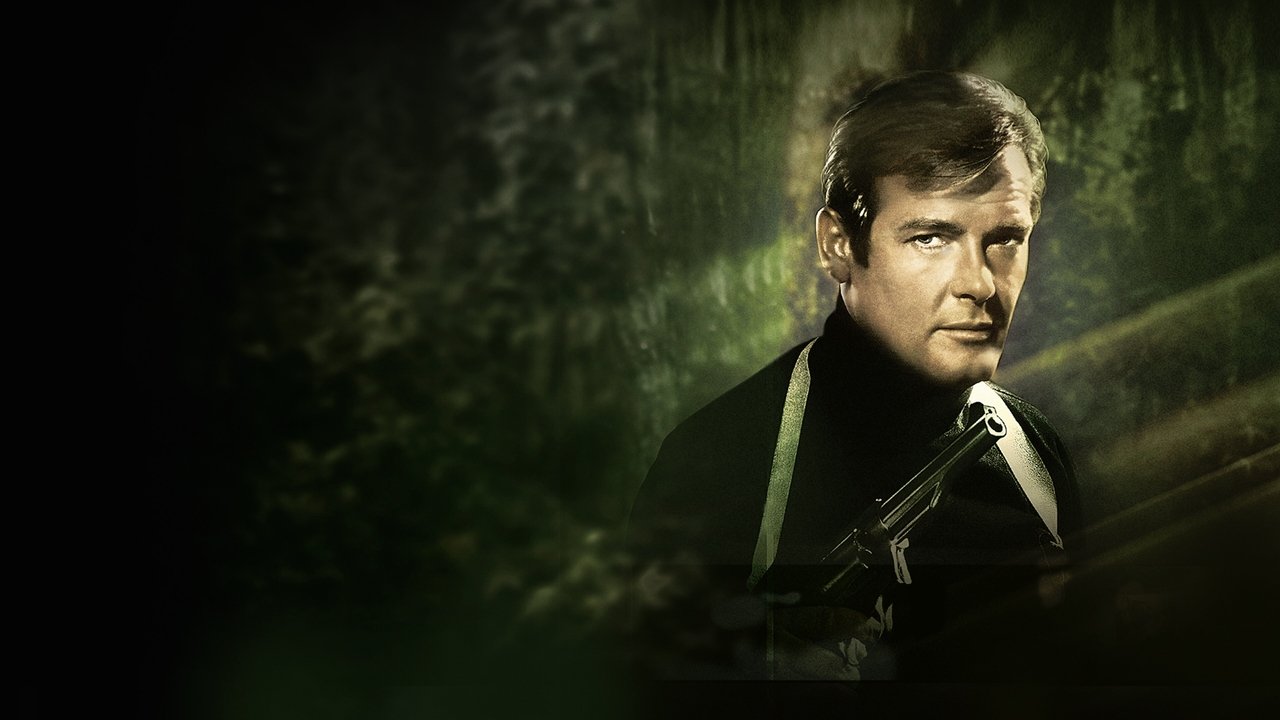
Moore’s debut in Live and Let Die is a fascinating tonal pivot. He’s less a blunt instrument and more a polished piece of silver. He enters the frame looking like he just stepped out of a catalog for high-end safari gear, and he brings a lighter, more self-aware energy to the role. Director Guy Hamilton, who previously helmed Goldfinger, was tasked with modernizing 007 by leaning into the Blaxploitation trend that was dominating the box office at the time. The result is a Bond film that trades the Swiss Alps and volcano bases for the streets of Harlem, the jazz funerals of New Orleans, and the murky bayous of Louisiana.
Voodoo, Tarot, and the Claw
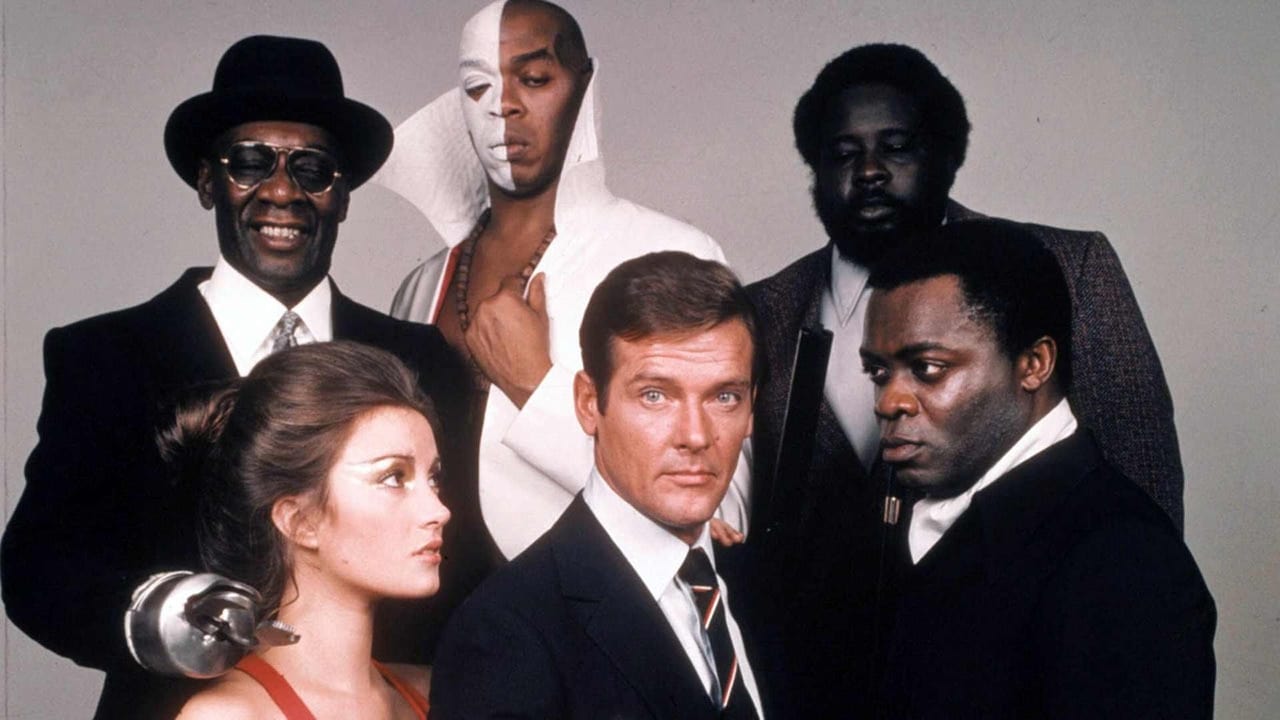
The villains here are some of the most memorable in the franchise’s history, mostly because they feel like they belong in a gothic horror film rather than a spy thriller. Yaphet Kotto (who would later face off against a Xenomorph in Ridley Scott’s Alien) is dual-roled as Kananga and Mr. Big. Kotto brings a simmering, understated menace to the part, even if the script eventually fails him with that infamous "inflation" ending.
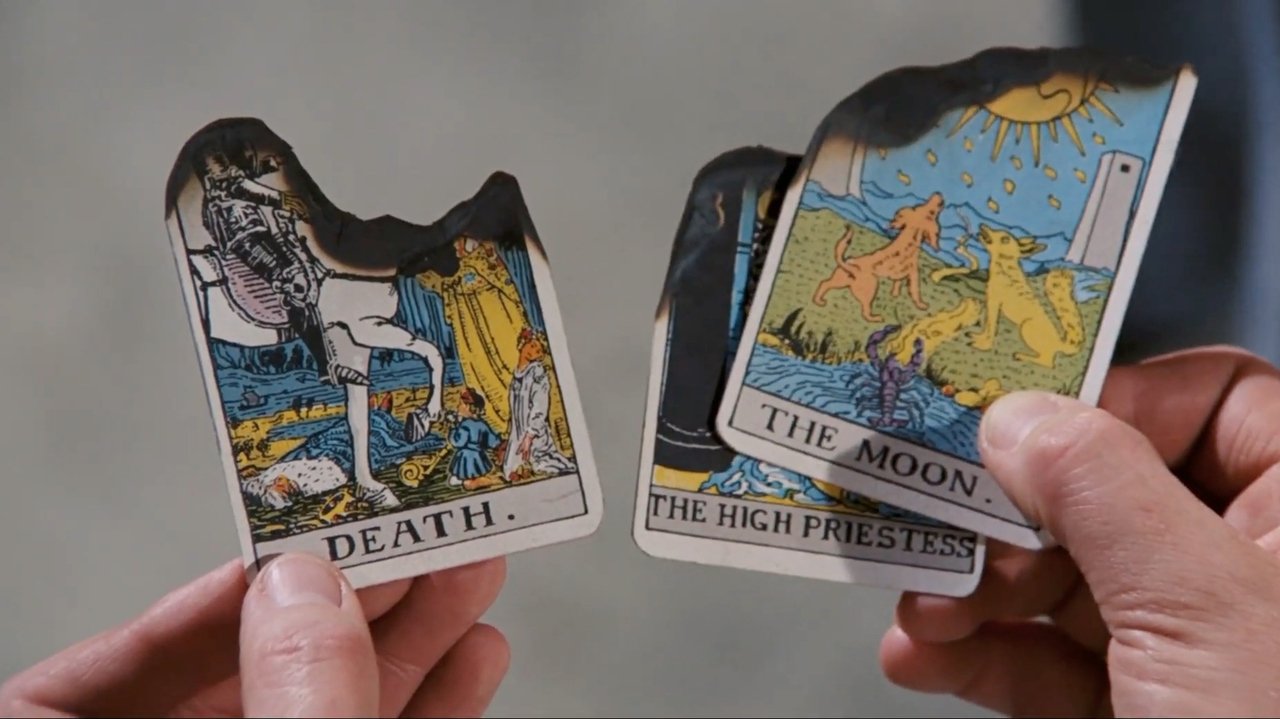
Supporting the villainous hierarchy is Julius Harris as Tee Hee, a man with a prosthetic pincer for a hand and a smile that never quite reaches his eyes. Then there’s Geoffrey Holder as Baron Samedi, the "man who cannot die." Holder, a legendary dancer and choreographer, provides a theatrical, supernatural chilling presence that feels genuinely eerie. Between the voodoo rituals and Jane Seymour’s Solitaire—a virgin priestess who loses her "powers" the moment Bond shows up with a stacked deck of tarot cards—the movie flirts with the occult in a way no Bond film has since. Jane Seymour is ethereal here, though her character is essentially a human MacGuffin defined by her proximity to men with deck-shuffling skills.
The Stunt That Broke the Record
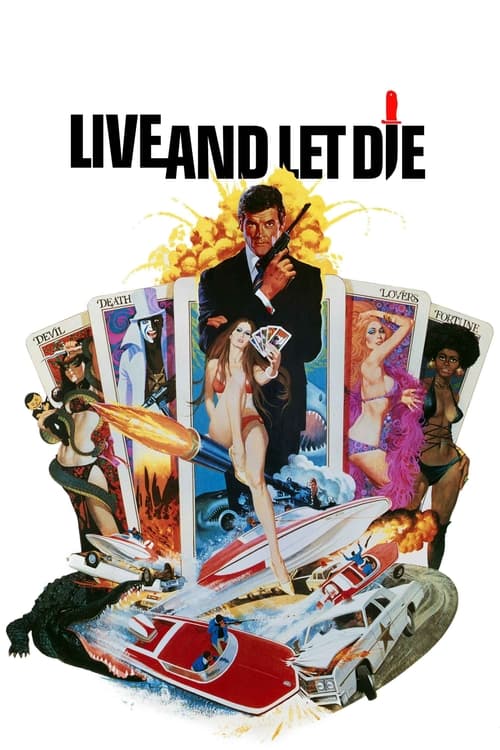
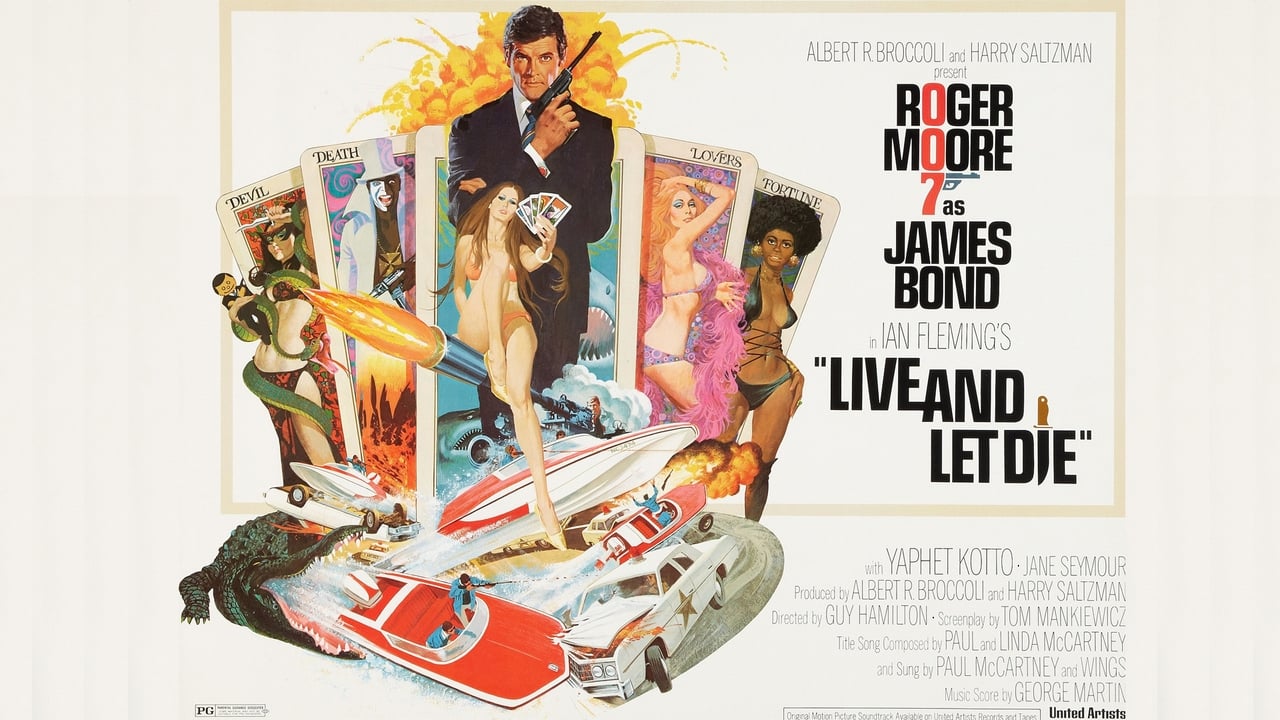
If you grew up browsing the aisles of a local video store, you likely remember the iconic cover art for the James Bond Collection VHS release. It usually featured Moore surrounded by flames, crocodiles, and speedboats. That speedboat chase in the Louisiana bayou remains a masterclass in practical action choreography. It’s long—perhaps a bit too long for modern attention spans—but the physical reality of those boats leaping over roads and through wedding parties is undeniable.
The crown jewel of the film’s practical effects is the record-breaking boat jump. The stunt crew actually built a ramp and flew a Glastron GT-150 over 110 feet through the air. It wasn't a camera trick; it was a world record at the time. Similarly, that crocodile run I mentioned earlier was performed by a stuntman named Ross Kananga (the villain’s namesake), who owned the farm where they filmed. He had to do five takes to get it right, and on the fourth, a crocodile actually snapped at his heel, nearly taking his foot off. That kind of "we’ll figure it out on the day" danger is what gives 70s action its grit, even when the movie is being intentionally silly.
The George Martin Groove
We have to talk about the music. For the first time, the legendary John Barry wasn't behind the baton. Instead, the producers tapped George Martin, the man who helped shape The Beatles. This led to the recruitment of Paul McCartney & Wings for the title track. "Live and Let Die" isn't just a theme; it’s a symphonic rock explosion that redefined what a Bond song could be. It’s the perfect sonic accompaniment to an era where the franchise was trying to prove it could still be hip.
The film does suffer from some "cultural friction," let’s say. The introduction of Clifton James as Sheriff J.W. Pepper is a polarizing choice. He represents the loud, tobacco-spitting caricature of the Southern lawman, intended as comic relief but often feeling like he’s wandered in from a different movie entirely. Depending on your mood, Sheriff Pepper is either a hilarious highlight or a grinding halt to the movie’s momentum.
Live and Let Die is a transitional piece of cinema that captures the 1970s in a bottle—leisure suits, funk-infused scores, and a desperate desire to stay relevant in a changing market. It’s not the most sophisticated Bond film, nor is it the most tightly plotted, but it’s undeniably fun. It’s the kind of movie that makes you miss the days when "special effects" meant hiring a guy to run across the backs of actual reptiles.
Moore’s debut proved that the franchise could survive without Connery, largely by refusing to take itself too seriously. If you can overlook some of the dated tropes and a slightly bloated middle act, you’re left with a high-energy adventure that remains one of the most distinct entries in the 007 canon. It’s a film that asks you to sit back, ignore the laws of physics, and enjoy the ride—just watch out for the crocs.
Keep Exploring...
-
The Man with the Golden Gun
1974
-

Goldfinger
1964
-
Diamonds Are Forever
1971
-
The Spy Who Loved Me
1977
-
Moonraker
1979
-
Octopussy
1983
-
For Your Eyes Only
1981
-
A View to a Kill
1985
-
You Only Live Twice
1967
-
On Her Majesty's Secret Service
1969
-
Thunderball
1965
-
Never Say Never Again
1983
-
The Living Daylights
1987
-
Licence to Kill
1989
-
Dr. No
1962
-
From Russia with Love
1963
-
GoldenEye
1995
-
Tomorrow Never Dies
1997
-
Die Another Day
2002
-

Skyfall
2012