The Holy Mountain
"Forget your life. Burn your money. Wake up."

I once tried to explain the plot of The Holy Mountain to my grandmother while she was folding laundry, and she just asked if the Alchemist had a proper permit for all those birds in his tower. It’s a fair question. This isn’t a movie you "watch" in the traditional sense; it’s a movie that happens to you, usually while you’re wondering if someone slipped something into your coffee.
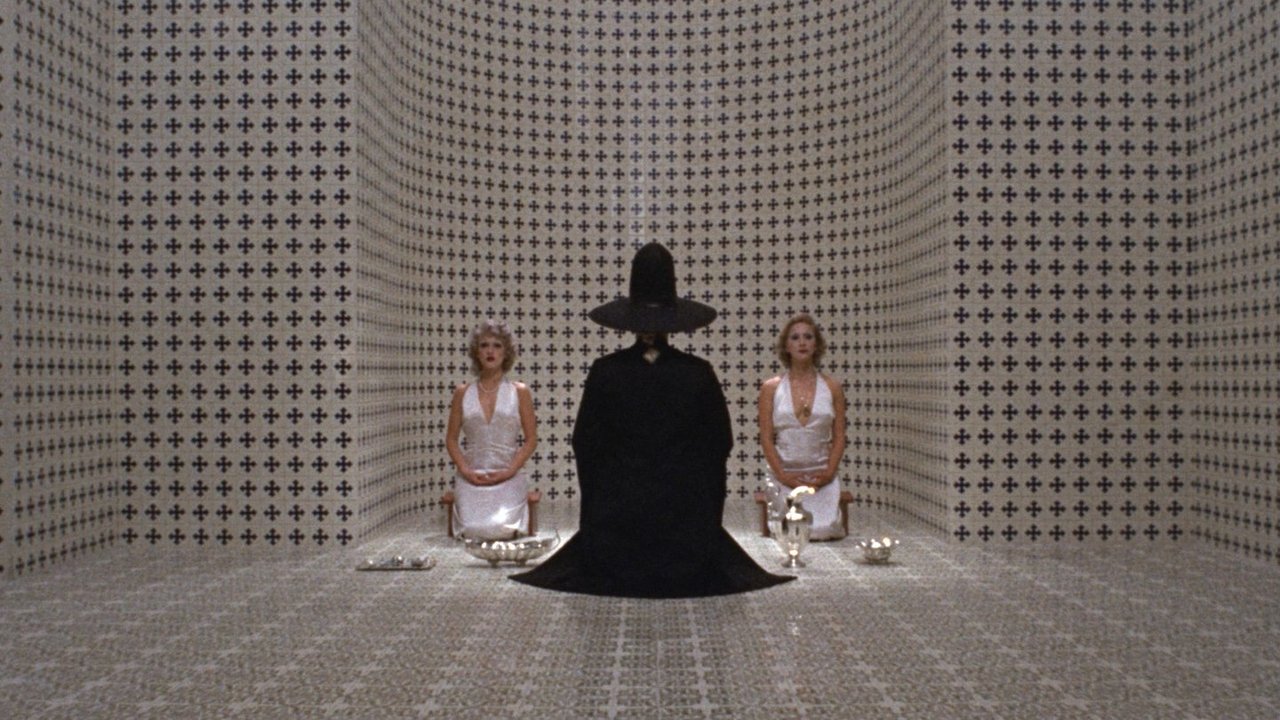
In 1973, Alejandro Jodorowsky wasn't just a director; he was a self-styled provocateur-shaman coming off the midnight-movie success of El Topo. With the financial backing of John Lennon and Yoko Ono (who were so obsessed with his vision they convinced Beatles manager Allen Klein to cough up $750,000), Jodorowsky set out to create a cinematic sacrament. The result is a film that feels less like a narrative and more like a fever dream curated by a very angry, very talented tarot reader.
The Planets and the Piss
The story—if we’re being generous enough to call it that—follows a Christ-like figure known as The Thief (Horacio Salinas), who wanders through a hyper-saturated, grotesque landscape of religious commercialism and military parades featuring crucified dogs. He eventually scales a tower to meet The Alchemist (Alejandro Jodorowsky), who promises to turn his literal excrement into gold. This isn't a metaphor; he actually does it on screen. It’s the kind of movie that makes you realize modern cinema is far too cowardly about poop.
The Alchemist then recruits seven of the most powerful people on Earth—each representing a planet and a specific vice—to join them on a quest to the Holy Mountain. Their goal? To displace the nine immortal masters who rule the world and steal the secret of eternal life.
What follows is a series of introductions for these "planets" that rank among the most imaginative sequences in film history. We meet a weapons manufacturer who sells "artistic" psychedelic gas masks and a financial advisor who lives in a room full of computerized wax figures. These vignettes aren't just weird; they are sharp, cynical critiques of capitalism, religion, and the military-industrial complex that feel uncomfortably relevant fifty years later.
A Masterclass in the Tangible
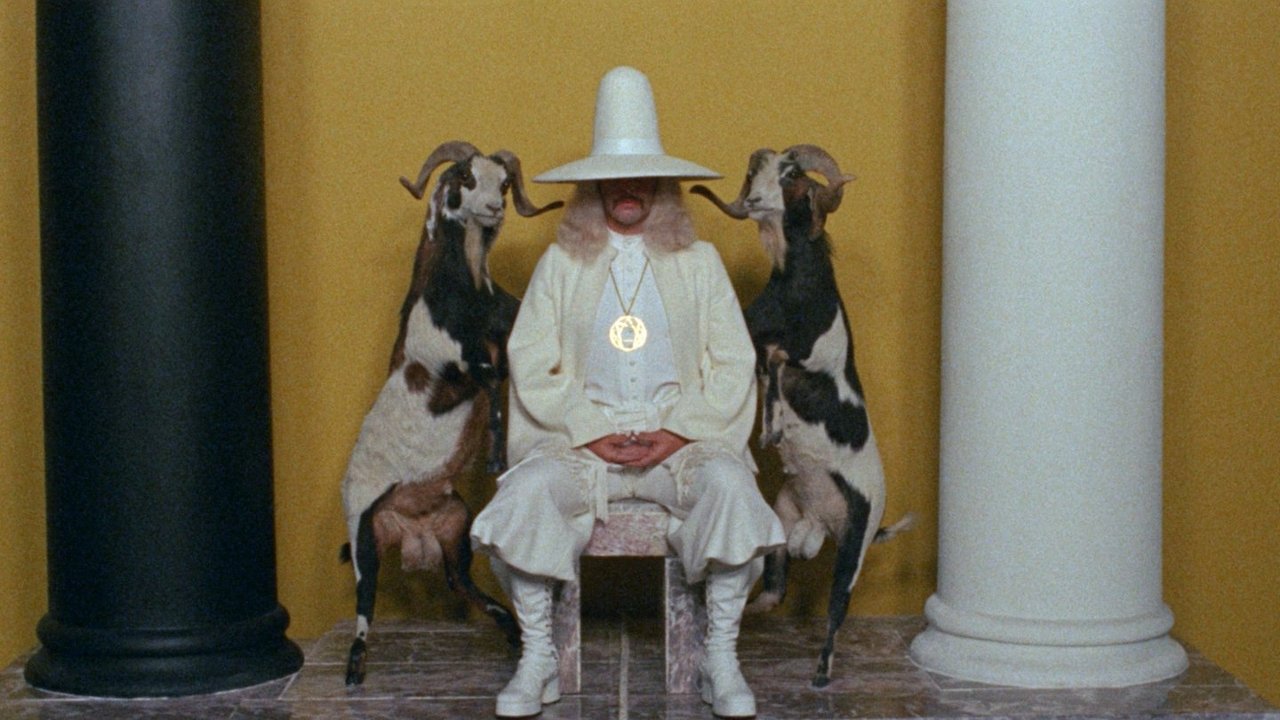
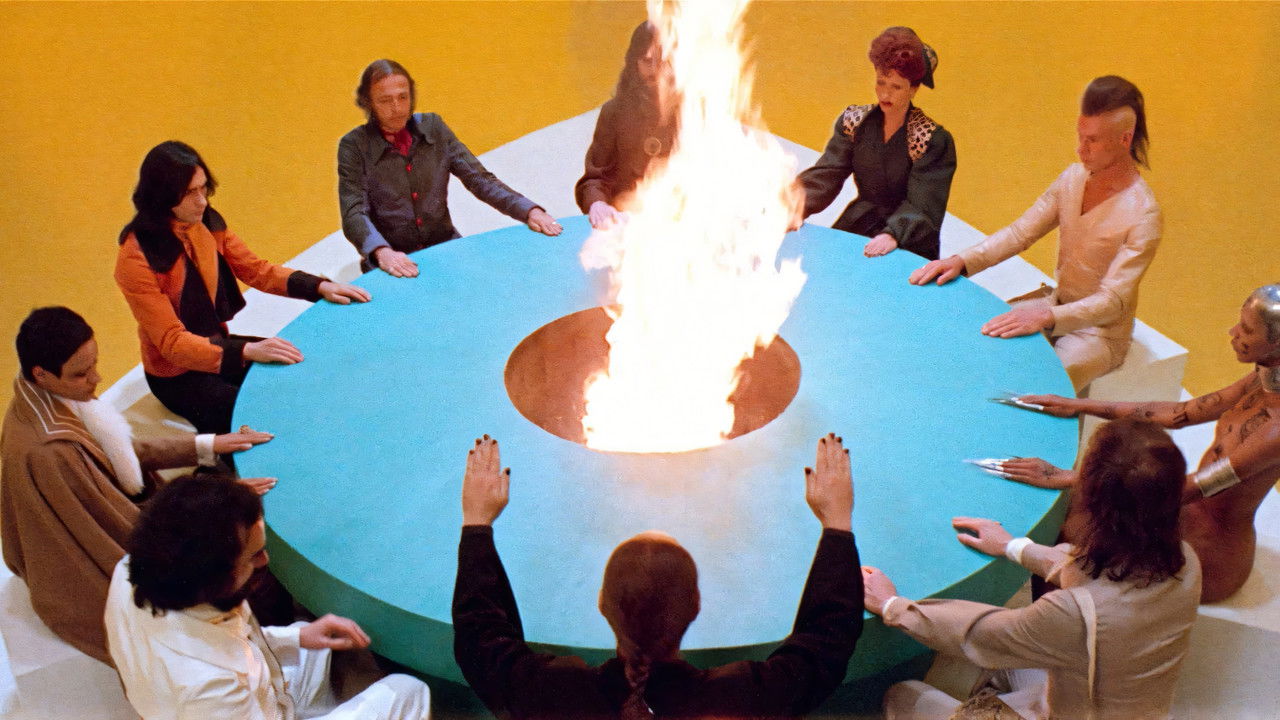
There is a specific texture to The Holy Mountain that CGI simply cannot replicate. Everything you see—the thousands of literal frogs dressed in Aztec armor for a "Conquest of Mexico" reenactment, the massive sets, the intricate costumes—is physically there. The production design is a triumph of imagination over safety regulations. Jodorowsky famously put his cast through a month of communal living and spiritual training before filming, and you can see that glazed, cult-like intensity in their eyes.
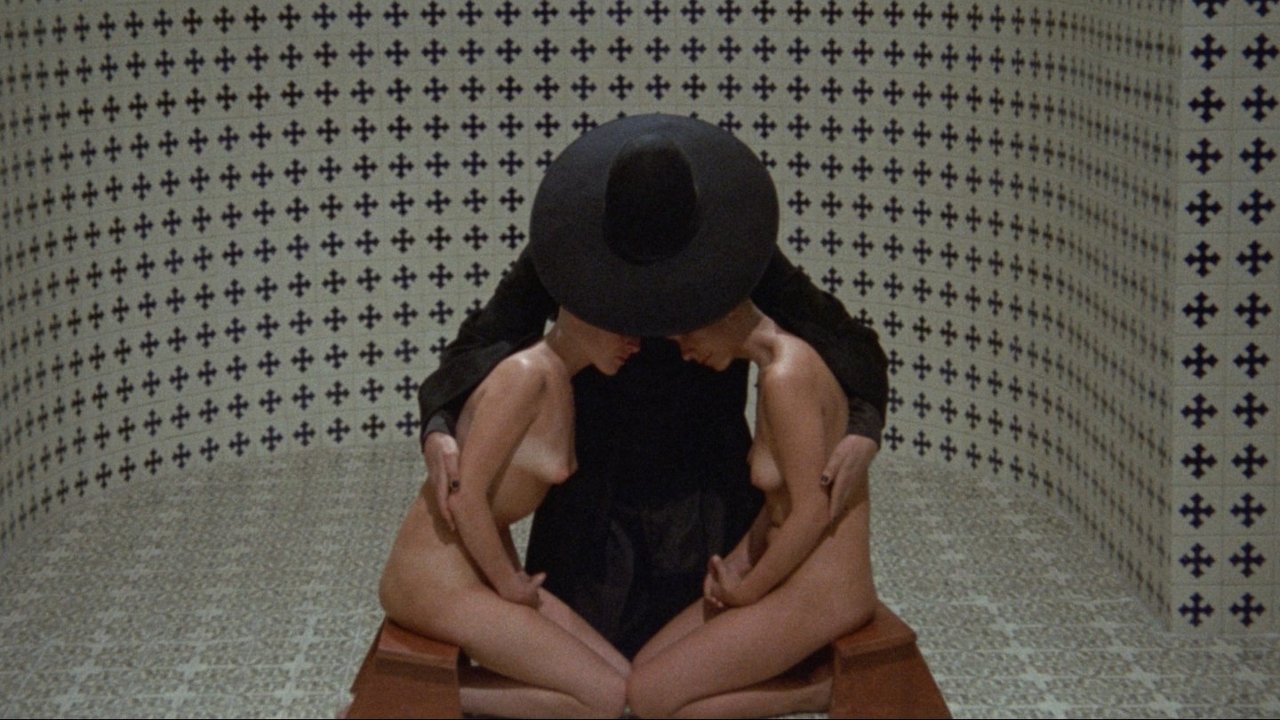
The cinematography by Rafael Corkidi is breathtaking. He uses deep focus and wide angles to ensure that every corner of the frame is stuffed with symbolic detail. Even the most disgusting images are shot with a painterly grace. It’s a "Drama" by way of a gallery opening. Jodorowsky makes Michael Bay look like a minimalist when it comes to visual clutter, but here, every object feels like it’s vibrating with some occult meaning.
The Forbidden Tape
For those of us who grew up in the 80s and 90s, The Holy Mountain was the ultimate white whale. Due to a massive fallout between Jodorowsky and producer Allen Klein, the film was legally suppressed for over 30 years. It wasn't in theaters, and it wasn't on official home video.
This created a legendary "bootleg culture." To see this movie, you had to know a guy who knew a guy with a grainy, tenth-generation VHS copy, likely recorded from a Japanese laserdisc with unremovable subtitles. Watching it back then felt dangerous, like you were viewing something the government had confiscated for being too "enlightened." When it finally received a pristine DVD and Blu-ray release in the mid-2000s, some of the mystery evaporated, but the sheer power of the imagery remained. The crispness of the high-definition transfer only highlighted how much work went into the practical effects, from the prosthetic transformations to the literal tons of fruit used in some scenes.
Breaking the Mirror
While the film is deeply rooted in alchemy, Zen Buddhism, and Jungian psychology, it never feels like a lecture. Jodorowsky’s genius is in his playfulness. He’s a trickster. He wants to shock you, yes, but he also wants to show you the "machinery" of your own belief systems.
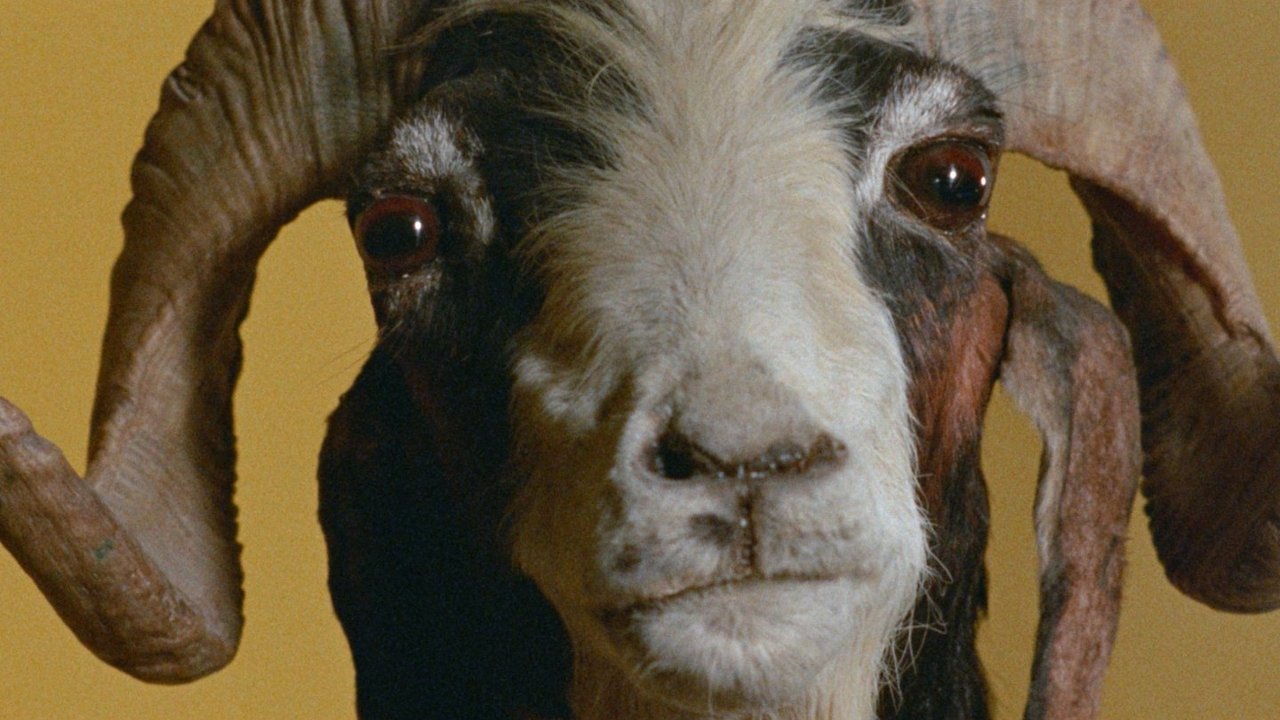
The ending—which I won’t spoil in detail, though the film itself tells you to wake up—is one of the most famous fourth-wall breaks in history. It shifts the drama from the characters to the audience. It asks you why you’re sitting in the dark watching shadows on a wall when there’s a real world outside. It’s a philosophical gut-punch that validates the two hours of insanity you just witnessed.
The Holy Mountain is a monumental achievement of independent spirit. It is gross, beautiful, pretentious, hilarious, and utterly unique. If you’ve ever felt like movies are getting a bit too predictable, let the Alchemist wash your soul (and maybe turn your trash into gold). It’s a journey that doesn't just ask for your attention—it demands your transcendence. Just don't try to explain it to your grandmother while she's doing the laundry.
Keep Exploring...
-

Midnight Cowboy
1969
-
Network
1976
-
Annie Hall
1977
-
Mirror
1975
-
The Apartment
1960
-
Judgment at Nuremberg
1961
-
Guess Who's Coming to Dinner
1967
-
Harold and Maude
1971
-
Rocky
1976
-
Stalker
1979
-
Paris, Texas
1984
-
Wings of Desire
1987
-

My Left Foot: The Story of Christy Brown
1989
-
Easy Rider
1969
-
Cabaret
1972
-
Mean Streets
1973
-
Serpico
1973
-
Badlands
1974
-
Death Wish
1974
-

The Conversation
1974