Blazing Saddles
"Where the West was won... and the fourth wall was demolished."

I first watched Blazing Saddles on a humid Tuesday evening while nursing a bowl of slightly over-salted popcorn and trying to ignore a persistent squeak in my ceiling fan. By the time the campfire scene ended, I wasn’t thinking about the fan anymore; I was too busy wondering how a major studio in 1974 didn't collectively have a heart attack before the premiere. It is a movie that functions like a well-timed prank—it’s loud, it’s messy, and it’s smarter than it has any right to be.
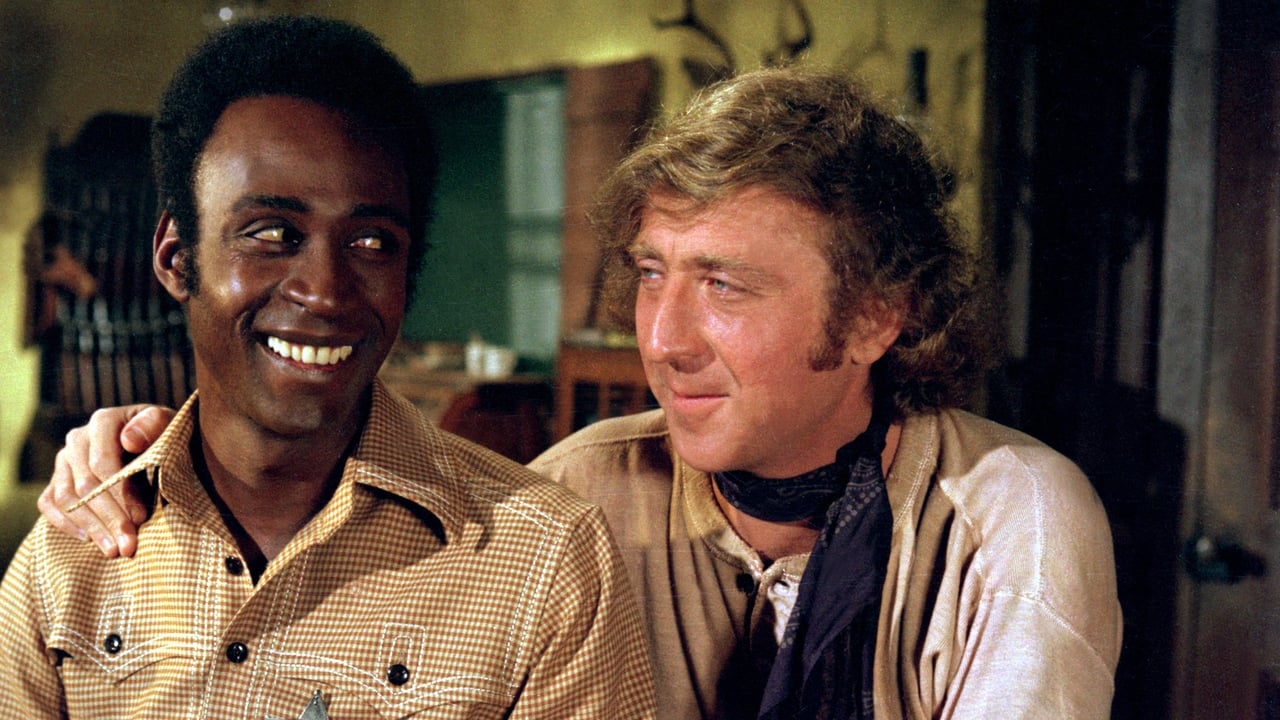
The 1970s were a weird, wonderful vacuum for Hollywood. The old studio system had collapsed, and for a brief, shining moment, the "inmates" were running the asylum. Mel Brooks took this creative freedom and used it to set fire to the most sacred cow in American cinema: the Western. But while many parodies just mock the tropes, Blazing Saddles dismantles the very foundation of the genre, exposing the inherent absurdity—and the deep-seated racism—of the "frontier myth" with a grin and a handful of beans.
The Zen of the Waco Kid
The movie works because it’s anchored by one of the greatest comedic duos to never make a sequel. Cleavon Little, as the sharp-dressed Sheriff Bart, is the ultimate "straight man" who is actually the coolest person in every room. He navigates a town full of bigoted idiots (all named Johnson) with a wink to the camera that tells us he’s in on the joke, even when the characters aren't.
Opposite him is Gene Wilder as Jim, the Waco Kid. Wilder’s performance is a masterclass in 1970s "cool." He doesn't play for laughs; he plays for a specific kind of Zen-like exhaustion. Watching him explain that the townspeople are "just simple farmers... people of the land... the common clay of the new West... you know, morons" is perhaps the most quoted bit of dialogue in comedy history. Wilder was a last-minute replacement for Gig Young, who reportedly collapsed during his first scene due to actual alcohol withdrawal. Wilder stepped in, brought his signature "quiet-before-the-storm" energy, and created a legend.
The supporting cast is essentially a comedy All-Star team. Harvey Korman plays Hedley Lamarr (no, not Hedy) with a theatrical villainy that feels like he’s trying to win an Oscar in a movie he knows is a farce. And then there’s Madeline Kahn, whose parody of Marlene Dietrich in The Blue Angel is so pitch-perfect that it earned her an actual Academy Award nomination. Her song, "I'm Tired," is a masterpiece of comedic timing, capturing the exact moment when a performance becomes so exhausted it circles back around to being hilarious.
Subverting the Script and the Screen

What often gets lost in the talk about the movie’s "crude" humor is the sheer sophistication of the writing. This wasn't just a Mel Brooks solo project; the writers' room included Richard Pryor, and you can feel his sharp, uncompromising edge in every scene involving Bart’s reception by the town. The film uses the "N-word" frequently, not for shock value, but to highlight the staggering stupidity of the people using it. It is a movie that licks the stamp of social commentary and then accidentally-on-purpose mails it to the wrong address.
The production itself was a gamble that paid off in ways Warner Bros. couldn't have imagined. With a modest budget of $2.6 million, the film went on to gross over $119 million domestically. Adjusted for inflation, that’s roughly half a billion dollars today. It was a genuine cultural phenomenon that stayed in theaters for months. People didn't just see it; they returned to it like a religious ritual.
That popularity translated perfectly to the VHS era. For those of us who grew up with the tan-and-red Warner Home Video boxes, Blazing Saddles was a staple. It was the kind of tape that stayed at the top of the "Comedy" section in video stores, its box art worn white at the edges from being pulled off the shelf a thousand times. It was also the ultimate "watch with your dad" movie, a rare bridge between the Greatest Generation’s love of Westerns and the Boomers' desire to tear them down.
A Legacy of Anarchy
Technically, the film is a fascinating bridge between old-school craft and New Hollywood cynicism. Joseph F. Biroc’s cinematography looks like a "real" Western—the vistas are wide, the lighting is dusty, and the sets feel lived-in. This "straight" look is essential; the visual comedy only works because the world looks like it belongs in a serious John Ford film. When Alex Karras, playing the hulking Mongo, famously punches a horse, it works because the scene is framed with the gravity of a classic shootout. (For the record: no horses were actually hurt, though the stunt remains one of the most controversial laughs in cinema).
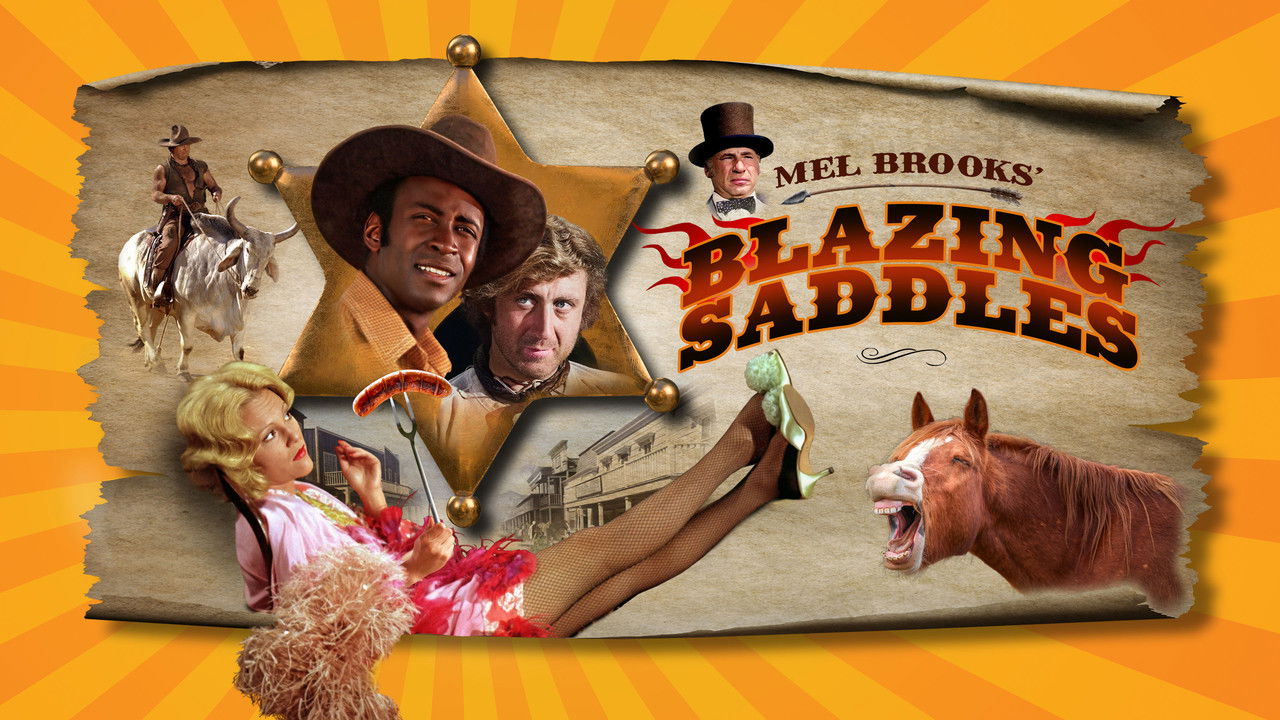
The finale, where the movie literally breaks out of its own sets and spills onto the Warner Bros. backlot, is a stroke of meta-fictional genius that predates the "meta" trend by decades. The ending is essentially a collective labor strike against the concept of a plot. It acknowledges that the only way to end a story this ridiculous is to admit that it’s just a movie.
Does it all age well? Some of the frantic, vaudeville-style pacing in the middle drags slightly, and the sheer density of the gags means that not every arrow hits the bullseye. But the "hit rate" is still higher than almost any comedy released in the last fifty years. It’s a film that trusts its audience to be smart enough to handle the satire and juvenile enough to laugh at a loud noise.
Blazing Saddles remains the definitive parody because it loves the genre it’s destroying. It’s a riotous, offensive, brilliant, and ultimately hopeful piece of filmmaking that reminds us that the best way to deal with bigotry and pomposity is to point at it and laugh until you can't breathe. It is the crown jewel of the Mel Brooks library and a mandatory text for anyone who thinks comedy should have "limits." Put it on, ignore your squeaky ceiling fan, and enjoy the beans.
Keep Exploring...
-
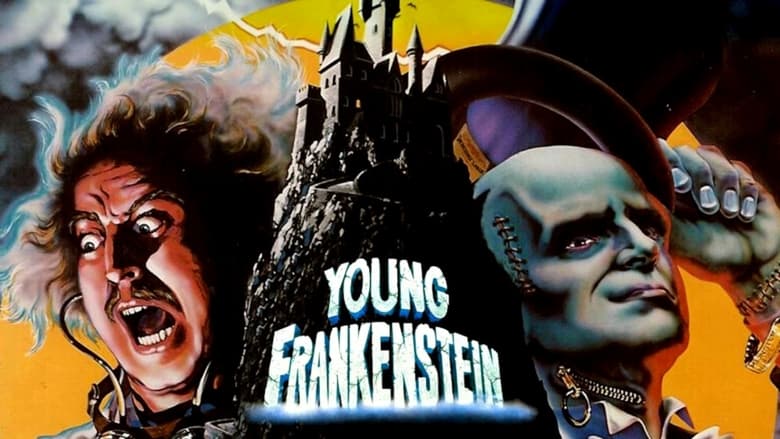
Young Frankenstein
1974
-

History of the World: Part I
1981
-
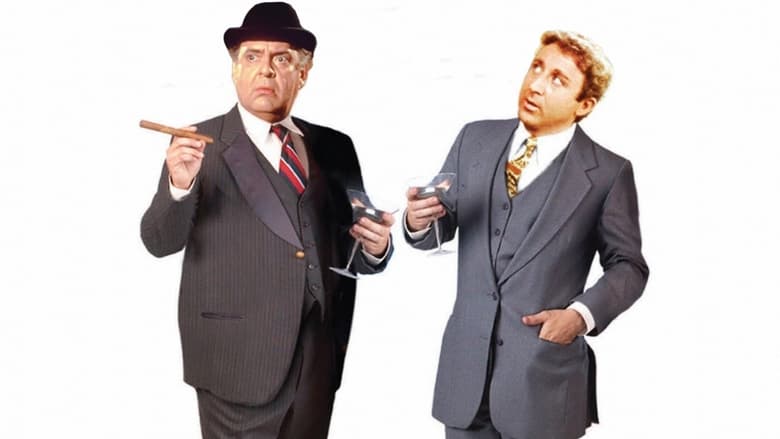
The Producers
1968
-
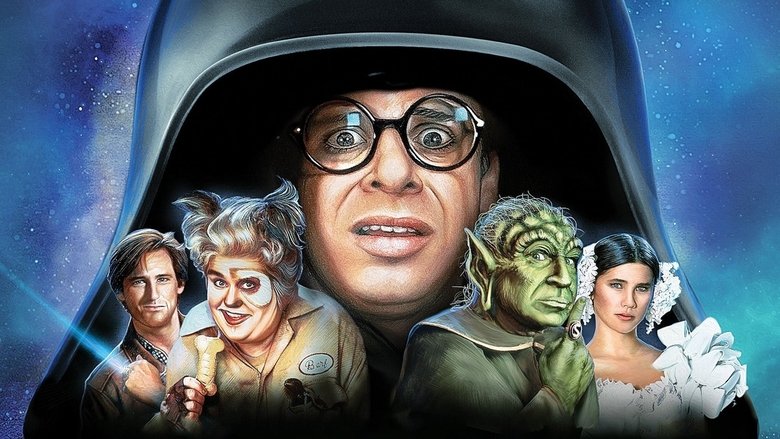
Spaceballs
1987
-
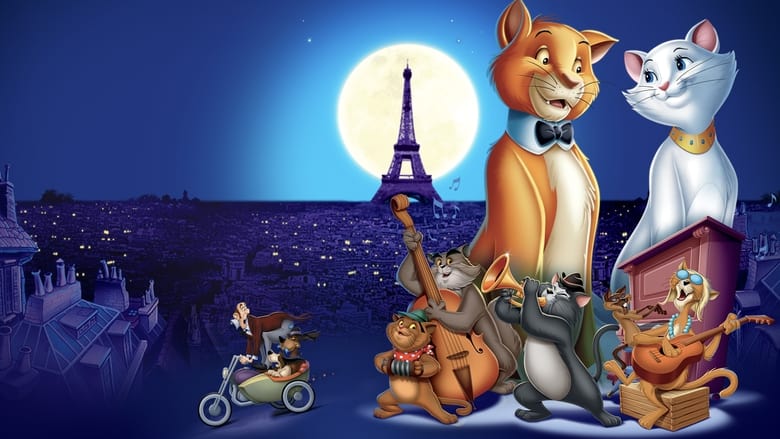
The Aristocats
1970
-
They Call Me Trinity
1970
-
Grease
1978
-
One Hundred and One Dalmatians
1961
-
The Graduate
1967
-

Willy Wonka & the Chocolate Factory
1971
-
The Blues Brothers
1980
-
Gremlins
1984
-
Beverly Hills Cop II
1987
-
Lethal Weapon
1987
-

Big
1988
-
Who Framed Roger Rabbit
1988
-
Back to the Future Part II
1989
-
Honey, I Shrunk the Kids
1989
-
Lethal Weapon 2
1989
-

American Graffiti
1973