King Kong
"The World Trade Center has a primate problem."
If you grew up in the shadow of the 2005 Peter Jackson epic or the modern "Monsterverse," the 1976 version of King Kong feels like a fever dream from a very specific, shag-carpeted era of Hollywood. It’s the middle child of the franchise—awkward, misunderstood, and frequently overshadowed by its older and younger siblings. But there is something undeniably fascinating about Dino De Laurentiis’ attempt to modernize the myth. While I was watching this last night, my neighbor started loudly vacuuming his hallway at 11:00 PM, and honestly, the rhythmic drone of his Hoover matched the industrial, oil-obsessed chug of this movie perfectly.
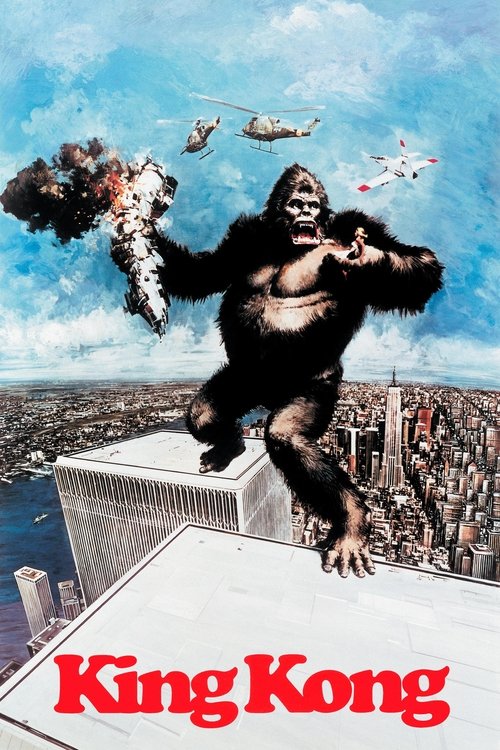
Released in the wake of Jaws (1975), this King Kong wasn't trying to be a period-piece tribute like the versions that bookend it. It was a contemporary 1970s disaster-adventure, swapping the Empire State Building for the then-new Twin Towers and turning the quest for a "Skull Island" into a cynical search for crude oil. It’s a movie where the monsters are big, but the corporate greed is bigger.
The Man in the Suit vs. The Million-Dollar Robot
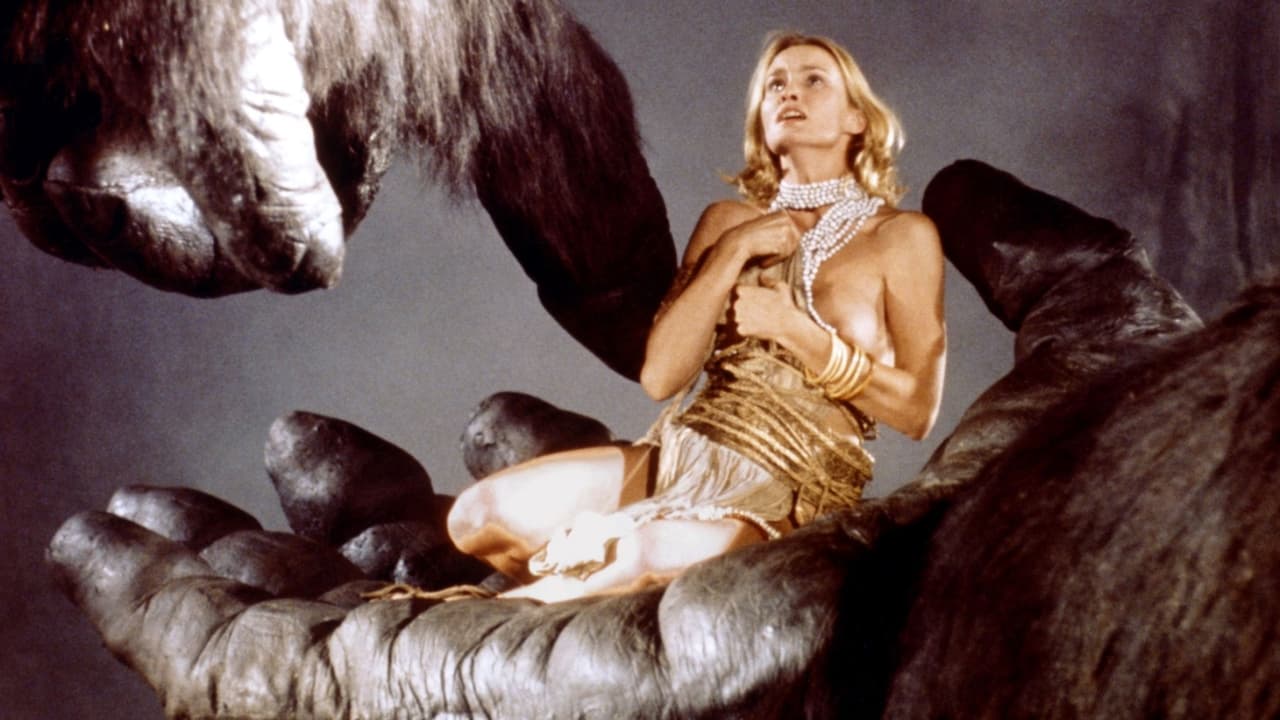
The behind-the-scenes drama of the 1976 King Kong is arguably more famous than the movie itself. Producer Dino De Laurentiis spent a fortune building a 40-foot tall, 13,000-pound mechanical Kong designed by Carlo Rambaldi (who later gave us the much friendlier E.T. the Extra-Terrestrial). The problem? The giant robot barely worked. It looks stiff and hauntingly vacant in the few seconds of screen time it actually earned.
Most of what you see on screen is actually makeup legend Rick Baker in a sophisticated gorilla suit he designed himself. Baker, who would go on to win seven Oscars for films like An American Werewolf in London, hated the suit at the time, but I think he’s being too hard on himself. There’s a soulful, tactile quality to the 1976 Kong that CGI simply cannot replicate. When Kong fights a giant snake (a sequence that looks like it raided a high-end taxidermy shop for parts), you feel the weight and the messiness of the practical effects. It’s the peak of "Pre-CGI" spectacle—messy, ambitious, and deeply human.
A Cast Lost in the Jungle

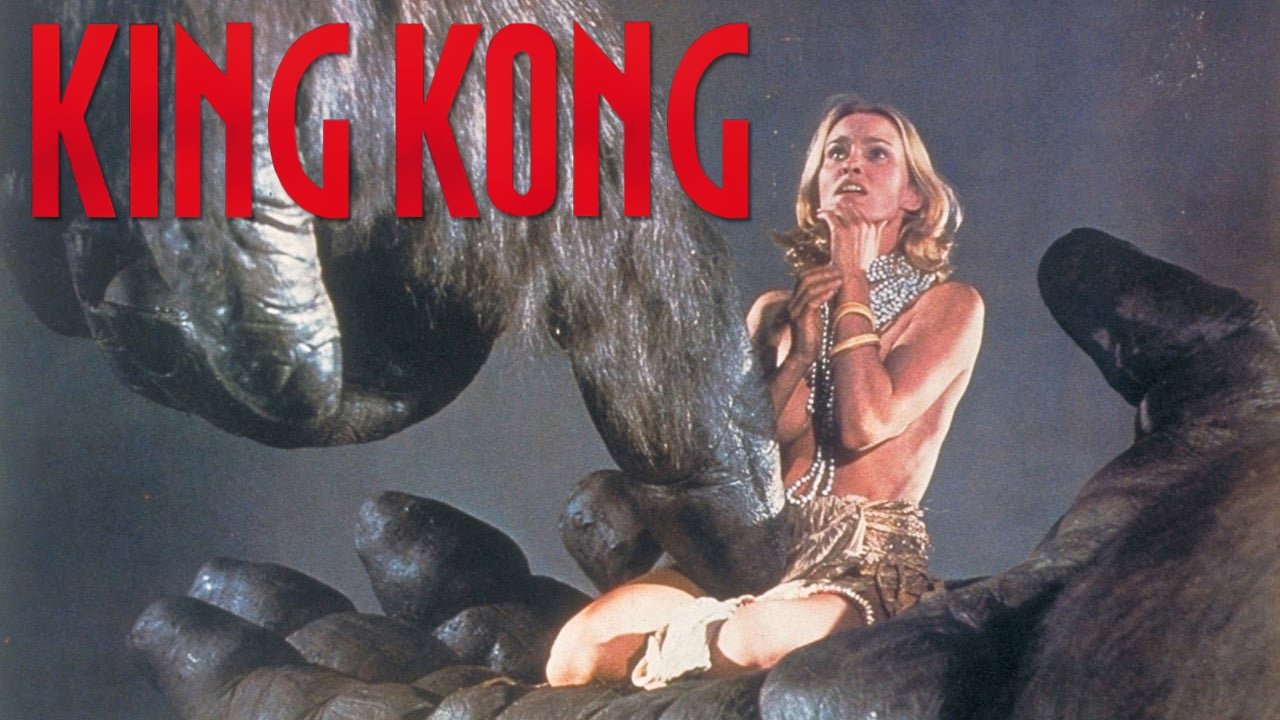
The human element is where the movie gets truly weird. This was the big-screen debut for Jessica Lange, and she’s saddled with the role of "Dwan." In the 1930s original, the female lead was a struggling actress; here, she’s a ditzy, aspiring starlet found floating in a life raft after a yacht explosion. Lange is incredibly charismatic, but the script gives her lines that are almost painfully campy. At one point, she tries to talk her way out of being Kong’s captive by telling him, "I'm a Libra... what are you?" It’s a moment so purely 1970s it should have come with a complimentary disco ball.
On the other side of the spectrum, we have Jeff Bridges as Jack Prescott, a long-haired, beard-toting paleontologist who stows away on the ship. Bridges plays it with a deadpan earnestness that keeps the movie grounded, even when he’s arguing with Charles Grodin's Fred Wilson. Grodin is the secret MVP here. He plays the Petrox Oil executive with such delightful, slime-coated arrogance that you can’t wait for him to get stepped on. Watching Grodin—who many of us grew up watching in Beethoven (1992) or Midnight Run (1988)—play a corporate villain who treats a prehistoric island like a gas station is a highlight for me.
The Twin Towers and the VHS Legacy
The final act in New York is where the film finds its unique identity. Moving the climax to the World Trade Center was a bold move in 1976, symbolizing the height of American modernization. Seeing Kong leap between the towers is a striking image that hits differently today, but at the time, it was the ultimate urban jungle metaphor. The cinematography by Richard H. Kline (who also shot Star Trek: The Motion Picture) captures a grittier, darker NYC that feels worlds away from the romanticized version in the 1933 film.
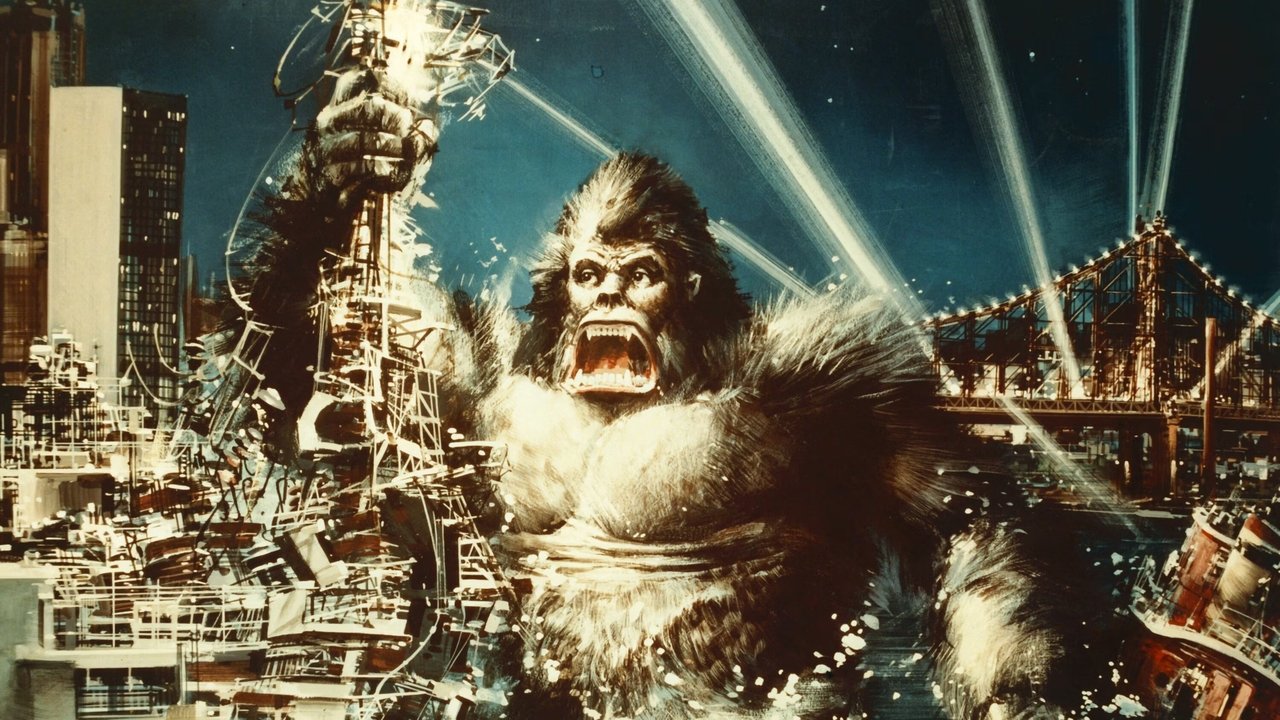
This movie became a staple of early home video and television broadcasts. I have a specific memory of seeing the iconic poster art—Kong straddling the Twin Towers like they were playground equipment—on the wall of a local video store, and the movie never quite lived up to that impossible scale. On a 19-inch CRT TV, Kong looked less like a god and more like a very frustrated guy in a fur coat. But that's part of the charm. It’s a movie made with a "we'll figure it out on the day" energy that modern blockbusters, with their $300 million budgets and five-year plans, have completely lost.
John Barry’s score also deserves a shout-out. The man behind the best James Bond themes brought a lush, romantic, and slightly melancholy sound to the film. It doesn't treat Kong like a mindless beast; it treats him like a tragic hero, which is exactly why the ending still lands a punch, despite the camp.
Ultimately, the 1976 King Kong is a fascinating artifact. It’s too weird to be a classic and too well-made to be a B-movie. It exists in that strange 70s vacuum where directors were trying to balance "serious art" with "giant monkeys." It’s an adventure that feels earned because you can see the sweat and the hydraulic fluid leaking through the seams. If you can handle a little camp and a lot of 1970s cynicism, it’s a journey worth taking, even if the destination is a little clunky.
Keep Exploring...
-

Bedknobs and Broomsticks
1971
-
Excalibur
1981
-
Time Bandits
1981
-
Flash Gordon
1980
-
The Dark Crystal
1982
-
Conan the Destroyer
1984
-
Ladyhawke
1985
-
Legend
1985
-

Return to Oz
1985
-
The Black Cauldron
1985
-

Masters of the Universe
1987
-
Death on the Nile
1978
-
The Rescuers
1977
-
The Adventures of Baron Munchausen
1988
-
The Poseidon Adventure
1972
-

The Towering Inferno
1974
-
Highlander
1986
-
Willow
1988
-

The Lord of the Rings
1978
-
Tron
1982