Animal House
"Zero GPA, maximum carnage."
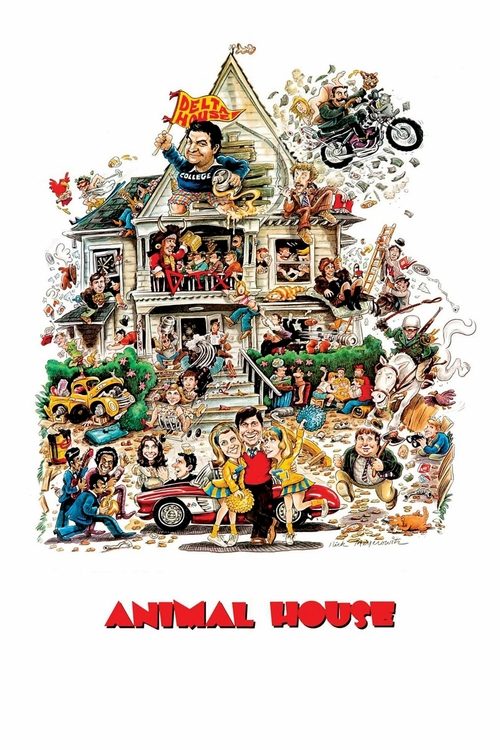
In 1978, Hollywood was still leaning into the gritty, post-Waterloo cynicism of the decade, and then came a man in a "COLLEGE" sweatshirt to smash a guitar against a wall. It was the cinematic equivalent of a beer bong in the middle of a faculty meeting. Animal House didn’t just break the rules of the campus comedy; it burned the rulebook and used the ashes to start a bonfire. It’s the kind of film that feels less like a structured narrative and more like a captured riot, and forty-odd years later, it still smells like stale beer and rebellion.
The Delta Standard of Chaos
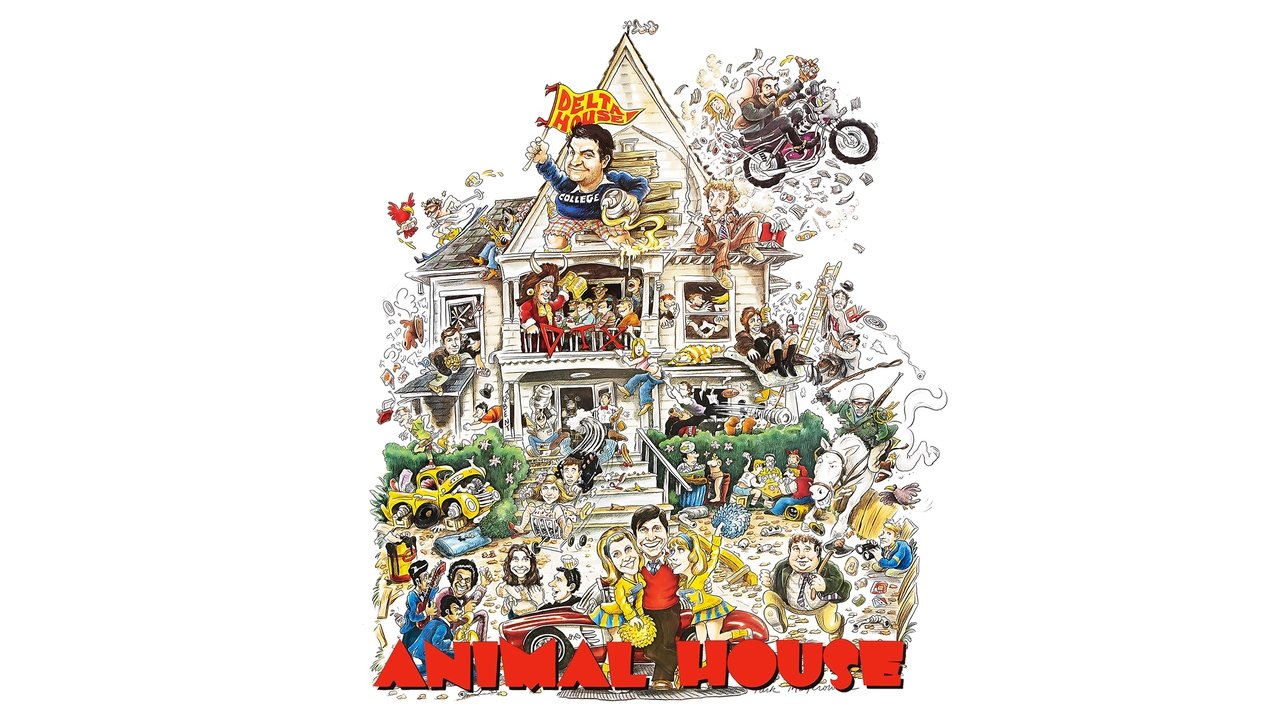
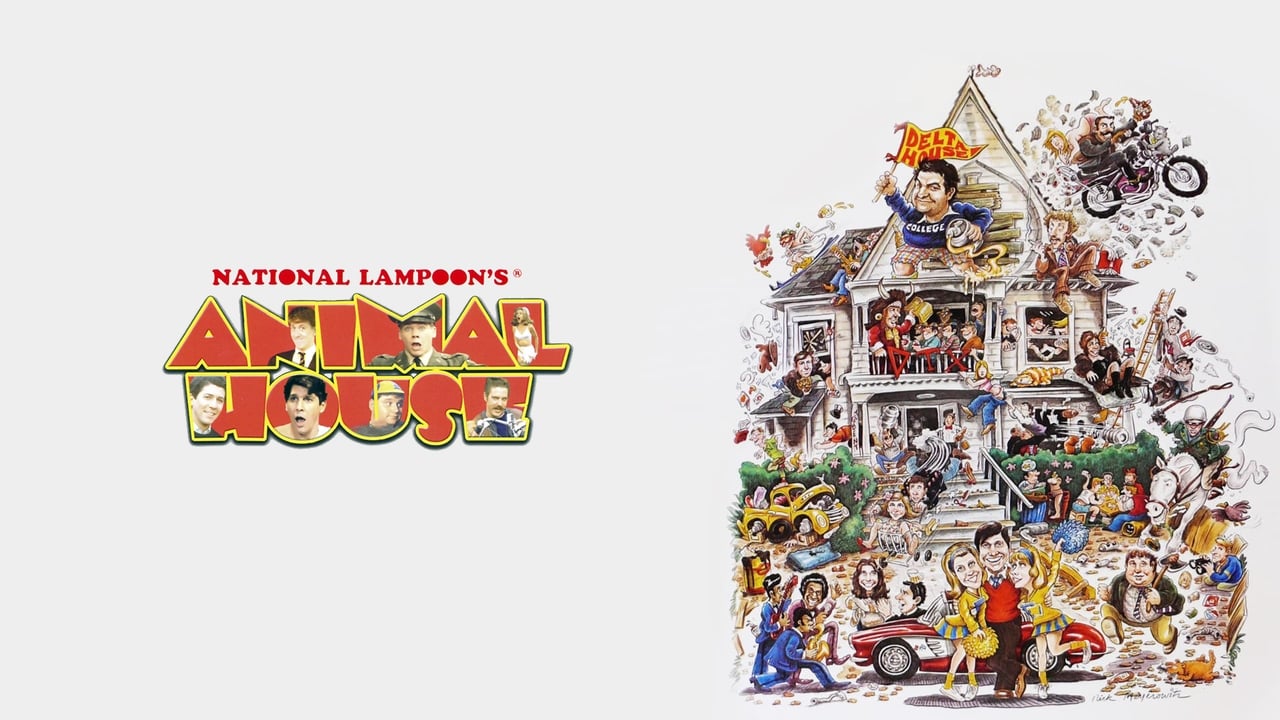
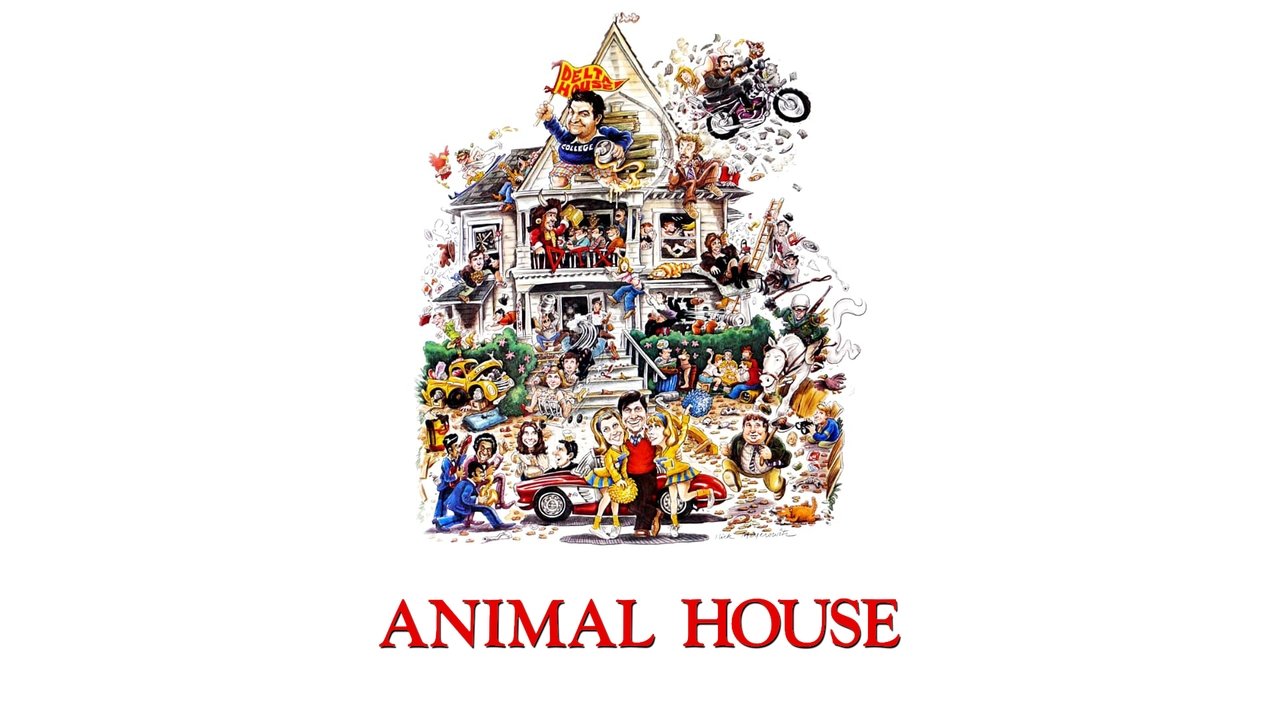
Growing up, I feel like this movie was baked into the carpet of every basement I ever visited. The VHS box, with that crowded Rick Meyerowitz illustration of the Faber College chaos, was the universal signifier that the adults weren’t in charge tonight. I actually re-watched my old copy on a Tuesday night while eating a bowl of cold spaghetti out of a Tupperware container, and honestly, the lack of microwave heat felt spiritually aligned with the Deltas' lifestyle.
What strikes me most about the direction by John Landis (The Blues Brothers, An American Werewolf in London) is how he treats the comedy with the intensity of a war movie. He doesn’t frame gags like a sitcom; he stages them with a sense of geographical chaos. Whether it's the chaotic "Deathmobile" parade climax or the frantic energy of the toga party, there’s a tactile, messy reality to it. The practical stunts—like a motorcycle driving up a flight of stairs or the sheer volume of food being flung in the cafeteria—have a weight that modern CGI-heavy comedies completely lack. The food fight scene is a masterpiece of unchoreographed filth, and you can practically feel the mashed potatoes hitting your own face.
Belushi and the Art of the Eyebrow
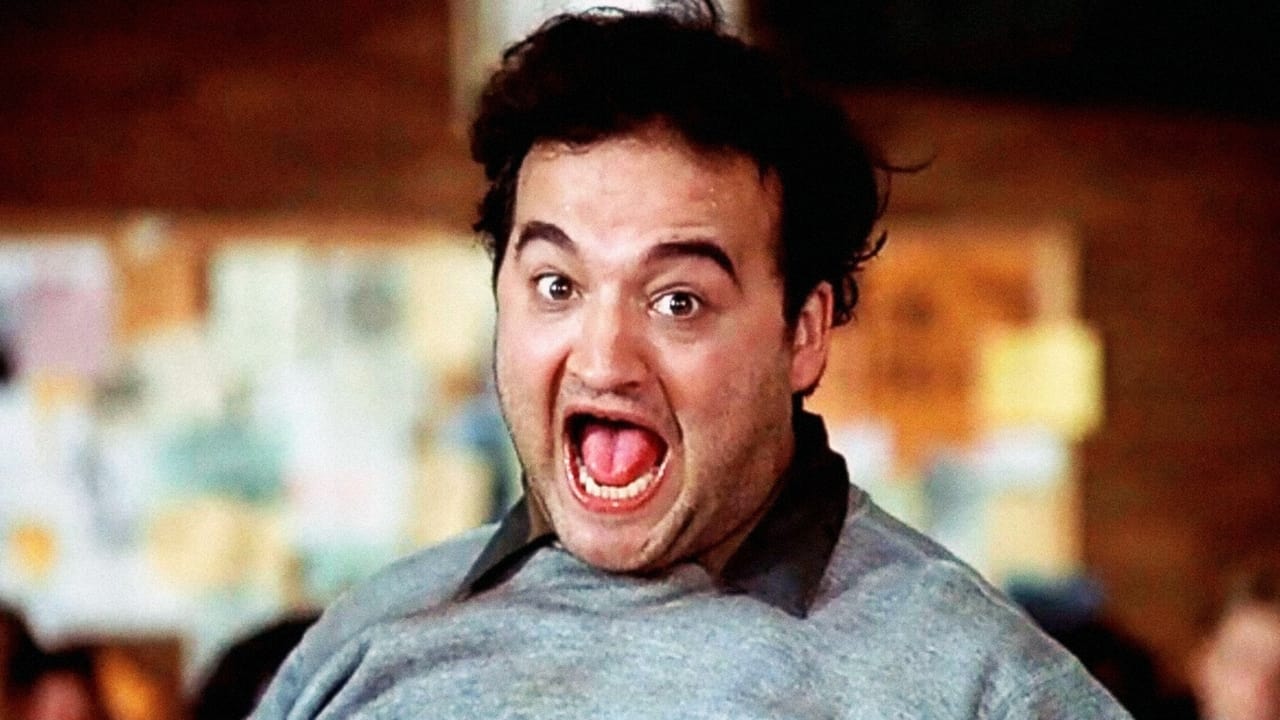
John Belushi is the gravitational force here, which is wild because his character, Bluto, barely has any dialogue. Most of his performance is comprised of grunts, eyebrow raises, and physical destruction. Belushi understood that Bluto is essentially a sentient wrecking ball in a toga, and the film wisely lets him operate on a different plane of reality than the rest of the cast. His "Zit" impression in the cafeteria is a bit of low-brow genius that only a performer with his specific brand of fearless physicality could pull off without it feeling desperate.
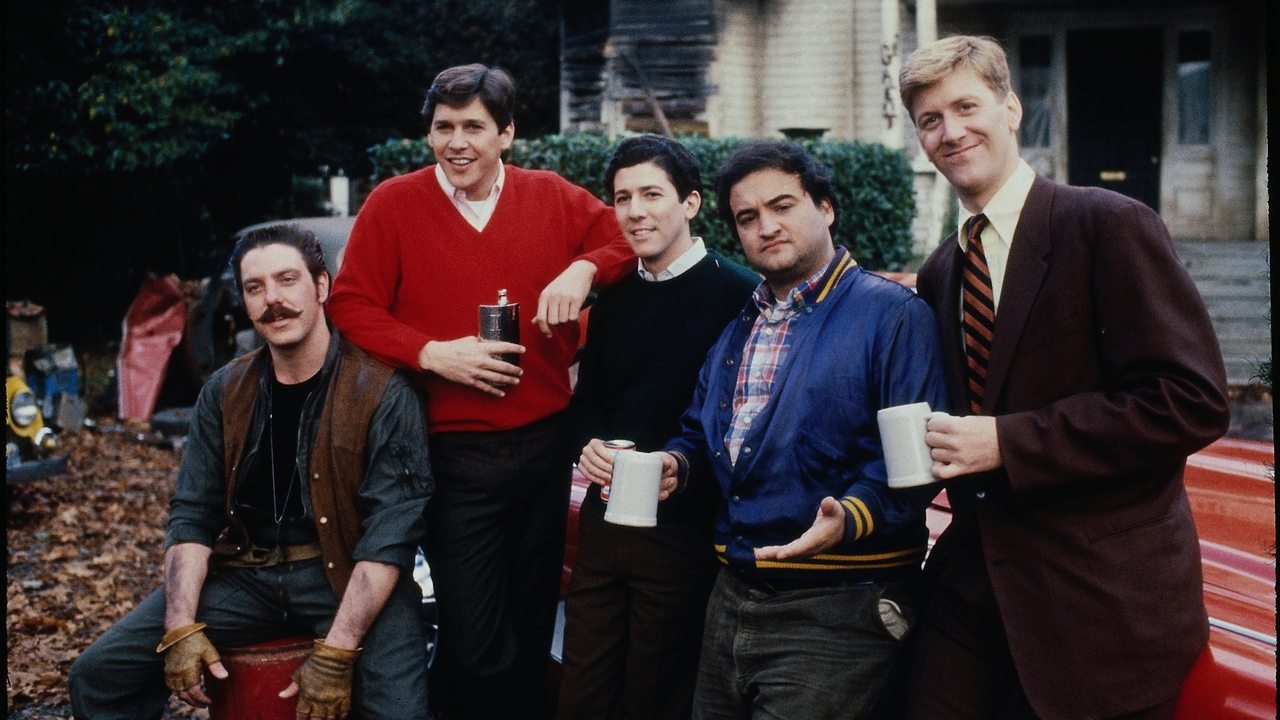
But the film isn't just a one-man show. The chemistry between the "straight men"—Tom Hulce (Amadeus) as the wide-eyed Pinto and Stephen Furst as the lovable, doomed Flounder—provides the necessary tether to reality. On the flip side, you have the villains. Every great comedy needs a villain you genuinely want to see fall into a vat of horse manure, and Mark Metcalf as Doug Neidermeyer is the gold standard for the "uptight authoritarian jerk." His performance is so dialed-in that I still feel a reflexive urge to stand at attention when I see a guy in a military jacket.
The $141 Million Kegger
It’s hard to overstate how much money this thing printed or how it fundamentally changed the business of being funny. Produced on a shoestring budget of $2.7 million, it raked in over $141 million, becoming the most profitable comedy of its time and effectively launching the "gross-out" genre. The behind-the-scenes stories are just as legendary as the film itself. For instance, Donald Sutherland—who was a massive star at the time—was offered a choice between a $35,000 flat fee or a percentage of the gross. He took the cash, a move that cost him roughly $20 million in lost residuals, making it one of the most expensive "it's just a paycheck" decisions in Hollywood history.
The film's DNA came from the National Lampoon magazine, and writers Harold Ramis (Ghostbusters) and Douglas Kenney brought a sharp, counter-cultural edge that kept it from being just a series of fart jokes. They were satirizing the rigid class structures of the early 60s, pitting the "losers" of Delta Tau Chi against the "elites" of the Omega house. It’s a classic underdog story, but one where the underdogs are objectively terrible people who just happen to be more fun than the alternative. Interestingly, the studio originally wanted Chevy Chase or Bill Murray for roles, but John Landis fought for a cast of mostly unknowns to make the world feel more lived-in and less like a variety show sketch.
A Legacy of Togas and Tequila
While some of the humor definitely reflects the era it was made in—the 1960s setting as seen through a 1970s lens results in some attitudes that haven't aged gracefully—the core spirit of "us vs. them" remains untouchable. The soundtrack, curated by Elmer Bernstein (The Magnificent Seven), is another stroke of genius. He scored the film like a serious, epic drama, which only makes the ridiculous antics on screen feel ten times funnier. Hearing a sweeping, heroic orchestral swell while a man tries to climb a ladder to peep into a sorority house is the ultimate exercise in comedic juxtaposition.
Animal House is the reason toga parties became a collegiate cliché and why every college comedy for the next forty years tried (and usually failed) to capture that same lightning in a beer bottle. It’s loud, it’s rude, and it’s unapologetically messy. It reminds me that sometimes, the best way to handle a world that takes itself too seriously is to put on a bedsheet, grab a bottle of Jack Daniel's, and start a parade.
If you haven't revisited Faber College lately, it’s time to head back to campus. Even with its dated edges, the film’s anarchic soul is as vibrant as ever. It's a reminder of a time when comedies felt dangerous, spontaneous, and genuinely fueled by a desire to stick it to the man. Put it on, ignore the GPA, and remember that "fat, drunk, and stupid" is actually a pretty entertaining way to spend two hours.
Keep Exploring...
-
The Blues Brothers
1980
-
Coming to America
1988
-
An American Werewolf in London
1981
-
Trading Places
1983
-
¡Three Amigos!
1986
-

American Graffiti
1973
-
Blazing Saddles
1974
-
The Rocky Horror Picture Show
1975
-
Ghostbusters
1984
-

Ghostbusters II
1989
-
Grease
1978
-
Caddyshack
1980
-
Porky's
1981
-
Stripes
1981
-

Tootsie
1982
-
One Hundred and One Dalmatians
1961
-

Mary Poppins
1964
-
The Graduate
1967
-
The Aristocats
1970
-

The Gods Must Be Crazy
1980