Dawn of the Dead
"Paradise is a shopping mall. Hell is the parking lot."
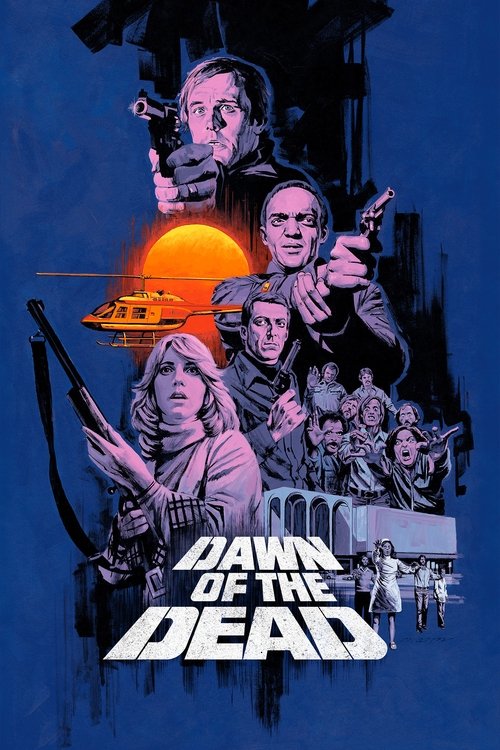
The American Dream didn't end with a whimper; it ended with a groan and a rhythmic shuffle toward the escalator. By the time George A. Romero got around to filming Dawn of the Dead in 1978, the hopeful glow of the 1960s had been replaced by the cold, fluorescent flicker of the shopping mall. While its predecessor, Night of the Living Dead, trapped us in a claustrophobic farmhouse, Dawn blew the doors off the hinges and gave us an entire world in collapse—and it’s a world that feels uncomfortably recognizable.
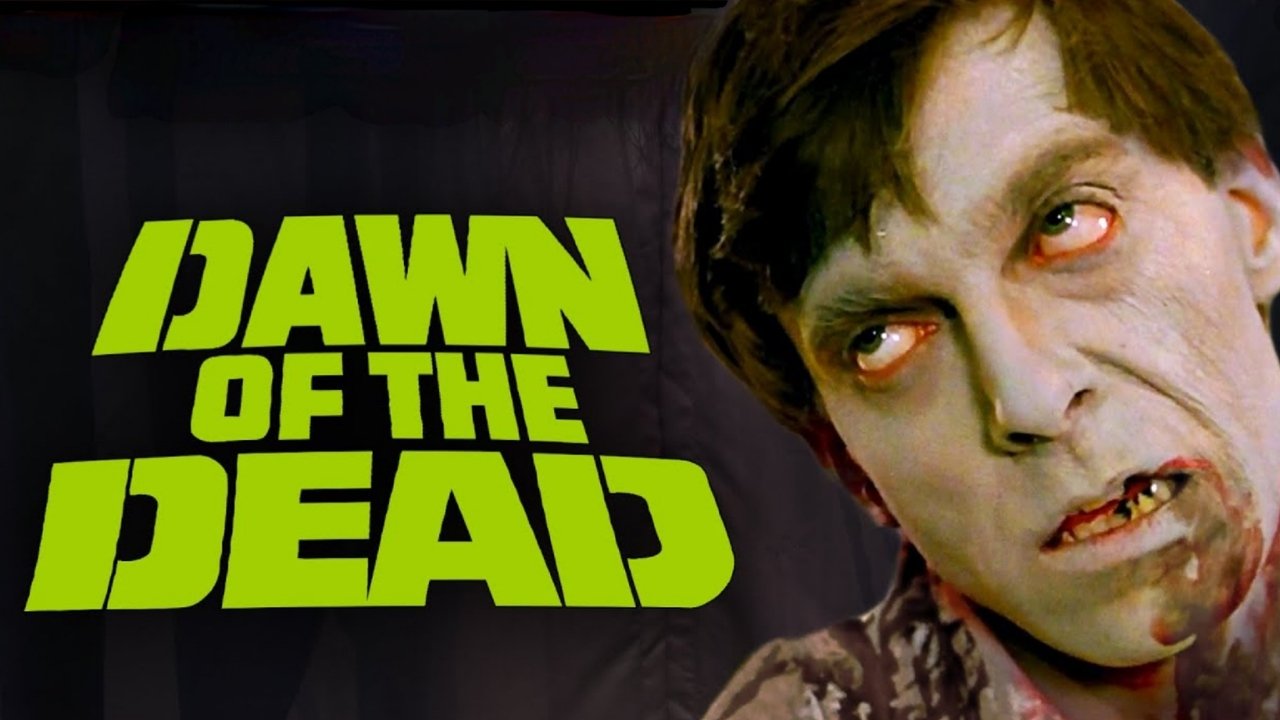
I recently rewatched this on a rainy Tuesday while trying to ignore a persistent squeak in my ceiling fan, and the contrast was striking. Here is a film about the total dissolution of society, and yet, the most terrifying thing isn't the guy getting his shoulder bitten; it’s the way the lead characters settle into a domestic routine amidst the apocalypse. They have everything they ever wanted—televisions, fur coats, a limitless supply of watches—and they are absolutely miserable.
The Temple of Consumerism
The plot is deceptively simple: as the dead begin to outnumber the living, a quartet of survivors—two SWAT members, Ken Foree and Scott H. Reiniger, a pilot played by David Emge, and a television executive played by Gaylen Ross—commandeer a helicopter and set up shop in the Monroeville Mall. It’s the ultimate "what if" scenario for anyone who grew up in the suburbs. Who hasn't fantasized about having a department store to themselves?
But Romero is too smart to let it stay a fantasy. The mall becomes a gilded cage. I love the way Ken Foree carries himself as Peter; he’s the moral anchor, the one who realizes that the zombies aren't the villains; the guys in the leather jackets are. The zombies are just acting on instinct, returning to the one place that mattered to them when they were alive. There’s a grim, dark irony in seeing a creature with no brain trying to figure out how an escalator works. It’s a joke that was funny in 1978 and is arguably even funnier—and meaner—now.
Savini’s Carnival of Carnage

You can’t talk about Dawn of the Dead without talking about Tom Savini. This was the project that turned him into a legend, and his "splatter" effects here have a specific, comic-book texture that CGI simply cannot replicate. Because the film was shot on a shoestring budget of roughly $640,000, Savini had to be an alchemist. He used a bright, almost neon-orange blood that looks like poster paint, which actually saves the movie from being too depressing. It gives the violence a surreal, pop-art quality.
However, the "dark" modifier of this film is earned in the opening twenty minutes. The raid on the housing project is a brutal, chaotic sequence that feels like a documentary of a nightmare. It’s loud, it’s messy, and it shows the racial and class tensions of the 1970s boiling over. Romero didn't just make a monster movie; he made a movie about how poorly we treat each other when the lights go out. Savini even appears on screen as the leader of a motorcycle gang, looking like he’s having the time of his life while dismantling the survivors' hard-won paradise.
The Indie Hustle and the VHS Bloom
The production of Dawn is a masterclass in independent resourcefulness. Because they didn't have the budget to build a mall, they struck a deal with the owners of the Monroeville Mall in Pennsylvania. The crew would arrive at 10 PM, shoot until 6 AM, and then frantically scrub the fake blood off the floors before the morning shoppers arrived at 9 AM. There’s a certain grit you get from that kind of "guerrilla" filmmaking that a studio backlot can’t provide. You can feel the cold Pennsylvania air in the outdoor shots.
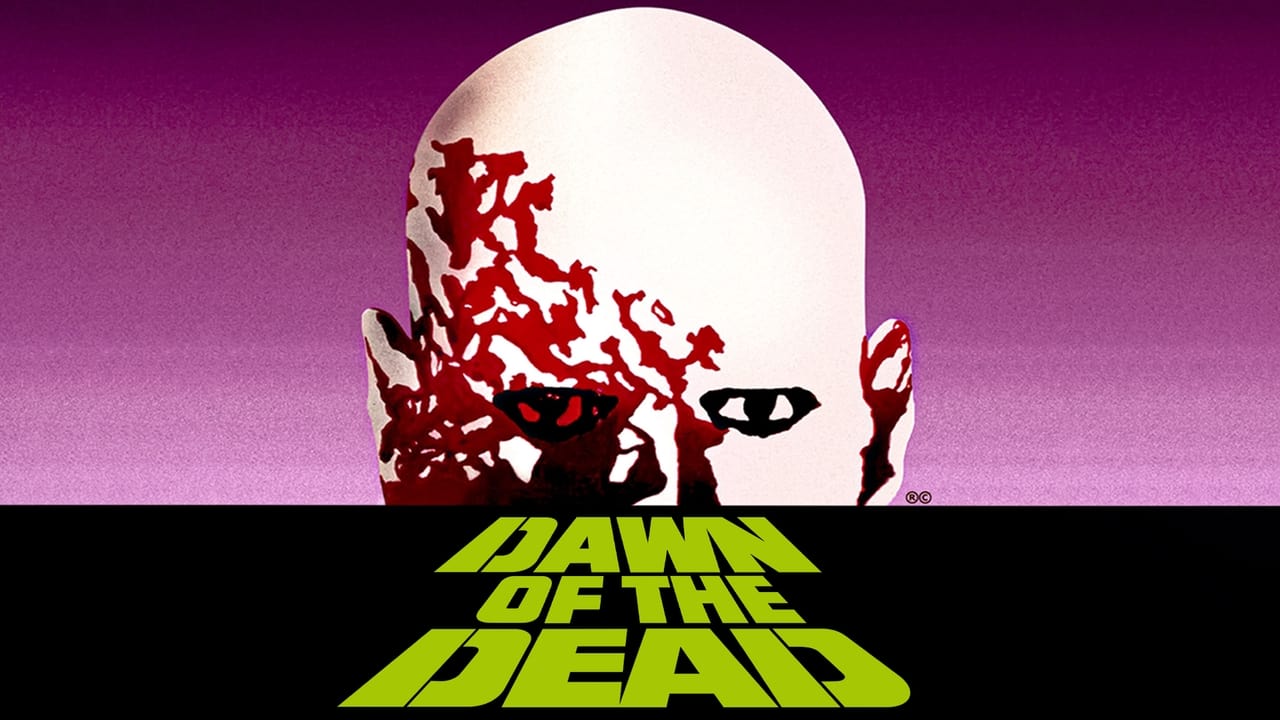
For many of us, the true way to experience this film was on a grain-heavy VHS tape. I remember the iconic "half-buried head" box art in the horror section of the local rental shop; it looked like a forbidden artifact. On a CRT television, the slightly grey skin of the zombies (an intentional choice by Romero to make them look like decaying statues) looked hauntingly organic. The score by the Italian progressive rock band Goblin (frequent collaborators with Dario Argento) also hits differently through old TV speakers. It’s a pulsing, synth-heavy heartbeat that makes the mall feel alive and predatory.
Dawn of the Dead is a rare beast: a sequel that eclipses the original in scale and ambition without losing its soul. It manages to be a harrowing survival horror, a biting social satire, and a grand-scale tragedy all at once. It’s the kind of movie that makes you look at your local shopping center and wonder how long the glass would hold. Even with the dated outfits and the bright orange blood, the underlying dread is timeless. It’s not just a landmark of the 70s; it’s a landmark of human cynicism, gift-wrapped in a department store bow.

Keep Exploring...
-
Night of the Living Dead
1968
-

Day of the Dead
1985
-
Land of the Dead
2005
-

Invasion of the Body Snatchers
1978
-
The Rocky Horror Picture Show
1975
-

Scanners
1981
-
Alien
1979
-

The Thing
1982
-
The Dead Zone
1983
-
Videodrome
1983
-
The Wicker Man
1973
-
The Texas Chain Saw Massacre
1974
-
Carrie
1976
-
Eraserhead
1977
-

Halloween
1978
-
Nosferatu the Vampyre
1979
-
Mad Max 2
1981
-
Possession
1981
-

The Evil Dead
1981
-
Creepshow
1982