Days of Heaven
"Heaven is just a place you're passing through."
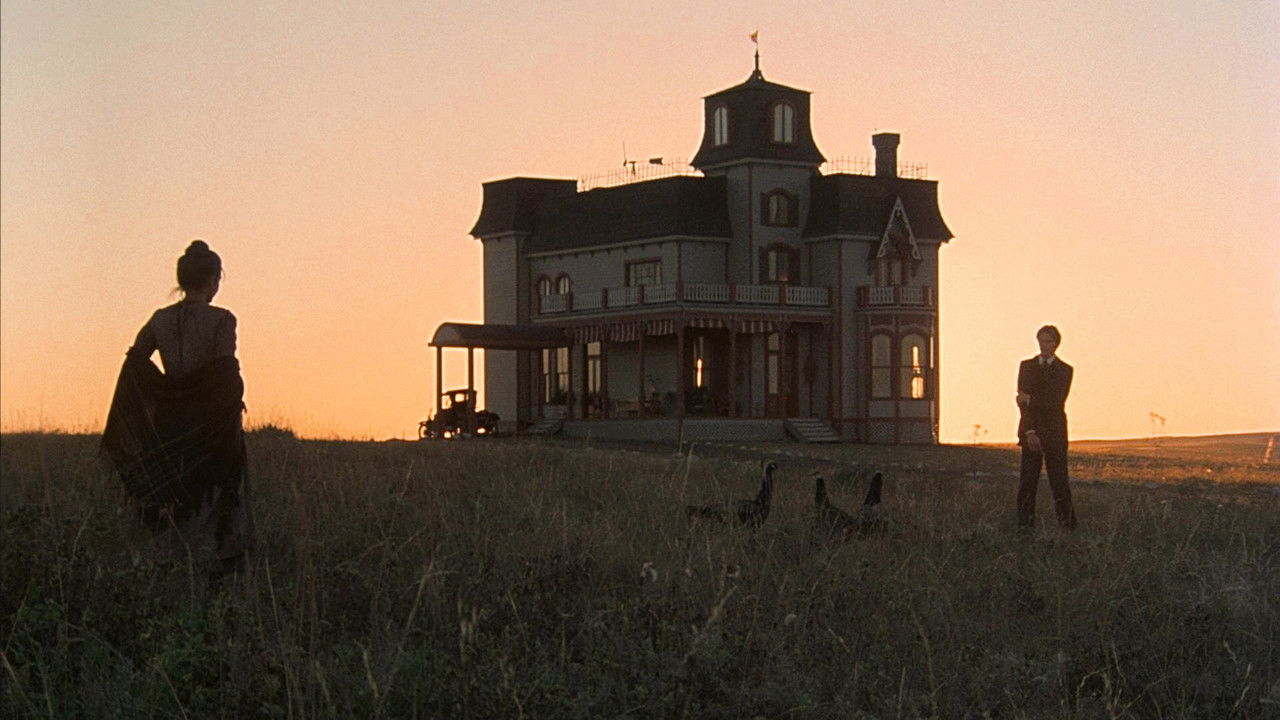
There is a specific, fleeting window of time just before the sun dips below the horizon where the world stops looking like a place and starts looking like a memory. Photographers call it the "Golden Hour," but on the set of Days of Heaven, Terrence Malick and his cinematographer Néstor Almendros treated it like a religious commandment. They refused to shoot during the harsh glare of midday, often waiting around for hours just to capture twenty minutes of perfect, honey-hued light. I watched this recently while wearing a particularly scratchy wool sweater, and honestly, the physical discomfort of the wool perfectly complemented the beautiful, itchy restlessness of the film’s itinerant workers.
Set in 1916, the story is deceptively simple: Richard Gere plays Bill, a hot-tempered Chicago steelworker who accidentally kills his foreman. He grabs his girlfriend, Abby (Brooke Adams), and his kid sister, Linda (Linda Manz), and flees to the Texas Panhandle. To avoid gossip, Bill and Abby pretend to be siblings. They find work harvesting wheat for a wealthy, terminally ill Farmer (Sam Shepard). When the Farmer falls for Abby, Bill encourages her to marry the man, thinking they can inherit the fortune when he kicks the bucket. It’s a classic noir setup dressed in the robes of a pastoral epic, and it goes about as well as you’d expect—which is to say, things eventually catch on fire.
The Gospel of the Magic Hour
If you’ve only ever seen Richard Gere in Pretty Woman or American Gigolo, his performance here might catch you off guard. He’s raw, youthful, and possesses a nervous energy that feels like a live wire hidden in a haybale. But the real soul of the movie isn't Gere or the luminous Brooke Adams; it’s the teenage Linda Manz. Her improvised, gravelly-voiced narration provides a child’s-eye view of a world that is simultaneously gorgeous and cruel. Linda Manz wasn’t a polished Hollywood kid; she was a street-smart find from New York, and her "I don't give a damn" delivery keeps the movie from drifting too far into the clouds.
The visuals are, quite frankly, a miracle. Néstor Almendros was actually losing his eyesight during production, requiring assistants to take Polaroids of the scenes so he could examine the light. Despite this, he and Terrence Malick (with some uncredited help from Haskell Wexler) created what I consider the most beautiful film ever put to celluloid. The movie looks so good it makes reality feel like a low-resolution mistake. It’s the peak of the "New Hollywood" era’s obsession with authenticity, rejecting the artificial studio lighting of the 1950s for something that feels breathed onto the lens.
Locusts, Fire, and Peanut Shells
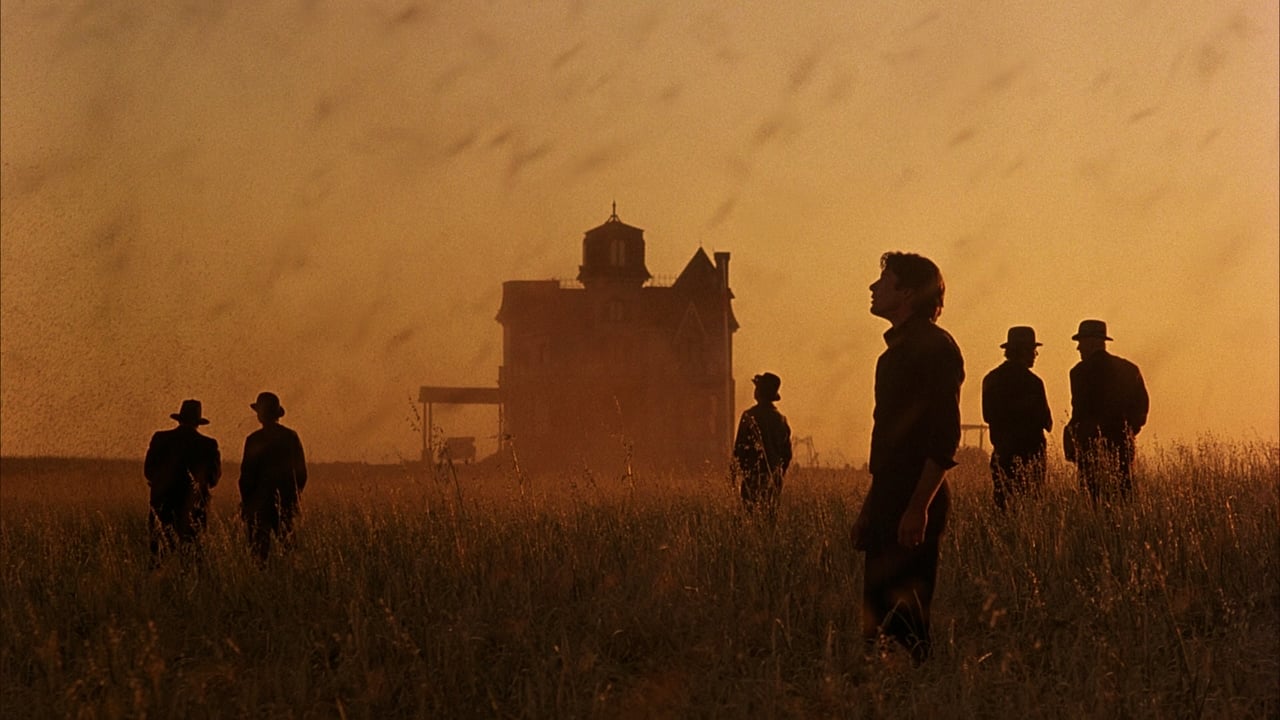
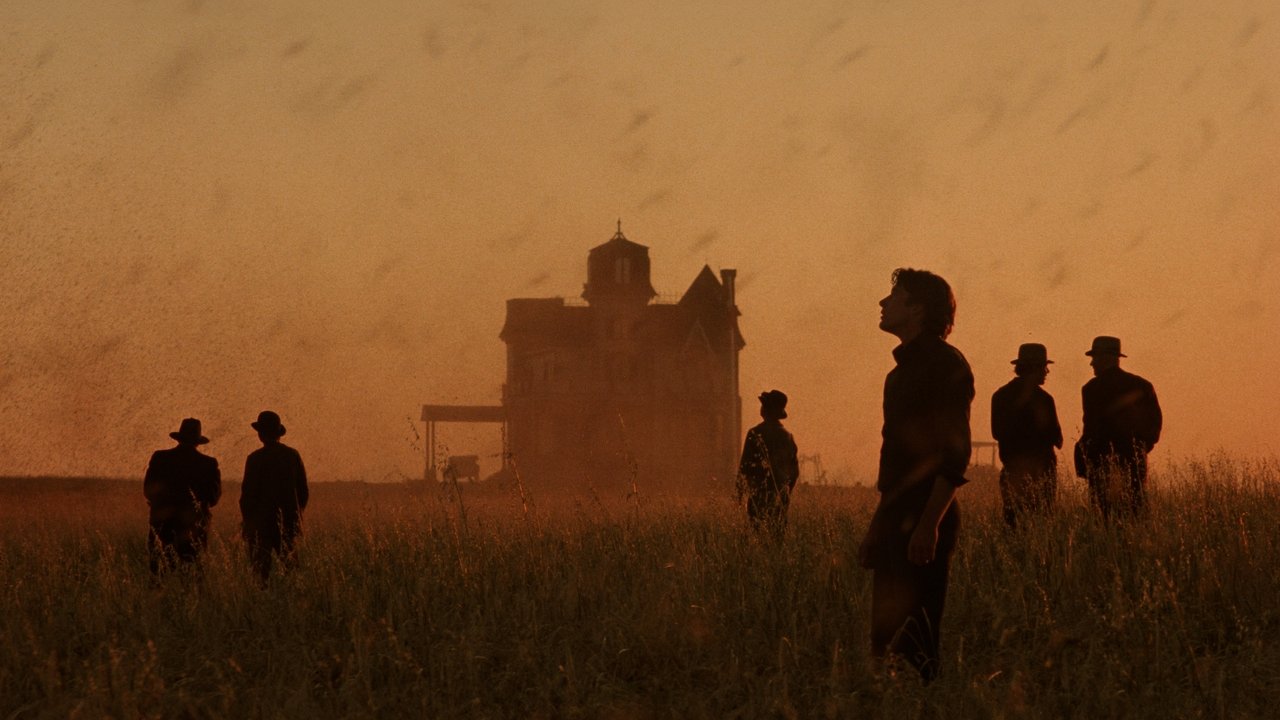
For the practical effects junkies, Days of Heaven features a sequence that puts modern CGI to shame: the locust plague. To simulate millions of insects descending on the wheat fields, the crew dropped thousands of tons of peanut shells from planes and helicopters. To get the shots of the "locusts" rising from the ground, they had the actors walk backward while filming, then ran the film in reverse so the falling shells appeared to be leaping into the sky. It’s a low-tech solution that produces a terrifying, biblically scaled nightmare.
When the fire inevitably breaks out—a real, massive blaze that the actors had to actually navigate—the film shifts from a dream to a fever. Sam Shepard, in his first major film role, plays the Farmer with a tragic, quiet dignity. He’s not a villain; he’s just a lonely man caught in a con, and his slow realization of the betrayal is heartbreaking. Sam Shepard was basically the personification of a weathered fence post—sturdy, silent, and deeply American.
The VHS Curse and the Big Screen Cure
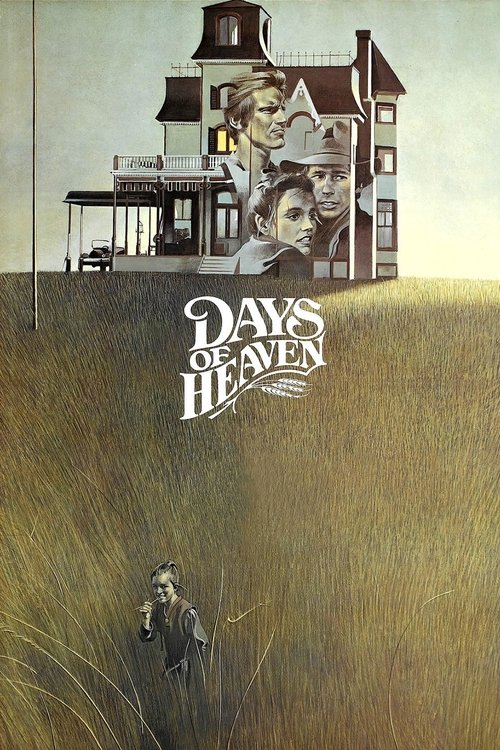
I remember seeing the old Paramount home video release of this in a bargain bin years ago. The cover art tried to sell it as a tawdry romance, emphasizing the love triangle to hide the fact that it was an avant-garde art film. On a grainy VHS tape played on a bulky CRT television, the "Golden Hour" looked more like "Muddy Brown Thirty Minutes." This is one of those rare films that almost died in the home video era because its beauty was too big for the technology of the time. It’s a film that demands the highest resolution possible, yet it’s the kind of "half-forgotten" masterpiece that people often overlook because they think it's just a slow-moving period piece.
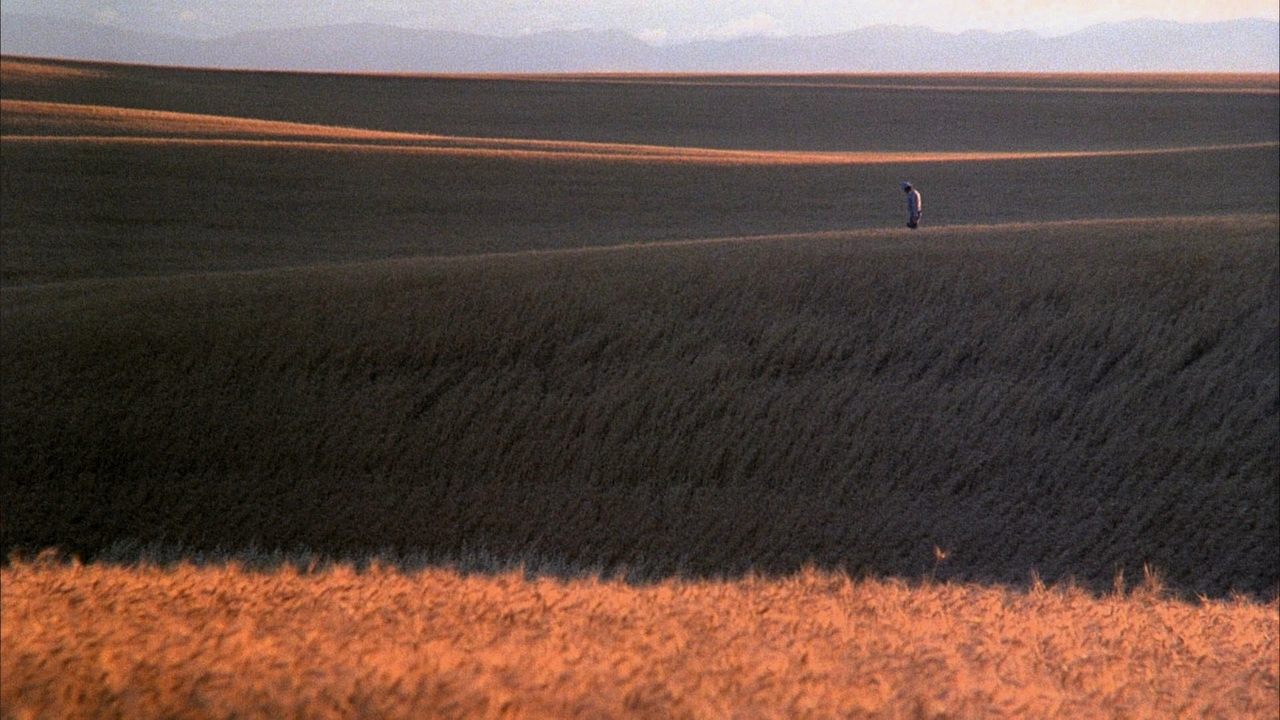
Terrence Malick was so exhausted by the two-year editing process of this film that he vanished from filmmaking for twenty years afterward. He retreated to Paris, leaving Days of Heaven as a singular, shimmering monument to his perfectionism. It’s a movie that values a shot of a silhouette against a purple sky more than a page of dialogue, and while that might frustrate some, I find it incredibly refreshing. It trusts you to feel the story through the environment rather than having it explained to you.
Days of Heaven isn’t just a movie; it’s a mood that lingers in your room long after you turn off the TV. It captures a specific American transition—the end of the agrarian dream and the rise of the industrial machine—all through the eyes of a girl who just wanted to find a place to belong. If you’ve ever felt like an outsider looking in on a world that's too beautiful to be real, this is your film. Seek out the best print you can find, dim the lights, and let the Texas wind blow through your living room.

Keep Exploring...
-
Badlands
1974
-
The New World
2005
-
An Officer and a Gentleman
1982
-
Sophie's Choice
1982
-

Risky Business
1983
-

The Hustler
1961
-
Harold and Maude
1971
-

The Party
1980
-
West Side Story
1961
-
Annie Hall
1977
-
Starman
1984
-
Pretty in Pink
1986
-
Dangerous Liaisons
1988
-
Say Anything...
1989
-
Jules and Jim
1962
-
La Jetée
1962
-
Belle de Jour
1967
-
Barry Lyndon
1975
-
Manhattan
1979
-

The Big Blue
1988