Invasion of the Body Snatchers
"Your friends are gone. Sleep is next."
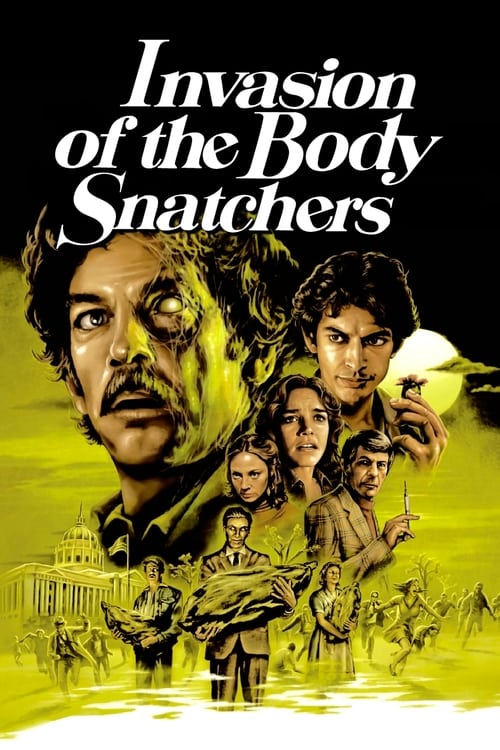
The film begins not with a scream, but with a silent, drifting microscopic invasion. Spores from a dying world hitch a ride on the solar winds, landing in the rain-slicked streets of San Francisco like a slow-motion plague of dandelion seeds. By the time we meet our protagonists, the transformation is already happening in the background of every frame—a garbage truck crushing a pile of discarded, "used" human remains, or a stranger’s blank stare that lingers just a second too long. While the 1956 original was a taut allegory for Red Scare paranoia, Philip Kaufman’s 1978 reimagining is something far more nihilistic. It’s a funeral march for the 1960s, suggesting that the "Me Decade" wasn't just about narcissism; it was about the literal death of the human soul.
I watched this most recently while wearing a pair of particularly itchy wool socks, and the constant, nagging discomfort of my own skin actually served as the perfect tactile companion to the movie’s creeping dread.
The Fog of Paranoia
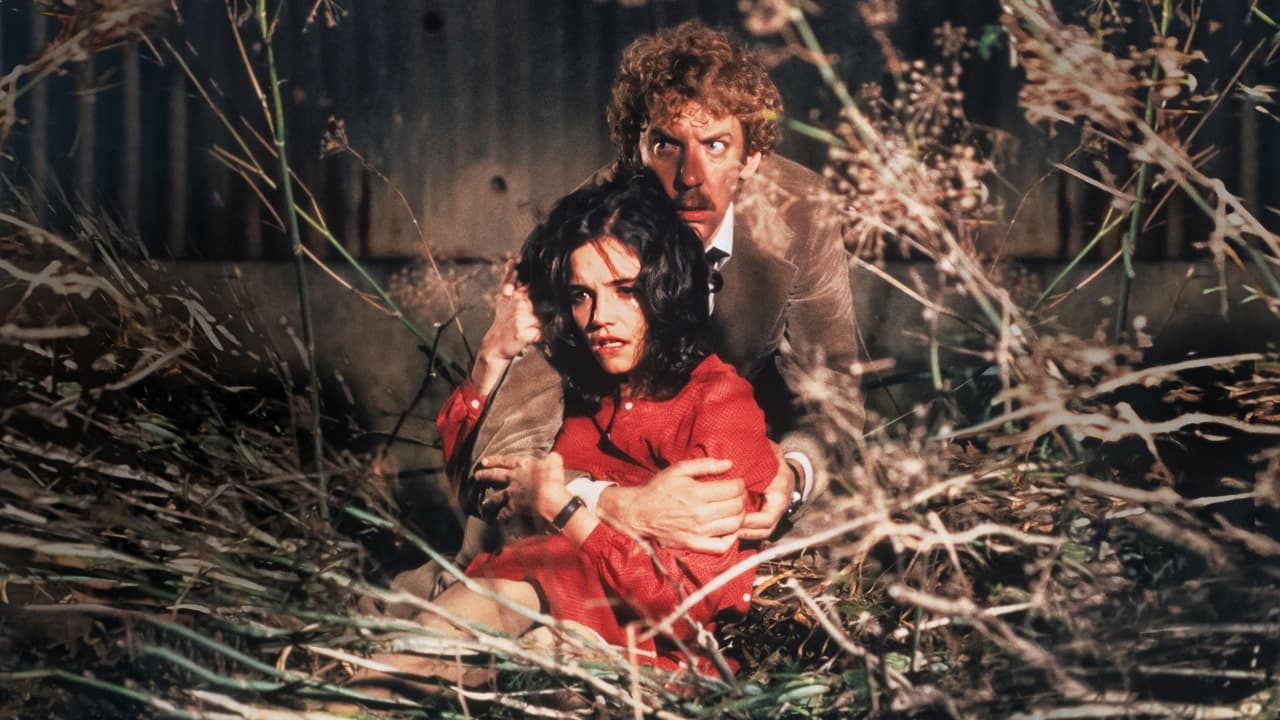
San Francisco has rarely looked this unwelcoming. Philip Kaufman and cinematographer Michael Chapman (who brought that same grimy, nocturnal energy to Taxi Driver) treat the city like a maze of shadows and glass. Everything feels cold. Our hero, Matthew Bennell, played with a frantic, curly-haired intensity by Donald Sutherland, is a health inspector—a man whose job is literally to find the rot beneath the surface. When his colleague Elizabeth (Brooke Adams) confesses that her boyfriend "isn't himself anymore," Matthew’s initial skepticism feels like a personal betrayal of the audience. We see what he doesn't: the way the background characters are slowly forming a silent, watchful web.
The screenplay by W.D. Richter is a masterclass in escalating tension. It doesn't rely on jump scares; it relies on the realization that the world is being replaced by a Xerox copy. There is a scene in a bookstore where a frantic man (a cameo by Kevin McCarthy, the lead from the '56 original) tries to warn the crowd, only to be chased down and killed while the city watches with a new, terrifying apathy. It’s a sequence that hits harder today than it did in the seventies—the idea that you could be screaming the truth in a public square and the world will simply step over your body to get to work on time.
Practical Nightmares
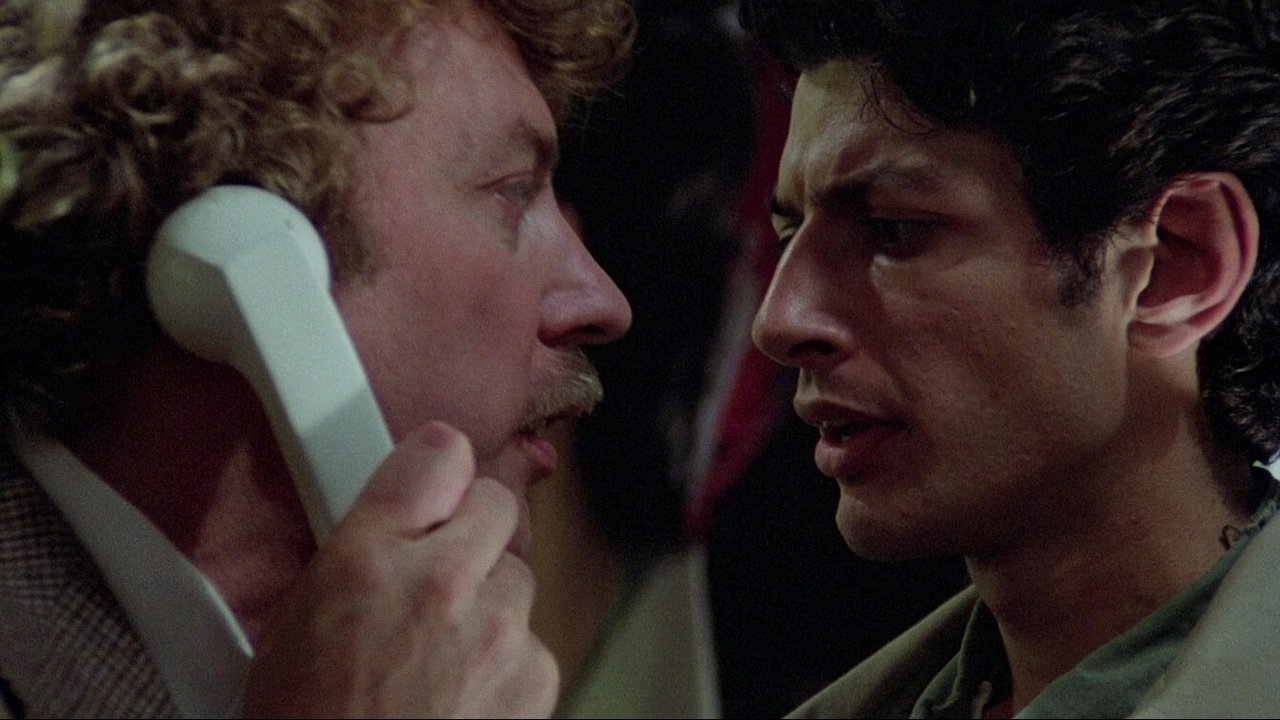
In an era before digital pixels could cheat the eye, the special effects team had to get their hands dirty. The "pod birth" sequence remains one of the most unsettling things ever committed to celluloid. Watching the translucent, gooey membranes stretch and tear to reveal a fetal, half-formed Donald Sutherland is a testament to the power of practical ingenuity. These aren't just monsters; they are biological insults. The sound design by Denny Zeitlin—his only film score—is a dissonant, electronic heartbeat that sounds like a machine trying to mimic a sob.
And then there’s the dog. You know the one. Through a freak accident of the pod-replication process, a street musician’s face ends up on the body of his pet. The dog-human hybrid is still more upsetting than 90% of modern CGI creatures, precisely because it looks like a physical mistake that shouldn't exist in our reality. It’s the kind of image that burned itself into the brains of kids who caught this on a late-night TV broadcast or found the Magnetic Video VHS sitting ominously on a rental shelf. That specific VHS cover, featuring Sutherland’s distorted, screaming face in high-contrast red and black, promised a level of trauma that the movie actually delivered.
A Masterclass in Supporting Dread
The cast is a "who’s who" of 70s character actors at their absolute peak. Jeff Goldblum is twitchy and magnificent as Jack Bellicec, a struggling poet who runs a mud bath business with his wife Nancy (Veronica Cartwright). Their frantic energy provides a necessary foil to Leonard Nimoy, who plays celebrity psychiatrist Dr. David Kibner. Nimoy is chillingly effective here; he uses his post-Star Trek gravitas to play a man who pathologizes everyone’s valid fears. He tells them their friends haven't changed—they’re just experiencing "modern alienation." Watching "Spock" tell you to just relax and accept the emptiness is a stroke of casting genius that adds an extra layer of meta-textual unease.
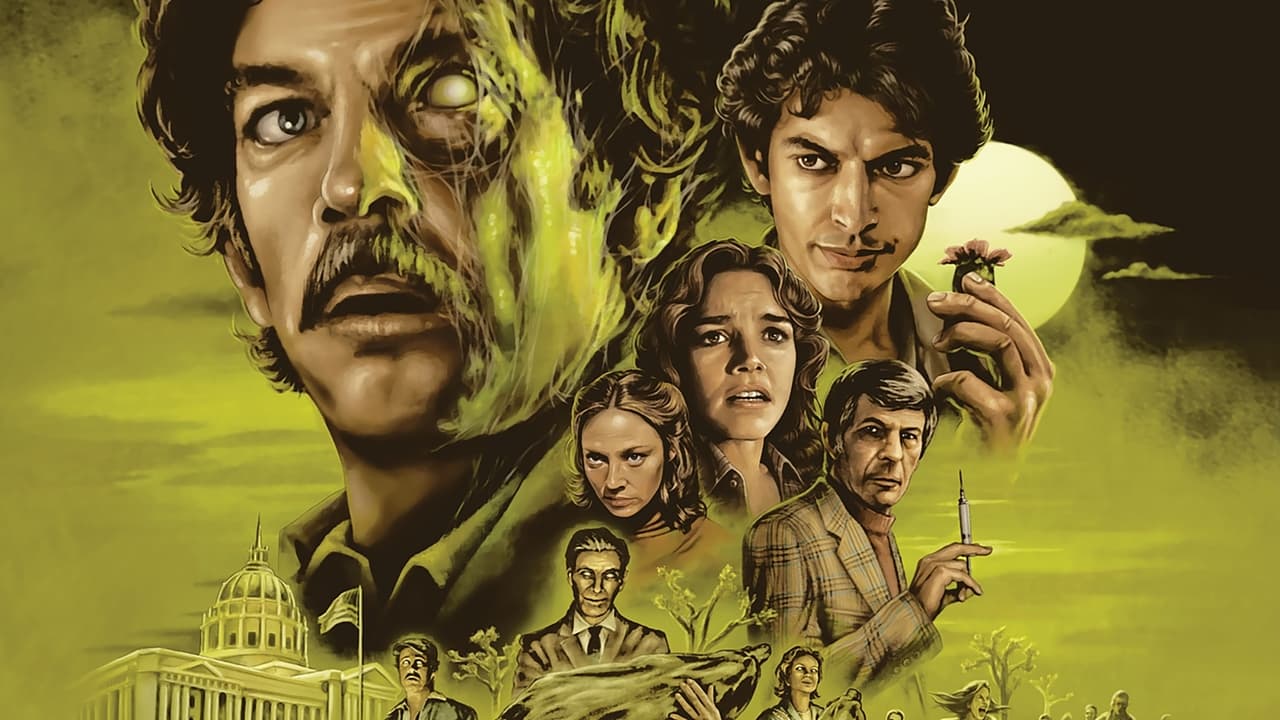
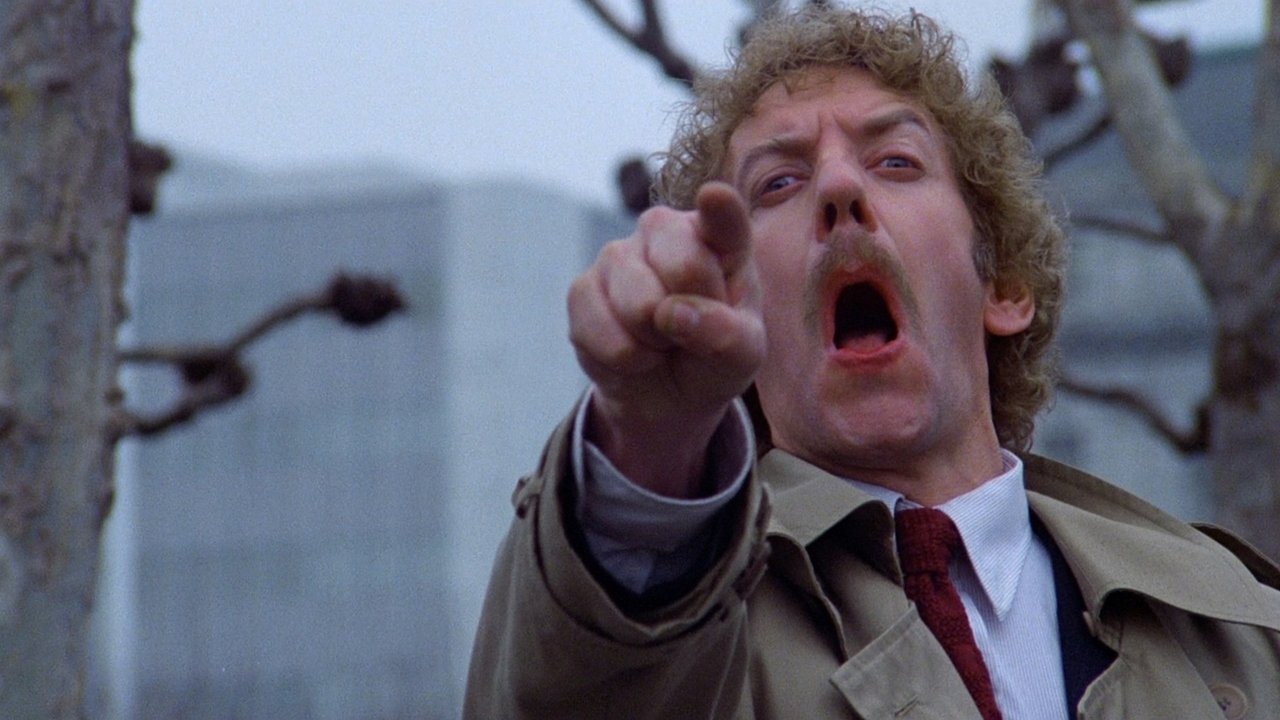
By the time the third act kicks in, the film abandons all hope. The protagonists are no longer trying to save the world; they are just trying to stay awake. The sheer exhaustion on Donald Sutherland’s face mirrors the audience's own fatigue. It’s a relentless, suffocating experience that culminates in perhaps the most famous final shot in horror history. It’s an ending that doesn’t just close the story; it points a finger directly at the viewer and screams.
This is the rare remake that doesn't just justify its existence—it eclipses its predecessor. It captures a specific moment in American history where the optimism of the previous decade had curdled into a cold, urban loneliness. It’s a film that demands you look closer at your neighbors, your friends, and your own reflection. If you haven't seen it, find the best copy you can, turn out the lights, and try your hardest not to drift off. Because once you close your eyes, you might not be the one who opens them.
Keep Exploring...
-
Dawn of the Dead
1978
-
Alien
1979
-
The Dead Zone
1983
-
The Rocky Horror Picture Show
1975
-

The Thing
1982
-
The Texas Chain Saw Massacre
1974
-
Carrie
1976
-
Eraserhead
1977
-

Halloween
1978
-

The Evil Dead
1981
-
The Birds
1963
-

Scanners
1981
-

Videodrome
1983
-
Don't Look Now
1973
-
The Wicker Man
1973
-
Nosferatu the Vampyre
1979
-
Mad Max 2
1981
-
Possession
1981
-

Re-Animator
1985
-
Critters
1986