Escape from Alcatraz
"The Rock always wins. Until now."
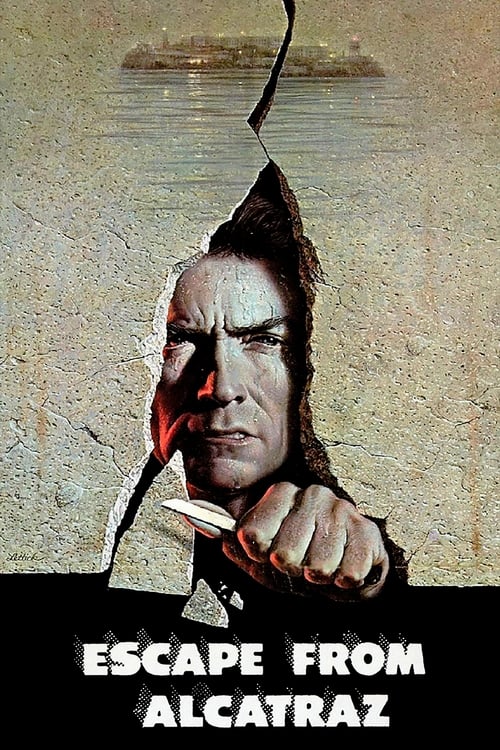
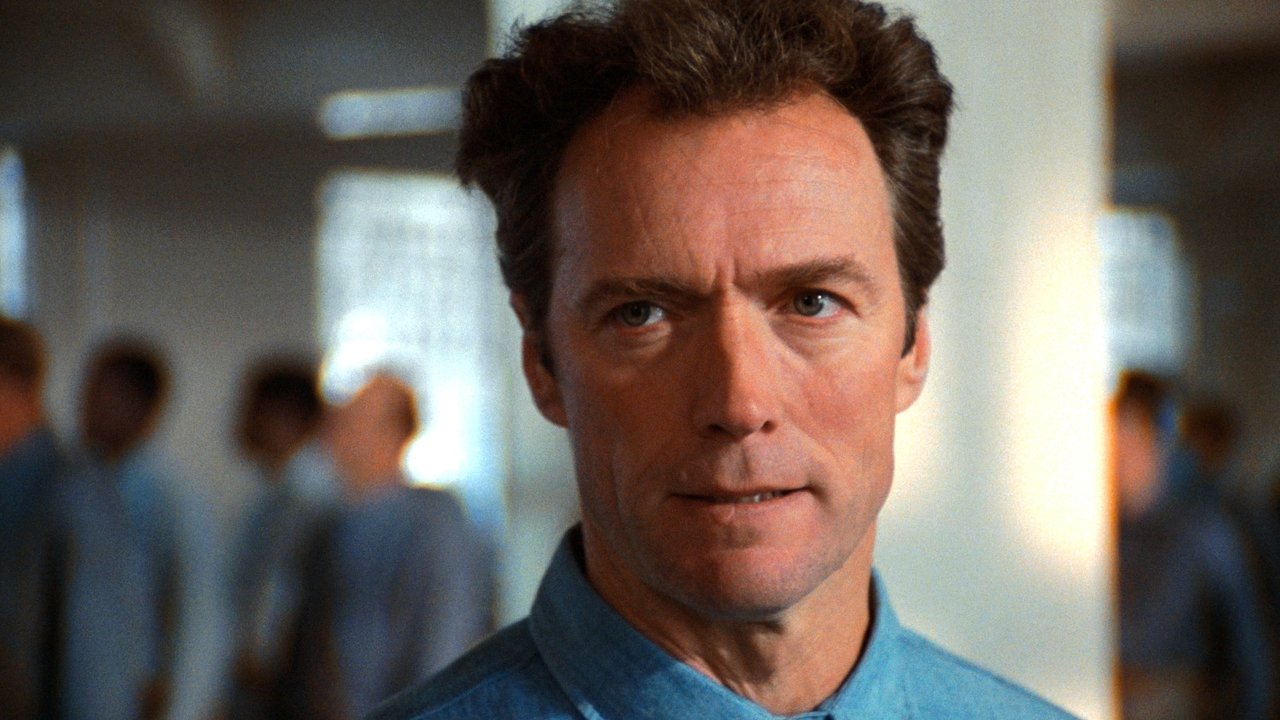
The first thing you hear in Escape from Alcatraz isn't dialogue; it’s the relentless, rhythmic drumming of rain against the cold, salt-sprayed stone of San Francisco Bay. It’s January 1960, and Clint Eastwood is being ferried toward a tomb. There are no soaring orchestral swells here—just the low hum of a boat engine and the oppressive silence of a man who knows he’s being buried alive. I watched this again on a particularly drafty Tuesday night while nursing a lukewarm cup of peppermint tea, and I swear the dampness from the screen made the air in my living room feel five degrees colder.
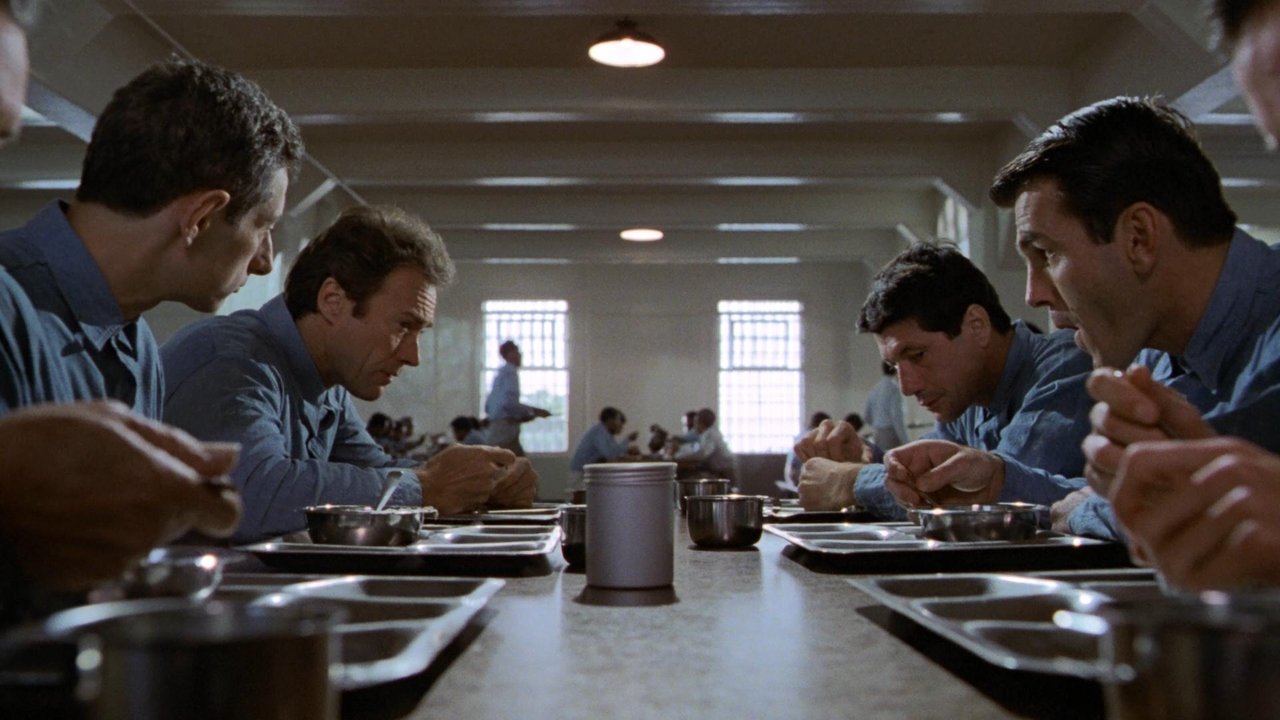
This 1979 classic marks the fifth and final collaboration between Eastwood and director Don Siegel, the duo that gave us Dirty Harry. But if you’re expecting the high-octane bravado of Inspector Callahan, you’re in for a shock. This is a film of whispers, shadows, and the agonizingly slow scraping of a sharpened spoon against concrete. It is, in my book, the absolute gold standard of the prison subgenre because it refuses to "Hollywood" the experience.
The Blue Shadow of The Rock
The atmosphere is the real star here, dictated by the legendary cinematographer Bruce Surtees. He treats the prison like a noir Cathedral. Everything is bathed in "Alcatraz Blue"—a cold, desaturated palette that makes the inmates look like ghosts before they’ve even died. Eastwood plays Frank Morris, a man with a genius-level IQ and a face that looks like it was carved out of the very island he’s trying to leave. He doesn't need to monologue to tell you he's thinking; you can see the gears turning in the way he eyes a loose vent or a stray piece of wire.
Opposing him is Patrick McGoohan as the Warden. If you know McGoohan from The Prisoner, you know he excels at playing authority figures with a hint of sociopathy. Here, he is terrifyingly still. He doesn't scream; he just clicks his fingernail clippers with a rhythmic, metallic snip that feels more threatening than a loaded Magnum. He tells Morris that Alcatraz was built to keep all the "rotten eggs" in one basket, and for the next hundred minutes, the film becomes a high-stakes chess match between Morris’s ingenuity and the Warden’s arrogance.
The Procedural Beauty of the Break
What I love most about this film—and why it became such a massive staple of the early VHS era—is its obsession with the "how." In the 80s, my local video store had three copies of this on the shelf, and the tape was always a bit grainy during the scenes where they’re actually prepping the escape. People rewound those parts constantly. This movie is basically a two-hour tutorial on how to dismantle a federal fortress with nothing but stolen raincoats and stolen time.
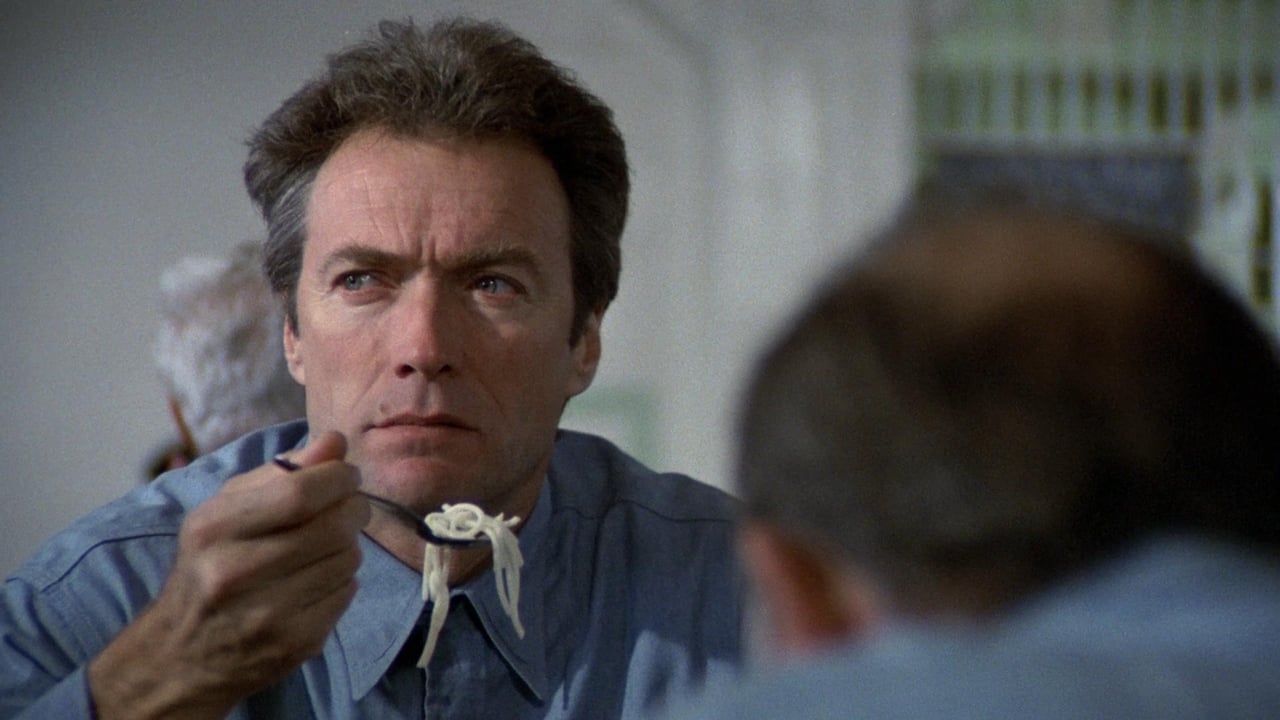
There’s a tactile, "Practical Effects Golden Age" joy in watching the inmates craft life-like dummy heads out of soap, toilet paper, and real hair from the barbershop floor. When the film gets into the nitty-gritty of the escape—the climbing of utility shafts, the bracing against the wind on the roof—you feel the grit under your own fingernails. Don Siegel understood that tension isn't built with explosions; it’s built by wondering if a flickering flashlight will catch a man’s heel as he disappears into a hole in the wall.
The supporting cast adds the necessary soul to what could have been a cold exercise in mechanics. Roberts Blossom is heartbreaking as "Doc," the inmate who paints to keep his sanity, and Paul Benjamin provides a grounded, cynical wisdom as English, the librarian who knows exactly where the bodies are buried. Their presence reminds us that while Morris is the one with the plan, the "Rock" is a place that consumes everyone eventually.
Stuff You Didn't Notice
One of the reasons this film feels so authentic is that Siegel insisted on shooting on location at Alcatraz itself. The prison had been closed for sixteen years, but the decay was real. The crew had to rewire the entire island for electricity, and the cold the actors are shivering through wasn't simulated—the Bay winds are no joke.
Interestingly, the real-life escape of Frank Morris and the Anglin brothers remains one of the great American mysteries. The film leans into the theory that they made it, but in reality, they were never seen again. To keep the focus on the claustrophobia, Jerry Fielding composed a score that is almost entirely absent. For vast stretches, the only "music" is the clinking of cell doors and the whistling wind. It’s a bold choice that pays off by making the final act feel like a silent movie where every footstep is a thunderclap.
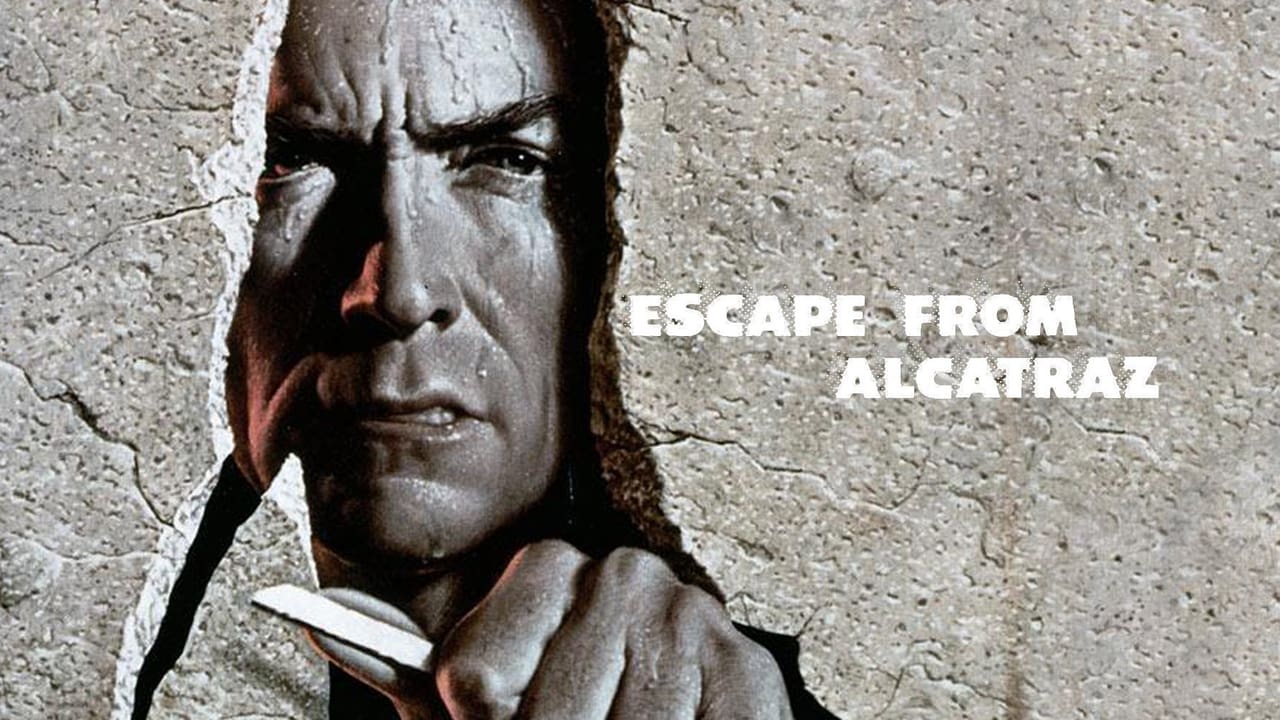
Also, look closely at the "papier-mâché" heads used in the film. They were modeled so accurately on the actors that they’ve become iconic pieces of movie memorabilia. They look just as unsettling today as they did when the guards discovered them in those empty beds in 1962.
Escape from Alcatraz is a masterpiece of minimalism. It’s a dark, intense procedural that respects the audience's intelligence and doesn't feel the need to fill every silence with noise. Whether you're watching it for Eastwood's iron-jawed resolve or the fascinating mechanical details of the break, it’s a film that lingers in your mind like the smell of salt air. It’s the kind of movie that makes you look at a common household spoon and wonder exactly what you could achieve with enough patience.
***

Keep Exploring...
-
Dirty Harry
1971
-
Chinatown
1974
-

The Towering Inferno
1974
-
All the President's Men
1976
-
Marathon Man
1976
-

Blade Runner
1982
-

WarGames
1983
-
The Name of the Rose
1986
-

Bloodsport
1988
-
Dog Day Afternoon
1975
-
The Shining
1980
-

Star Trek II: The Wrath of Khan
1982
-

The Terminator
1984
-
The Poseidon Adventure
1972
-
Witness
1985
-
Mississippi Burning
1988
-
Murder on the Orient Express
1974
-
The Tenant
1976
-
The Omen
1976
-
The Warriors
1979